
Review · POMPEII TOURS
Amazing Private Pompeii & Herculaneum | Guide, Transport, Tickets
Pompeii and Herculaneum, side by side.
I like the private guide pace and the fact that this day bundles two major ruins plus a Vesuvius winery stop. One thing to weigh: the overall day can feel long, because you’re doing several moving parts and you’ll still be on your feet for a chunk of time inside the sites.
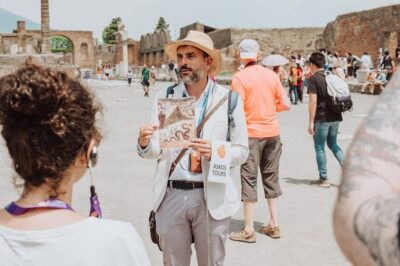
If you want the experience of Pompeii without getting lost in the crowd, a private format helps a lot. You get someone to read the ruins with you—city gates, civic buildings, homes, baths—so you’re not just looking at stones and hoping it clicks. The air-conditioned vehicle also makes a real difference when Naples-area heat hits.
Possible drawback: this is a 7–8 hour outing and includes walking on site. The tour notes recommend moderate physical fitness, comfortable shoes, and sun gear for summer. If you know your limits (or you’re on a cruise schedule with tight timing), plan carefully.
In This Review
- Key things to know before you go
- Private Guide + Air-Conditioned Transport: How This Day Actually Runs
- Pompeii Starts at Porta Marina: Main Gate and the City’s Built-Up Everyday Reality
- Pompeii’s Forum Baths, Marketplace, and the Art of Daily Life
- Pompeii’s Big Houses: Faun, Vettii, and Why Status Shows Up in Stone
- Via dell’Abbondanza, the Chaste Lovers View, and Theater Time
- Antiquarium and the Plaster Casts: The Moment Pompeii Becomes Unforgettable
- Cantina del Vesuvio Winery: A Calm Vesuvius Reset With Lacryma Christi
- Herculaneum’s Boat Pavilion and Carbonized Wood: Why This Site Feels Different
- Herculaneum Shoreline and Boathouses: Where Escape by Sea Turned Fatal
- Herculaneum Homes and Mosaics: Deer Villa, Neptune Panel, and Imperial Cult Rooms
- Price and Value: Is $724.24 Worth It?
- Tips That Prevent a Bad Day (and Keep Your Energy for the Best Parts)
- Should You Book This Private Pompeii and Herculaneum Tour?
- FAQ
- How long is the tour?
- Is the tour private?
- What’s included in the ticketing?
- Is a guide included?
- Do you provide pickup?
- What language is the tour in?
- Is transportation provided?
- How much walking should I expect?
- Do I need to provide information from my ID?
- Is the winery stop included?
- What’s the typical order of stops?
Key things to know before you go
- Private guide time: you’re not sharing attention, and you can ask questions as you move through Pompeii and Herculaneum
- Skip-the-line tickets for both archaeological sites, plus private air-conditioned transport
- Pompeii + Vesuvius winery + Herculaneum in one day, so you see how the volcano shaped two different towns
- Pompeii hits the classics: Porta Marina, Forum, Baths, major houses, theater, and the Antiquarium
- Herculaneum’s preservation factor: carbonized wood, the preserved boat, and intimate interiors
- You’ll still walk: the guaranteed archaeological walking portion is about 2 hours, so wear real shoes
Which Pompeii ticket and guide? Compare a few more.
- Pompeii Small Group Tour with an Archaeologist★ 5.0 · 6,593 reviews
- Discover the Ancient Ruins of Pompeii: Day Trip from Rome★ 3.5 · 2,247 reviews
- Pompeii and Herculaneum Small Group Tour with an Archaeologist★ 5.0 · 1,350 reviews
- Skip the Line Guided Tour of Pompeii led by an Archaeologist★ 5.0 · 703 reviews
Private Guide + Air-Conditioned Transport: How This Day Actually Runs
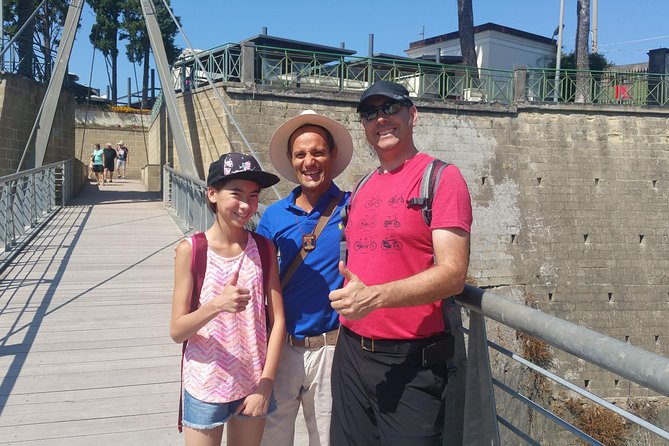
This is built for people who want the “serious tour” feeling without the confusion. You get a private guide and private transport, and the van is air-conditioned—important when the Bay of Naples is doing its hottest routine.
Pickup is flexible around Naples and Sorrento (hotels, B&Bs, train stations, and the airport). That flexibility is a big value add, because getting to Pompeii on your own can turn into a timing puzzle. The tour is also private-only for your group, so you’re not waiting for other parties to finish photos.
Timing can vary with traffic and where you’re picked up, but the company guarantees the walking tour inside the archaeological sites will last about 2 hours. Outside that, you’ll spend time riding between locations and on the Vesuvius winery stop.
Pompeii Starts at Porta Marina: Main Gate and the City’s Built-Up Everyday Reality
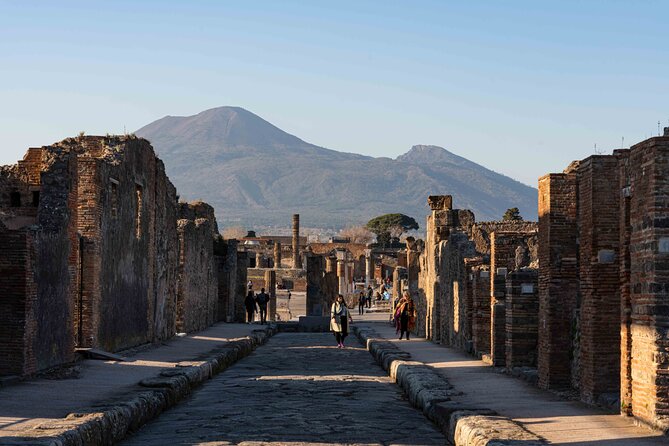
Pompeii is huge, and the entry points matter. The tour begins at Porta Marina, one of the city’s main gateways. Walking beneath the stone arch, you get a fast sense of scale: this was a working city, with merchants and sailors entering from the port.
From there, you move into Pompeii’s civic heartbeat:
- Basilica: Pompeii’s most important civic building, where business and legal disputes took place
- Temple of Apollo: an early and major sacred site tied to civic identity, not just worship
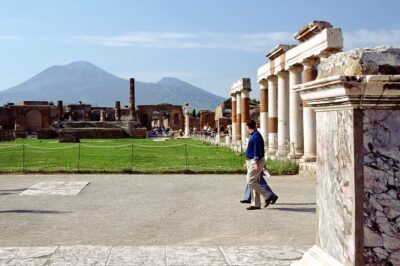
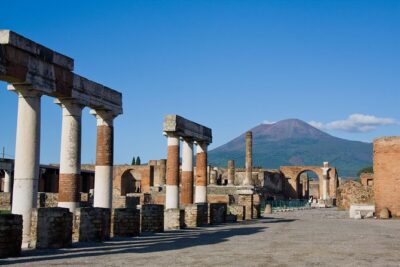
- Forum: the main square for trade, politics, and public life
What I like about this structure is that it doesn’t treat Pompeii as a theme park. It teaches the city’s rhythm: people arrived, conducted business, worshiped, argued, then ate and relaxed. When you understand the order, the ruins feel way less random.
Pompeii’s Forum Baths, Marketplace, and the Art of Daily Life
Next comes the parts that make ancient Rome feel personal: food, hygiene, social life, and commerce. The tour takes you through:
- Marketplace areas where locals bought fish, meat, fruit, and imports
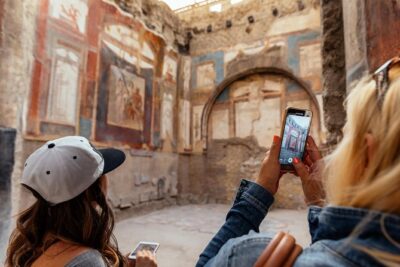
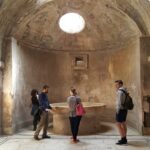
- Forum Baths, highlighted as among the best-preserved buildings, including original mosaics and stucco decorations
This is where you start seeing Pompeii as a place people used every day. Baths weren’t just cleanliness. They were a social hub—exercise, conversation, routine. If you’ve ever wondered why Romans seemed obsessed with public spaces, the baths answer that question fast.
The marketplace stop also helps you connect religion and buying. You’re shown how trade and worship mixed in everyday corners, and you’re walking through spaces that were clearly designed for flow: counters, storage areas, and shrine-like elements.
Pompeii’s Big Houses: Faun, Vettii, and Why Status Shows Up in Stone
Pompeii’s private homes are where you feel the social ladder. You visit two of the tour’s most talked-about residences:
- House of the Faun: one of Pompeii’s largest and most elegant homes, with the famous bronze dancing faun and a showcase mosaic of Alexander the Great
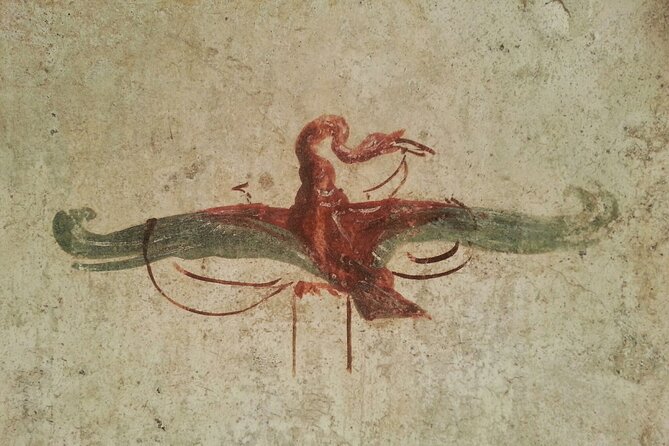
- House of the Vettii: a remarkably preserved, recently restored residence with vivid wall paintings
The House of the Faun is about ambition and display. The mosaic connection to Alexander signals cultural aspirations and wide-reaching networks. Then the House of the Vettii shifts the story to social mobility: the guide explains how the fresco themes and symbols reflect the wealthy owners’ goals.
If you like art history but also want the practical story—who lived where, why they cared, what they wanted people to think—these homes do both.
Herculaneum keeps a few more tours worth your time

Via dell’Abbondanza, the Chaste Lovers View, and Theater Time
Pompeii continues past houses and into street life. You’ll walk along Via dell’Abbondanza, the city’s main commercial street. This is the best kind of ruin-walk: shops, workshops, taverns, bakeries, street fountains, and even wheel-worn tracks. It’s noisy in your imagination, even though the city is silent now.
You also get an elevated look at the Insula of the Chaste Lovers. This block is undergoing restoration, but the viewpoint helps you understand how houses and workspaces fit into one city unit. It’s one of the few times Pompeii feels like architecture you can map in your head.
Then the tour moves to Teatro Grande, Pompeii’s main theater built into a natural slope. From the tiers, it’s easier to picture crowds—actors, musicians, and the audience responding in the same basic human way we still do today. The theater also gives a useful pause point, with views that show the ruins’ spread.
Antiquarium and the Plaster Casts: The Moment Pompeii Becomes Unforgettable

Near the end of the Pompeii portion, you enter the Antiquarium, a museum space that ties everyday objects to the locations you just walked. Expect items like statues, inscriptions, jewelry, and domestic pieces that connect directly back to what you saw outside.
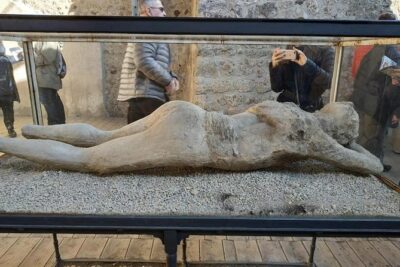
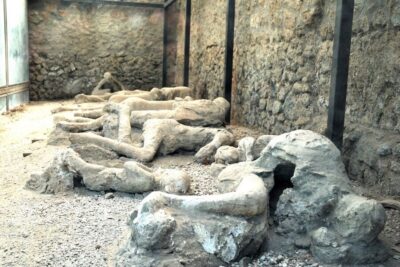
The emotional highlight comes with the plaster casts of the victims from 79 AD. Standing before them, you see final postures and expressions preserved by the unique casting process. It’s powerful, and you may feel it more than you expect—because it changes the ruins from background scenery into real people you can almost meet with your eyes.
It’s also a good point for the private-guide advantage: if you have questions about what you’re seeing, this is where an explanation helps you process it without rushing.
Cantina del Vesuvio Winery: A Calm Vesuvius Reset With Lacryma Christi
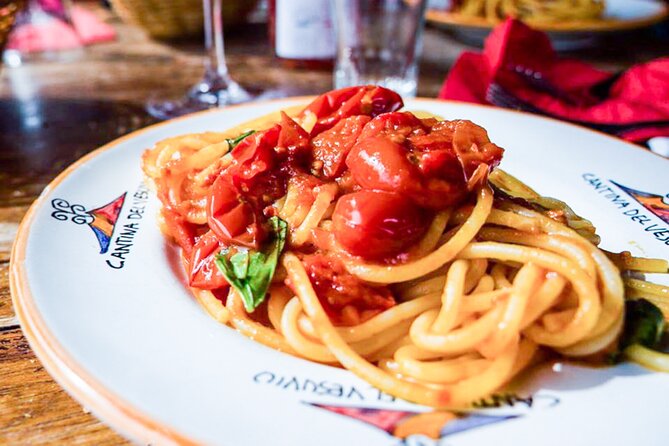
After Pompeii, the day shifts from stone city to volcanic slopes. You’ll go up to Cantina Del Vesuvio (Russo family since 1930) for about 90 minutes.
The focus here is the idea that the volcano shapes flavor. You walk among vines while your hosts explain how mineral soil and sea breezes influence the grapes. Then you sit down for a tasting, featuring signature Lacryma Christi labels, paired with small seasonal bites.
Two practical notes:
- The winery’s admission ticket is not included in the base list price details, and the wine/lunch add-on depends on the option you choose.
- This is a good mental break. After Pompeii’s density, tasting wine with Bay of Naples views feels like a reset, not a detour.
The guide also points out views of Mount Vesuvius and the crater where possible, and the timing is set so photos work without feeling like you’re sprinting.
Herculaneum’s Boat Pavilion and Carbonized Wood: Why This Site Feels Different

Then you move to Herculaneum, and the vibe changes immediately. It’s quieter, more compact, and—most importantly—preservation is extraordinary.
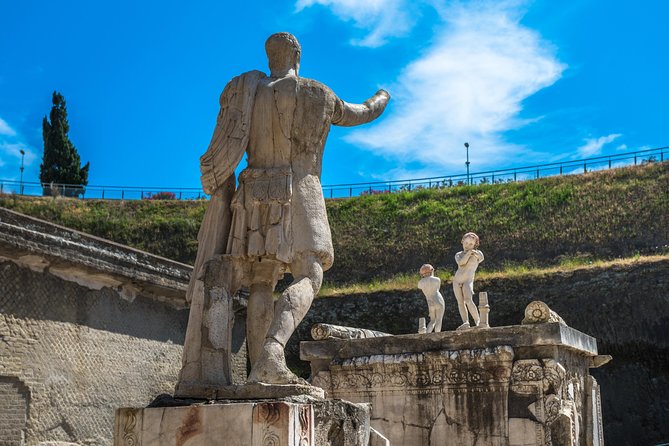
You start with the Boat Pavilion, where a Roman boat found near the shoreline is preserved from carbonization. It’s a big deal because it connects the town to maritime life and trade routes. You’re not only looking at buildings; you’re seeing how people moved goods and lived with the sea as a daily neighbor.
Next, you’ll tour the Antiquarium again, but the emphasis shifts to artifacts that rarely survive elsewhere: carbonized wood, furniture fragments, doors, beams, and household items. This is the part that helps Herculaneum feel intimate. You can almost picture how rooms functioned day to day.
Herculaneum Shoreline and Boathouses: Where Escape by Sea Turned Fatal
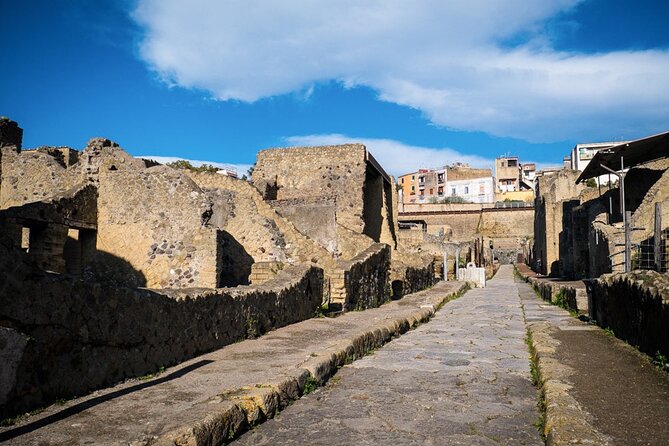
One of the most striking stops is the ancient shoreline. Today it’s inland because the volcanic surge pushed the coast outward, so you’re literally walking away from where the sea once met the town.
The guide helps you imagine boats pulled to shore, goods unloaded, and residents moving between docks and the city center. It’s also tied to a heavy archaeological story: the excavation found over 300 skeletons in boat houses as people waited to escape by sea when the pyroclastic surge reached the coast.
You can still see arches of the boathouses and the dark volcanic layers. Even if you’re not a “dramatic history” person, this stop lands because it’s geographic. You understand the decision point in a way museum glass can’t give you.
Herculaneum Homes and Mosaics: Deer Villa, Neptune Panel, and Imperial Cult Rooms
After the shoreline, the tour returns to life inside houses and civic spaces. You visit several that highlight different types of people in Herculaneum:
- House of the Deer: a seaside villa with porticoes, marble tables, garden areas, and a framed view of the Bay of Naples
- A home with a bright mosaic panel of Neptune and Amphitrite, with deep blues and gold-colored tesserae details still visible
- A prestigious residence reopened after restoration, including multiple floors and surviving wooden elements—rare for a Roman site
You also see spaces that explain social structure and civic identity. There’s a hall dedicated to the cult of the Emperor with vivid frescoes, plus discussion of the Augustales, a local group of freedmen tied to elite status.
The tour also includes a look at an ancient shop recognizable by terracotta storage jars set into a marble counter, and you walk through an exercise courtyard where athletic training and social education played a role in the town’s youth culture.
And yes, there’s a house named after a human skeleton uncovered during early excavations. It’s quiet, intimate, and it adds a poignant layer to the architecture you’ve already been taught to read.
Price and Value: Is $724.24 Worth It?
At $724.24 per person, you’re paying for three things that add up fast if you try to DIY:
1) a private guide who can explain what you’re seeing as you walk,
2) skip-the-line tickets for both major sites, and
3) private transportation in an air-conditioned vehicle.
The real value is not just convenience. It’s time. Pompeii and Herculaneum are both easy to misunderstand without context, and both are crowded enough that you’ll waste energy if you’re guiding yourself. Here, the structure is what you’re buying.
That said, it’s not a bargain tour. This is a strong option if you:
- want one-on-one guidance (not a shared group voiceover),
- care about connecting architecture to daily life,
- and will enjoy the “two ruins + one wine stop” full-day format.
If you’re traveling with limited time, or you know walking will drain you, you should think twice and pick your option carefully.
Tips That Prevent a Bad Day (and Keep Your Energy for the Best Parts)
A few practical moves make this tour go smoother:
- Bring a valid ID (and be ready to provide full names and ages as on IDs). The company requires this for ticket purchase.
- Wear shoes you trust. Pompeii and Herculaneum mean real walking on uneven terrain.
- Use sun protection. The tour specifically recommends sun gear in summer.
- Confirm your meeting spot in advance. In the real world, meeting points can be messy, and this is the kind of day where a missed start eats hours.
- If you’re on a cruise, ask how pickup works for your pier timing. The day involves travel logistics, and you’ll want a plan that doesn’t leave you doing long climbs with fatigue.
On the guide side, you’ll sometimes see serious specialists. For example, guides like Giuseppe D’Angel and Dr Lavinia De Rosa have been named in past experiences, and that’s a good sign when you care about Roman context.
Should You Book This Private Pompeii and Herculaneum Tour?
I’d book it if your priority is understanding what you’re seeing—not just collecting photos. The private guide format, skip-the-line tickets, and the pairing of Pompeii (urban life + iconic structures) with Herculaneum (preservation + intimate interiors) is a smart way to use one day.
I’d hesitate if:
- you hate long travel days,
- walking is a struggle for you, or
- you’re on a tight cruise schedule and want a low-stress plan.
If you do book, treat the day like a full outing: start hydrated, wear comfortable shoes, and keep your expectations tied to the day’s flow—Pompeii’s major hits, a calm Vesuvius reset, then Herculaneum’s more human scale.
FAQ
How long is the tour?
The tour lasts about 7 to 8 hours, but timing can vary depending on traffic and your pickup location. The company guarantees the walking tour inside the archaeological sites will last around 2 hours.
Is the tour private?
Yes. This is a private tour/activity with only your group participating.
What’s included in the ticketing?
Skip-the-line tickets to both Pompeii and Herculaneum are included. The Vesuvius winery’s admission ticket is not included (though premium options may add a wine/lunch package).
Is a guide included?
Yes. You’ll have a private guide for the Pompeii and Herculaneum visits.
Do you provide pickup?
Pickup is flexible from hotels, B&Bs, train stations, and the airport in Naples and Sorrento.
What language is the tour in?
The tour is offered in English.
Is transportation provided?
Yes. You get private transportation in an air-conditioned vehicle.
How much walking should I expect?
The tour notes recommend moderate physical fitness. It also guarantees about 2 hours of walking inside the archaeological sites.
Do I need to provide information from my ID?
Yes. The company requires the full names of all participants and their ages as they appear on IDs to purchase tickets. Bring a valid ID or a copy on the day of the tour.
Is the winery stop included?
The winery experience is part of the itinerary. The winery’s admission ticket is not included in the provided list, and wine tasting/light lunch depends on the option you choose.
What’s the typical order of stops?
You visit Pompeii first, then go to the Vesuvius winery area, and finish with Herculaneum. The day includes a mix of ruins, museum spaces, and viewpoint areas.
More Tour Reviews in Pompeii



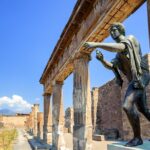

Herculaneum, a Few More Tours


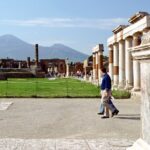
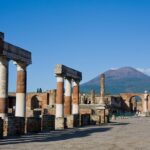
More Pompeii Tours to Compare
More Pompeii tours, freshly reviewed



Pompeii Tours, compared.
 ★ 4.8Pompeii: Entry Ticket and Guided Tour with an ArchaeologistFrom $3519,459 reviews
 ★ 4.1Pompeii: Entry Ticket with Audio GuideFrom $4013,491 reviews
 ★ 4.8Pompeii: Small Group Tour with an ArchaeologistFrom $4012,264 reviews
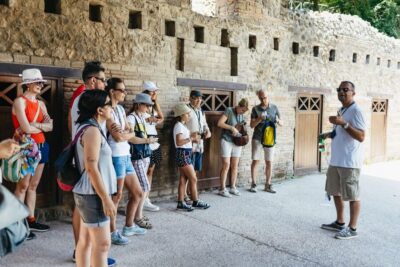 ★ 4.3Pompeii Ruins & Mount Vesuvius Day TourFrom $12011,459 reviews
★ 5.0Pompeii Small Group Tour with an ArchaeologistFrom $356,593 reviews
★ 4.3Pompeii Ruins & Mount Vesuvius Day TourFrom $12011,459 reviews
★ 5.0Pompeii Small Group Tour with an ArchaeologistFrom $356,593 reviews
 ★ 4.5Skip-the-line Pompeii – Small Group TourFrom $544,401 reviews
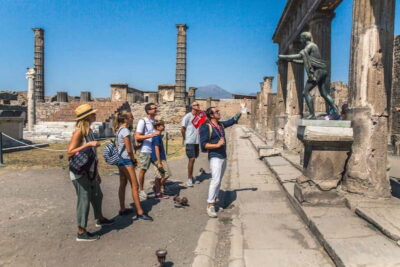 ★ 4.6Naples or Sorrento: Full-Day Pompeii and Mount Vesuvius TourFrom $1044,235 reviews
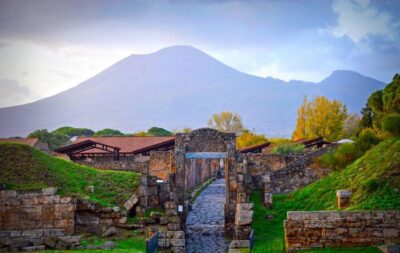 ★ 3.9Pompeii: Skip-the-line Entry Ticket with Audio Guide & MapFrom $433,153 reviews
Browse the lists this tour appears in