
Review · POMPEII TOURS
5 Hours Private and Guided Tour to Pompeii and Herculaneum with Archaeologist
Pompeii and Herculaneum are heavy hitters—so getting the story right matters. This private, English-guided outing is led by ELIANA SANDRETTI, an archaeologist (PhD-level) who works on-site and explains what you’re seeing in real excavation terms. I like that it’s built for a small private group (up to 10), so questions don’t get swallowed by a crowd.
Two things I particularly like: the pacing stays focused (lots of small stops instead of one endless march), and you get real context—how spaces were used and what the ruins reveal. The big consideration is simply time: in about 5 hours, you’re covering major Pompeii highlights and then transferring to Herculaneum, so you’ll want comfortable shoes and a flexible mindset.
One more practical note: adults pay separate entry tickets (Pompeii and Herculaneum). Also, like most outdoor archaeological days, hot sun can turn “short stops” into long ones—so plan for the weather and keep your energy for the second half in Herculaneum.
In This Review
- Key things that make this tour work
- Price and logistics: what you’re paying for (and what’s extra)
- Meet your archaeologist guide: why Eliana changes the feel of the day
- Pompeii first: a focused route through drama, baths, and everyday life
- Teatro Grande: where Romans watched dramas and comedies
- Casa del Menandro: an elite home and the art they used for status
- Basilica: the early Roman civic model
- Lupanar: the uncomfortable part—handled with historical framing
- Stabian Baths (Terme Stabiane): oldest baths in Pompeii
- Foro de Pompeya: where daily life centered
- Thermopolium of Vetutius Placidus: the street-food shop feel
- Casa degli Amorini Dorati: a rich house and its message
- An early worship area and a terrace-temple view
- Partem Domus lignea: the wooden partition you can picture
- The train transfer to Herculaneum: less stress than DIY
- Herculaneum: a smaller site with frescos, baths, and the ship
- Scenic terrace viewpoint: read the setting
- Central Thermae: the bath culture continues
- Casa del Salone Nero: black-fresco luxury
- Casa del Rilievo di Telefo: large house, major scale
- Casa Sannitica: the oldest house in Herculaneum
- House of the Deer: terrace overlooking the sea
- Salone della Barca di Ercolano: the ship found by the sea
- College of the Augustales: worship tied to imperial life
- Comfort tips that actually matter for this route
- Is this tour good value at $709.76 per group?
- Who should book this Pompeii and Herculaneum private archaeologist tour?
- Should you book it?
- FAQ
- How long is the Pompeii and Herculaneum private guided tour?
- Is this tour private?
- What language is the tour offered in?
- Where does the tour start in Pompeii?
- Where does the tour end in Herculaneum?
- Are entrance tickets included?
- How much are the adult entrance tickets?
- How do you get from Pompeii to Herculaneum during the tour?
- What else is included besides the guide?
- What happens if weather is bad?
Key things that make this tour work
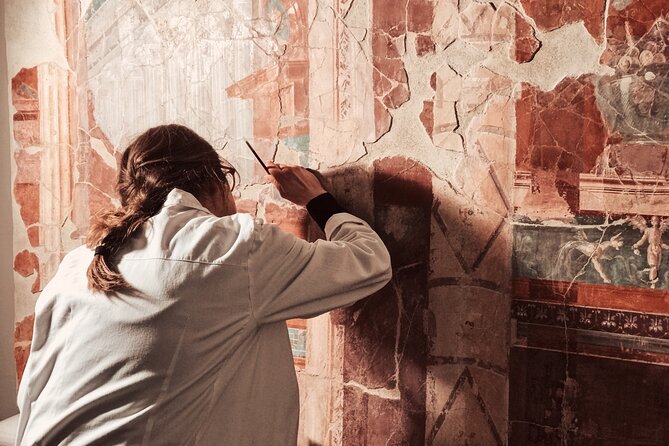
- Archaeologist-led explanations by Eliana Sandretti with on-site context tied to real research and excavations
- Private group up to 10 so you can ask questions and get answers in the moment
- A tight Pompeii route across theater, elite homes, baths, forum life, and even a sex-work site (handled carefully with context)
- Guided train hop to Herculaneum with help buying tickets, plus fast on-site entry purchasing
- Herculaneum’s frescos and preservation through major houses, baths, and the ship display
Which Pompeii ticket and guide? Compare a few more.
- Pompeii Small Group Tour with an Archaeologist★ 5.0 · 6,593 reviews
- Discover the Ancient Ruins of Pompeii: Day Trip from Rome★ 3.5 · 2,247 reviews
- Pompeii and Herculaneum Small Group Tour with an Archaeologist★ 5.0 · 1,350 reviews
- Skip the Line Guided Tour of Pompeii led by an Archaeologist★ 5.0 · 703 reviews
Price and logistics: what you’re paying for (and what’s extra)
This tour is priced at $709.76 per group up to 10 people for about 5 hours. In real terms, that makes it one of those Rome-area experiences that’s often cheaper than you’d expect if you split the group cost—especially compared with paying for separate tickets and separate guided time.
Here’s the split that matters for your budget:
- Included: an archaeologist/authorized guide (Eliana), assistance during the tour, and entrance fees for minors.
- Not included: Pompeii and Herculaneum adult entrance tickets, plus food and beverages, and private transportation.
Adult entry fees listed are:
- Pompeii: €19 per person
- Herculaneum: €15 per person
So if you’re 6 adults, you’re mostly paying for guided time + expertise, while the museum-style entry tickets are the add-on. That’s a normal setup for Pompeii/Herculaneum days, but it’s good to plan it before you go.
Logistics-wise, the route is designed to avoid a common headache: you don’t have to figure out the train connection from scratch. After Pompeii, you’ll be accompanied to the train and helped in purchasing the ticket to reach Herculaneum, and you’ll be able to buy entry tickets on site quickly thanks to the skip-the-line arrangement.
Meet your archaeologist guide: why Eliana changes the feel of the day
The biggest reason I’d book a tour like this is not the number of stops. It’s the kind of guide you get. Eliana Sandretti brings an archaeologist’s perspective to Pompeii and Herculaneum, and that shows in how she connects buildings to daily life.
You can expect more than basic facts. The tour is structured so the guide can point out what matters: what a building was used for, how Romans organized social life, and why the excavation record is so important.
If you love asking questions, this setup is friendly to that. In this kind of private format, the guide can answer deeper follow-ups instead of rushing past them. I also like the human side described in real-life feedback: when the group shifts—whether that’s curiosity overload or a kid who needs a different pace—the tour still works because the guide can pivot.
Pompeii first: a focused route through drama, baths, and everyday life
Pompeii can feel like a maze if you wander alone. This tour keeps you moving through the city’s most recognizable functions—public life, elite homes, commerce, and leisure—so you leave with a clearer mental map of how the place worked.
Most stops are short, so think of this as a guided “highlights with meaning” route. Each stop is about 15 minutes (a couple are around 20), which is perfect for getting key visuals and then moving on before you lose momentum.
Teatro Grande: where Romans watched dramas and comedies
Your first stop is Teatro Grande, Pompeii’s theater. It’s not just stone seating. A Roman theater tells you about entertainment culture and civic life: who went, what kinds of performances mattered, and how theater fit into a city’s rhythm. I like this start because it sets the tone—Pompeii isn’t only about disaster; it’s about a city that was alive with daily events.
Herculaneum keeps a few more tours worth your time

Casa del Menandro: an elite home and the art they used for status
Next is Casa del Menandro, a domus linked to a high-ranking family. Here, the guide can explain how elite homes were organized and how decorations communicated wealth. These places aren’t “just pretty rooms.” They show social structure—who lived where, how guests were received, and how art and architecture worked together.
Basilica: the early Roman civic model
You’ll stop at the Basilica, noted as one of the oldest examples of this building type in the Roman world. Even without going deep into architecture jargon, this is a meaningful stop because basilicas were central to public life. You get a sense of where people gathered for business, decisions, and civic chatter.
Lupanar: the uncomfortable part—handled with historical framing
Then comes the Lupanar, a house associated with prostitution. This can be a tough stop for some people, but it’s also one of the most revealing. I appreciate that an archaeologist guide can keep it grounded in the historical record instead of turning it into shock tourism. If you prefer a gentler pace around sensitive topics, this is also where a private tour helps—you can ask for context and keep moving when you’re ready.
Stabian Baths (Terme Stabiane): oldest baths in Pompeii
The Stabian Baths are next, presented as the oldest baths of Pompeii. Baths weren’t just about hygiene. They were social hubs, and the layout helps you visualize daily routines: meeting friends, relaxing, and moving through spaces designed for different steps of bathing. I like pairing this with the theater earlier—public entertainment and public wellness belong to the same city mindset.
Foro de Pompeya: where daily life centered
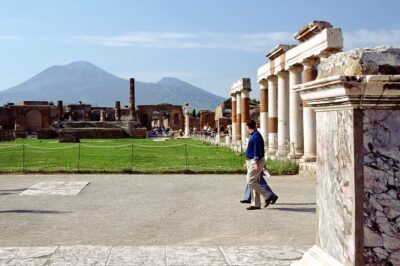
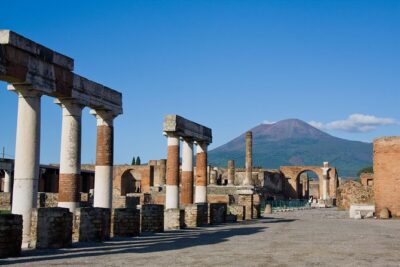
At the Foro (Civil Forum), you’ll see the center of daily life. This is where Romans connected politics, commerce, and community. The value here is orientation: after a few elite homes and specialty sites, the forum helps you see the city as a system.
Thermopolium of Vetutius Placidus: the street-food shop feel
A Thermopolium (shop) is one of those spots that makes Pompeii click as real life. At Casa e Thermopolium di Vetutius Placidus, you get a direct look at how quick meals and hot drinks worked in the city. Even if you’re not a history obsessive, this stop is easy to picture.
Casa degli Amorini Dorati: a rich house and its message
You’ll then visit Pompei Casa Degli Amorini Dorati. This is another elite-home stop, but the focus is the way wealth showed up in private space—through decoration, layout, and the sort of imagery meant to impress. This kind of contrast matters: Pompeii shows you how different parts of society used the same city in totally different ways.
An early worship area and a terrace-temple view
After that, the route includes:
- one of Pompeii’s oldest places of worship, and
- a temple on an artificial terrace with a standout view over the Gulf of Naples.
I love this pair because it adds two layers at once. Worship connects you to belief and civic identity, and the terrace view reminds you Pompeii was also a place with geography and scenery—people lived inside a landscape, not beside it.
Partem Domus lignea: the wooden partition you can picture
Near the end of the Pompeii side, you’ll see Partem Domus lignea (Casa del Tramezzo di Legno), named for a discovered wooden structure—specifically a folding partition concept. This stop is short but fascinating because it hints at how much of ancient life depended on materials that didn’t always survive. When wood shows up in a setting like this, it gives you something rare: a more complete picture of interior space.
The train transfer to Herculaneum: less stress than DIY
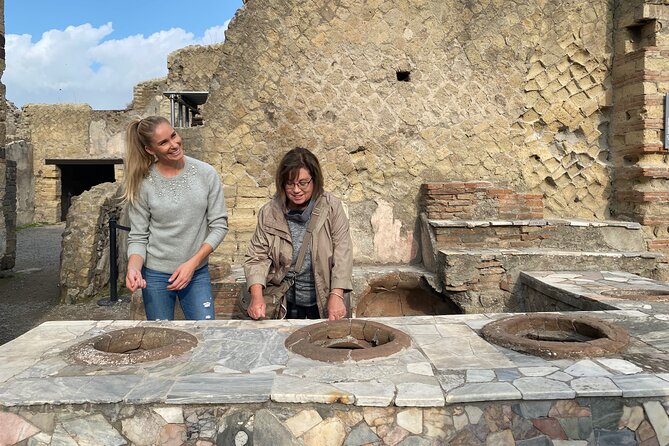
One of the smartest parts of this day is the handoff from Pompeii to Herculaneum. You won’t just get a direction or a map. You’ll be accompanied to the train, helped with purchasing the ticket, and then brought into the Herculaneum site with an approach designed to save time.
Also note the pacing design: Pompeii takes the lead, then Herculaneum is intentionally treated as a separate visit with its own emphasis. That matters because Herculaneum is a different feeling. Pompeii often reads like a big open stage. Herculaneum reads more intimate—tighter neighborhoods, houses that feel closer, and preservation that makes details pop.
Herculaneum: a smaller site with frescos, baths, and the ship
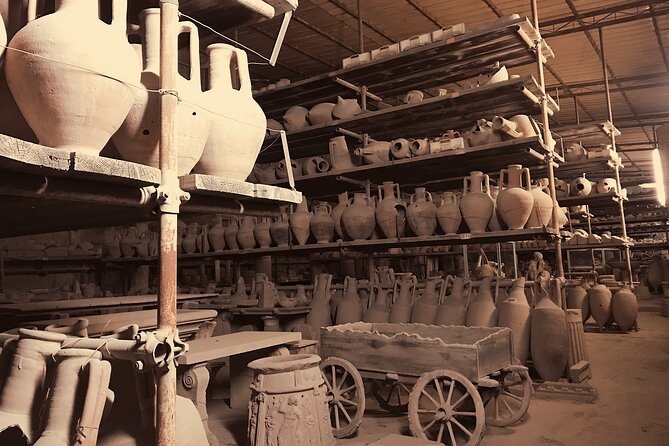
Herculaneum is where the day can feel like it slows down just enough to let the art and interiors land. The park visit is about 1 hour, so again, it’s highlights with meaning—not a whole-day deep dive.
Scenic terrace viewpoint: read the setting
You start with a terrace view, one of those “pause for a second” moments that helps you understand why the settlement’s position mattered. Even with only a short stop, it gives you context before you shift back to rooms and buildings.
Central Thermae: the bath culture continues
The tour then moves to the Central Thermae. This connects back to Pompeii’s baths and shows you that bathing culture wasn’t a one-city habit—it was regional Roman life. You’ll be able to compare how these spaces served daily routines and social contact.
Casa del Salone Nero: black-fresco luxury
Next is Casa del Salone Nero, described as a luxurious house frescoed in black. That black interior detail is the kind of visual you can’t fully understand without seeing it. This stop is valuable because it turns “Roman house” from generic to specific: the colors, the rooms, and the taste of the occupants.
Casa del Rilievo di Telefo: large house, major scale
You’ll visit Casa del Rilievo di Telefo, spread over 1800 square meters, listed as the second largest house in Herculaneum. Even if you only walk through a portion, the size communicates how wealth worked here. Big homes weren’t just comfort; they were power.
Casa Sannitica: the oldest house in Herculaneum
Casa Sannitica is next, described as the oldest house in Herculaneum. This is a great stop if you like long timelines: older structures can help you see how styles and spaces changed over time. It’s also a nice contrast with the most decorative or luxurious houses.
House of the Deer: terrace overlooking the sea
Then comes the House of the Deer, a luxurious residence with a terrace looking toward the sea. If you’re trying to picture how people lived day to day, terrace access is a big clue. It signals how homes were built for light, views, and a sense of openness.
Salone della Barca di Ercolano: the ship found by the sea
One of the best “wait, what?” stops is Salone della Barca di Ercolano, the museum-room display of a ship found on Herculaneum’s beaches. A ship in a city context helps you connect daily life to movement—trade, travel, and the coastline’s role in work and supplies.
College of the Augustales: worship tied to imperial life
Finally, you’ll see the College of the Augustales, described as a worship center for the Emperor Augustus. This closing stop helps tie the ruins back to the political world. You’re seeing how religion, status, and loyalty blended into civic identity.
Comfort tips that actually matter for this route
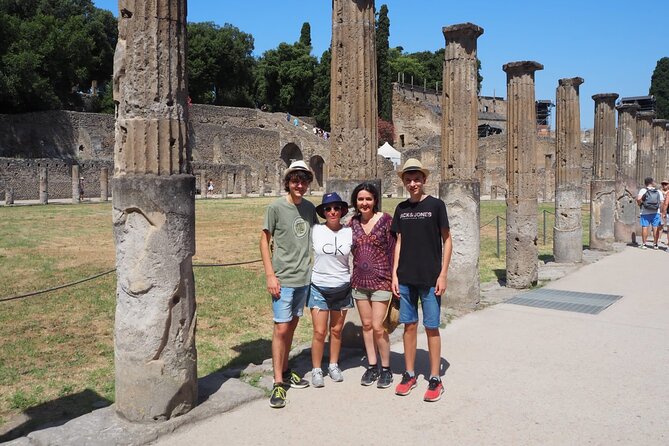
This day is efficient. That also means comfort needs to be planned.
- Bring a hat and sun protection. The Pompeii side can feel relentless in summer. The climate is dry, but shade is still your friend.
- Wear shoes you can stand in. Many stops are short, but the total walk adds up.
- Plan for food not being included. If you want a snack or water, bring it. You don’t need a picnic plan; just don’t count on being fed during the tour.
- Assume the sites are lively. Pompeii and Herculaneum can have lots of cats around the ruins. If you’re traveling with kids, that can become part of the day’s entertainment in an unexpected way—so keep a light attitude.
- Weather matters. This experience requires good weather, and poor conditions can change your plans.
Is this tour good value at $709.76 per group?
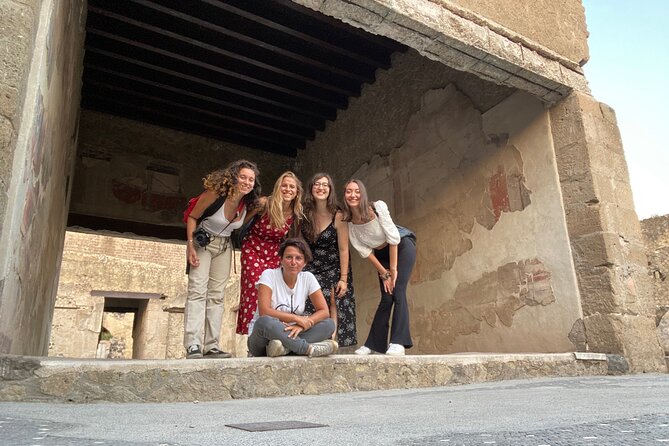
For a private, archaeologist-led day, the price isn’t just about standing next to a guide. It’s about compressing expertise into a route that’s hard to duplicate on your own.
Here’s where the value shows:
- Your guide is an archaeologist, not just a narrator. That changes the quality of what you notice.
- You get a structured Pompeii overview without getting lost in details that can overwhelm most people on-site.
- Herculaneum is handled as a real second stop, not an afterthought. The guided train transfer and time-saved ticket help matter when you have limited hours.
If you’re traveling solo or as a couple, the per-person cost can feel high because it’s priced per group. But if you can split among a few friends or family members, it becomes much more sensible—especially if you’re the type who likes asking questions and connecting buildings to real life.
Who should book this Pompeii and Herculaneum private archaeologist tour?
I’d recommend it if:
- you want expert storytelling rather than basic signage reading
- you’re short on time but still want a clear Pompeii + Herculaneum comparison
- your group includes different interests (some people want deep details; others want simpler “what is this and why does it matter?” answers)
- you like the idea of a private format where questions stay in play
You might want to choose a different option if:
- you expect a slow, unhurried walk through every major monument
- you’re traveling with a strict budget where entrance fees must be fully included
- you don’t handle heat well and can’t adjust your schedule with weather in mind
Should you book it?
If you want a well-paced day that turns Pompeii and Herculaneum into a readable story—with Eliana Sandretti’s archaeologist lens—this is a strong pick. The price is easier to justify when you split the group cost, and the guided train transfer plus time-saving entry help reduce the usual day-friction.
Book this tour if you’re ready for a focused highlights route and you want real context at nearly every stop. Skip it only if you prefer a slower, fully self-directed day where you can wander for hours without moving on.
FAQ
How long is the Pompeii and Herculaneum private guided tour?
The tour is listed as approximately 5 hours.
Is this tour private?
Yes. It’s private, and only your group participates.
What language is the tour offered in?
The tour is offered in English.
Where does the tour start in Pompeii?
The start point is Piazza Esedra, 80045 Pompei NA, Italy.
Where does the tour end in Herculaneum?
It ends at the Archaeological Park of Herculaneum ticket office, Corso Resina, 187, 80056 Ercolano NA, Italy.
Are entrance tickets included?
Entrance tickets for minors are included. Adult entrance tickets for Pompeii and Herculaneum are not included.
How much are the adult entrance tickets?
Pompeii is listed as €19 per person, and Herculaneum is listed as €15 per person.
How do you get from Pompeii to Herculaneum during the tour?
You’ll travel by train with accompaniment, and you’ll be helped purchasing the train ticket. Entry tickets are then purchased on site using a skip-the-line option.
What else is included besides the guide?
The included items are the archaeologist/authorized tourist guide and assistance for the duration of the tour, plus the minor entrance fee.
What happens if weather is bad?
This experience requires good weather. If it’s canceled due to poor weather, you’ll be offered a different date or a full refund.
More Tour Reviews in Pompeii



Herculaneum, a Few More Tours

More Pompeii Tours to Compare
More Pompeii tours, freshly reviewed


Pompeii Tours, compared.
 ★ 4.8Pompeii: Entry Ticket and Guided Tour with an ArchaeologistFrom $3519,459 reviews
 ★ 4.1Pompeii: Entry Ticket with Audio GuideFrom $4013,491 reviews
 ★ 4.8Pompeii: Small Group Tour with an ArchaeologistFrom $4012,264 reviews
 ★ 4.3Pompeii Ruins & Mount Vesuvius Day TourFrom $12011,459 reviews
★ 5.0Pompeii Small Group Tour with an ArchaeologistFrom $356,593 reviews
★ 4.3Pompeii Ruins & Mount Vesuvius Day TourFrom $12011,459 reviews
★ 5.0Pompeii Small Group Tour with an ArchaeologistFrom $356,593 reviews
 ★ 4.5Skip-the-line Pompeii – Small Group TourFrom $544,401 reviews
 ★ 4.6Naples or Sorrento: Full-Day Pompeii and Mount Vesuvius TourFrom $1044,235 reviews
 ★ 3.9Pompeii: Skip-the-line Entry Ticket with Audio Guide & MapFrom $433,153 reviews
Browse the lists this tour appears in