
Review · POMPEII TOURS
Private Pompeii Tour With Guide and Transfer Included
Pompeii is better with a local guide. This private outing pairs round-trip transfer from Naples with a licensed guide plus Pompeii entry, so you can spend your energy reading the ruins instead of figuring logistics. I like how the route hits the city’s big-life moments, from food markets to baths and an elite villa, all tied together by clear explanations.
What really stands out is the service feel: you get pickup coordination (or you’ll meet at Molo Beverello) and a smooth plan that keeps everyone on track. If you like to ask questions and slow down at a favorite spot, this tour style is made for that.
The main drawback to consider is the time: it’s about 4 hours total, with roughly 2 hours of guided walking. If you’re the type who wants to wander the entire site on your own for a full day, this will feel like a curated highlights walk rather than an all-day Pompeii marathon.
In This Review
- Key highlights at a glance
- Getting from Naples to Pompeii without wasting the morning
- The value question: what $358.86 per person is really buying
- Your Pompeii route: 2 hours with a guide, built around real Roman life
- Macellum: Pompeii’s main food market
- Granai del Foro: grain stores with archaeological storytelling
- Anfiteatro Romano: early gladiatorial entertainment
- Foro de Pompeya: the city square and power center
- Terme del Foro: Roman baths as a daily social hub
- Lupanar: vivid frescoes and a darker corner of Pompeii
- Casa del Fauno: elite life, luxury, and famous art
- How the guide makes the ruins make sense (and not feel like homework)
- Timing and pacing: what a 4-hour private day feels like
- Who this tour is best for
- Practical tips to get the most from your Pompeii walk
- Should you book this private Pompeii tour?
- FAQ
- How long is the Pompeii tour?
- Is transportation included?
- Where does the tour start in Naples?
- Will I get a licensed guide?
- Are Pompeii entrance tickets included?
- What stops will we visit during the guided walk?
- Is the tour private or shared?
- Do I need to bring a ticket?
- Is food or drink included?
- Can I cancel for a refund?
Key highlights at a glance
- Private transfer from Naples so your day doesn’t start with bus-chasing or last-minute ticket stress
- Licensed guide time focused on meaning, not just names and dates
- Admission tickets included for the Pompeii stops on your route
- Every stop connects to daily life, from the Macellum market to the Forum Baths
- Big contrast in Pompeii society, including the amphitheater, Lupanar, and Casa del Fauno
- Strong communication and punctual service are part of the experience’s reputation
Which Pompeii ticket and guide? Compare a few more.
- From Naples: Pompeii Ruins & Mount Vesuvius Day Tour★ 4.3 · 11,459 reviews
- From Naples: Skip-the-line Pompeii – Small Group Tour★ 4.5 · 4,401 reviews
- Naples or Sorrento: Full-Day Pompeii and Mount Vesuvius Tour★ 4.6 · 4,235 reviews
- Pompeii & Mt.Vesuvius Day Tour from Naples with Pizza Lunch★ 4.0 · 2,901 reviews
Getting from Naples to Pompeii without wasting the morning

Pompeii is one of those places where the ruins are the star, but the route matters too. This experience is built around private round-trip transport, which is a big deal when you’re visiting from Naples and you don’t want your day sliced into delays.
You’ll start either with pickup at your accommodation or at the signed meeting point near Molo Beverello in Naples (80133). The tour ends back at the meeting point, which is practical when you’re planning dinner afterward or you want a predictable return.
Also, this is set up as a private tour for only your group, so you don’t get the stop-and-go rhythm of mixed tours. If you’re traveling with kids, a couple, or you want a calm pace for photos and questions, that privacy can make the whole thing feel less rushed.
The value question: what $358.86 per person is really buying
At $358.86 per person, this isn’t the cheapest way to see Pompeii. But it’s not just a ticket and a vague audio guide either. Your price covers a few key pieces that add up quickly:
- Private transport (not shared)
- Private guide (licensed)
- Pompeii tickets included for the stops you visit
- A 2-hour guided walk inside Pompeii as part of an ~4-hour total experience
If you compare this to low-cost group tours, you’re paying for control and comfort. You also avoid the classic Pompeii problem: arriving with energy, then spending it in lines and confusion. Here, the plan is built around getting you inside and moving through the highlights in a guided order.
One thing to keep in mind: the route is focused. This is not a full-site, all-day exploration. It’s a smart “greatest hits” day, and the value depends on whether that matches what you want.
Your Pompeii route: 2 hours with a guide, built around real Roman life
This tour walks a sequence of places that explain how Pompeii functioned as a living city, not just a pile of ruins. You’ll move from food and trade, to public entertainment, to the civic heart, to leisure and housing for different social classes. It’s a strong way to build understanding fast.
The stop times aren’t huge at each point, so the guide’s job becomes essential: they point out what to notice and connect it to Roman daily routines. If you’ve ever stared at ancient stones thinking, I know this matters, but I don’t know what I’m looking at, this route is designed to fix that.
Macellum: Pompeii’s main food market
You start at the Macellum, Pompeii’s central food market, where meat and fish were sold. This isn’t just interesting because markets sound fun. It’s interesting because a market explains how people lived day to day—what they ate, how trade worked, and how business moved through the city.
You’ll spend a short stretch here, but the layout helps you “see” the city as an economy. Once you understand what the Macellum was doing, other parts of Pompeii (like storage and trade) make more sense.
What to watch for: Pay attention to how the area is organized and how shops and sellers likely clustered around customer flow. Markets weren’t just about food; they were about social life too.
More guided runs around Naples
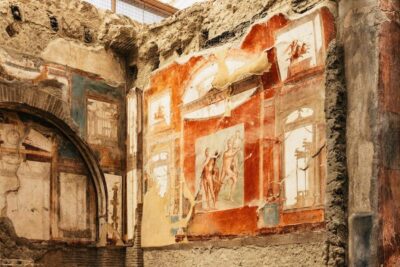
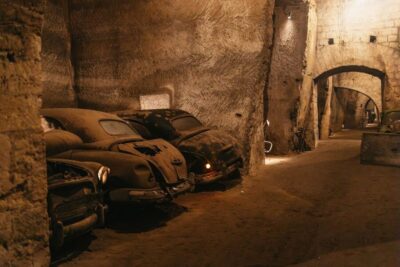


Granai del Foro: grain stores with archaeological storytelling
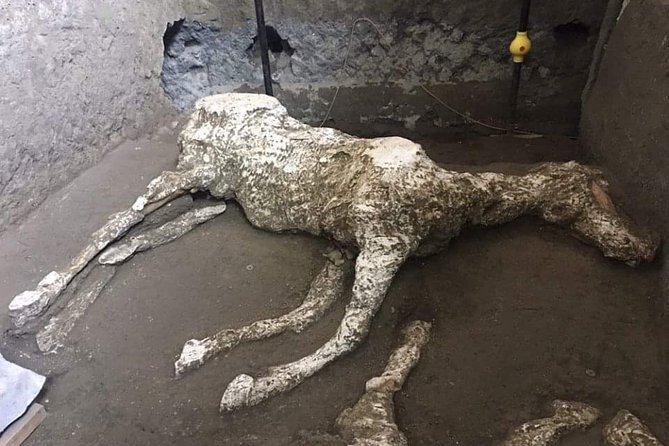
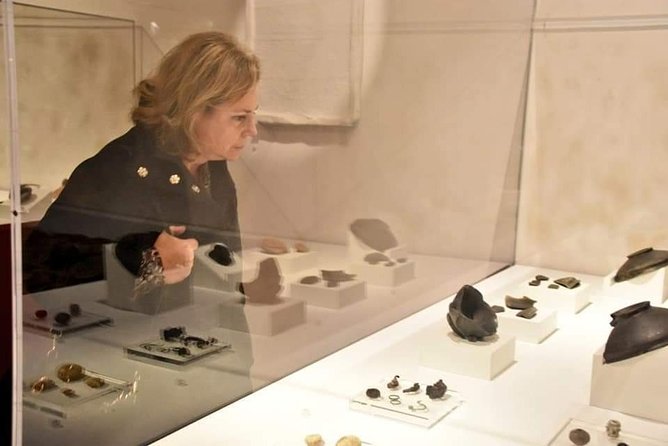
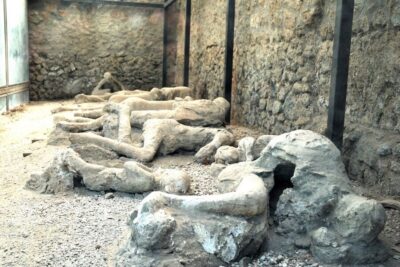
Next comes the Granai del Foro, ancient warehouses that stored grain and supplies. Today, these spaces are used to display casts of victims of the eruption and other archaeological finds. That combination can hit you differently than walking through buildings with no emotional anchor.
This stop adds one of the most important layers to Pompeii: the difference between everyday routines and the sudden end of them. The guide’s context helps keep it from feeling like a list of tragedies and instead frames it as part of the city’s story.
Consideration: This stop can be heavy. If you’re traveling with children, plan your pace here and ask your guide what details to focus on.
Anfiteatro Romano: early gladiatorial entertainment
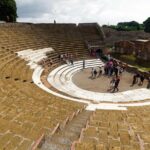
Then you’ll reach the Anfiteatro Romano, built in 70 BC, described as the oldest surviving Roman amphitheater. It’s tied to the public side of Pompeii: games, entertainment, and a shared city identity that showed up in big crowds.
This is also a great stop for understanding Roman leisure. You’ll learn what gladiatorial games meant socially, not just as violence for spectacle.
Quick mental trick: When you look at an amphitheater, imagine the crowd energy. The guide should help you translate stone seating into real public life.
Foro de Pompeya: the city square and power center
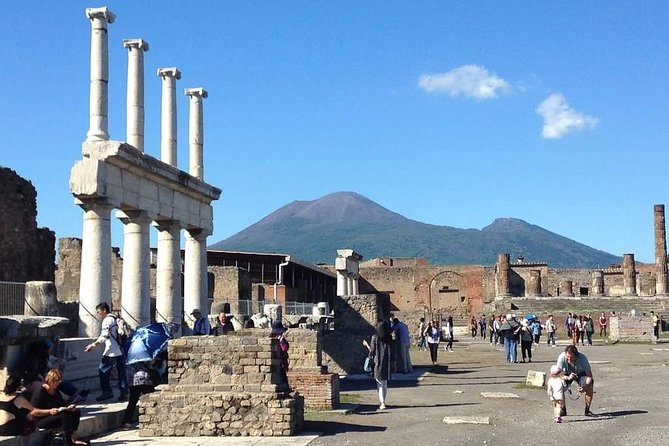
After entertainment, you shift to the center of civic life: the Forum (Foro de Pompeya). This is the main square surrounded by temples, administrative buildings, and markets. It’s where people gathered for business, politics, religion, and everyday errands rolled into one.
Your time here is longer than some other stops, which is a good sign: the Forum needs a little more time to understand what’s happening in the space. With the right commentary, you start seeing how all these structures worked together.
What you’ll feel: Pompeii stops being a set of random buildings and starts looking like a system.
Terme del Foro: Roman baths as a daily social hub
Next are the Forum Baths (Terme del Foro), where you’ll see changing rooms, heated pools, and decorative frescoes. Roman baths weren’t only about hygiene. They were about conversation, social mixing, and relaxation.
This stop is one of the best for people who like the “small human” details. Frescoes and interior design tell you what people valued aesthetically and how they spent their time.
Look for contrast: Baths combine comfort with engineering. The guide should help you connect the heated pools to Roman building know-how.
Lupanar: vivid frescoes and a darker corner of Pompeii
The Lupanar is one of Pompeii’s best-preserved buildings, known for its vivid fresco cycle. The explanation you get includes the idea that it may depict Dionysian rites—not a guaranteed answer, but a thoughtful interpretation.
This stop is memorable because it shows Pompeii isn’t sanitized for tourists. You get a clearer picture of how people used spaces for pleasure, ritual, and whatever else the city allowed.
Note for families: If you’re with kids, you can decide how much detail you want to hear. A private guide means you can steer the level of detail.
Casa del Fauno: elite life, luxury, and famous art
Finally, you’ll reach the Casa del Fauno, a luxurious home associated with the elite. It’s famous for the statue of the dancing faun and the Alexander Mosaic, and it’s a strong closing stop because it shows how different Pompeii felt depending on who you were.
This is where the ruins turn from city-wide routines into personal lifestyle. The scale, decoration, and famous artworks give you a clear sense of wealth and status.
What makes this stop click: When you’ve seen markets, baths, and the Forum first, the house lands with meaning. You start comparing the same city experienced through very different lives.
How the guide makes the ruins make sense (and not feel like homework)
A good Pompeii guide does two things: points you at what matters and gives you a story you can hold onto. This tour is set up around that kind of guidance, with a licensed guide and a route that mixes architecture with practical explanations.
Because you’re on a private setup, you can ask questions as you go. That matters at Pompeii, where details can feel confusing unless someone helps you interpret them. You’ll want answers to stuff like: What was the purpose of this space? How did people move through it? Why does that fresco matter?
The tour’s reputation also leans heavily toward clear communication and friendlier service. One strong theme you’ll see in the experience’s feedback is that people felt the message and timing were handled well, and the guides brought warmth along with knowledge.
One caution: there’s also at least one complaint along the lines of a bad experience and doubts about legitimacy. That doesn’t mean your booking will go wrong, but it does mean I’d treat Pompeii like any big-ticket day-trip: confirm you have the right provider details and keep your confirmation handy so nothing gets muddled on the day.
Timing and pacing: what a 4-hour private day feels like
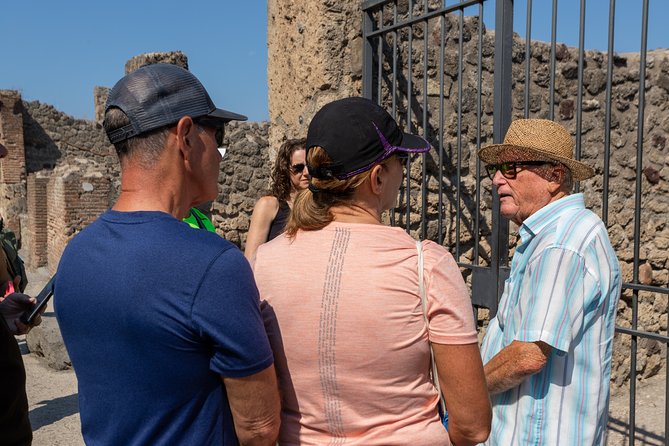
Total time is about 4 hours. With roughly 2 hours of guided time, you should expect a focused walk rather than deep independent wandering.
That can be perfect if:
- You want the biggest Pompeii highlights
- You like structured sightseeing
- You’re short on time in Naples
- You want tickets handled and transport arranged
It may feel less ideal if:
- You want to cover every major area without time pressure
- You’re hoping for a full day inside the site at your own speed
- Your priority is to linger for a long time at each location with no route flow
The good news is that this format still leaves room for your pace during the stops. You don’t have to rush through everything at breakneck speed, but you also won’t have hours to roam every side street.
Who this tour is best for
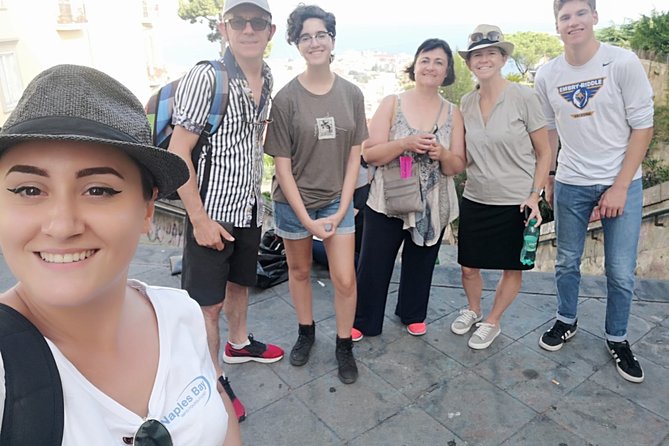
This one fits especially well for:
- Couples who want a meaningful, guided highlights day with no transport headaches
- Families who want structure and clear explanations without wrestling with transit
- Culture lovers who care about how Roman daily life worked—food, public life, baths, and elite homes
- Anyone who prefers a private guide and the ability to ask questions
If you’re someone who hates crowds and likes to keep control of your schedule, the private transfer and private group format is a big part of the appeal.
Practical tips to get the most from your Pompeii walk
A few straightforward things will help you enjoy the day more:
- Wear comfortable shoes. Pompeii involves a lot of uneven surfaces and walking.
- Bring a hat and water. Pompeii can feel exposed, and you don’t have food included.
- If you’re sensitive to the heavier parts of Pompeii’s story, tell your guide so they can adjust the level of detail you hear at the casts display.
And if you’re aiming for good photos, ask your guide when to pause for the best viewpoints. A private group means your guide can time things around your priorities.
Should you book this private Pompeii tour?
I’d book it if you want a smooth, guided, highlights-based Pompeii day with private transport, Pompeii tickets included, and a route that ties together food, civic life, leisure, and elite housing. At this price, you’re paying for reduced friction and a guide who helps the site click.
I’d be more careful if your dream is a slow, full-day independent exploration of Pompeii. This is about focus, not covering every corner.
If you book, my best advice is simple: double-check your confirmation details, arrive ready to go, and treat it like a guided story walk. Pompeii is already powerful—your guide just helps you read it faster, better, and with fewer wasted minutes.
FAQ
How long is the Pompeii tour?
The experience lasts about 4 hours total, with an approximate 2-hour guided tour.
Is transportation included?
Yes. Private transport is included, and pickup is offered. The tour also includes round-trip transfer.
Where does the tour start in Naples?
The meeting point is Molo Beverello, 80133 Napoli NA, Italy.
Will I get a licensed guide?
Yes. The tour includes a licensed guide for the Pompeii walking portion.
Are Pompeii entrance tickets included?
Yes. Pompeii tickets are included.
What stops will we visit during the guided walk?
Your route includes Macellum, Granai del Foro, Anfiteatro Romano, Foro de Pompeya, Terme del Foro, Lupanar, and Casa del Fauno.
Is the tour private or shared?
This is a private tour/activity. Only your group participates.
Do I need to bring a ticket?
A mobile ticket is mentioned, and confirmation is received at booking.
Is food or drink included?
No. Food and drink are not included.
Can I cancel for a refund?
Yes. You can cancel up to 24 hours in advance for a full refund. If you cancel less than 24 hours before the start time, the amount paid is not refunded.
More Tours in Naples




More Tour Reviews in Naples

More Pompeii Tours to Compare

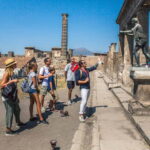
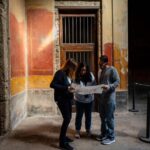

More Naples tours, freshly reviewed




Pompeii Tours, compared.
 ★ 4.8Pompeii: Entry Ticket and Guided Tour with an ArchaeologistFrom $3519,459 reviews
 ★ 4.1Pompeii: Entry Ticket with Audio GuideFrom $4013,491 reviews
 ★ 4.8Pompeii: Small Group Tour with an ArchaeologistFrom $4012,264 reviews
 ★ 4.3Pompeii Ruins & Mount Vesuvius Day TourFrom $12011,459 reviews
★ 5.0Pompeii Small Group Tour with an ArchaeologistFrom $356,593 reviews
★ 4.3Pompeii Ruins & Mount Vesuvius Day TourFrom $12011,459 reviews
★ 5.0Pompeii Small Group Tour with an ArchaeologistFrom $356,593 reviews
 ★ 4.5Skip-the-line Pompeii – Small Group TourFrom $544,401 reviews
 ★ 4.6Naples or Sorrento: Full-Day Pompeii and Mount Vesuvius TourFrom $1044,235 reviews
 ★ 3.9Pompeii: Skip-the-line Entry Ticket with Audio Guide & MapFrom $433,153 reviews
Browse the lists this tour appears in