
Review · POMPEII TOURS
Transfer from Naples to Positano with 2 hours Private Tour in Pompeii
Pompeii in one smooth half-day. You get a private ride and Pompeii admission is included, plus a tightly focused walk guided by Maria. Only catch to think about: the vehicle may be a sedan even if you expect a minivan, so confirm if you have a lot of luggage.
For about 4 hours, the plan is simple: meet at Porta Marina Superiore, see the main Pompeii sights in an efficient order, then continue onward to Positano with hotel drop-off. If you want a fast, high-value Pompeii hit without getting stuck on logistics, this setup fits well.
In This Review
- Key points to know before you go
- Private Naples to Positano transfer built around Pompeii
- Meeting at Porta Marina Superiore: you start with traction
- Pompeii Archaeological Area admission: what’s included and why it matters
- Basilica and the Forum: seeing Pompeii’s daily engine room
- The Basilica: where merchants found cover
- The Foro de Pompeya: Pompeii’s main square
- Granai del Foro and “casts” spaces: the story turns
- Casa del Menandro: a wealthy home, explained simply
- Stabian Baths, Lupanar, and Casa del Fauno: three different lenses
- Stabian Baths (Terme Stabiane): the oldest thermal complex
- Lupanar: the famous brothel
- Casa del Fauno: large, impressive, private
- Teatro Piccolo and Teatro Grande: the stage view of Pompeii
- Naples pickup and the one-way transfer to Positano
- Price and timing: is $467.63 per person worth it?
- Who this Pompeii + Positano plan is best for
- Should you book this tour?
- FAQ
- Is Pompeii admission included?
- Where do we meet the guide in Pompeii?
- How long is the Pompeii portion and overall tour?
- Where can the driver pick us up in Naples?
- Is this a private tour?
- Are meals included?
Key points to know before you go
- Admission included to Pompeii’s Archaeological Area, so you’re not hunting tickets mid-day
- Porta Marina Superiore is the meeting spot, which helps you avoid wandering at the start
- Guiding time is structured around major sights, with frequent short stops instead of one long slog
- Pompeii gets paired with a one-way transfer from Naples to Positano, with hotel drop-off
- Maria’s style is a standout—engaging and long-practiced, which makes quick pacing feel friendly
- Vehicle type can vary, so ask about car vs minivan if luggage is a concern
Which Pompeii ticket and guide? Compare a few more.
- From Naples: Pompeii Ruins & Mount Vesuvius Day Tour★ 4.3 · 11,459 reviews
- From Naples: Skip-the-line Pompeii – Small Group Tour★ 4.5 · 4,401 reviews
- Naples or Sorrento: Full-Day Pompeii and Mount Vesuvius Tour★ 4.6 · 4,235 reviews
- Pompeii & Mt.Vesuvius Day Tour from Naples with Pizza Lunch★ 4.0 · 2,901 reviews
Private Naples to Positano transfer built around Pompeii
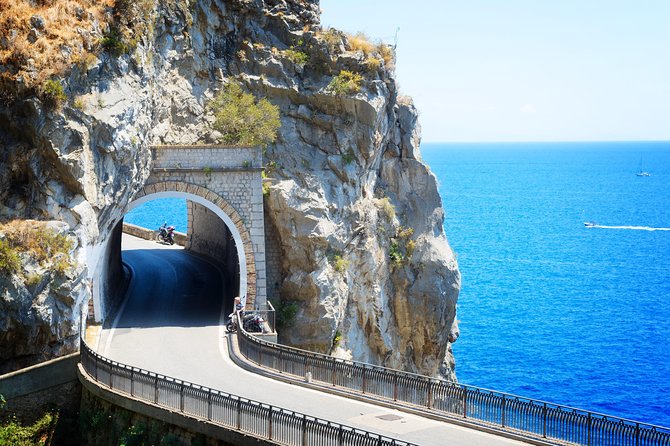
This is the kind of tour that makes sense when your days are packed. You’re not only “going to Pompeii.” You’re using Pompeii as the centerpiece of a transfer day—starting in Naples, spending your time inside the ruins, then continuing to Positano afterward.
What I like most is how the experience is designed around your time. Instead of wasting half your day on back-and-forth transport or figuring out what matters, you get a private air-conditioned ride and a guide who keeps the pace moving. That matters if you have one shot at Pompeii during a short stay.
Second big plus: Pompeii entry fees are included in the package. That’s one less cost and one less step, and it helps this feel like real value instead of “cheap until you add everything later.”
The main practical consideration is the vehicle. One set of notes from a past guest said the car turned out to be a sedan even though the description suggested a minivan. If you have 4–6 pieces of luggage (or bulky bags), ask ahead so you’re not doing luggage Tetris at the pickup.
Meeting at Porta Marina Superiore: you start with traction
The day begins at the main entrance at Pompeii called Porta Marina Superiore. That’s a good choice because it gives you a clear anchor point and reduces the risk of arriving and then trying to find the meeting crowd.
You’ll also get a name sign from the driver during Naples pickup. That small detail is worth more than people think—especially around busy areas like airports and central stations.
Once you’re with the guide, you’re not just “touring ruins.” You’re learning how to read the site quickly. Pompeii covers a lot of ground, and without guidance it’s easy to see random walls and call it a day. With a guide directing your stops, you get the bigger story fast.
Pompeii Archaeological Area admission: what’s included and why it matters
Admission to Pompeii’s Archaeological Area is included. That means your Pompeii portion is all about the ruins and the explanations—not ticket logistics.
Because the tour is timed for efficiency, this matters even more. You’re on a tight schedule with multiple short segments, so it’s smart that the entry fee is handled as part of the plan. You don’t want to burn precious minutes sorting out what’s included versus what you still need to pay.
Also, the tour uses a mobile ticket format. If you prefer having everything on your phone, that’s convenient. If you prefer printed backups, make sure your plan matches your comfort level—especially if you’re traveling with an international data setup.
Basilica and the Forum: seeing Pompeii’s daily engine room
After meeting at Porta Marina Superiore, the walk starts with a broad, easy-to-understand rhythm. You hit the spaces that show how people moved through commerce, civic life, and everyday shelter.
Positano to Ravello: more coast-road days out






The Basilica: where merchants found cover
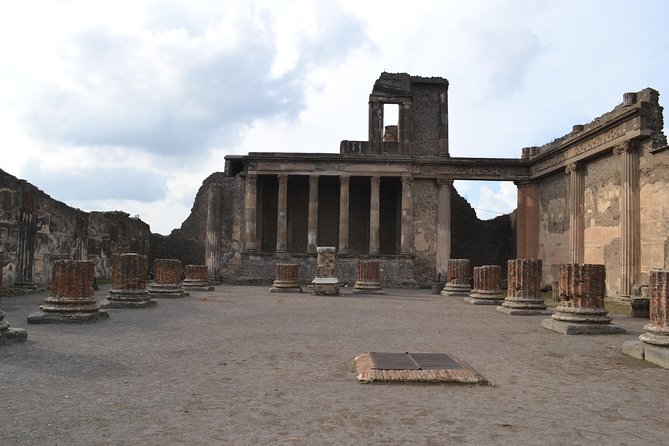
The Basilica stop is described as an open portico that sheltered merchants and other activities. I like this because it explains Pompeii in human terms. You’re not only looking at stones. You’re picturing people waiting out weather, doing business, and weaving work into the square life.
Time here is short, so the value is in the guide’s framing: what the structure was for and why it mattered to the city’s flow.
The Foro de Pompeya: Pompeii’s main square
Then you move into the Foro de Pompeya, the ancient main square. This is one of those stops that makes the site feel like a city again. Squares are where decisions happen and where the public sees what’s going on.
A practical thought: with quick stops, you’ll want to pay attention to what your guide points out. At short time windows, your best “memory” is what you choose to look at rather than trying to capture every detail.
Granai del Foro and “casts” spaces: the story turns
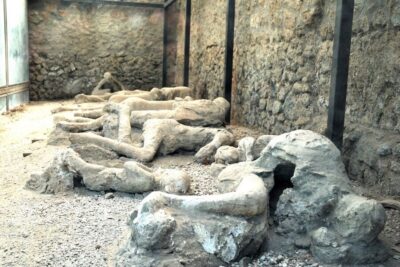
Next is the Granai del Foro, where you see marble tables and bath areas for fountains at entrances of houses, plus casts connected to the eruption—along with casts of a dog and a tree.
This is a heavier moment. The physical space has a mix of everyday design (marble and fountain-related features) and then the reminder of what happened. The guide’s pacing helps here: you’re not stuck staring too long, but you’re also not skipping the emotional weight.
Also, these kinds of stops are where you’ll start understanding why Pompeii is studied so intensely. It isn’t only about architecture. It’s about the way a moment in time can preserve human routines and city design—and also show the tragedy left behind.
Casa del Menandro: a wealthy home, explained simply
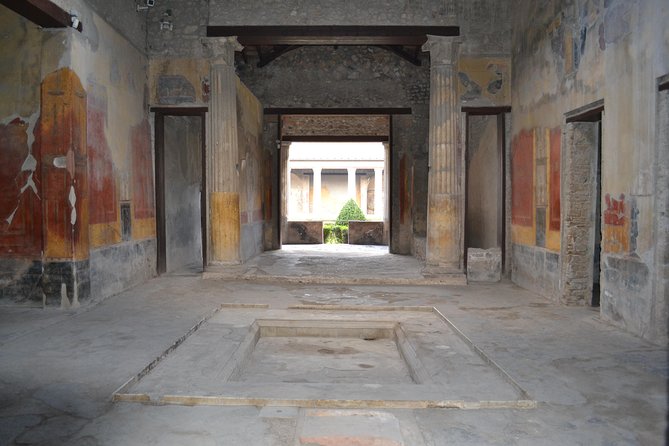
The next highlight is Casa del Menandro, one of the richest and most magnificent houses in Pompeii for architecture, decoration, and contents.
This stop is where Pompeii shifts from “public life” to “private display.” You’ll get a sense of how status showed up in layout and ornament. The good part of a short guided visit is that you don’t need to be an expert to understand what you’re seeing.
Potential drawback of fast home stops: if you love reading floor plans and soaking in rooms, you may wish you had more time here. But the trade-off is that you still get to see a wide range of Pompeii sectors in one day.
Stabian Baths, Lupanar, and Casa del Fauno: three different lenses
After the house segment, the route brings you into spaces that reveal how Pompeii managed leisure, social life, and daily routines.
Stabian Baths (Terme Stabiane): the oldest thermal complex
The Stabian Baths occupy a large area, and they’re described as the oldest thermal complex in the city. That’s a key detail. Baths weren’t only about hygiene; they were community spaces.
With only a brief stop, your guide’s job is important: pointing out the scale and helping you connect the layout to how people would have used the area. If you’re someone who likes seeing how Romans and locals spent downtime, this stop lands well.
Lupanar: the famous brothel
Then comes the Lupanar, described as the most famous brothel in the ruined Roman city of Pompeii. This is the kind of stop that most visitors remember, mostly because it’s so specific.
It can be uncomfortable for some people, but that’s also why it’s meaningful. Pompeii doesn’t only show temples and theaters. It shows the messy, real-life functions of a city. A guide’s tone matters here, because you want context rather than just shock.
Casa del Fauno: large, impressive, private
Finally in the home category, you visit Casa del Fauno, one of the largest and most impressive private residences in Pompeii. This likely feels like a step up in scale from Menander. You’re seeing how big houses and interiors worked as status statements and daily living spaces.
Quick stop note: don’t try to “win” by taking in everything. With limited time, your goal is to understand the major idea of each home—what makes it stand out—then move on.
Teatro Piccolo and Teatro Grande: the stage view of Pompeii
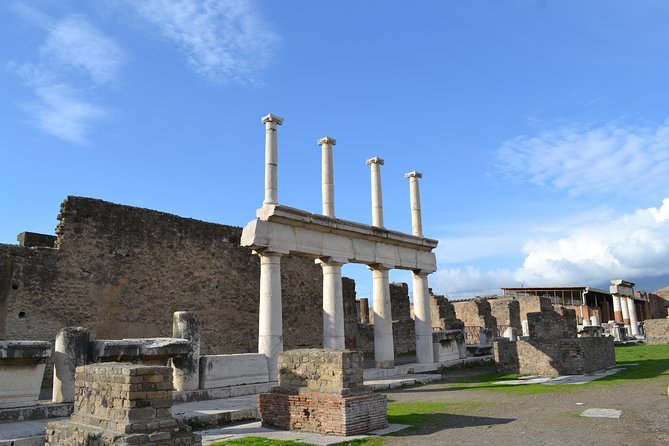
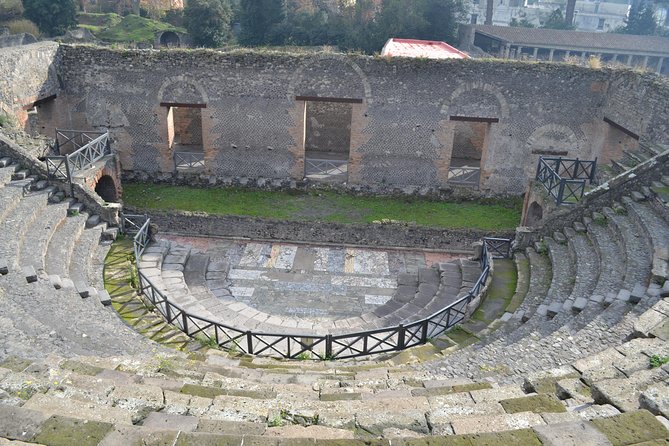
Near the end of your Pompeii route, you’ll get a look at Teatro Piccolo, then visit Teatro Grande, described as the most important theater in Pompeii. Time is short, but theaters are powerful because you can imagine crowds, performances, and civic life in motion.
Your visit to Teatro Grande includes additional points of interest: you’ll also see the house of Tragic Poet and the famous plaster casts. That combination is smart. The theater area gives you public energy, while the casts bring back the human reality of the eruption.
If you’ve heard about Pompeii plaster casts, this is where you’ll likely feel the site become unforgettable. You’re not just learning facts—you’re watching the city’s story crystallize into something you can’t easily forget.
Naples pickup and the one-way transfer to Positano
This experience isn’t a round trip. It’s a one-way private transfer from Naples to Positano, with hotel drop-off in Positano.
Your pickup in Naples can be from the airport, the central station (NAP), or your accommodation. The driver holds a sign with your name, which is a real help if you’re juggling arrival times or multiple people in your group.
This part is valuable if you’re moving to Positano anyway. A lot of Pompeii day tours require you to get back to Naples after. Here, Pompeii sits inside the travel day, so you save the extra transfer leg.
Also, the guide and assistance are part of the plan for the Pompeii segment, while the private driver handles the transport piece. That division of labor usually makes the timing smoother.
Price and timing: is $467.63 per person worth it?
At $467.63 per person, this isn’t a budget day. But it also isn’t just “Pompeii tickets.” You’re paying for three things at once:
- Private, air-conditioned transportation from Naples
- A guided Pompeii visit with admission fees included
- Hotel drop-off in Positano after the ruins
When you’re traveling in a short window, value comes from time savings. That’s what you’re buying here. You’re also getting a structured route with a professional guide who can keep a quick pace feeling coherent.
For solo travelers or couples, the price is steep but may still feel fair if you would otherwise pay for separate transfers plus a separate guide. For families or small groups, it can start to look more reasonable, because private transport costs are often the biggest line item in this part of Italy.
Just do one small homework step: confirm the vehicle type if you’re expecting a minivan. If luggage logistics could be annoying, you’ll be happier catching that early.
Who this Pompeii + Positano plan is best for
This tour fits best if you:
- Have limited time in Italy and want Pompeii without a full-day commitment
- Prefer a private experience where you can stay with your guide instead of dealing with a crowd
- Are transferring anyway from Naples to Positano, so you’d rather combine travel + sightseeing
- Want short, high-impact stops: Basilica, Forum, houses, baths, the brothel, and the main theaters
It may not be ideal if you:
- Want long, slow wandering in just one or two neighborhoods of Pompeii
- Get frustrated by quick stops (this is a move-along route)
- Have lots of luggage and didn’t confirm whether you’ll get a minivan or a sedan
From what’s shared about Maria, the guidance quality is a major reason people feel satisfied. Her style is described as engaging and personable, the kind of energy that helps when you’re moving fast.
Should you book this tour?
I’d book it if your priority is a smooth Pompeii experience that doesn’t hijack your whole day. The best-case scenario is exactly what this is built for: a professional guide walking you through the core sights, Pompeii admission included, and an efficient transfer to Positano afterward.
I’d pause and ask a couple questions first if you’re luggage-heavy. Confirm the vehicle type in writing, and think about whether you’d rather split your day into separate Pompeii and separate transfers. If you’re flexible and want value from time, this private combination is a strong choice.
FAQ
Is Pompeii admission included?
Yes. Admission fees to Pompeii ruins/Archaeological Area are included in the tour price.
Where do we meet the guide in Pompeii?
You meet the guide at the main entrance of the ruins called Porta Marina Superiore.
How long is the Pompeii portion and overall tour?
The duration is about 4 hours in total (approx.).
Where can the driver pick us up in Naples?
Pickup is available at the airport, the central station (NAP), or your accommodation in Naples. The driver holds a sign with your name.
Is this a private tour?
Yes. Only your group participates.
Are meals included?
No. Meals are not included.
More Tour Reviews in Naples





More Amalfi Coast Days Out




More Pompeii Tours to Compare



More Naples tours, freshly reviewed





Pompeii Tours, compared.
 ★ 4.8Pompeii: Entry Ticket and Guided Tour with an ArchaeologistFrom $3519,459 reviews
 ★ 4.1Pompeii: Entry Ticket with Audio GuideFrom $4013,491 reviews
 ★ 4.8Pompeii: Small Group Tour with an ArchaeologistFrom $4012,264 reviews
 ★ 4.3Pompeii Ruins & Mount Vesuvius Day TourFrom $12011,459 reviews
★ 5.0Pompeii Small Group Tour with an ArchaeologistFrom $356,593 reviews
★ 4.3Pompeii Ruins & Mount Vesuvius Day TourFrom $12011,459 reviews
★ 5.0Pompeii Small Group Tour with an ArchaeologistFrom $356,593 reviews
 ★ 4.5Skip-the-line Pompeii – Small Group TourFrom $544,401 reviews
 ★ 4.6Naples or Sorrento: Full-Day Pompeii and Mount Vesuvius TourFrom $1044,235 reviews
 ★ 3.9Pompeii: Skip-the-line Entry Ticket with Audio Guide & MapFrom $433,153 reviews
Browse the lists this tour appears in