
Review · POMPEII TOURS
Private Transfer: Naples to Sorrento with Pompeii Guided Tour
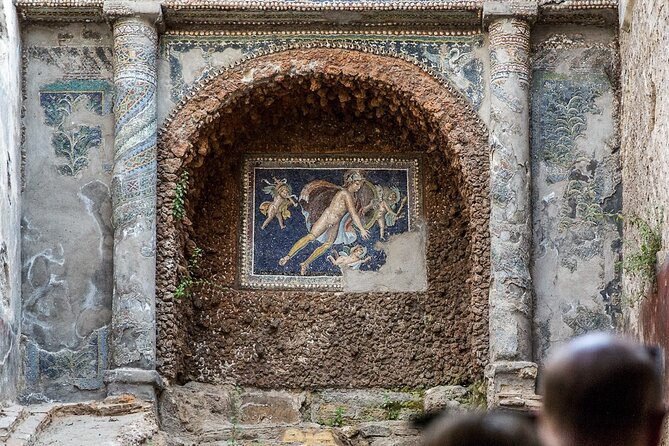
Pompeii in a few hours? Yes, and it works. This private transfer ties a Pompeii guided walk into your Naples-to-Sorrento travel day, so you don’t lose precious vacation hours to train changes or long waits. The big win is the combination of flexible pickup in Naples, an air-conditioned ride, and an official guide who keeps the momentum going inside the ruins.
What I like most is how practical it feels: you get door-to-door drop-off in Sorrento at your chosen address, and you’re not stuck with a transfer that drops you somewhere random. The second thing I really like is that Pompeii time is guided and ticketed, including skip-the-line entry, which matters when the day is already packed.
The only real drawback to consider is that the Pompeii focus is a highlights sweep. Many stops are timed at about 10 minutes each, so if you want long, photo-heavy wandering at just one site, you may feel rushed.
In This Review
- Key things that make this transfer worth your attention
- Naples to Sorrento, with Pompeii built in
- Price and value: what you’re paying for (and what’s included)
- The Pompeii plan: how the timed stops actually feel
- Stop by stop: what to expect at each Pompeii highlight
- Archaeological Park of Pompeii (2-hour guided walking tour)
- Foro de Pompeya (10 minutes)
- Tempio di Giove Capitolino (10 minutes)
- Macellum (10 minutes)
- Via dell’Abbondanza (10 minutes)
- Stabian Baths / Terme Stabiane (10 minutes)
- Lupanar (10 minutes)
- Casa del Fauno (10 minutes)
- Teatro Grande (10 minutes)
- Basilica (10 minutes)
- The ride part: staying comfortable from start to finish
- Timing tips: how to make the 4–5 hours feel smooth
- Who this tour is best for
- Should you book this Pompeii transfer?
- FAQ
- What’s the duration of the Naples to Sorrento transfer with Pompeii?
- Where do you get picked up in Naples, and where do you get dropped off?
- Is Pompeii entry included, or do I need to buy tickets separately?
- Is there an official guide during the Pompeii portion?
- What isn’t included in the price?
- Can I cancel for a full refund?
Key things that make this transfer worth your attention
- Flexible pickup in Naples so you can match your flight or train arrival (or hotel timing)
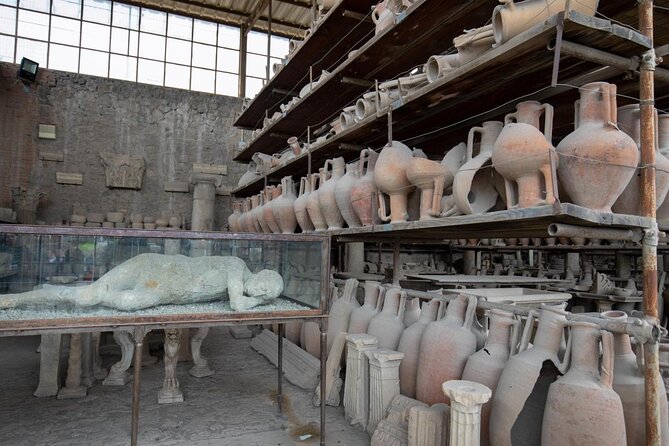
- Official local guide in Pompeii to turn scattered ruins into a readable “day story”
- Skip-the-line Pompeii entry for faster entry and less queue time
- Door-to-door drop-off in Sorrento at the location you provide at booking
- Air-conditioned private vehicle with room for luggage (per the stated allowance)
- Tickets included for Pompeii highlights—you’re paying for access plus guided time
Which Pompeii ticket and guide? Compare a few more.
- From Naples: Pompeii Ruins & Mount Vesuvius Day Tour★ 4.3 · 11,459 reviews
- From Naples: Skip-the-line Pompeii – Small Group Tour★ 4.5 · 4,401 reviews
- Naples or Sorrento: Full-Day Pompeii and Mount Vesuvius Tour★ 4.6 · 4,235 reviews
- Pompeii & Mt.Vesuvius Day Tour from Naples with Pizza Lunch★ 4.0 · 2,901 reviews
Naples to Sorrento, with Pompeii built in

This is the kind of itinerary that makes sense if you’re trying to avoid wasting a whole day on logistics. Instead of treating Pompeii as a separate excursion, you fold it into the move from Naples to Sorrento. That means you start in Naples, do your Pompeii highlights with a guide, then finish with a direct drop where you’re staying.
I also like the “private transportation” part because it changes the feel of the trip. You’re not waiting around for other people to shuffle in, you’re not dealing with a packed shuttle, and your day stays controlled. When traffic or timing shifts, it’s handled within your group rather than turning into a domino effect for everyone.
One more practical detail: the driver meets you holding a board with the lead passenger’s name at the airport/port/train station. If you’ve ever tried to find the right vehicle after landing, you’ll understand why this little detail is worth something.
Price and value: what you’re paying for (and what’s included)
At $492.76 per person for a 4 to 5 hour window, it’s not a budget move. But you’re also not just buying a ride. Your price covers private transportation, an air-conditioned vehicle, Pompeii guide time, and admission tickets for the Pompeii stops. Skip-the-line entry is also included, which can save real time at the gate.
Think of it as three things bundled into one:
- Transportation from Naples to Sorrento with luggage space
- Official guide time inside Pompeii (not just “here’s the map”)
- Entry fees for the Pompeii sites covered in the route
What’s not included is lunch and beverages. So you’ll want to plan for a quick snack if hunger hits. The good news is the itinerary is structured to keep you moving rather than disappearing into long breaks.
The Pompeii plan: how the timed stops actually feel
Pompeii is huge, and you can burn a day without noticing. This tour avoids that trap by using a guided walk that focuses on the big story of the city and the places that best represent daily life, public worship, commerce, and entertainment.
Here’s the key idea: after a 2-hour guided walking tour of Pompeii, the remaining stops are brief (around 10 minutes each). That doesn’t mean they’re unimportant. It means the guide is prioritizing the highest-impact ruins you’d miss if you wandered randomly.
If you like learning fast and then using your photos later to remember what you saw, this pacing will click. If you’re the type who wants to linger over one mosaic or one corner of a house for an hour, you might want a different style of visit.
Stop by stop: what to expect at each Pompeii highlight
More runs down to Sorrento and its lemon groves




Archaeological Park of Pompeii (2-hour guided walking tour)
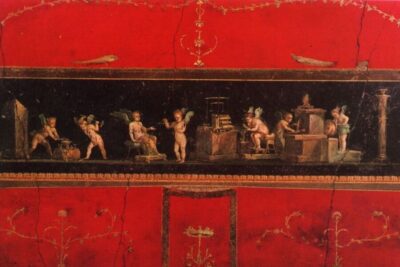
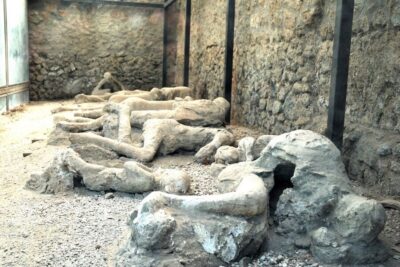
This is your main course: the official guide-led walk that puts Pompeii into context. You’ll cover how the eruption of Mount Vesuvius in 79 AD buried the city under lapilli and lava, preserving structures and everyday details that would have vanished otherwise.
In practical terms, this 2-hour segment is where the visit becomes understandable. Without guidance, Pompeii can look like a pile of stones. With a guide, you start seeing patterns: streets, building types, how people moved, and what mattered to the residents.
Tip for comfort: wear comfortable shoes. Even if the itinerary is “only” a few hours, Pompeii ground and uneven surfaces add up fast.
Foro de Pompeya (10 minutes)
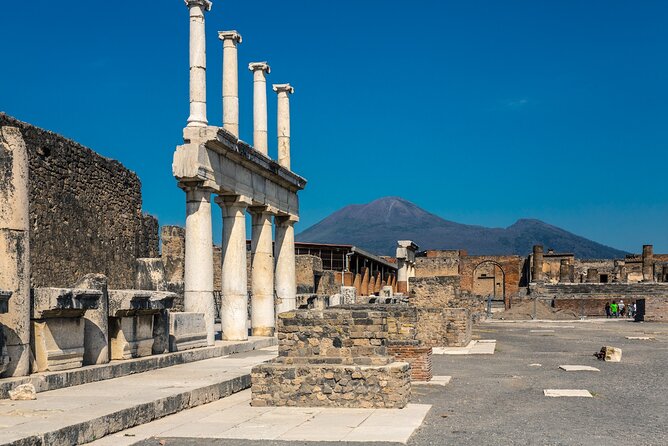
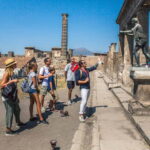
The Civil Forum is the city’s core—where administration, justice, business activity, markets, and worship overlapped. This stop helps you understand Pompeii as a living city, not just a ruin field.
In a short time, you’re not meant to study every angle. The goal is to orient yourself: once you understand the Forum’s role, the other public buildings start making sense.
Tempio di Giove Capitolino (10 minutes)
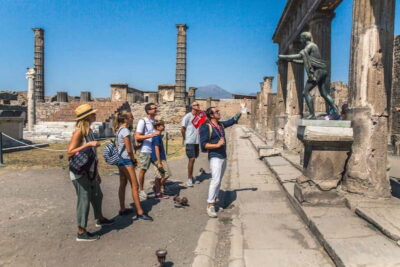
This Temple of Jupiter stands out on the north side of the Forum, with Mount Vesuvius rising behind it in a scenic way. When the colony was founded (80 BC), the temple was renovated into a Capitolium setup with statues of Jupiter, Juno, and Minerva.
I like this stop because it connects politics and religion. It’s easy to forget that in Roman city life, worship and civic identity were tied together.
Macellum (10 minutes)
The Macellum was the marketplace hub. You’ll see the tuff quadriporticus and the worship hall area positioned on the eastern side. It’s also associated with the imperial cult theme, and there are hints of commercial activity nearby—think food and the social energy of trading.
Even in a brief stop, this is a smart choice because it shows that Pompeii’s economy wasn’t abstract. It was built into the daily rhythm of the city center.
Via dell’Abbondanza (10 minutes)
This was the main street, the decumanus maximus, running east/west from the Forum toward the Porta Sarno. In ancient times, it was crowded—shops, workshops (officinae), cafes, snack bars, and places to eat.
This is one of the stops where you can really picture “how it felt” because it’s about movement and noise. Even if you only walk a short segment, it’s a powerful way to understand why Pompeii’s streets are so central to its story.
Stabian Baths / Terme Stabiane (10 minutes)
The Stabian Baths date to the early years after the colony was founded by General Silla. You’ll see how men and women had separate entrances, and how spaces served different temperatures—apodyterium for dressing, then tepidarium, frigidarium, and calidarium.
The interesting angle here is that baths weren’t just hygiene. They were social centers. This stop helps you grasp Pompeii as a place where people spent time, not just a place where people worked.
Lupanar (10 minutes)
The Lupanar is the famous official brothel, set in a narrow side street near the heart of the city. It’s a two-story stone building with built-in beds and well-preserved erotic frescoes above doors, plus hundreds of graffiti left by visitors.
This is a “mind the tone” stop. It’s raw and direct, and it can feel surprisingly intimate because the decoration and graffiti are so preserved. If you’re sensitive about explicit imagery, you’ll want to brace yourself.
Casa del Fauno (10 minutes)
The House of the Faun was one of the largest private residences in Pompeii, built during the 2nd century BC. It’s known for major art pieces and for representing the luxuries of the aristocratic Roman Republic era.
I like this stop because it contrasts with the public spaces. You get a sense of wealth and taste, and you see how homes were arranged to signal status.
Teatro Grande (10 minutes)
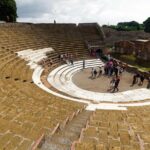
The Large Theater was built into a hillside slope, creating a major auditorium divided into sectors. The performances were tragedies tied to Greco-Roman traditions.
Even in a short visit, the theater teaches you something important: entertainment and culture were civic life too.
Basilica (10 minutes)
The Basilica, with its massive forum-scale footprint, was the most sumptuous building in the Forum and used for business and justice. It’s basically a statement building.
This final Forum-area stop is a great way to cap the “public life” theme. By the time you leave the Forum zone, you’ll have a stronger sense of how Pompeii functioned as a city.
The ride part: staying comfortable from start to finish

The private vehicle is air-conditioned, and luggage space is included. The tour also states a luggage allowance: one medium or big suitcase per passenger seat plus one small item (like a camera bag or small shoulder bag).
That last detail matters. If you’re traveling with a lot of gear, you don’t want surprise limits on the vehicle. If you’re carrying bulky items, it’s worth double-checking capacity with the supplier to avoid stress on the day.
Timing tips: how to make the 4–5 hours feel smooth
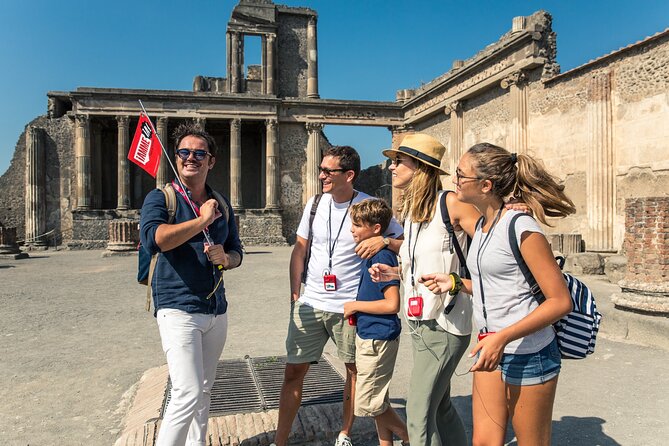
The itinerary is compact, and compact is the whole point. You’re moving from Naples into Pompeii, then finishing the day by landing in Sorrento.
Two timing realities to plan for:
- Traffic can shift your exact arrival time at Pompeii and affect your pacing.
- The short stop durations mean you’ll remember more if you stay mentally ready: listen, look, then move on.
Pack essentials the night before: sunscreen, water (even though beverages aren’t included), and keep your camera accessible. The tour specifically suggests sunscreen and comfortable shoes because it can get very hot in summer.
Who this tour is best for
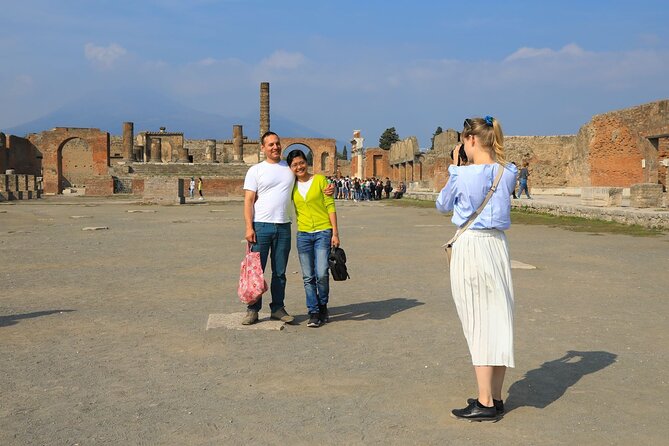
This works especially well if:
- You’re moving from Naples to Sorrento anyway and don’t want a separate Pompeii day
- You like guided context but don’t want to spend an entire day inside the park
- Your schedule is tight (arrivals, hotel check-in timing, or trains)
It may not be the best fit if:
- You want to linger for long at just one ruin or spend hours wandering independently
- You’re traveling with a group that struggles with walking between multiple sites
Should you book this Pompeii transfer?
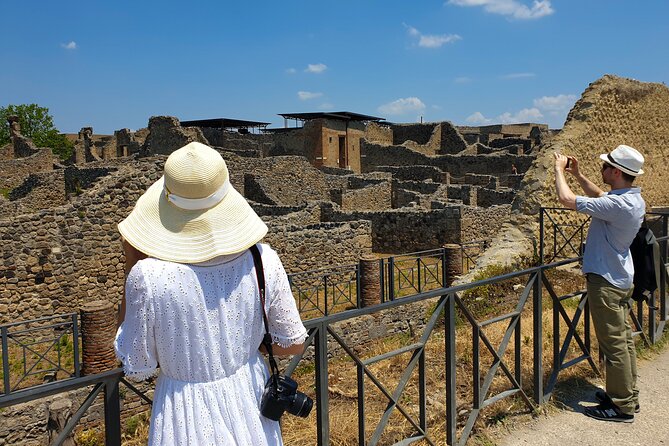
If your priority is efficiency without losing the value of a real guide, this is a strong choice. The mix of private pickup, skip-the-line entry, official guidance, and door-to-door Sorrento drop-off is exactly how you turn a travel day into a meaningful sightseeing block.
I’d book it if you’re the type who says yes to highlights and wants Pompeii to “make sense” quickly. I’d skip or switch to a slower Pompeii-only visit if you’re chasing deep exploration or need lots of free time at each stop.
FAQ
What’s the duration of the Naples to Sorrento transfer with Pompeii?
It runs about 4 to 5 hours.
Where do you get picked up in Naples, and where do you get dropped off?
You’re picked up at the hotel, airport, train station, or port in Naples. You’re dropped off at your accommodation in Sorrento, at the location you provide when booking.
Is Pompeii entry included, or do I need to buy tickets separately?
Admission tickets for the Pompeii stops are included, and Pompeii skip-the-line entrance is included as well.
Is there an official guide during the Pompeii portion?
Yes. The tour includes an official local guide for the Pompeii walking tour.
What isn’t included in the price?
Lunch and beverages aren’t included.
Can I cancel for a full refund?
You can cancel up to 24 hours in advance for a full refund. If you cancel less than 24 hours before the experience’s start time, the amount paid won’t be refunded.
More Tour Reviews in Naples





More Sorrento Day Trips



More Pompeii Tours to Compare



More Naples tours, freshly reviewed





Pompeii Tours, compared.
 ★ 4.8Pompeii: Entry Ticket and Guided Tour with an ArchaeologistFrom $3519,459 reviews
 ★ 4.1Pompeii: Entry Ticket with Audio GuideFrom $4013,491 reviews
 ★ 4.8Pompeii: Small Group Tour with an ArchaeologistFrom $4012,264 reviews
 ★ 4.3Pompeii Ruins & Mount Vesuvius Day TourFrom $12011,459 reviews
★ 5.0Pompeii Small Group Tour with an ArchaeologistFrom $356,593 reviews
★ 4.3Pompeii Ruins & Mount Vesuvius Day TourFrom $12011,459 reviews
★ 5.0Pompeii Small Group Tour with an ArchaeologistFrom $356,593 reviews
 ★ 4.5Skip-the-line Pompeii – Small Group TourFrom $544,401 reviews
 ★ 4.6Naples or Sorrento: Full-Day Pompeii and Mount Vesuvius TourFrom $1044,235 reviews
 ★ 3.9Pompeii: Skip-the-line Entry Ticket with Audio Guide & MapFrom $433,153 reviews
Browse the lists this tour appears in