
Review · POMPEII TOURS
Pompeii: Small-Group Guided Tour with Skip-the-Line Ticket
Pompeii hits harder with the right setup. This small-group tour pairs skip-the-line entry with a guided route through the key ruins, so you spend your 2 hours on streets and mosaics, not ticket queues. I also like the English-speaking expert guide approach, where you get clear context for the eruption of 79 AD and daily life in the city.
Two hours is a highlights sampler, and it is not designed for wheelchair users; plan on arriving 5 to 10 minutes early and having a valid ID ready for everyone, including kids.
In This Review
- Key Things That Make This Pompeii Tour Work
- Skip-the-Line Entry That Buys You Real Ruins Time
- Meeting Point Near Piazza Anfiteatro: Find Your Guide Fast
- Stop 1 and the First Walk: Getting Oriented in Pompeii Archaeological Park
- The Amphitheater of Pompeii: Where Entertainment Was Public and Physical
- House of the Faun: Mosaics, Status, and the Language of Elite Life
- Temple of Apollo and Vetutius Placidus House: Religion Meets Daily Needs
- Garden of the Fugitives: A Terrifying Story Told in Stone
- Foro Civile di Pompei: The City’s Social Center and a Great Finish
- The Real MVP: How the Guide Makes Pompeii Click
- Timing, Pace, and When to Schedule Your 2 Hours
- After the Tour: How to Use Your Remaining Time Wisely
- Should You Book This Pompeii Small-Group Tour?
- FAQ
- How long is the Pompeii small-group tour with skip-the-line tickets?
- What’s included in the tour price?
- Where do we meet?
- Do I need hotel pickup?
- Is this tour wheelchair accessible?
- What should I bring for the tour?
Key Things That Make This Pompeii Tour Work
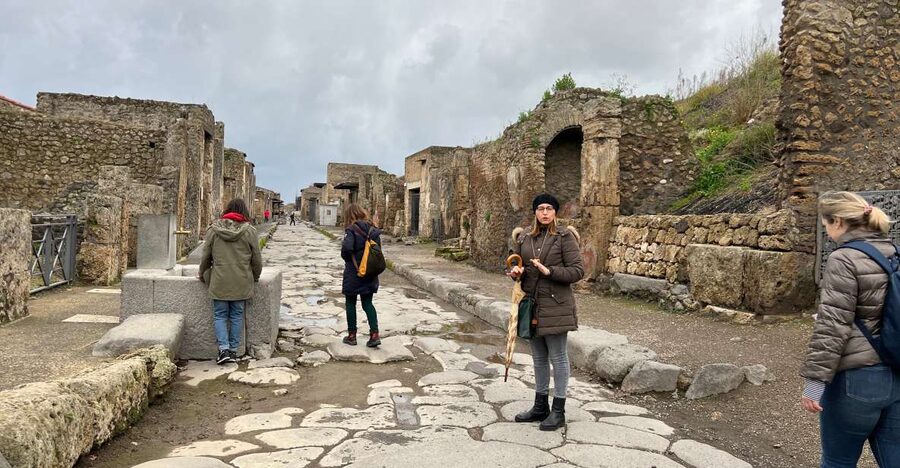
- Skip-the-line access using a separate entrance, which saves real time at a very busy site
- A tight 2-hour route that hits major stops without turning into a marathon
- Plaster-cast remains that bring the disaster closer than photos ever can
- Stop order that makes sense: amphitheater, elite houses, temples and shops, then the forum
- Guides who keep you moving while still answering questions and spotting details many people miss
- Small-group energy that can feel almost private once the group size stays tiny
Which Pompeii ticket and guide? Compare a few more.
- From Naples: Pompeii Ruins & Mount Vesuvius Day Tour★ 4.3 · 11,459 reviews
- From Naples: Skip-the-line Pompeii – Small Group Tour★ 4.5 · 4,401 reviews
- Naples or Sorrento: Full-Day Pompeii and Mount Vesuvius Tour★ 4.6 · 4,235 reviews
- Pompeii & Mt.Vesuvius Day Tour from Naples with Pizza Lunch★ 4.0 · 2,901 reviews
Skip-the-Line Entry That Buys You Real Ruins Time
Pompeii is one of those places where time feels stolen from you. Main entrances can mean waiting in long lines, and once you’re inside, the site spreads out fast. This tour’s big value is the pre-reserved tickets with skip-the-line access and a separate entrance, so you get into the Pompeii Archaeological Park quickly and start walking while the day is still in your favor.
The tour lasts about 2 hours, which is short enough to keep it focused, but long enough to understand what you’re looking at. You’re not trying to see everything Pompeii has. You’re seeing the key landmarks that help you connect the dots: how the city was laid out, what people did for entertainment, where they shopped and ate, and how public space shaped daily life.
You also get an actual live guide rather than just a ticket and a map. For Pompeii, that matters. Even with the best signage, it’s easy to get lost in the wow-factor and miss the why. With a guide, you learn what the buildings were, what the objects meant, and why the ash preserved so much.
Price-wise, it’s listed as $282.08 per group up to 2. If you’re traveling as a pair, this is the moment where you often decide if you want to pay for convenience. Here, you’re paying for three things you can’t easily DIY: priority entry, guided interpretation, and a route that hits the highlights without wandering for hours.
Meeting Point Near Piazza Anfiteatro: Find Your Guide Fast
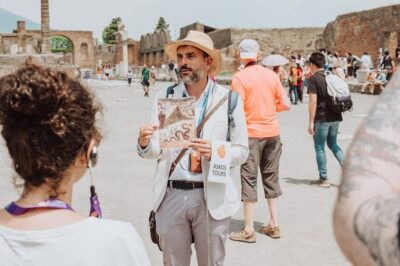
Logistics can make or break a Pompeii day. This tour starts in the piazza area near Piazza Anfiteatro, with the meeting point described as across from the entrance gate of Piazza Anfiteatro. The guide is easy to spot: by a statue of the Virgin Mary holding a sign that says Walks In Europe.
I like meeting-point clarity like this because Pompeii is a maze of streets and entry points. If you arrive late, you might miss the start. The instructions ask you to be there 5 to 10 minutes early, and they also note you can’t join after the tour begins. So set a buffer, grab water if you need it, and don’t treat the meeting as a suggestion.
Come prepared for walking and sun. The tour requests you bring a hat and water. That’s not just a polite suggestion. Pompeii is outdoors, and your pace depends on it. In the group tours, guides often manage timing and shade opportunities when possible, but you still should show up ready.
One more practical detail that matters: every visitor, including children, must have a valid ID for entry to the Pompeii Archaeological Site. It’s the kind of requirement that can quietly ruin plans if you only remember at the ticket desk.
Stop 1 and the First Walk: Getting Oriented in Pompeii Archaeological Park
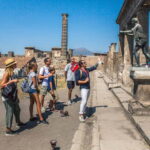
The tour officially begins at the starting piazza and then moves into the Pompeii Archaeological Park for your guided walk. This part is short, but it’s useful. You’re not just arriving and guessing. You get orientation right away, which helps the rest of the route click into place.
This is also where the guide’s job becomes more than storytelling. Pompeii is famous, but familiarity can trick you. You’ve seen images of columns, mosaics, and ruins before. The guide’s work is to show you what those elements were in real life, how people moved through the city, and why certain spots became iconic.
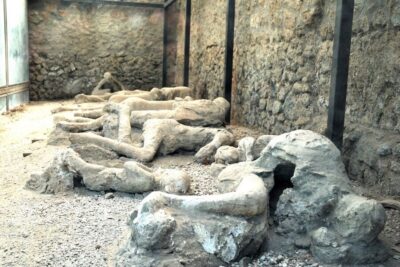
One of the highlights specifically included is the plaster-cast remains of the people who were caught during the eruption. Even if you’ve seen these casts in museums or photos, seeing them in the context of the site changes the feeling. They’re not just artifacts. They’re the final moment of human scale in a landscape of stone.
A practical thing here: the earlier you start inside, the better. The tour is built to avoid getting stuck behind big arrival waves. With skip-the-line access and a quick orientation, you get a cleaner start before crowds reshape the experience.
The Amphitheater of Pompeii: Where Entertainment Was Public and Physical
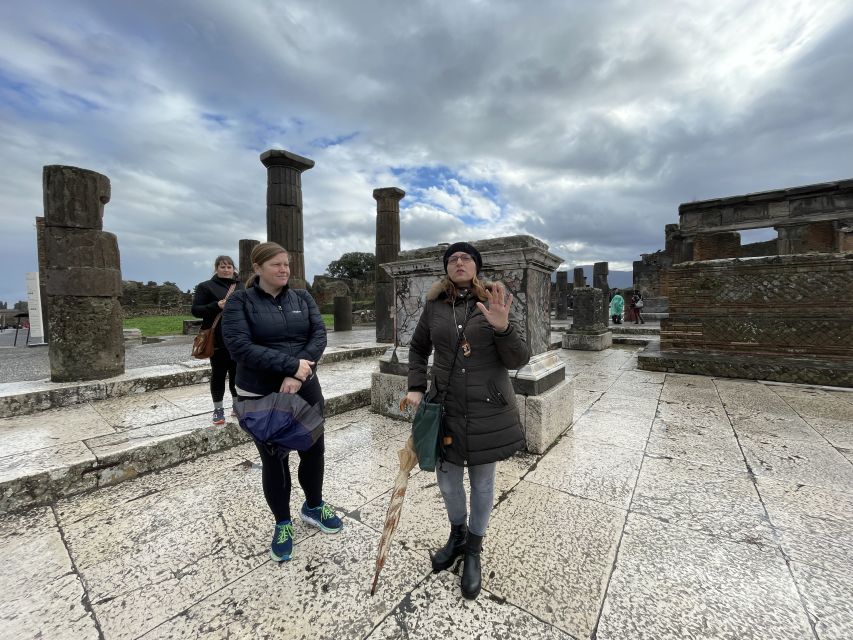
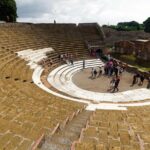
Next comes the Amphitheater of Pompeii, about a 20-minute guided stop. This is one of the best places to understand Pompeii as a real city, not just an archaeological site.
In the amphitheater, the guide connects architecture to action. You learn how public entertainment worked, and why the space mattered socially. It’s easy to think of gladiator stories as distant mythology, but the guide will bring it back to the people who actually sat there for events.
The amphitheater is also a visual anchor. Even if you don’t memorize every detail, you remember the shape of the space. After that, when you see more buildings and street scenes, your brain can map what’s public, what’s private, and what’s designed for crowds.
Because this stop is guided and timed, it’s a good choice even if you’re not a history superfan. You still get the big picture fast. The amphitheater is dramatic enough to keep your attention, and explained enough that it doesn’t feel like a one-note stop.
Other tickets and entries for Naples


House of the Faun: Mosaics, Status, and the Language of Elite Life
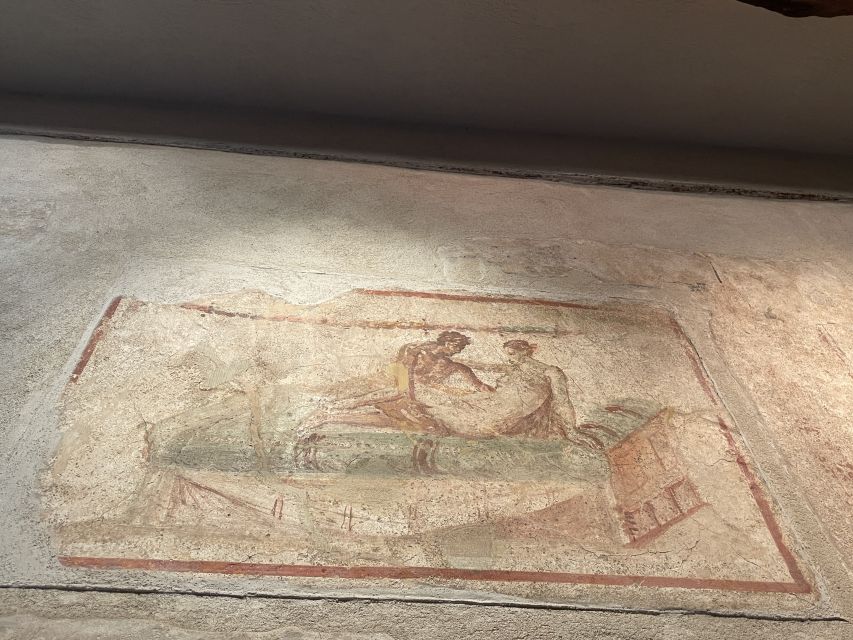
The House of the Faun is another standout, with a 20-minute guided visit. This is where Pompeii’s elite homes start to feel less like ruins and more like lived spaces.
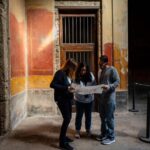
What makes the House of the Faun special is what it communicates: wealth, taste, and the kind of household culture that got expressed through art and decoration. This is where the tour’s mention of 2000-year-old artworks and mosaics becomes tangible. You’re looking at visual storytelling that was meant to impress.
A guided approach helps because mosaics can look like pretty patterns at first glance. With a guide, you’re more likely to understand the themes, placement, and what those choices meant to the owner. You also get help reading the home layout, which makes it easier to imagine how the spaces were used.
The only drawback to a stop like this is the tradeoff. A Pompeii house doesn’t fit into a single photo. Two things compete for your attention: the art and the physical space. If you want to linger like you’re at a museum, you may feel the time pressure here. But for most people, the payoff is exactly that: you get the essentials without burning the whole afternoon.
Temple of Apollo and Vetutius Placidus House: Religion Meets Daily Needs
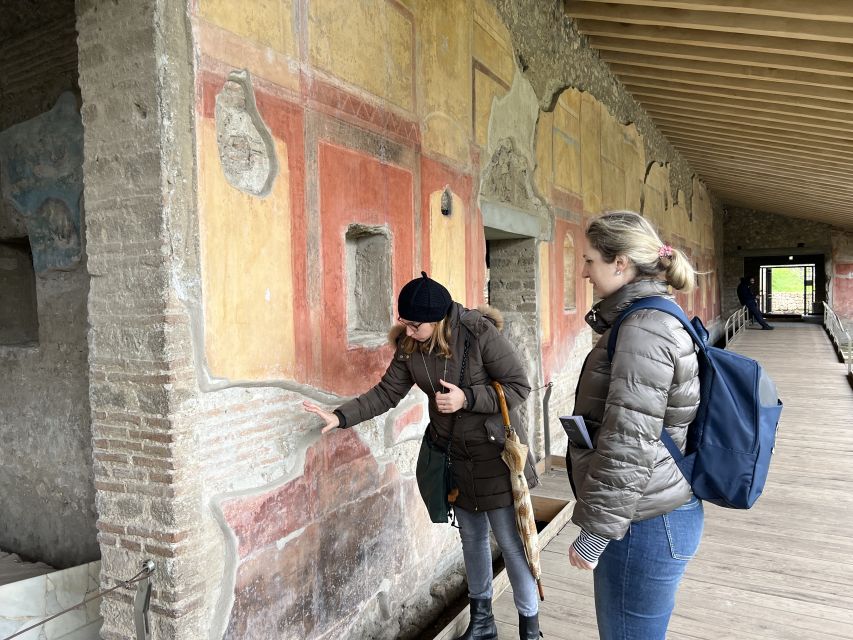
The tour then moves to the Temple of Apollo, another 20-minute guided stop. Temples matter because they show how belief, public life, and identity were woven into the city. When the guide points out architectural features and explains the role the temple played, it stops being just a ruin with columns and becomes a civic landmark.
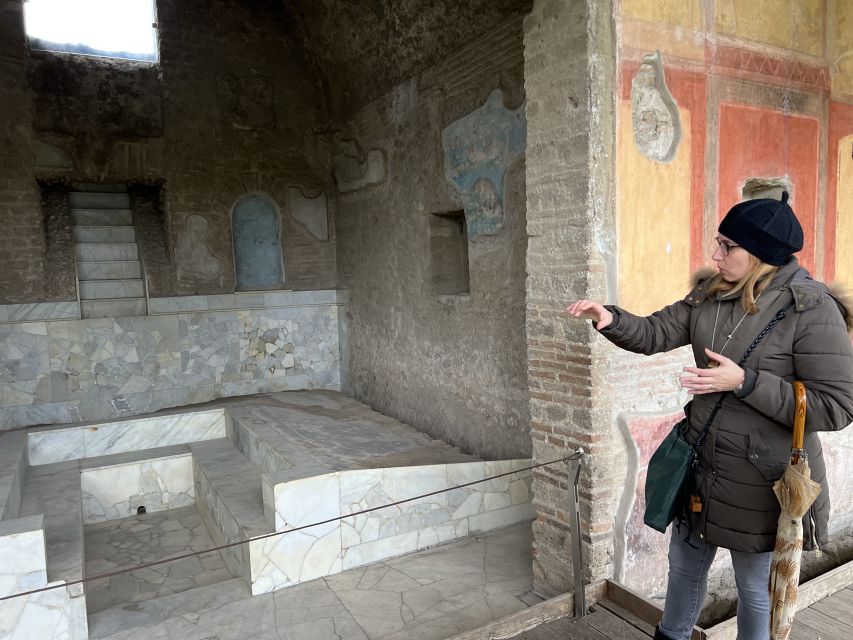
Right after that, you’ll visit the Vetutius Placidus House and Thermopolium, with about a 10-minute walk. This stop is a smart balance: it keeps the tour grounded in everyday life, not only big monuments.
The Thermopolium element is key. It’s a reminder that people ate outside homes, bought drinks, and gathered in ways that feel modern. If the elite houses show the city’s upper tier, the Thermopolium shows the rhythm of routine.
This combination also helps your understanding stick. You don’t just see a religious site and then switch to another distant topic. Instead, you see how different parts of city life sat side by side: worship, food, and neighborhood commerce.
Garden of the Fugitives: A Terrifying Story Told in Stone
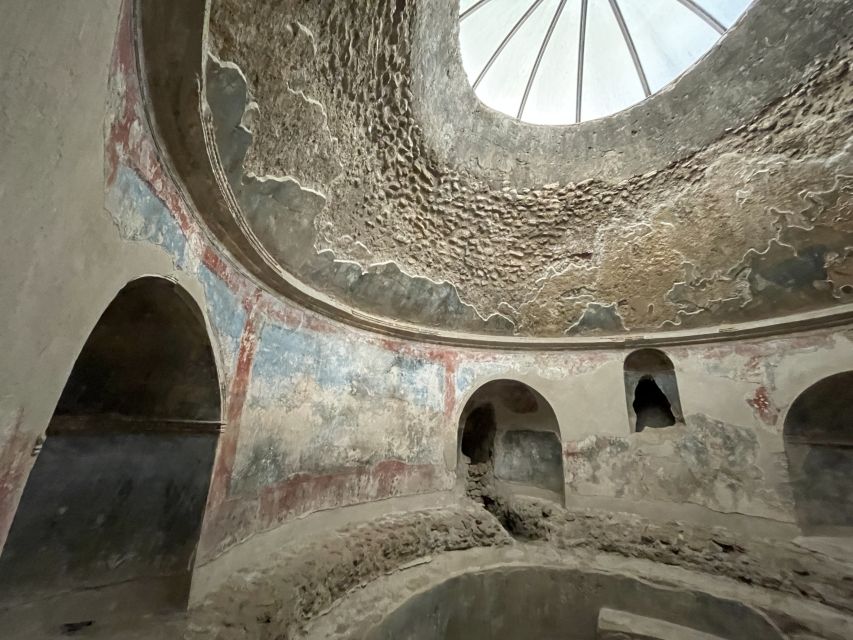
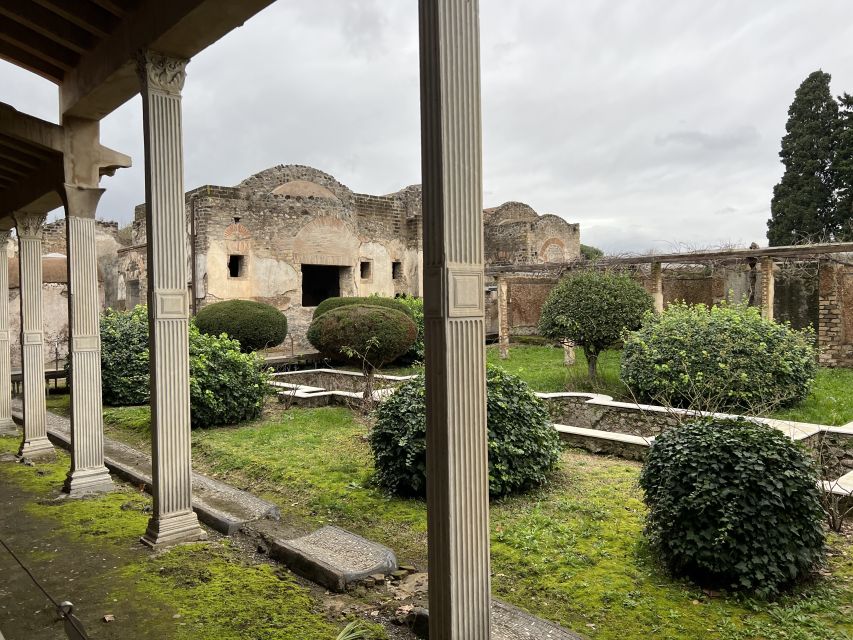
Then comes the Garden of the Fugitives, about 20 minutes on the route with guidance. This is one of those stops that hits emotionally, even if you’re there for history.
The location and the subject matter connect back to the eruption. When a guide ties what you see here to the moments of escape and the disaster’s aftermath, it adds weight to the plaster casts you saw earlier. Instead of treating Pompeii as a frozen snapshot, you start to feel the city as a place with a real end.
The garden also helps you understand how people moved and where people tried to go when things went wrong. Even if you don’t catch every term, you’ll grasp the bigger pattern.
One practical consideration: because this is a story-heavy stop, you may want a moment to just stand back and look without talking. That’s not always easy in a small group schedule, but if your guide offers photo pauses, take them. It helps the emotional tone settle in.
Foro Civile di Pompei: The City’s Social Center and a Great Finish
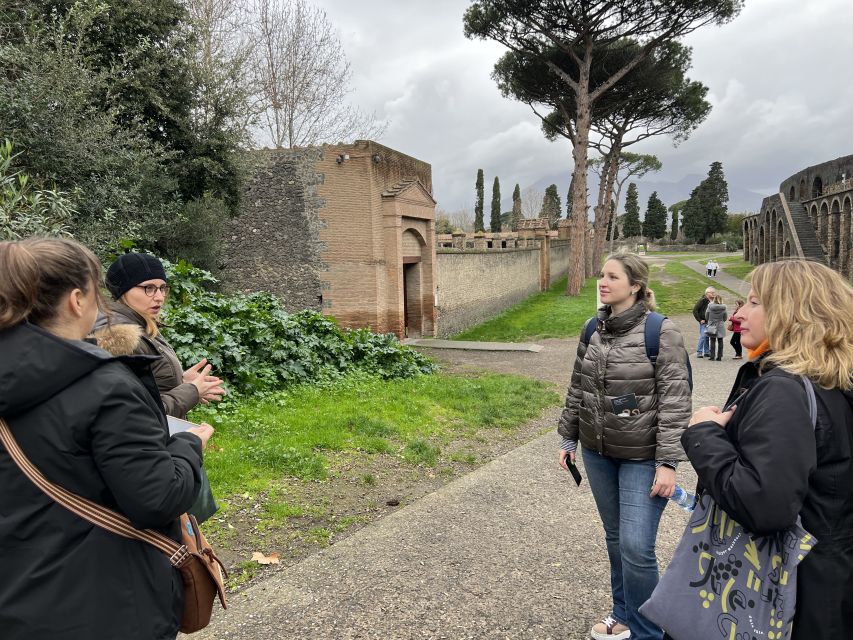
The final major stop on the route is the Foro Civile di Pompei, the Forum, with about 20 minutes of guided time. Ending here is a smart move, because the forum helps you synthesize everything you just saw.
This is where the heart-of-the-city idea becomes physical. The forum was where public life happened: announcements, movement, social visibility, and a constant flow of people. When you’ve just toured amphitheater entertainment, elite domestic spaces, temples, and eating spots, the forum feels like the natural connector.
It’s also a good ending point because it sets you up for self-guided exploring. After the tour finishes, you’re free to continue on your own, and you can also ask the guide for where to go next. I like that the structure isn’t a hard stop. The guide can help you spend your remaining time efficiently rather than wandering randomly.
The tour ends back at the meeting point, but the idea is that you can tack on extra viewing afterward if you still have energy and curiosity.
The Real MVP: How the Guide Makes Pompeii Click
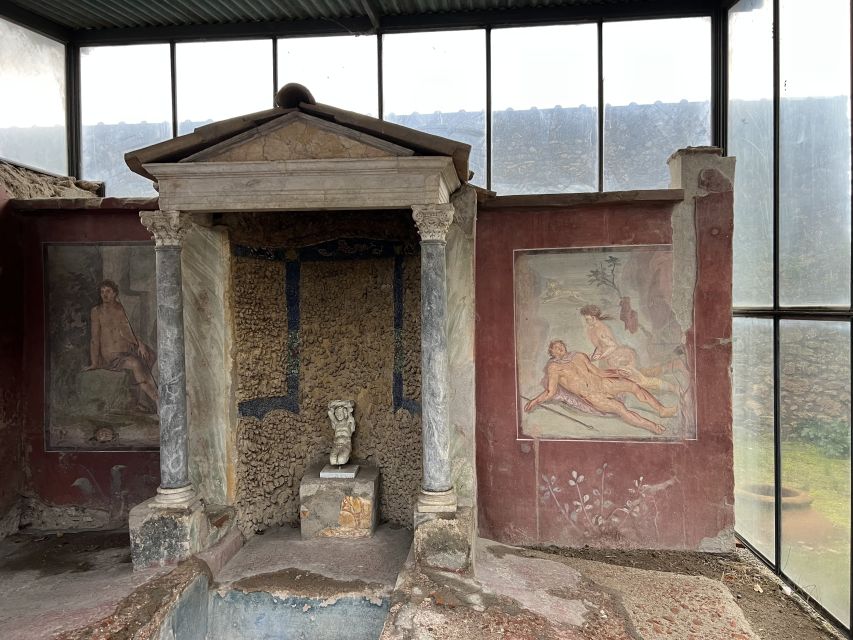
I’m not going to pretend Pompeii is easy to understand on your own. It’s not. The site is huge, and the stories are layered. That’s where this tour shines.
Across the guide experiences tied to the tour, names like Glauco, Vito, Caterina, Giovanni, Alessia, Vincenzo, Alicia, Laura, and Kiara show up in the experience history, and the common theme is the way guides explain details in plain language. More than that, they keep it lively. One guide style is more humorous. Another is calmer but deeply prepared. Different personalities, same goal: you leave understanding what you saw.
Several guides are also described as adjusting the route to avoid heavier crowds. That matters because Pompeii crowds aren’t evenly distributed. If your route can dodge the busiest pockets, your photos come out cleaner and your attention stays on the ruins instead of the bottleneck.
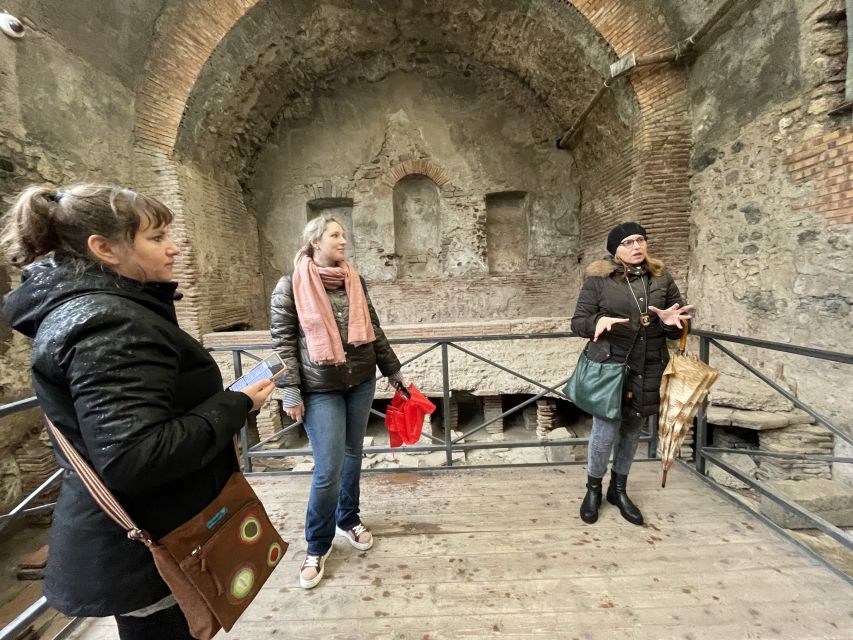
In one highlight-style mention, Vito is singled out for a practical suggestion about walking on a platform while archaeologists work. That kind of tip is exactly what you want from a guide. You get not just facts, but better ways to experience the place.
If you care about learning, ask questions. The tour is set up for that. And if you just want the best highlights with a coherent story, the guide will do that too.
Timing, Pace, and When to Schedule Your 2 Hours
This tour is built to be 2 hours, which means the pace stays purposeful. You’ll walk between major sights, and each stop is timed for impact rather than maximum lingering.
That makes it a great choice if you have a packed Italy schedule. It also makes it a decent choice if you’re traveling with teens or mixed interests, because amphitheater drama and mosaic wow-factor tend to land with everyone. Still, you should go in knowing it’s a sampler. Pompeii deserves more time than a single afternoon.
Timing can also change the whole mood. The tour route is manageable, but Pompeii heat and crowd density can wear you down. A later start can feel cooler and less congested, and a good guide often helps with shade opportunities when possible. If your schedule allows, pick a time that avoids the hottest stretch of the day.
Also remember the simple rule: arrive early. The guide can’t restart the clock if you’re still searching for the statue.
After the Tour: How to Use Your Remaining Time Wisely
When the tour ends, you’re back at the meeting point, and you can keep exploring. This is where the guide’s last bit of help becomes valuable.
Rather than trying to cover more ground blindly, ask your guide what to see next based on what you liked most. If you were most impressed by the elite houses, you might want to spend time with more residential areas near your route. If you connected with public life, you’ll likely enjoy lingering around the forum area after the guided portion.
You can also use the stop order as your roadmap. The tour takes you through the city like a story. Afterward, you can reread the city on foot: entertainment in the amphitheater, status in the homes, worship in the temple zones, everyday life through shop and eating areas, then the forum as the city’s social center.
Should You Book This Pompeii Small-Group Tour?
Book this tour if you want skip-the-line convenience, a live English guide, and a route that hits the most important Pompeii landmarks without turning into an all-day grind. It’s especially good for couples or small groups because the private-group setup keeps things flexible and question-friendly.
I’d think twice if you need wheelchair access, since it’s not suitable for wheelchair users. I’d also plan your expectations around time: 2 hours is ideal for highlights, not for a deep, unhurried museum-style visit.
If Pompeii is on your list and you want the story as much as the scenery, this is a strong bet. The combination of priority entry, a focused route, and guides like Glauco or Alessia-style interpretation is exactly how you get more out of fewer minutes.
FAQ
How long is the Pompeii small-group tour with skip-the-line tickets?
The tour lasts about 2 hours (you can check availability for specific starting times).
What’s included in the tour price?
It includes pre-reserved skip-the-line tickets, entry to Pompeii, and a live guided tour (English).
Where do we meet?
You meet in the piazza just opposite the entrance gate of Piazza Anfiteatro. The guide will be by the statue of the Virgin Mary holding a sign that says Walks In Europe.
Do I need hotel pickup?
No. Hotel pickup and drop-off are not included.
Is this tour wheelchair accessible?
No. It is not suitable for wheelchair users.
What should I bring for the tour?
Bring a hat and water. Also, everyone including children must provide a valid ID upon entry to the Pompeii Archaeological Site.
More Tours in Naples




More Tour Reviews in Naples

More Pompeii Tours to Compare


More Naples tours, freshly reviewed




Pompeii Tours, compared.
 ★ 4.8Pompeii: Entry Ticket and Guided Tour with an ArchaeologistFrom $3519,459 reviews
 ★ 4.1Pompeii: Entry Ticket with Audio GuideFrom $4013,491 reviews
 ★ 4.8Pompeii: Small Group Tour with an ArchaeologistFrom $4012,264 reviews
 ★ 4.3Pompeii Ruins & Mount Vesuvius Day TourFrom $12011,459 reviews
★ 5.0Pompeii Small Group Tour with an ArchaeologistFrom $356,593 reviews
★ 4.3Pompeii Ruins & Mount Vesuvius Day TourFrom $12011,459 reviews
★ 5.0Pompeii Small Group Tour with an ArchaeologistFrom $356,593 reviews
 ★ 4.5Skip-the-line Pompeii – Small Group TourFrom $544,401 reviews
 ★ 4.6Naples or Sorrento: Full-Day Pompeii and Mount Vesuvius TourFrom $1044,235 reviews
 ★ 3.9Pompeii: Skip-the-line Entry Ticket with Audio Guide & MapFrom $433,153 reviews