
Review · POMPEII TOURS
Pompeii: Private Tour with an Archaeologist
Pompeii feels real when someone explains every turn. This private tour guides you through the western side of the ancient city, where everyday Roman life was frozen in time by Vesuvius and brought back through excavation.
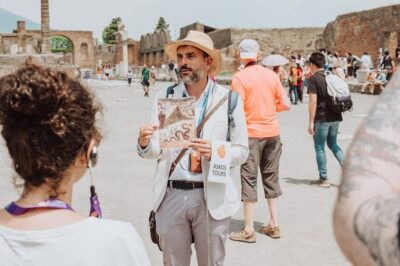
I like two things a lot. First, the guides bring human stories alongside the ruins—people talk about the same places you’re standing in, not just stones on a map. I’ve especially seen this credited to guides like Nicoletta, Patrizia, and Serenella, who focused on small details and kept the mood friendly and question-friendly. Second, you get to move like it’s a walk, not a cattle chute, with skip-the-line entry so you spend your energy on Pompeii instead of waiting.
One consideration: you’re buying a set 3-hour experience, and Pompeii is huge. You’ll hit major stops, but you still won’t see everything—so set your expectations that this is a sharp, curated slice of the city, not a full do-everything marathon.
In This Review
- Key highlights worth your attention
- Why West Pompeii is the smarter first chapter
- Meeting at Porta Marina Superiore (and finding the lemons)
- Porta Marina and Temple of Apollo: get your bearings fast
- The Forum and Basilica: Pompeii’s civic heartbeat
- Baths and the rhythm of everyday life
- House of Menander and the Faun: what “home” meant in Pompeii
- The Lupanare (brothel) and Roman nightlife reality check
- Theaters and amphitheater: spectacle and community
- House of the Vettii: wealth, taste, and the power of decoration
- Volcano story, excavation, and why guides matter here
- Price and whether this private tour feels worth it
- Who should book this Pompeii private archaeologist tour
- Should you book it?
- FAQ
- How long is the Pompeii private tour with an archaeologist?
- Where do we meet, and where does the tour end?
- What major sites are included on the route?
- Is skip-the-line entry included?
- What languages is the guide available in?
- What should I bring or wear?
- Is Pompeii free on the first Sunday of the month?
Key highlights worth your attention
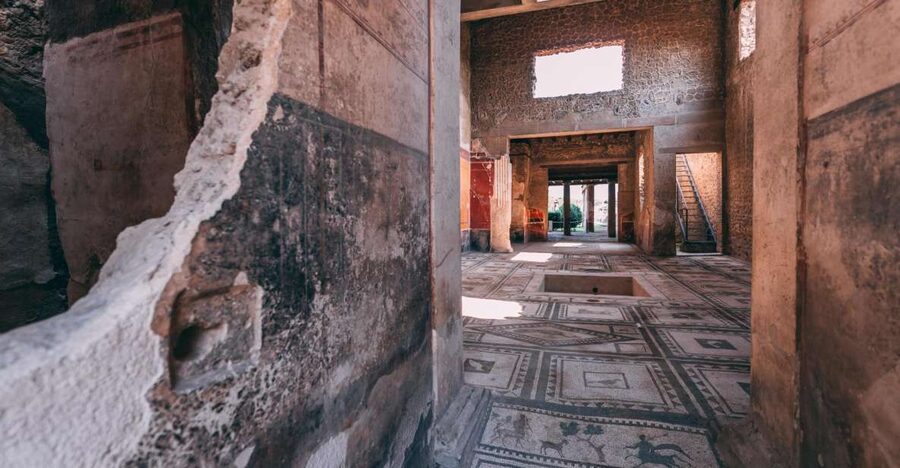
- Private archaeologist-guide focus: you get a guided circuit through major public buildings and house interiors.
- Skip-the-line admission: you’re not stuck waiting at the ticket counters before your walk begins.
- West Pompeii itinerary: Marina Gate to the Forum area, then homes, baths, theaters, and the amphitheater.
- Daily-life details: houses like Menander and the Faun, plus the Lupanare (brothel) and shop spaces.
- “Still-living town” pacing: the route is designed so the city feels connected, not like disconnected photo stops.
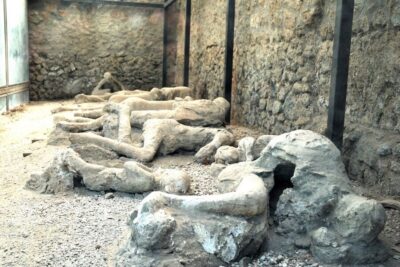
- Victim plaster casts in the mix: the tour includes the emotional, hard-to-forget parts of the story.
Which Pompeii ticket and guide? Compare a few more.
- From Naples: Pompeii Ruins & Mount Vesuvius Day Tour★ 4.3 · 11,459 reviews
- From Naples: Skip-the-line Pompeii – Small Group Tour★ 4.5 · 4,401 reviews
- Naples or Sorrento: Full-Day Pompeii and Mount Vesuvius Tour★ 4.6 · 4,235 reviews
- Pompeii & Mt.Vesuvius Day Tour from Naples with Pizza Lunch★ 4.0 · 2,901 reviews
Why West Pompeii is the smarter first chapter
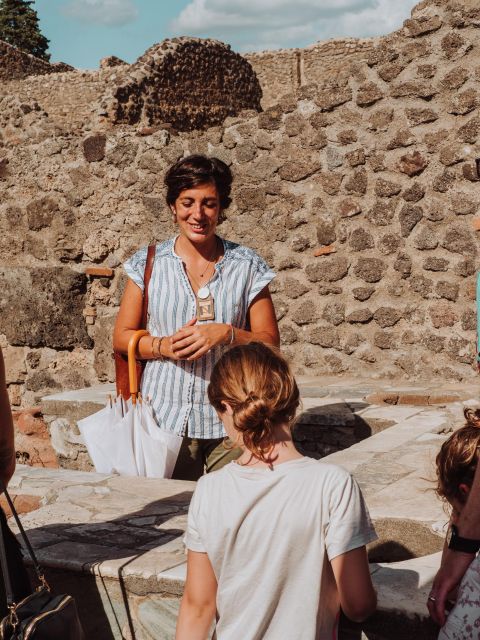
Pompeii works best when you don’t treat it like a checklist. The western side has a strong flow: you start with city entry and power, then you move into civic center spaces, and you finish with entertainment and more private life. That sequence helps your brain build the town as a system—streets, buildings, and social habits all tied together.
And yes, Pompeii is intense. Even when you know the basic story, walking the streets can still hit you. You’re surrounded by the scale of a real town—fountains, shops, baths, and homes—then the volcano story snaps into place. It’s not abstract. You can feel how normal life was right up until the moment it wasn’t.
A private archaeologist-guided route is especially valuable here because Pompeii rewards attention. The most interesting details are often the small ones: what a space suggests about social class, how a building functioned, what everyday routines might have looked like. This is where the best guides tend to shine, and reviews consistently praise the way guides point out those micro-details and connect them to real human behavior.
Meeting at Porta Marina Superiore (and finding the lemons)
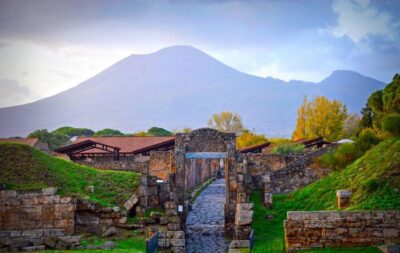
You meet at the Pompeii main gate called Porta Marina Superiore, right in front of the bar-restaurant Hortus—look for the building with lemons and oranges hanging outside. That visual marker is useful because Pompeii is big, and having an obvious meeting point helps you start calmly.
Your tour ends back at the meeting point (with drop-off also noted near Scavi di Pompei – Biglietteria at Porta Marina Superiore). The loop format matters. You don’t need to think about logistics mid-walk or risk arriving at the wrong end of the site.
If you’re wondering about language, this tour is offered in multiple languages, including English, Italian, Spanish, German, French, Portuguese, Japanese, Chinese, Russian, and others. Reviews also highlight guides by name, and that’s a good sign for quality consistency.
Porta Marina and Temple of Apollo: get your bearings fast
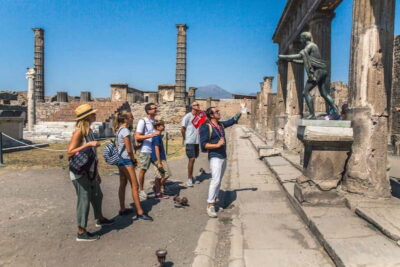
The first stop is your entry point: Porta Marina. Gates aren’t just architecture here—they’re the idea of movement and access. When your guide starts with the gate, you’ll quickly understand where you are relative to the rest of the city’s layout.
From there, the itinerary includes the Temple of Apollo. Temples in Pompeii aren’t always about long speeches and grand ceremonies. They’re part of civic identity. Your guide can help you see how religious spaces sat inside the everyday grid of the city, not off in a separate world.
Practical note: this early section is where comfortable shoes pay off. Pompeii’s surfaces can be uneven, and you’ll appreciate being able to keep your footing. If you come in with stiff or minimal shoes, the tour can feel like punishment instead of discovery.
The Forum and Basilica: Pompeii’s civic heartbeat
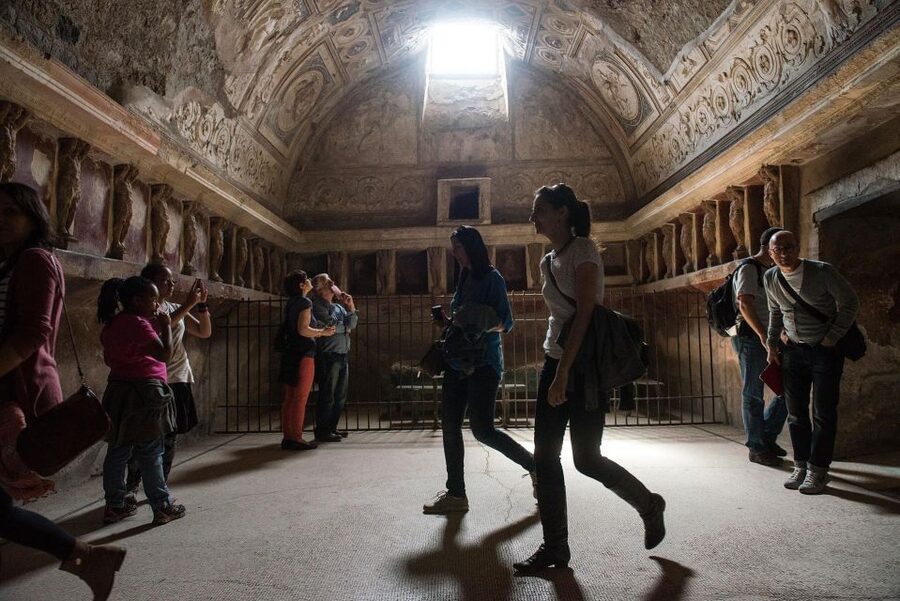
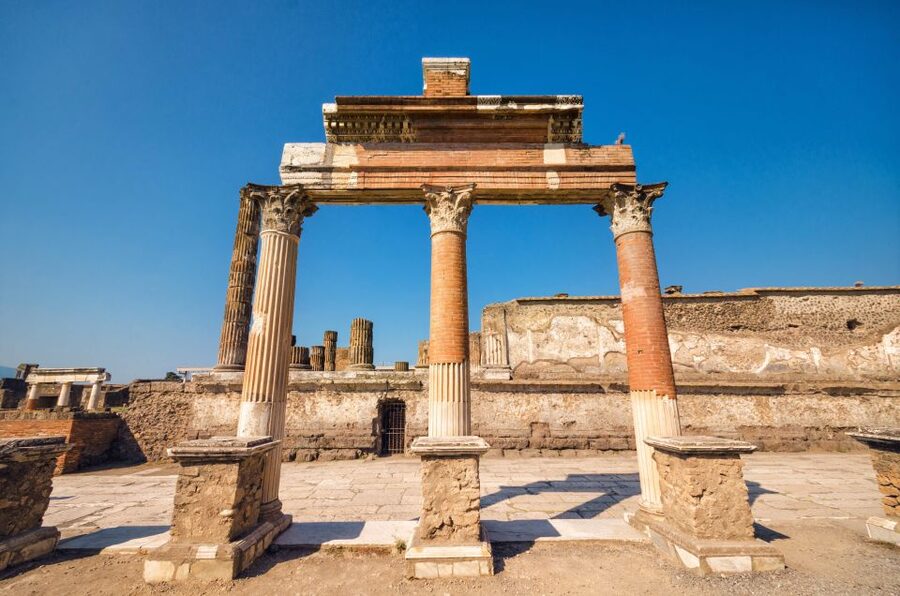
Next comes the public center: the Foro Civile di Pompei and the Basilica. These spaces help you understand how the city ran. In Roman towns, the Forum area wasn’t just for politics in the modern sense. It was also about commerce, public announcements, legal life, and community rituals.
The Basilica is the kind of stop where a good guide changes your whole viewpoint. It’s easy to walk past a big building and think, “Okay, it was important.” But on this tour, the explanation is aimed at function—what people likely did there and why it mattered to daily life.
This is also a stage where you’ll want to ask questions. If you ever wondered how Romans organized work, disputes, and social standing, the Forum/Basilica area is where the answers start to make sense. Reviews repeatedly praise guides for answering questions and keeping the tour lively, not stiff.
Rather go private? More options in Naples






Baths and the rhythm of everyday life
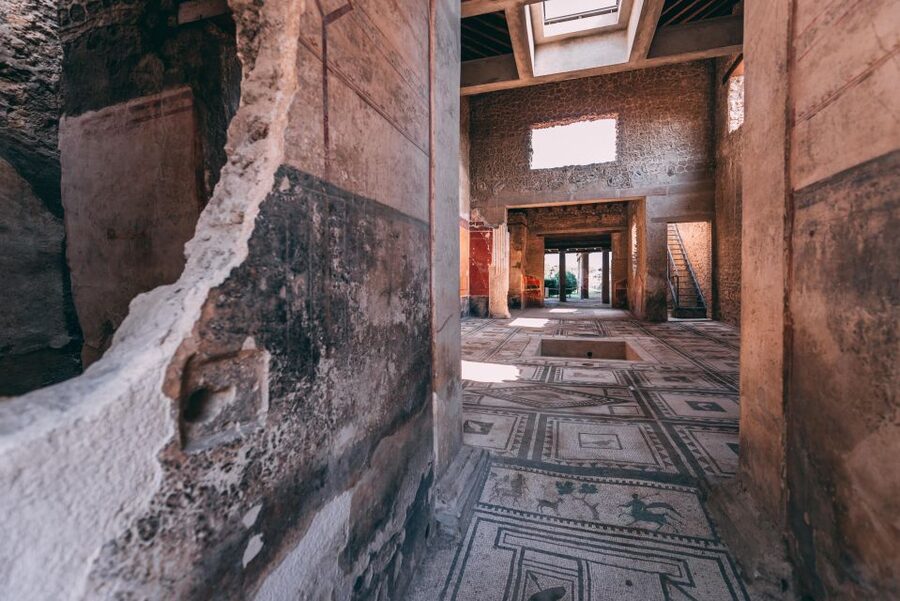
The route includes Forum Baths (listed after the House of Menander). Baths are one of the most revealing parts of Pompeii. They show how socializing, cleanliness, exercise, and routine could fit into a city’s public life.
Even if you don’t want to get lost in “how the plumbing worked,” baths have a human angle. People used them, talked in them, and built relationships there. This tour’s style leans into that everyday reality—exactly what makes Pompeii feel like it’s not dead, even though it is.
If you’re sensitive to emotional material: this is a good time to pace yourself. Pompeii alternates between fascination and gravity. The tour includes the plaster casts of the victims, and having a slower moment after the baths can make that part land without overwhelming you.
House of Menander and the Faun: what “home” meant in Pompeii
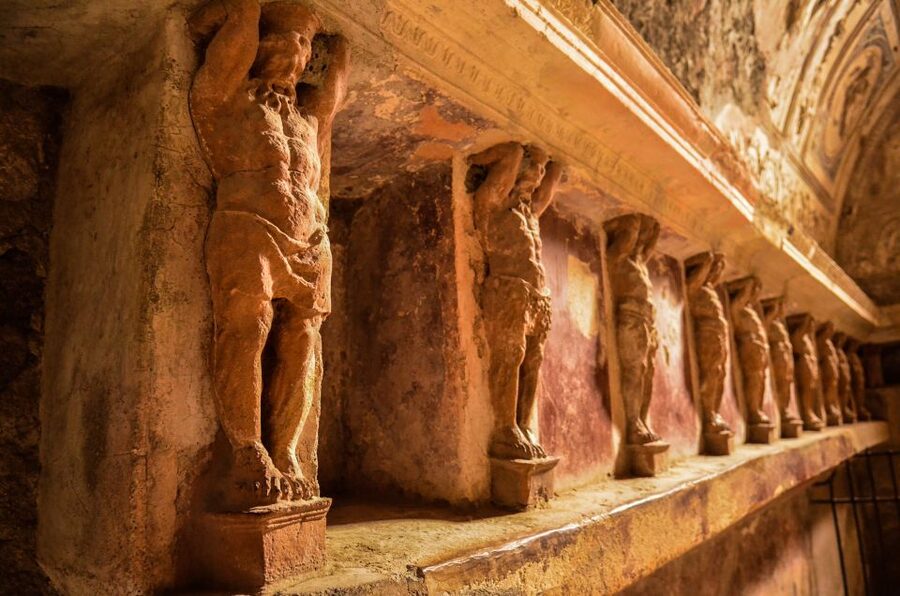
Private life gets real in the House of Menander and later the House of the Faun. Pompeii’s houses aren’t just “pretty rooms.” They’re built clues about status, spending, and family rhythm.
Your guide can explain the differences you’d be missing on your own—how rooms likely functioned, where daily movement happened, and what decorative choices signaled. Reviews frequently mention guides calling out small details in the structures and surfaces. That’s the difference between seeing a house and understanding what it tells you.
One thing I’d emphasize: don’t rush these stops just to “get the pictures.” In Pompeii, a house layout tells a story about privacy, performance (hosting visitors), and how wealth was displayed—sometimes quietly, sometimes not.
The Lupanare (brothel) and Roman nightlife reality check
Yes, the itinerary includes the Lupanare, Pompeii’s brothel. This stop is historically important, and it can feel uncomfortable. But it also rounds out the picture of Roman life—because cities aren’t only temples and forums. They include commerce, sex work, and social systems that shaped day-to-day behavior.
A good guide won’t just label the place. They’ll explain the context so you understand why this building existed in that part of town and how the setting connected to the broader street life around it.
If you’re coming with kids, this can be a “heads-up” moment. The tour is often recommended as a family-friendly experience in reviews, including with 12-year-old daughters, but the content depends on how your guide frames it and what your group’s comfort level is.
Theaters and amphitheater: spectacle and community
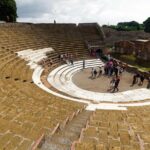
Entertainment appears in two forms on this route. First is the Large Theatre. Then later you’ll visit the Amphitheater of Pompeii.
Theaters show how performance was a social event—people gathering, sharing attention, and turning communal space into a living stage. The amphitheater shifts the vibe toward mass spectacle. A guide’s explanations help you connect the seating, architecture, and movement patterns to what audiences might have experienced.
If you like understanding design, this is a strong section. You can see how the building shapes behavior: where people sit, how crowds move, and why visibility matters. When Pompeii is explained well, these stops stop being “Roman entertainment” and become Roman community life.
House of the Vettii: wealth, taste, and the power of decoration
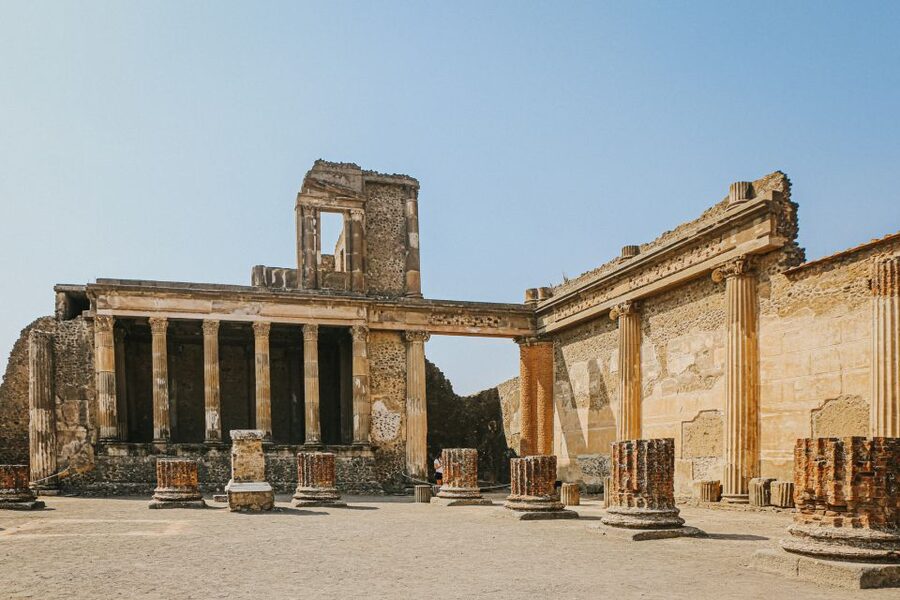
The itinerary includes the House of the Vettii. If the other houses helped you understand domestic life, this one tends to make status visible. Wealth in Pompeii often shows up through decoration and the way spaces feel planned for showing off.
Even if you don’t care about art history, this stop can help you connect the dots between social rank and built environment. It’s one of those places where the guide’s narration can turn what looks like “more rooms” into a story about ambition and identity.
And it’s worth taking a second to look around instead of only following the path. Pompeii rewards attention to context: where you are, what you can see from a doorway, and how a visitor would have experienced the space.
Volcano story, excavation, and why guides matter here
Pompeii is famous for one reason: Vesuvius. The city was buried in volcanic ash in 79 A.D., and excavation later brought it back. But the real value of a private tour with a certified archaeologist-guide is how the guide stitches the big events into what you’re actually seeing.
On this route, you’ll walk past the physical evidence: public buildings, houses, baths, and the more intimate spaces that show everyday routine. You’ll also encounter the more serious parts of the story, including the plaster casts of victims. A good guide handles these moments with care—bringing back humanity without turning the place into a shock show.
If you’re trying to learn fast, this style works. The guide’s job is to translate ruins into meaning. That’s why many people rank this kind of experience as the best activity in Italy, even when they’ve toured other sites before.
Price and whether this private tour feels worth it
At $508.15 per group (up to 1) for a 3-hour private tour, you’re paying for three things:
- Time with an archaeologist-guide: Pompeii isn’t a site where a generic audio app fully covers the “why.” You’re paying for human explanation and the ability to ask questions.
- Skip-the-line admission: it can save meaningful waiting time, especially in peak season.
- A structured route of major stops: the itinerary hits key areas—Marina Gate, the Forum/Civic center, baths, multiple houses, Lupanare, theaters, and the amphitheater.
If you’re traveling solo or as a duo who wants a slower pace and more Q&A, this can be a strong value. If you’re a group of four or more, prices like this usually make more sense when you compare them to adding multiple standard tickets plus guide time. Either way, a private archaeologist-guided walk often wins because it reduces your “wasted wandering.”
One more practical angle: this tour is wheelchair accessible in the details, but it also notes it’s not suitable for wheelchair users. That contradiction matters. If mobility access is a concern, contact the provider before booking and ask how the route is handled in practice.
Who should book this Pompeii private archaeologist tour
Book it if you want:
- A guided walk through key Pompeii sites without missing the story behind them
- A guide who points out small details and answers questions
- The western-side route that moves from public life to private life
Skip it (or consider a different format) if:
- You only have a short attention span and want maximum “big hits” with no explanation
- You’re planning to see everything in Pompeii in one go (this is 3 hours, not a full day)
This is also ideal if you care about real social context: how people lived, gathered, shopped, bathed, performed, and structured their world.
Should you book it?
Yes—if you’re willing to pay for understanding, not just photographs. This tour’s value comes from the way it’s guided: structured stops, an archaeologist-guide approach, and a route that makes Pompeii feel like a town rather than scattered ruins.
Do it especially if you want someone to connect the dots between the Forum, baths, houses, theaters, and the darker human chapters like the victim casts and the Lupanare. Pompeii is one of those places where the difference between “I saw it” and “I got it” is huge—and that difference usually has a name: your guide.
FAQ
How long is the Pompeii private tour with an archaeologist?
The tour lasts 3 hours. You can check availability to see starting times.
Where do we meet, and where does the tour end?
Meet your guide at Porta Marina Superiore, in front of the bar-restaurant Hortus with lemons and oranges hanging outside. The tour ends back at the meeting point.
What major sites are included on the route?
The tour includes stops such as Porta Marina, the Temple of Apollo, the Forum Civile, the Basilica, the House of Menander, Forum Baths, the Lupanare, the House of the Faun, the Large Theatre, the House of the Vettii, and the Amphitheater of Pompeii.
Is skip-the-line entry included?
Yes. Skip-the-line admission fees are included.
What languages is the guide available in?
The live guide is available in Japanese, English, Spanish, Italian, German, French, Portuguese, Chinese, Russian, and more.
What should I bring or wear?
Wear comfortable shoes. The tour happens in any weather, and in rain you’re advised to bring a small umbrella and/or a raincoat.
Is Pompeii free on the first Sunday of the month?
Yes, entrance is free on the first Sunday of each month, but tickets can’t be reserved ahead of time, so entry is not guaranteed.
If you tell me your travel month and whether you’re aiming for “maximum sites” or “maximum understanding,” I can help you decide if 3 hours is perfect or if you should look for a longer visit.
More Tours in Naples





More Tour Reviews in Naples

More Pompeii Tours to Compare


More Naples tours, freshly reviewed




Pompeii Tours, compared.
 ★ 4.8Pompeii: Entry Ticket and Guided Tour with an ArchaeologistFrom $3519,459 reviews
 ★ 4.1Pompeii: Entry Ticket with Audio GuideFrom $4013,491 reviews
 ★ 4.8Pompeii: Small Group Tour with an ArchaeologistFrom $4012,264 reviews
 ★ 4.3Pompeii Ruins & Mount Vesuvius Day TourFrom $12011,459 reviews
★ 5.0Pompeii Small Group Tour with an ArchaeologistFrom $356,593 reviews
★ 4.3Pompeii Ruins & Mount Vesuvius Day TourFrom $12011,459 reviews
★ 5.0Pompeii Small Group Tour with an ArchaeologistFrom $356,593 reviews
 ★ 4.5Skip-the-line Pompeii – Small Group TourFrom $544,401 reviews
 ★ 4.6Naples or Sorrento: Full-Day Pompeii and Mount Vesuvius TourFrom $1044,235 reviews
 ★ 3.9Pompeii: Skip-the-line Entry Ticket with Audio Guide & MapFrom $433,153 reviews