
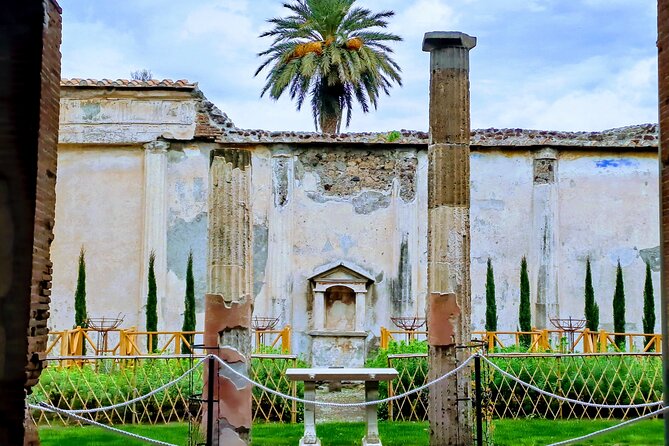
Review · POMPEII TOURS
Pompeii private tour from Naples. The best choice for cruisers
Pompeii hits different when it’s organized. This private tour from Naples lines up the big sights with a smooth, cruiser-proof pace, and it’s offered in English with tickets included. You’ll start at Stazione Marittima and finish right back there, so the day stays low-stress.
I like two things a lot: the tour is truly private, so your group controls the questions and timing, and the route focuses on the major landmarks instead of wasting time wandering. I also love that the tickets are handled for you, so you’re not stuck guessing where to stand when you first arrive.
The main drawback to think about is time: at about 5 hours, you’ll see the highlights, but you won’t cover every street corner Pompeii offers. It’s also a walking day on uneven ancient ground, so plan to move at a steady pace.
In This Review
- Key highlights that make this Pompeii tour work well
- Naples-to-Pompeii pickup that fits cruise schedules
- Why private guide time makes Pompeii feel less overwhelming
- Entering Pompeii at Porta Marina: the right start for orientation
- Forum of Pompeii: where daily life, business, and power overlap
- Sanctuary of Apollo, the Macellum, and Pompeii’s everyday engine
- Suburban Baths: privacy, procedure, and the erotic wall art
- Casa del Fauno: reading wealth from the street
- Teatro Grande and Anfiteatro Romano: entertainment at city scale
- Via dell’Abbondanza: the shopping street you can actually picture
- Casa dei Vettii and Priapus: the most striking “home” stop
- Panificio di Popidio Prisco: a bread stop that turns into real context
- Basilica and the Forum’s business heart
- Price and logistics: is $216.27 worth it?
- Who should book this Pompeii private tour
- Should you book this Pompeii private tour from Naples?
- FAQ
- Where is the meeting point in Naples?
- How long is the Pompeii private tour from Naples?
- Is this tour private or shared with other groups?
- What language is the tour offered in?
- Are admission tickets included for the stops?
- What vehicle is used for transportation?
Key highlights that make this Pompeii tour work well
- Cruise-day pickup at Stazione Marittima and return to the same meeting point
- Porta Marina as the grand entrance into Pompeii
- Suburban Baths details that include erotic artwork in the changing rooms (know it’s part of the stop)
- Casa dei Vettii and Priapus for a standout look at wealth and Roman religious symbolism
- Bread-making at Panificio di Popidio Prisco for a practical, everyday angle
- Anfiteatro Romano at 70 BC scale, with room for up to 20,000 spectators
Which Pompeii ticket and guide? Compare a few more.
- From Naples: Pompeii Ruins & Mount Vesuvius Day Tour★ 4.3 · 11,459 reviews
- From Naples: Skip-the-line Pompeii – Small Group Tour★ 4.5 · 4,401 reviews
- Naples or Sorrento: Full-Day Pompeii and Mount Vesuvius Tour★ 4.6 · 4,235 reviews
- Pompeii & Mt.Vesuvius Day Tour from Naples with Pizza Lunch★ 4.0 · 2,901 reviews
Naples-to-Pompeii pickup that fits cruise schedules
If you’re visiting Pompeii from a cruise, timing is everything. This tour is designed around a simple start and finish: you meet at Stazione Marittima in Naples, and the experience ends back at the same meeting point. That means less worrying about how far you’ll need to travel after the last stop.
Transport is in a Peugeot 3008 (2014 model). If you have a larger group, bigger cars or a mini van can be requested with a supplement. In practice, that matters because tight cruise logistics often turn into long walks and transit headaches if you choose the wrong vehicle setup.
Opening hours run Mon–Fri from 8:30 AM to 5:00 PM, covering the typical cruise-time window. The tour also runs only when weather is suitable, because Pompeii is outdoors and the walking matters.
Why private guide time makes Pompeii feel less overwhelming
Pompeii is massive, and doing it solo can turn into a museum-stroll where you miss the connections. With a private guide, you get the “why” behind what you’re seeing, stop by stop—so the ruins don’t feel like random walls.
This is also where small-group comfort shows up. One key theme from the experience reviews is how guides such as Nino Pezzullo run things with clear communication and a flexible pace. Even on busy days, the tour setup helps you keep moving without the constant stops and starts you get on larger groups.
And because it’s private, you can ask questions that matter to you—architecture, daily life, religion, Roman entertainment—without feeling like you’re hijacking a group schedule. If you care about details, the stops are structured to feed those interests.
Entering Pompeii at Porta Marina: the right start for orientation
The tour begins at Porta Marina, one of Pompeii’s gates—and not just any gate. It’s described as the most impressive of Pompeii’s seven gates, which is a smart way to start because it immediately frames scale and city planning.
This first stop also sets expectations for how you’ll move through the site. After the entrance, your guide’s job is to help you connect what you see to how Pompeii functioned as a living town, not a ruined backdrop. In a short day, that early orientation is worth its weight in comfortable shoes.
You’re not lingering here for long, but you’re getting the first anchor point: the idea that this city had formal entry points, deliberate pathways, and a sense of civic grandeur.
Forum of Pompeii: where daily life, business, and power overlap
Next comes the Forum of Pompeii, the civil center of daily life. This isn’t just a pretty plaza; it’s where major public buildings face the open space, so you can understand the layout as a system.
Your guide typically uses this stop to explain what people did there: commerce, civic interaction, and the public face of Roman administration. It’s the kind of stop that helps you read Pompeii like a city plan rather than a list of buildings.
A common benefit of covering the Forum early is that it gives you a reference point for later stops. When you later see entertainment spaces and homes, you start to recognize how power, leisure, and wealth fit together.
Rather go private? More options in Naples

Sanctuary of Apollo, the Macellum, and Pompeii’s everyday engine
After the Forum, the tour moves into a mix of worship and market life—an excellent combo for anyone who doesn’t want only monuments.
At the Sanctuary of Apollo, you’re shown how this was one of the oldest places of worship in Pompeii, placed in a strategic spot. The story connects the choice of Apollo to the Greek and Etruscan presence in Campania. That kind of cultural context makes a ruin feel specific instead of generic.
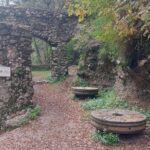
Then you head to the Macellum, Pompeii’s market. The key detail here is the circular structure in the courtyard used for selling and cleaning fish. It’s a concrete, practical clue about how food supply and daily transactions worked.
Two minutes of market context can save you an hour of confusion later. Markets explain why certain areas were busy, why particular buildings mattered, and why Pompeii felt like a working city right up to the moment everything changed.
Suburban Baths: privacy, procedure, and the erotic wall art
The Suburban Baths stand out because they were private, unlike some other thermal facilities. This gives you a chance to think about class and access: who could use these spaces, and what “leisure” meant in Pompeii.
There’s also an intentionally specific detail here: pictures with erotic subjects appear in the changing room, advertising what happened upstairs. It’s the kind of stop where you’ll either find it fascinating as a window into Roman attitudes toward entertainment and marketing, or you’ll want to keep your eyes moving if you prefer fewer explicit visuals.
Either way, it’s better to know it’s part of the experience than to be surprised in the moment. I’d treat this as an interpretive stop: it’s not just architecture; it’s how Romans sold experiences, not much different from how we market anything today.
Casa del Fauno: reading wealth from the street
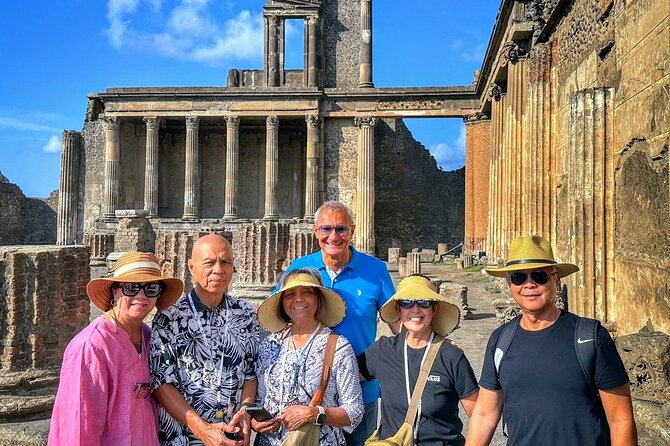
From baths and markets, you shift into domestic space at the Casa del Fauno, one of Pompeii’s larger houses. The clue for wealth starts right away: you can perceive the social level of the owner just from the street.
This stop tends to work well because it trains your eyes. Instead of treating rooms like disconnected ruins, you start to notice the layout choices that signal status—space planning, decorative emphasis, and the feeling of ownership carved into the building.
A larger house also gives you a sense of what “home” meant for different Romans. Pompeii isn’t only temples and theaters; it’s everyday status display, built into the walls.
Teatro Grande and Anfiteatro Romano: entertainment at city scale
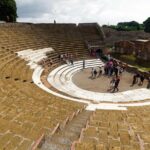
Next up is classic Roman drama and crowds, starting with the Teatro Grande. This theater was built around the middle of the 2nd century BC, and it hosted Greco-Roman comedies and tragedies. The value here is in understanding how performance space shaped social life.
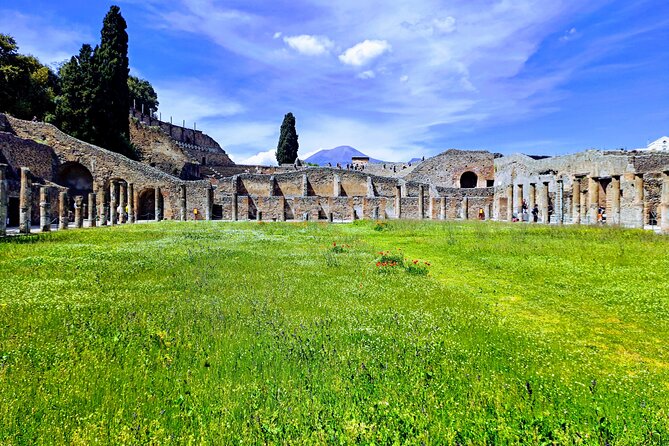
Then the tour hits the Anfiteatro Romano, described as the oldest amphitheater in the Roman world. Built around 70 BC, it could hold up to 20,000 spectators—a staggering number that makes the city’s ability to gather people feel real, not abstract.
If you’re wondering why amphitheaters matter in the Pompeii story, it’s simple: public entertainment reveals how Roman culture organized leisure, drew crowds, and turned power into shared spectacle. In a few hours, this pair of stops gives you a full arc of how people spent free time and how the city handled mass gatherings.
Via dell’Abbondanza: the shopping street you can actually picture
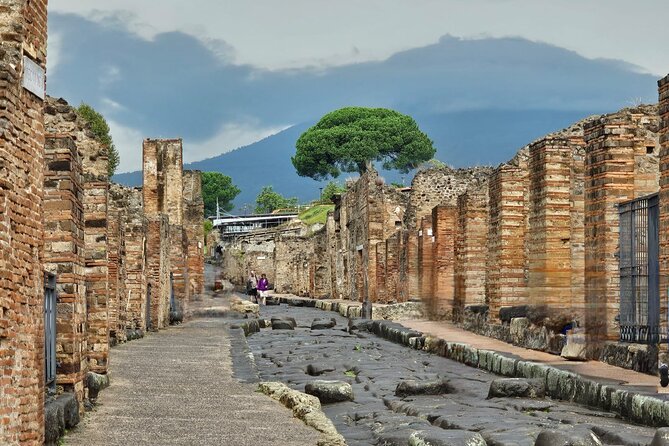
A great mid-tour breather comes through Via dell’Abbondanza, one of Pompeii’s most important streets and its shopping spine. This is where you can start imagining what it felt like to walk through the city for daily purchases.
It’s also a smart stop for photo timing and pacing. When your brain is overloaded from forums, baths, and amphitheaters, a street stop lets you reconnect to the simple idea of movement—buying, browsing, and going somewhere specific.
If you like seeing how commerce shapes a city, don’t rush this section. Even when you’re walking quickly, the street context helps you understand why certain buildings would have been active all day.
Casa dei Vettii and Priapus: the most striking “home” stop
One of the most praised parts of this tour flow is time spent at Casa dei Vettii, described as among the richest and most famous houses in Pompeii. The guide’s explanation often highlights how the house was protected under the god Priapus, associated with prosperity.
That’s a meaningful detail because it links decoration to belief and economic identity. In many of these homes, art and symbolism aren’t just decoration; they communicate values, hopes, and social positioning.
If you want a standout stop that feels visual and story-driven, this is often the one. The house is described as richly decorated, which helps you focus on the human side of Pompeii rather than only the civic side.
Panificio di Popidio Prisco: a bread stop that turns into real context
Most people think of Pompeii as ruins and big buildings. The Panificio di Popidio Prisco bakery stop changes that. You get an explanation of how bread was produced, which reframes Pompeii as a place with daily systems—food supply, labor routines, and neighborhood needs.
A bakery isn’t just a building. It’s a window into repetition: dough, heat, timing, and demand. When you hear how bread production worked, you start understanding why market streets and cooking spaces mattered so much.
In a short 5-hour tour, this kind of practical everyday stop is excellent value. It makes Pompeii feel lived-in, not only tragic.
Basilica and the Forum’s business heart
To close the civic loop, the tour includes the Basilica, described as the most sumptuous building in the Forum. This is where management of business and justice took place.
This matters because it connects the Forum’s open space to real decisions and real work. You’re not just looking at architecture; you’re seeing the machinery of Roman civic life.
By the time you reach this stop, you’ve already seen worship (Apollo), commerce (Macellum and Via dell’Abbondanza), and entertainment (theater and amphitheater). The Basilica gives you the governance piece, helping the whole city snap into focus.
Price and logistics: is $216.27 worth it?
At $216.27 per person for about 5 hours, you’re paying for structure: private guiding, included admission ticket access across multiple key sites, and round-trip organization from Naples.
Here’s how I think about value for a cruiser day:
- You’re not paying only for ruins. You’re paying for time saved from navigating Pompeii and figuring out what matters most.
- A private format reduces friction. Even if you’re fit and confident, Pompeii still takes concentration. Having someone point the story out to you is the difference between seeing and understanding.
- Transport is included, using a 2014 Peugeot 3008, with bigger vehicles available on request if needed (with a supplement). That reduces the “how do we get there” problem.
Is it the cheapest option? Usually, no. But if your goal is a high-impact highlights tour with less hassle, this is priced in the sweet spot for cruisers who want maximum payoff without turning the day into a DIY stress test.
Who should book this Pompeii private tour
This tour is a strong fit if you:
- are visiting Pompeii from a cruise and want a clear start point at Stazione Marittima
- prefer a private pace over large groups
- want a guided route that mixes civic life, markets, homes, and entertainment in one go
- like context, not just sightseeing boxes to check
It may not be the best match if you:
- want to slow down for every single street and side alley (5 hours is highlights only)
- dislike surprise explicit details, since the Suburban Baths include erotic wall images in the changing room
If you do book, I’d plan on a steady walking pace and think of the tour like a curated storyline. You’ll remember the city more because you’ll understand the parts.
Should you book this Pompeii private tour from Naples?
Yes—if your priority is a well-run cruise day with top Pompeii stops arranged in a logical order, this is an easy choice. The combination of private pacing, included access to major sites, and a start/finish setup at Stazione Marittima keeps the day from turning into logistics.
If you want to experience Pompeii like a living city—markets, worship spaces, homes, and public entertainment—this route gives you that balance in one package. Just be honest with yourself about time: you’re here for the highlights, not an endless wander day.
FAQ
Where is the meeting point in Naples?
You meet at Stazione Marittima, 80133 Napoli NA, Italy.
How long is the Pompeii private tour from Naples?
The tour runs for about 5 hours (approx.).
Is this tour private or shared with other groups?
It’s private. Only your group participates.
What language is the tour offered in?
The tour is offered in English.
Are admission tickets included for the stops?
Yes. Admission tickets are included for the listed Pompeii stops.
What vehicle is used for transportation?
Transport is provided in a Peugeot 3008 (2014 model). Larger cars or mini vans can be requested with a supplement.
More Tours in Naples


More Tour Reviews in Naples

More Pompeii Tours to Compare

More Naples tours, freshly reviewed




Pompeii Tours, compared.
 ★ 4.8Pompeii: Entry Ticket and Guided Tour with an ArchaeologistFrom $3519,459 reviews
 ★ 4.1Pompeii: Entry Ticket with Audio GuideFrom $4013,491 reviews
 ★ 4.8Pompeii: Small Group Tour with an ArchaeologistFrom $4012,264 reviews
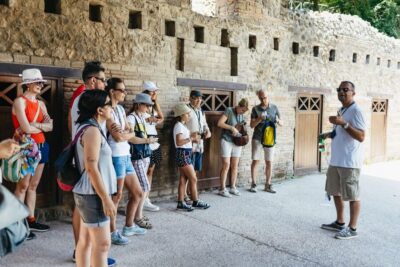 ★ 4.3Pompeii Ruins & Mount Vesuvius Day TourFrom $12011,459 reviews
★ 5.0Pompeii Small Group Tour with an ArchaeologistFrom $356,593 reviews
★ 4.3Pompeii Ruins & Mount Vesuvius Day TourFrom $12011,459 reviews
★ 5.0Pompeii Small Group Tour with an ArchaeologistFrom $356,593 reviews
 ★ 4.5Skip-the-line Pompeii – Small Group TourFrom $544,401 reviews
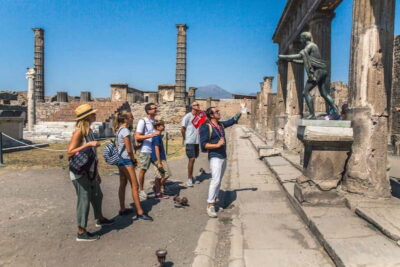 ★ 4.6Naples or Sorrento: Full-Day Pompeii and Mount Vesuvius TourFrom $1044,235 reviews
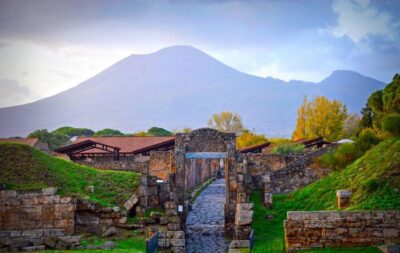 ★ 3.9Pompeii: Skip-the-line Entry Ticket with Audio Guide & MapFrom $433,153 reviews