
Review · POMPEII TOURS
Pompeii Guided Walking Tour – Skip-the-Line Priority Access
Skip the ticket line in Pompeii. This guided walking tour makes it practical to see key parts of Pompeii fast, starting at Porta Marina Inferiore and moving through the Forum, baths, and standout homes like the House of the Faun. I really like the priority access for getting your entrance taken care of, and I also like how the route is built for a clear overview without turning into a marathon. The main drawback to plan around: Pompeii is enormous, so in 2 hours you’ll focus on the central highlights rather than seeing every corner.
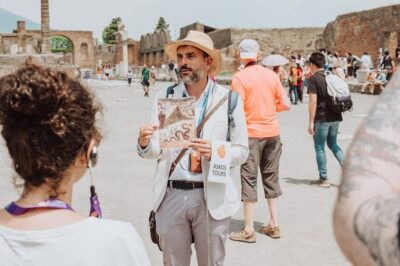
Meet your official guide at Porta Marina Inferiore in Piazza Esedra, with a board showing the local tour operator logo. Wear comfortable shoes, because you’re on real Roman streets and uneven excavated ground, and you’ll walk enough that better footwear is genuinely worth it.
In This Review
- The “Skip-the-Line” Reality: What Priority Access Means Here
- Meeting at Porta Marina Inferiore: Getting Started Without Stress
- Two Hours in the Heart of Pompeii: The Route That Makes Sense
- The Forum, Basilica, and Temple Area
- Baths and Social Life: Forum Baths and Stabian Baths
- Via dell’Abbondanza and the Shops: Where Everyday Life Fits In
- The House of the Faun: Elite Taste in Private Space
- Lupanar and Leisure: Roman Social Customs in Plain View
- Recently Excavated Areas: New Finds Before the Volcanic End
- Price and Value: Is $47 for Two Hours Worth It?
- How This Tour Fits Different Travelers
- When Pompeii Is Free on the First Sunday
- Quick Practical Tips Before You Go
- Should You Book This Pompeii Guided Walking Tour?
- FAQ
- How long is the Pompeii guided walking tour?
- Where do I meet the guide?
- What’s included in the price?
- Is transport included?
- Will I be able to skip the ticket line?
- What languages are available?
- What should I bring?
- Is the entrance free on the first Sunday of each month?
- Can I cancel for a refund?
- How much does it cost?
The “Skip-the-Line” Reality: What Priority Access Means Here
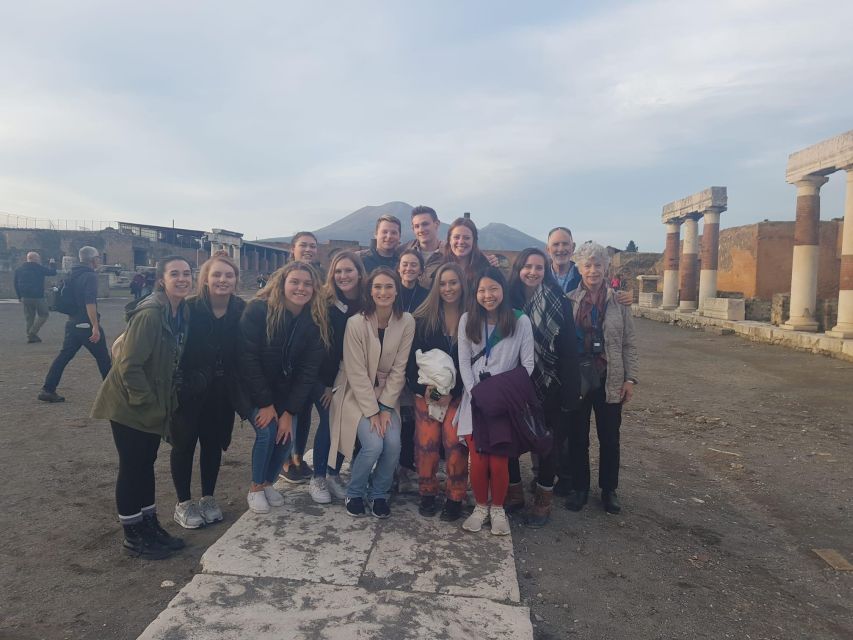
Pompeii can be slow in peak hours, so this tour’s value starts before you even begin walking. You get priority access to buy your entrance ticket, plus the entrance fee is included in the price. That combo matters because it reduces one of the biggest time-wasters in Pompeii: standing around while the rest of the group is still waiting for paper tickets.
What you should expect, though: skip-the-line access here is about getting through the ticket-buying step efficiently. Once you’re inside, the tour becomes a timed walking experience—so it’s not about hiding from the crowds inside the site, and it’s not about trying to cover everything.
Which Pompeii ticket and guide? Compare a few more.
- From Naples: Pompeii Ruins & Mount Vesuvius Day Tour★ 4.3 · 11,459 reviews
- From Naples: Skip-the-line Pompeii – Small Group Tour★ 4.5 · 4,401 reviews
- Naples or Sorrento: Full-Day Pompeii and Mount Vesuvius Tour★ 4.6 · 4,235 reviews
- Pompeii & Mt.Vesuvius Day Tour from Naples with Pizza Lunch★ 4.0 · 2,901 reviews
Meeting at Porta Marina Inferiore: Getting Started Without Stress
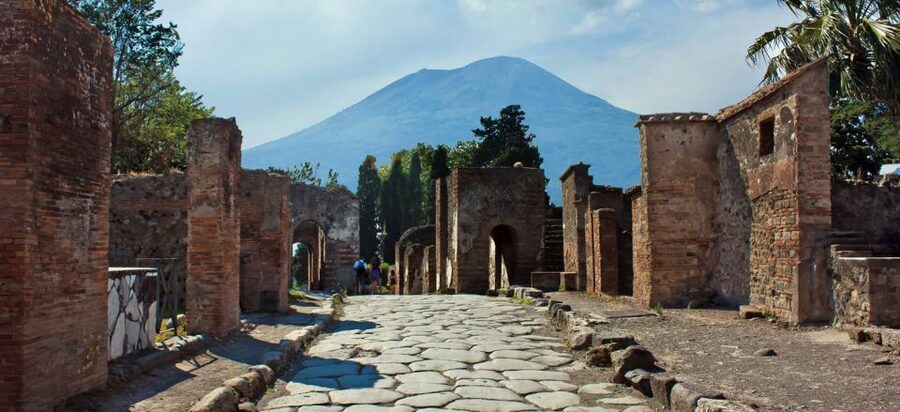
Your meeting point is specific: Porta Marina Inferiore, in Piazza Esedra. Your guide will carry a board with the local tour operator logo, which is helpful when you’re scanning the area. I recommend arriving a few minutes early so you’re not rushing through the last few steps while trying to spot the group.
If you’re the type who likes a clear plan, this is a good tour to choose. The route is set, and the guide leads the pace. That said, the one practical risk in Pompeii is simple: if you arrive late or you miss the meeting moment, it can take time to regroup. Bring a little patience and give yourself a buffer.
Also note the practical stuff: bring comfortable shoes. If you’re traveling with children, the tour info calls out the need for a passport or ID card for children.
Two Hours in the Heart of Pompeii: The Route That Makes Sense
This itinerary is designed around a central Pompeii route, not a long, sprawling tour of the entire archaeological site. In other words, it’s built for people who want the big ideas and the most recognizable spaces, not people chasing every single excavation trench.
The walk starts at Porta Marina Inferiore, once the main gateway connecting Pompeii to its harbor. Walking through it gives you an immediate sense of how the city moved people and goods. Then you transition onto original Roman streets toward the Forum, which is where Pompeii’s public life concentrated—politics, religion, and commerce under the same roof, so to speak.
The Forum, Basilica, and Temple Area
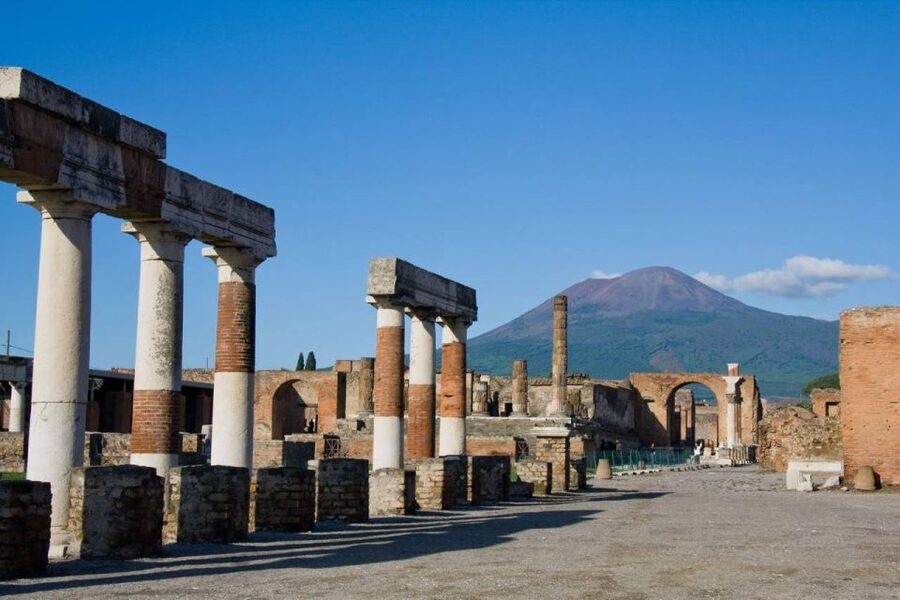
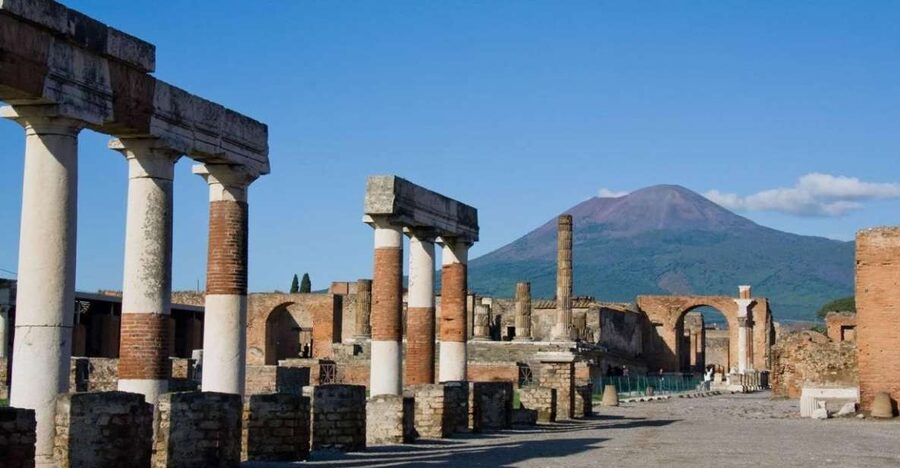
In the Forum area, you’ll see major monumental buildings such as the Basilica, the Temple of Jupiter, and the Temple of Apollo. Even if you’ve seen photos before, this is where you really start to understand scale: Pompeii wasn’t a small town you can casually wander in an afternoon. The Forum is the heart, and the guide’s job is to connect what you’re seeing to how people used it.
What I like about including these specific sites is that they quickly explain the city’s structure. You’re not just looking at stones—you’re learning why these buildings mattered to daily life and civic identity. If you’re the kind of traveler who enjoys context while you walk, the Forum stop is the best place for that.
One caution: because Pompeii is full of important spots, a 2-hour tour naturally skips some places. If your personal “must see” list is huge, you’ll have to choose. This tour focuses on the central highlights comfortably within the time limit.
Baths and Social Life: Forum Baths and Stabian Baths
After the civic center, the tour moves toward Pompeii’s public relaxation spaces, including the Forum Baths or the Stabian Baths. Baths were more than hygiene. They were meeting points, places to chat, and a daily routine for many people.
I love this shift in pace because it changes the feel of the tour. The Forum gives you power and ceremony; the baths show you ordinary habits and social structure. You start thinking in terms of routines—when people gathered, what spaces were used for leisure, and how urban design supported that.
Even though you’re walking through ruined structures, the baths stop often helps visitors picture the rhythm of life right before the eruption.
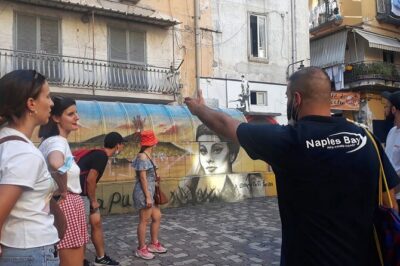
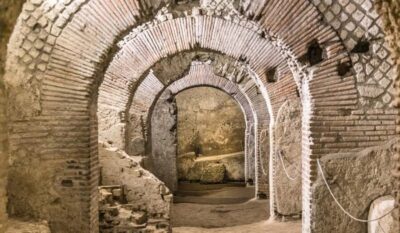
More of Naples at street pace




Via dell’Abbondanza and the Shops: Where Everyday Life Fits In
Then comes one of Pompeii’s most famous street experiences: Via dell’Abbondanza. This street is lined with ancient shops, bakeries, and taverns—exactly the kind of details that help you stop thinking of Pompeii as a museum and start thinking of it as a living city.
This is a great section for photos too, because street-level scenes are where your brain connects most easily. Still, keep your pace: the tour route is time-based. If you stop too long, you may feel like you’re rushing at later stops.
Also, if you’re the type who wants more about day-to-day routine, this is the part where that focus can happen most naturally. Even when the guide moves quickly, the street setting itself supports the everyday-life angle.
The House of the Faun: Elite Taste in Private Space
One of the standout stops is the House of the Faun, described here as one of Pompeii’s largest and most luxurious private homes. This is where you see how the wealthy lived, how architecture signaled status, and how art—like mosaics—showed off taste and money.
I like this stop for a simple reason: it balances the public spaces you’ve already seen. The Forum and baths tell you about shared city life. A major elite residence tells you what distinction looked like, and how far different social classes could be from each other within the same city.
You’ll also get a sense of why guides emphasize Pompeii’s mosaics and refined design elements. Even in ruin, the planning and decoration show intention. It’s not random beauty; it’s a window into identity.
Lupanar and Leisure: Roman Social Customs in Plain View
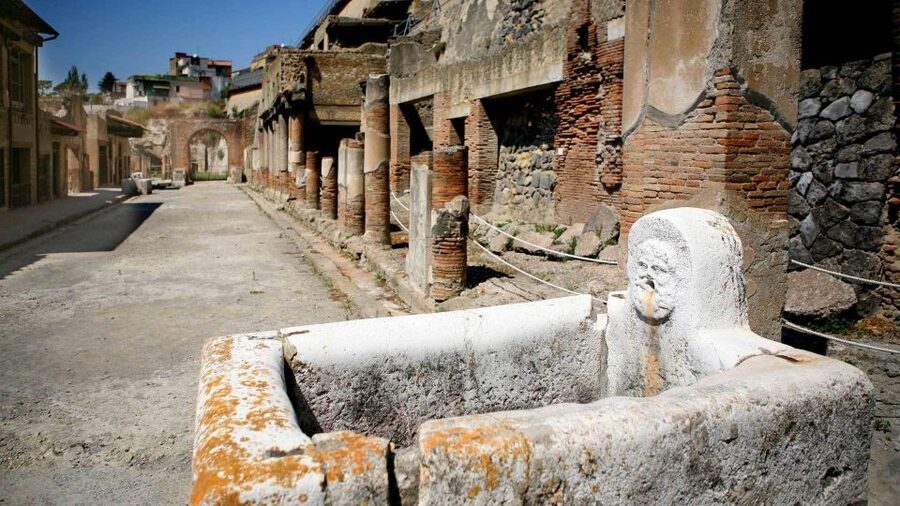
A tour like this also includes a visit to the Lupanar, a brothel, used to learn about Roman leisure time and social customs. This stop can feel uncomfortable to some people, and that’s normal. But as a historical site, it adds a layer people often miss: not only the official religion and politics, but also the everyday behavior and entertainment options that shaped how people passed time.
What you’ll likely take away is that Pompeii’s social world wasn’t only formal. It also included spaces that were transactional, private, and very much part of the city’s economy of desire.
If you’re hoping for a purely polished version of history, this stop may not fit your mood. If you want the whole picture—even the parts that make you squirm a little—this is a useful inclusion.
Recently Excavated Areas: New Finds Before the Volcanic End
An interesting part of the tour is that it includes recently excavated areas and new archaeological findings, giving a fresh perspective on Pompeii’s final days before the eruption of Mount Vesuvius in 79 AD.
This matters because Pompeii isn’t static. Excavation continues, and new discoveries can change how we interpret what we’re seeing. Even without getting lost in technical detail, the idea here is that you’re not only viewing what was known long ago—you’re seeing how scholarship keeps updating the story.
It’s also a reminder that Pompeii is still being pieced together. That framing can make your entire visit feel more alive, like you’re part of the ongoing work of understanding the past.
Price and Value: Is $47 for Two Hours Worth It?
At $47 per person for a 2-hour guided experience, the big question is value. Here’s how I’d think about it:
You’re getting:
- A professional, authorized guide for the walk
- Priority access to buy your entrance ticket
- The entrance fee included
Where the value really shows up is in time and clarity. Pompeii rewards a guided approach because so many details are easy to miss if you’re walking alone. A good guide helps you connect what you see to what it meant—Forum to civic life, baths to routine leisure, street shops to daily economy, and elite homes to social hierarchy.
If you can’t comfortably build time for ticket lines and you want an overview that makes the site click, this price can feel fair. If you already have a lot of experience with Pompeii or you travel best with total freedom, then a self-guided visit might be cheaper—but you’ll lose the structured connections the guide provides.
For most first-timers, this looks like a solid deal: you’re not just buying access to ruins; you’re buying a guided lens that turns those ruins into a readable city.
How This Tour Fits Different Travelers
This tour is a good fit if you:
- Want a timed, high-impact overview of Pompeii’s central highlights
- Prefer a guide to explain what you’re seeing as you walk
- Like mixing public civic spaces, everyday street life, and elite residence architecture
- Would rather manage your time with a plan than wander and risk missing key areas
It may be less ideal if you:
- Want to spend hours in depth at fewer sites (you may feel the tour moves on quickly)
- Have a very specific “must see” list that isn’t central to the standard route
- Struggle with meeting points in busy, crowded settings
A couple of reviews also point to a mismatch that can happen with guided tours: if you want more focus on everyday life details and less on building-by-building historical explanation, you may wish the pacing suited you differently. You can solve that partly by being clear with yourself: decide what you want most—context, atmosphere, or deep detail—and plan your expectations accordingly.
When Pompeii Is Free on the First Sunday
One important scheduling note: on the first Sunday of each month, entrance is free. But because tickets can’t be reserved ahead of time, entry isn’t guaranteed. That means you could show up during the free-entry window and still have uncertainty.
If you’re traveling at the start of the month, I’d treat it as a bonus chance, not a reliable plan. Booking a tour with priority access is still useful for getting your visit organized, but you should expect that free-entry days can add variables to entry flow.
Quick Practical Tips Before You Go
- Bring comfortable shoes. The site is uneven and you’ll be on your feet for the full route.
- Do some light planning: decide what you want from Pompeii. This tour is best for an overview with strong anchor stops.
- If you care a lot about photos, move with the group but plan for quick pauses. The tour is designed to cover stops efficiently.
- If you’re easy to lose in a crowd, arrive a few minutes early at Porta Marina Inferiore so you can spot your guide quickly.
Should You Book This Pompeii Guided Walking Tour?
I’d book this tour if you want the smart first visit: a guided route that takes you into Pompeii’s main civic spaces, everyday streets, baths, elite homes, and even the Lupanar, all wrapped into a manageable 2 hours. The price makes more sense when you factor in the entrance fee and the priority ticket access, because you’re paying for time saved and for interpretation that helps the ruins actually make sense.
I would not book it if you’re aiming to see Pompeii in total depth or you dislike tours that keep moving through multiple key spots. In that case, consider adding extra time on your own before or after the guided portion, so you can return to the places that grab you.
If this is your first time in Pompeii and you want a clear, efficient, and genuinely informative walk, this is a strong pick.
FAQ
How long is the Pompeii guided walking tour?
The tour lasts 2 hours.
Where do I meet the guide?
Meet at Porta Marina Inferiore in Piazza Esedra. Your guide will have a board with the local tour operator logo.
What’s included in the price?
The tour includes a 2-hour guided tour with an authorized professional guide, priority access to buy the entrance ticket, and the entrance fee.
Is transport included?
No, transport is not included.
Will I be able to skip the ticket line?
Yes. The tour offers skip-the-line priority access to buy your entrance ticket.
What languages are available?
The live tour guide is available in English and Italian.
What should I bring?
Wear comfortable shoes. If traveling with children, bring a passport or ID card for children.
Is the entrance free on the first Sunday of each month?
Yes, entrance is free on the first Sunday of each month, but tickets can’t be reserved ahead of time, so entry isn’t guaranteed.
Can I cancel for a refund?
Yes. Free cancellation is available up to 24 hours in advance for a full refund.
How much does it cost?
The price is $47 per person.
More Tours in Naples




More Tour Reviews in Naples

More Pompeii Tours to Compare


More Naples tours, freshly reviewed





Pompeii Tours, compared.
 ★ 4.8Pompeii: Entry Ticket and Guided Tour with an ArchaeologistFrom $3519,459 reviews
 ★ 4.1Pompeii: Entry Ticket with Audio GuideFrom $4013,491 reviews
 ★ 4.8Pompeii: Small Group Tour with an ArchaeologistFrom $4012,264 reviews
 ★ 4.3Pompeii Ruins & Mount Vesuvius Day TourFrom $12011,459 reviews
★ 5.0Pompeii Small Group Tour with an ArchaeologistFrom $356,593 reviews
★ 4.3Pompeii Ruins & Mount Vesuvius Day TourFrom $12011,459 reviews
★ 5.0Pompeii Small Group Tour with an ArchaeologistFrom $356,593 reviews
 ★ 4.5Skip-the-line Pompeii – Small Group TourFrom $544,401 reviews
 ★ 4.6Naples or Sorrento: Full-Day Pompeii and Mount Vesuvius TourFrom $1044,235 reviews
 ★ 3.9Pompeii: Skip-the-line Entry Ticket with Audio Guide & MapFrom $433,153 reviews
Browse the lists this tour appears in