
Review · POMPEII TOURS
Pompeii and Vesuvius Tour with Pickup
Pompeii and Vesuvius in one day is a big win. I like how this tour keeps things small (max 10) and gives you a fun vintage classic van ride instead of getting squeezed into buses and waiting around. The day is built for momentum: Pompeii first, then a guided climb to the Vesuvius crater for close-up views and science talk.
My only real caution is logistics around what you pay for and how pickup works. The Pompeii entrance ticket isn’t included, so you should plan for that extra cost, and pickup details can be a little unclear depending on where you’re starting from. Also, communication can vary—so if English support matters to you, it’s smart to confirm before you go.
In This Review
- Key highlights worth caring about
- What you’re really buying for $145.45
- Pickup and the meeting point: how to avoid a stressful start
- Pompeii Archeological Park: a guided tour that moves you past the stuck points
- Foro de Pompeya (Forum): the city’s center in stone
- Macellum: the market where people ate, traded, and gathered
- Casa del Fauno: luxury that shows what Romans valued
- Teatro Grande: a theater frozen mid-performance
- Via dell’Abbondanza: Pompeii’s main street concept
- The Pompeii snack + free time block: use it wisely
- Vesuvius crater day: what makes this climb feel different
- Vesuvius National Park time: the best photos and the science talk
- Price and logistics reality check (the part that decides if it’s worth it)
- Who this tour fits best (and who might want a different option)
- Should you book Pompeii and Vesuvius with Pickup?
- FAQ
- How long is the tour?
- Is there pickup included?
- What’s included in the price?
- Do I need to buy Pompeii tickets?
- How big is the group?
- Is Vesuvius guided?
- Are snacks provided?
- Where does the tour start and end?
- What should I bring?
Key highlights worth caring about
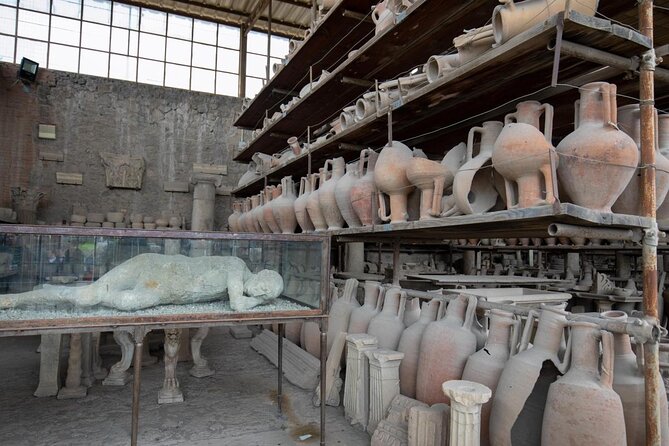
- Max 10 people for a calmer pace through Pompeii
- Licensed English/Italian guide for the Pompeii park so you’re not just wandering
- Vintage classic van makes the ride part of the experience
- Snacks included to keep energy up before the Vesuvius climb
- Volcanological mountain guides on Vesuvius who walk you along the crater path and point out fumaroles
- Pompeii ticket extra while Vesuvius entrance is included
Which Pompeii ticket and guide? Compare a few more.
- From Naples: Pompeii Ruins & Mount Vesuvius Day Tour★ 4.3 · 11,459 reviews
- From Naples: Skip-the-line Pompeii – Small Group Tour★ 4.5 · 4,401 reviews
- Naples or Sorrento: Full-Day Pompeii and Mount Vesuvius Tour★ 4.6 · 4,235 reviews
- Pompeii & Mt.Vesuvius Day Tour from Naples with Pizza Lunch★ 4.0 · 2,901 reviews
What you’re really buying for $145.45
This is priced like a “do it all” day trip, and the value comes from two things: transportation that saves time, plus guided time where it matters.
You get private transportation and a vintage classic van, which is a real upgrade over the typical scatter-and-wait approach. Instead of figuring out connections on your own, you’re on a schedule that strings together Pompeii’s key stops and then gets you up to Vesuvius. With an 8-hour day, that structure matters.
The other value piece is guidance at the right moments. You have a licensed multilingual guide (English/Italian) around Pompeii’s main areas, and then volcanological mountain guides take over for the crater walk. That’s the difference between seeing ruins and understanding why they’re arranged the way they are—and between looking at Vesuvius from a distance and walking the crater route with explanations.
One budget heads-up: Vesuvius entrance is included, but Pompeii entrance is not included. So your real total will depend on your Pompeii ticket.
Pickup and the meeting point: how to avoid a stressful start
The tour starts in Castellammare di Stabia (meeting point: 80053 Castellammare di Stabia) and ends back there. Pickup is listed as offered, but several people have run into confusion about whether pickup is actually from their exact accommodation.
Here’s the practical move: before you book, confirm two things in plain language:
- Where exactly does pickup happen for your address?
- If pickup doesn’t cover your hotel, what’s the exact meeting location and how do you get there?
This tour is designed for convenience, but convenience only works if the first handoff is clear. If you hate uncertainty, treat the meeting point as your fallback plan even if pickup is promised.
Also keep in mind that the driver and guiding team may use different languages depending on the day. One group noted that English communication from the driver was limited. If you’re counting on smooth English from start to finish, message ahead and ask what languages are typically available during the drive.
Pompeii Archeological Park: a guided tour that moves you past the stuck points
Pompeii is huge. Without help, you can spend half the day walking between major sights and still miss the “why this matters” details.
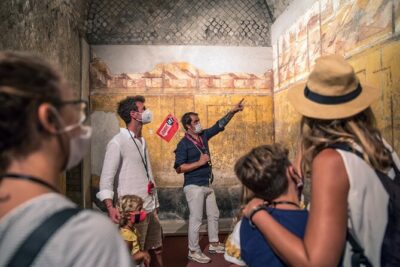
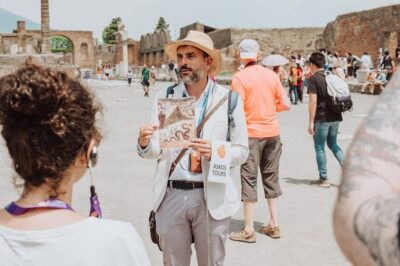
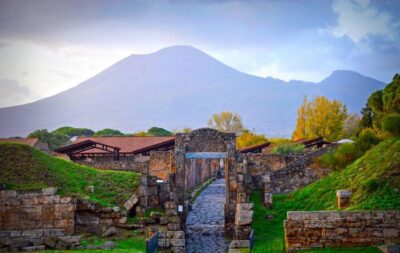
The day starts at Pompeii Archeological Park with your licensed multilingual guide. This is where the time-saving is real: you’re not just purchasing entry and wandering. You’re getting a route that hits the core areas and helps you connect the dots.
Then the tour flows through several high-impact stops (each around 15 minutes, except the first and the free time break later). Think of these as guided snapshots that create a mental map.
Foro de Pompeya (Forum): the city’s center in stone
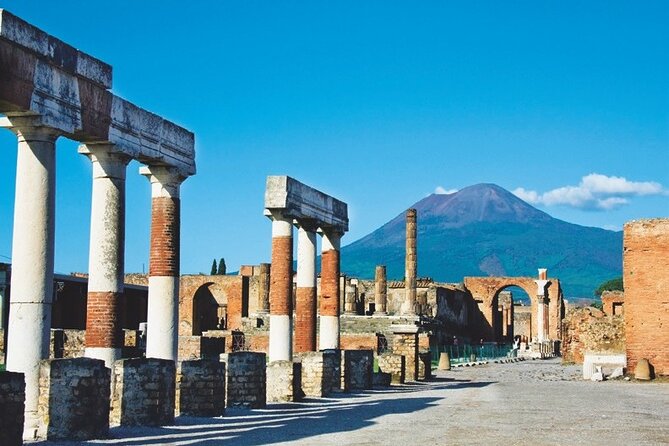
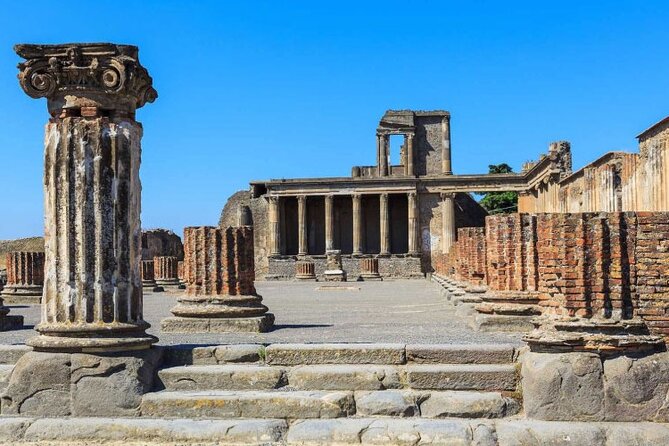
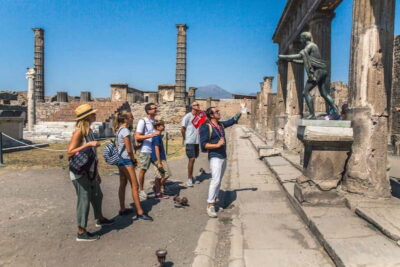
You’ll head to the Forum, the main square where political, economic, and religious life converged. This is one of Pompeii’s best-preserved spaces, so even a short visit gives you a strong sense of the city’s layout and power centers.
If you want a fast win, spend your energy looking at the way the buildings define the space. The Forum is less about one object and more about how the city organized authority and everyday life in the same public heart.
More ways up the crater, side by side



Macellum: the market where people ate, traded, and gathered
Next is the Macellum, Pompeii’s provision market located on the Forum area. Even in ruins, markets tell a story: movement, commerce, and routine. The key is to connect it to location. If you understand where food supply sat, you start to understand how people lived day-to-day.
Casa del Fauno: luxury that shows what Romans valued
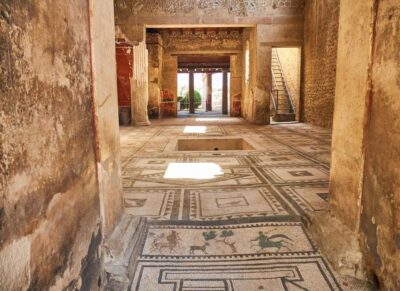
Then comes the House of the Faun (Casa del Fauno)—one of Pompeii’s most luxurious aristocratic homes. It’s especially useful because it reflects Roman republican-era style better than most evidence you’ll see even in Rome.
In a short stop, don’t try to memorize details. Instead, look for what signals wealth: the design choices and the sense of space. This is the kind of place where you can feel how “private” wealth differed from the public buildings around it.
Teatro Grande: a theater frozen mid-performance
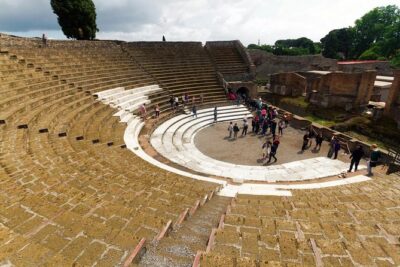
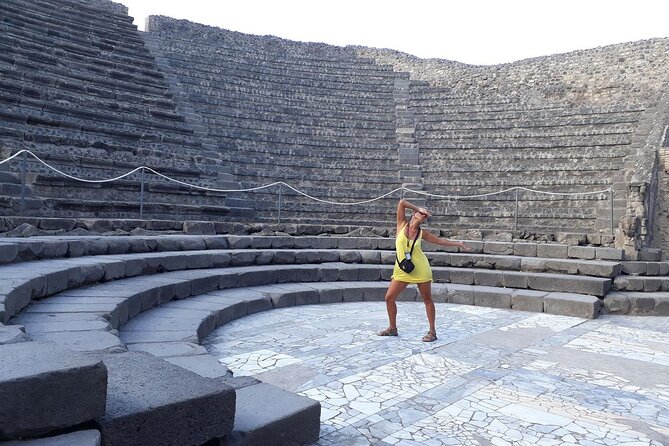
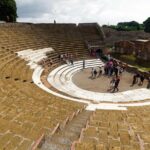
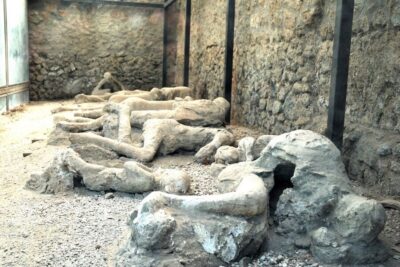
The Teatro Grande is buried by the AD 79 eruption and later uncovered. A theater is always a good Pompeii stop because it shows the social side of life: gatherings, spectacle, and civic identity.
What I like about this stop is the contrast. You’re standing in a place designed for applause and drama, but now it’s a quiet reminder of what the eruption interrupted.
Via dell’Abbondanza: Pompeii’s main street concept
You also walk Via dell’Abbondanza, which connects big city zones between the Forum and Porta Sarno. This street acts like a spine that links major sites—stopping you from seeing Pompeii as isolated rooms.
Even if you only walk it briefly, you’ll come away with a practical sense of where the neighborhoods and public buildings sat relative to each other.
The Pompeii snack + free time block: use it wisely
After the main set of guided stops, there’s a pause for snacks and a drink, plus free time for about an hour.
This is the moment to do what guided segments can’t. Use the hour to:
- Walk slowly with your new mental map
- Go back to one stop that you want to see more closely
- Take photos when the crowd energy shifts
If you’re the type who loves ruins but hates rushing, this break is your friend. And because snacks are included, you’re less likely to spend the day hunting for food while the clock runs.
Vesuvius crater day: what makes this climb feel different

Once Pompeii is in the rearview, the tour shifts from archaeology to volcano reality. This part is where the experience can turn from “ruins day” into “story day.”
You go up toward the crater in a minivan. At the top, you pass a checkpoint, then walk along a path that leads to the crater route. Your group gets gathered into smaller teams, and the volcanological mountain guides explain the crater features as you go.
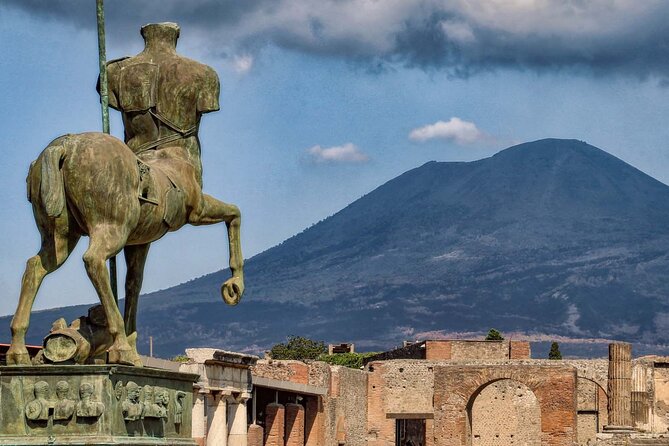
One detail worth planning for: the guides point out fumaroles, gas outlets that rise toward the sky. That’s not just scenery. It’s the living chemistry of Vesuvius, and it helps the crater feel real instead of abstract.
Also, bring something to protect your head and face. One review noted that a hat would have been helpful. Even if the day isn’t blazing, the crater approach can be exposed and bright.
Vesuvius National Park time: the best photos and the science talk
After arriving, you get about 2 hours in Vesuvius National Park with the crater guide experience. The route is guided, and the point is to balance viewpoint time with explanation.
For photos, aim to capture the crater from a few angles, not just one. The “wow” moment is fast, but the best images usually come when you’re standing still long enough to frame the fumaroles and the crater’s shape. Guides often slow the group at key points, which is helpful if you want steadier shots.
This is also the segment where I think a small group helps. The guide can actually talk to you, not just herd you. With a max of 10 people, you’re more likely to get attention when questions pop up.
Price and logistics reality check (the part that decides if it’s worth it)
At $145.45 per person, this tour costs what many people pay for transport alone in peak season—especially when you factor in that Vesuvius entrance is included and you’re getting snacks plus guided time.
The main cost surprise is Pompeii admission. If you budget only for the sticker price, you’ll feel it later. If you budget for Pompeii entrance up front, the rest becomes the kind of day trip where you don’t keep stopping to solve problems.
There are also two “day-ruiner” risks to watch:
- Pickup mismatch: If pickup isn’t where you expected, you may end up paying extra to reposition.
- Communication gaps: If English support is limited on the drive, you’ll rely more on the Pompeii guide and the volcano guides during their parts.
To keep this smooth, confirm:
- Pickup address coverage vs. meeting point fallback
- Languages available for the Pompeii guide
- Whether you’ll need to buy Pompeii tickets on your own the day of
Who this tour fits best (and who might want a different option)
This is ideal if you:
- Want a single-day hit of Pompeii plus Vesuvius
- Like the idea of guided context rather than just ruins hopping
- Prefer a small-group pace capped at 10
- Care about the crater being guided by volcanological mountain guides
It’s less ideal if you:
- Hate last-minute ticket purchases and expense add-ons (Pompeii entrance isn’t included)
- Need guaranteed pickup from a very specific hotel location
- Require heavy English narration during the drive for the entire day
If you’re the type who enjoys planning, you can make this work great. If you want zero moving parts, you’ll need to confirm the start details carefully.
Should you book Pompeii and Vesuvius with Pickup?
I think this is a solid book if you treat it as a structured, guided day with a clear focus: Pompeii’s core sights, then a crater walk with real volcano guidance.
The biggest “yes” factors are small-group size, guided Pompeii time, the vintage classic van, and the crater route led by volcanological mountain guides. The biggest “pause” factors are Pompeii ticket cost and the need to confirm pickup coverage so the first step doesn’t turn into extra travel.
If you confirm the pickup point in writing (or plan to meet at Castellammare di Stabia), you’re likely to end the day feeling like you packed two of Campania’s biggest natural and ancient stories into one efficient, memorable outing.
FAQ
How long is the tour?
It’s about 8 hours.
Is there pickup included?
Pickup is offered, and the activity starts from Castellammare di Stabia (meeting point in that area). You should confirm the exact pickup arrangement for your address.
What’s included in the price?
You get private transportation, a ride on a vintage classic van, Vesuvius entrance, and snacks.
Do I need to buy Pompeii tickets?
Yes. The Pompeii entrance ticket is not included.
How big is the group?
The tour is capped at a maximum of 10 travelers.
Is Vesuvius guided?
Yes. Volcanological mountain guides lead you along the path toward the crater and explain features like fumaroles.
Are snacks provided?
Yes, snacks are included, along with a snack and drink stop during the Pompeii portion.
Where does the tour start and end?
It starts at 80053 Castellammare di Stabia and ends back at the meeting point.
What should I bring?
Bring a hat, water, sunscreen, a camera, and wind-protective clothing.
More Tour Reviews in Naples




Up Vesuvius, More Ways to Climb


More Pompeii Tours to Compare

More Naples tours, freshly reviewed




Pompeii Tours, compared.
 ★ 4.8Pompeii: Entry Ticket and Guided Tour with an ArchaeologistFrom $3519,459 reviews
 ★ 4.1Pompeii: Entry Ticket with Audio GuideFrom $4013,491 reviews
 ★ 4.8Pompeii: Small Group Tour with an ArchaeologistFrom $4012,264 reviews
 ★ 4.3Pompeii Ruins & Mount Vesuvius Day TourFrom $12011,459 reviews
★ 5.0Pompeii Small Group Tour with an ArchaeologistFrom $356,593 reviews
★ 4.3Pompeii Ruins & Mount Vesuvius Day TourFrom $12011,459 reviews
★ 5.0Pompeii Small Group Tour with an ArchaeologistFrom $356,593 reviews
 ★ 4.5Skip-the-line Pompeii – Small Group TourFrom $544,401 reviews
 ★ 4.6Naples or Sorrento: Full-Day Pompeii and Mount Vesuvius TourFrom $1044,235 reviews
 ★ 3.9Pompeii: Skip-the-line Entry Ticket with Audio Guide & MapFrom $433,153 reviews
Browse the lists this tour appears in