
Review · POMPEII TOURS
Pompeii and Vesuvius Hike Small Group Priority Access from Naples
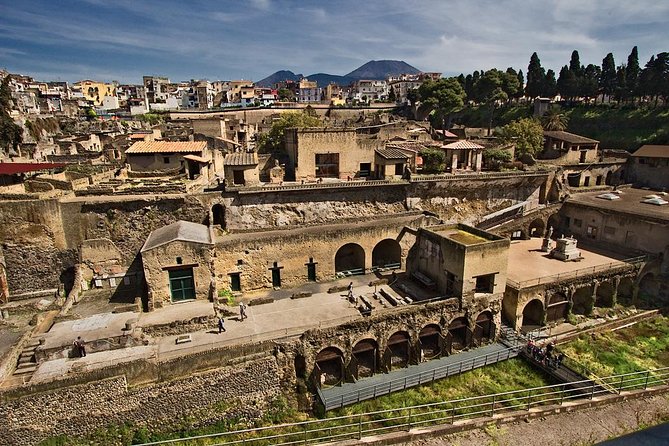
Vesuvius is a hike with an outcome. You get the blast radius of one of the world’s most famous volcanoes, then you head straight into Pompeii to walk streets and step inside Roman-era scenes. I like that this is built around skip-the-line priority and an archaeologist-led Pompeii portion, so you spend less time waiting and more time learning what you’re actually seeing. Guides such as Andrea and Luca were praised for turning everyday life in the ancient city into something you can picture.
The other big plus is the combo: you’re not just looking at ruins, you’re seeing the mountain that buried them. Still, the only real drawback is physical: the final part of the Vesuvius climb is a 25-minute uphill trek over volcanic gravel, plus you’re doing all of this on an early start. If you’re sensitive to steep, rocky paths, plan for slower steps and take breaks at the crater rim.
In This Review
- Key things to know before you go
- From Naples to Vesuvius: a day that runs on timing
- The Vesuvius climb: drive up, then the zigzag hike
- At the crater rim: what you’re really looking at
- Skip-the-line Pompeii: using priority the right way
- Pompeii’s highlights on a fast, focused guided route
- Theaters: Teatro Piccolo and Teatro Grande
- House of Menander: wealth you can see in decoration
- Stabian Baths: the oldest thermal complex in town
- Lupanar: brothel lane in plain sight
- Via dell’Abbondanza: Pompeii’s main street energy
- House of the Faun: scale and presence
- Foro de Pompeya and the Basilica: the civic center
- Small-group size: more questions, less standing around
- Guides and drivers: the human part you feel all day
- Price and value: $148.93 buys more than tickets
- What to bring and how to pace yourself
- Should you book this Pompeii and Vesuvius priority tour?
- FAQ
- What time does the tour start?
- How long is the experience?
- What does the tour include at Pompeii?
- Is skip-the-line entry included?
- When can the skip-the-line option not be accommodated?
- Is food included in the price?
- How big is the group?
- Do I need to bring an ID?
Key things to know before you go
- Priority access: skip-the-line entry to both Pompeii and Vesuvius helps a lot on a busy day
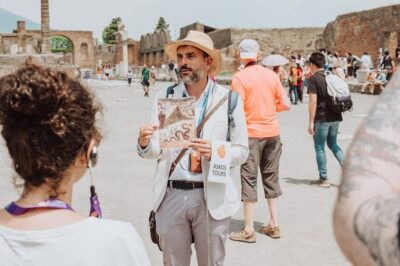
- A real Pompeii guide: a 2-hour Pompeii tour led by an archaeologist (not just a quick walk-through)
- Vesuvius effort is real: a drive climbs partway, then you do a final uphill hike over volcanic gravel
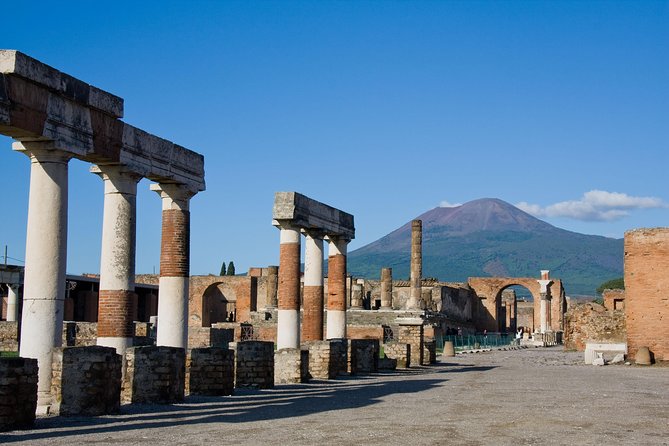
- Clear Pompeii route: you’ll see theaters, baths, a brothel area, major houses, and the main civic spaces
- Small group feel: maximum 19/21 travelers (and even smaller options exist), so questions don’t get lost
Which Pompeii ticket and guide? Compare a few more.
- From Naples: Pompeii Ruins & Mount Vesuvius Day Tour★ 4.3 · 11,459 reviews
- From Naples: Skip-the-line Pompeii – Small Group Tour★ 4.5 · 4,401 reviews
- Naples or Sorrento: Full-Day Pompeii and Mount Vesuvius Tour★ 4.6 · 4,235 reviews
- Pompeii & Mt.Vesuvius Day Tour from Naples with Pizza Lunch★ 4.0 · 2,901 reviews
From Naples to Vesuvius: a day that runs on timing
This is an 8-hour day that starts at 8:00am, and it’s designed like a well-timed train schedule: transport first, then the hike, then Pompeii while the day is still moving. You’ll ride in air-conditioned comfort with a driver, and you may also get an English-speaking assistant alongside the main guide. The goal is simple: reduce dead time.
It’s also a “big sights, efficient stops” format. Pompeii has a lot to see, so the route picks major anchors—places that explain how Romans lived, worked, and played. You’ll be able to follow the story because the day doesn’t just list monuments. It connects them.
If you’re coming from Naples, the structure is especially handy. You get port pickup and drop-off, and the tour ends back at the meeting point, so you’re not stuck guessing how to get home after a long day.
The Vesuvius climb: drive up, then the zigzag hike
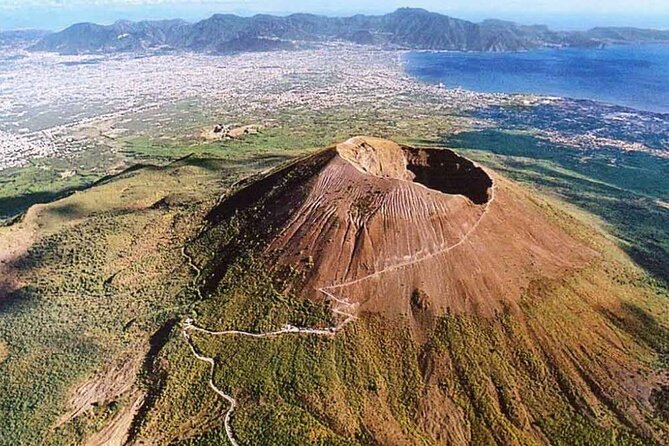
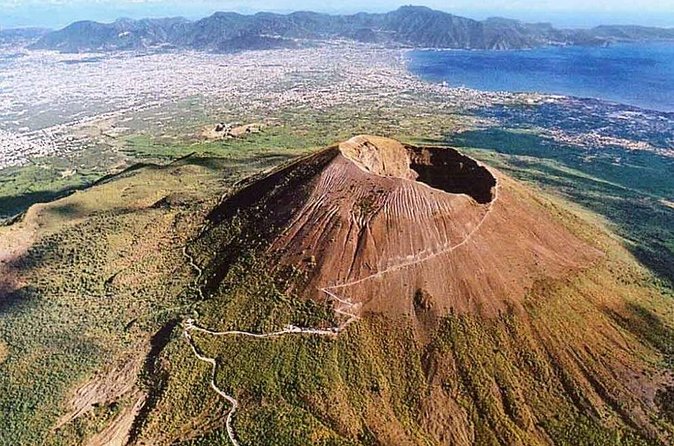
The Vesuvius section starts with a drive up through the old crater area, climbing to about 3,000 feet, before you lace up for the walking part. The final hike is about 25 minutes and follows a zigzag path over volcanic gravel. That gravel matters. It can be slippery underfoot, and your footing takes more work than a smooth path.
At the top, you’re rewarded with views that stretch across the Bay of Naples: the Peninsula of Sorrento and the islands of Capri, Ischia, and Procida. On a clear day, it’s the kind of panorama that makes the rest of the itinerary click. You can almost see why people settled here in the first place—and why the volcano is still the star of the show.
Practical pacing tip: treat the climb like a steady hike, not a sprint. You don’t have to race to the rim to enjoy it. In fact, going slower often gives you more time to take photos without standing in other people’s way.
At the crater rim: what you’re really looking at
The payoff on Vesuvius isn’t just the skyline. It’s the scale of the crater itself: about 700 feet deep and around 2,000 feet wide. That size changes how you understand the story of Pompeii. This is not a small hill that occasionally fumbles. This is a massive natural system that reshaped the coastline.
This is also where the day ties Pompeii to nearby Herculaneum, because Vesuvius is described as both destroyer and keeper of Pompeii and Herculaneum. You’re not just looking at a view—you’re getting context for why two different towns got swept up in the same event.
If you’re curious about weather and visibility, keep an eye on the sky before you leave Naples. Clouds can roll in around the bay, and if visibility drops, your “big view” payoff drops too. Either way, the crater scale stays impressive.
Skip-the-line Pompeii: using priority the right way
Pompeii is one of the most visited archaeological sites in Italy, so crowd management is not a small detail—it’s the difference between an enjoyable walk and a frustrating shuffle. The priority access is built in: skip-the-line entry to Pompeii is included, and you’ll have a mobile ticket to streamline the entry process.
The value here is time. You get about a 2-hour Pompeii tour with an archaeologist, and that time is the heart of the learning portion. If you had to wait in long lines first, you’d lose the best part: the guided route that helps you connect architecture, street life, and social spaces.
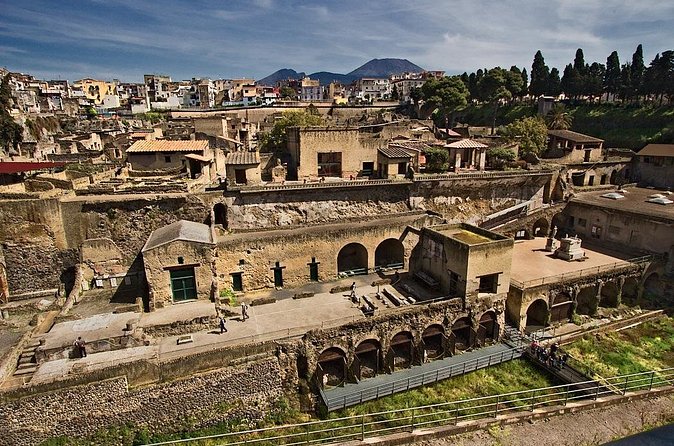
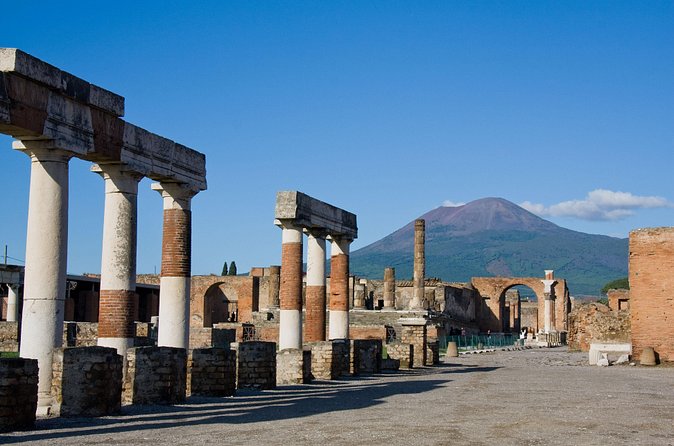
Pompeii is also an open-air museum where you can feel how the city looked before it was buried. It was covered in ashes and stayed that way until excavations began much later, with the site described as being buried in ashes until 1748. That “then and now” contrast is why Pompeii hits so hard. You’re walking through physical spaces, not just reading about them.
More ways up the crater, side by side

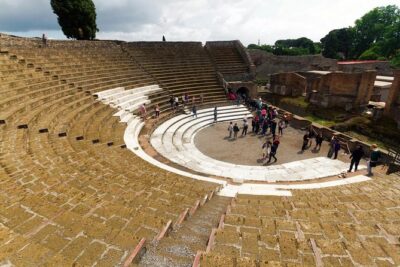

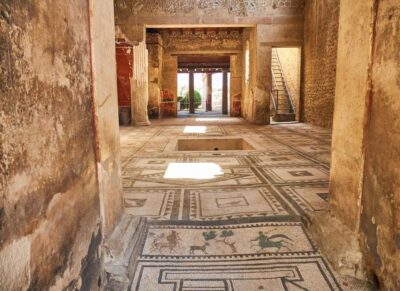
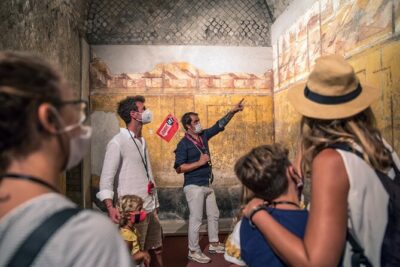

Pompeii’s highlights on a fast, focused guided route
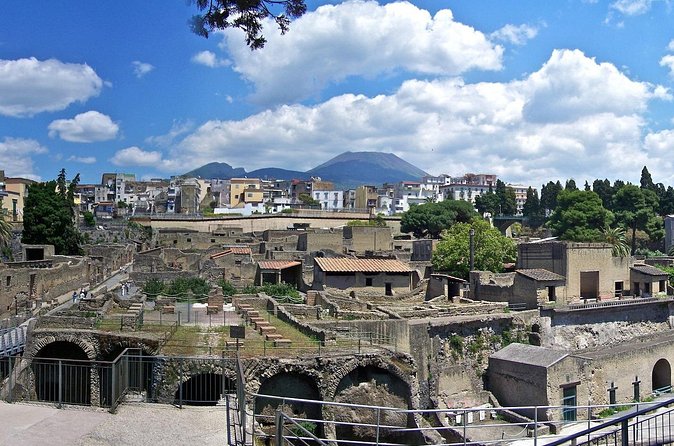
This day doesn’t try to cover every corner of Pompeii. Instead, it gives you key stops that explain the city. Each stop is short—often around 10 minutes—so the trick is to listen closely and look up as much as you look forward. Here’s what you can expect from the major areas you’ll hit.
Theaters: Teatro Piccolo and Teatro Grande
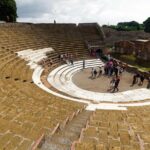
You’ll start with classic entertainment spaces: the Odeon / Teatro Piccolo and then the Teatro Grande, the most important theater in Pompeii. Even in a short visit, these theaters tell you something practical: Romans made room for public spectacle, and architecture backed that up.
Theater details can be easy to miss when you’re rushing. Try this: pause at the seating level and imagine the crowd. It helps you understand how sound and sightlines mattered. And it makes the ruins feel less like stone fragments and more like a real social machine.
House of Menander: wealth you can see in decoration
Next comes the House of Menander, one of the richest homes in Pompeii. The stop focuses on architecture, decoration, and contents—so this isn’t just a “look, there’s a room” moment. It’s a glimpse into how prosperity showed itself in layout and interior detail.
Rich homes in Pompeii are useful for your understanding of the whole city. If public spaces are for crowds, private spaces are where status turns into daily routines. You’ll feel that contrast even if you’re only spending a few minutes here.
Stabian Baths: the oldest thermal complex in town
The Stabian Baths (Terme Stabiane) are a major hit for anyone who wants to understand Roman daily life beyond politics and parties. You’ll see that they occupy a vast area and represent the oldest thermal complex in the city.
Baths weren’t only about washing. They were social hubs. Even with a quick stop, the scale can help you imagine groups mixing, resting, chatting, and moving through different rooms as part of a normal routine.
Lupanar: brothel lane in plain sight
Yes, the Lupanar is included, and it’s described as the most famous brothel in the ruined Roman city of Pompeii. It’s uncomfortable, but it’s also honest. This stop adds reality to the city story.
Instead of getting stuck on shock value, use it as an interpretive checkpoint. A brothel is part of an economic system, a labor system, and a street-level social system. The architecture and layout help you see that this wasn’t hidden. It was in the city’s orbit.
Via dell’Abbondanza: Pompeii’s main street energy
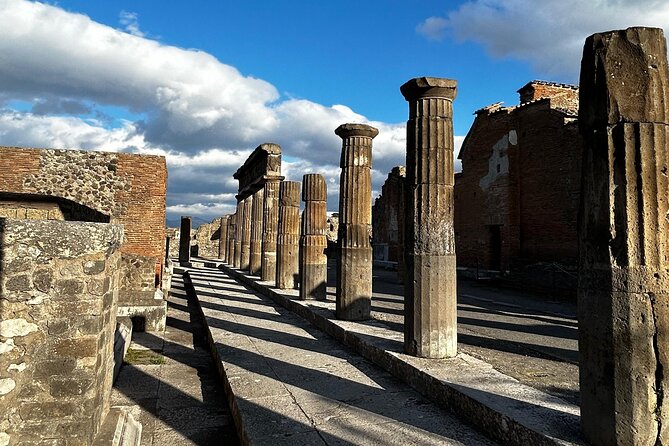
You’ll pass through Via dell’Abbondanza, one of the key streets. Even though it’s just a stop on the route, streets are how you understand movement: where people walked, where commerce likely happened, and how neighborhoods connected.
If you want your photos to look more meaningful, take them here by slowing down. Streets have a rhythm. The ruin details on the sides make more sense when you can see the street as a whole.
House of the Faun: scale and presence
Then you’ll reach the House of the Faun, described as one of the largest and most impressive private residences in Pompeii. A quick stop can still make an impression because scale is hard to fake. You get a sense of space and power—how this home would have dominated its corner of the city.
When you’re standing in places like this, it’s worth thinking about who could afford to live like this, and what kind of household staff might have made it function.
Foro de Pompeya and the Basilica: the civic center
Finally, you’ll see the Foro de Pompeya (the ancient main square) and the Basilica, an open portico that gave shelter to merchants and other activities. These stops explain what the city ran on: public gatherings, commerce, and the everyday work of civic life.
If theaters explain entertainment, forums and basilicas explain structure. The forum is where people showed up, and the basilica is where daily business likely flowed in all kinds of weather. Together, they help you see Pompeii not just as a tragic site, but as a living system.
Small-group size: more questions, less standing around
This tour is capped at maximum 21 travelers (with options that can be smaller). In practice, that matters because Pompeii is crowded and Vesuvius has limited space near viewpoints and paths.
A smaller group also makes guide explanations feel less like a broadcast. You can ask a question and get a real response instead of hearing it filtered through a dozen heads. The reviews back this up with repeated praise for guide personalities and rapport—especially Andrea and Luca, who were described as engaging, helpful, and fun while still focused on real information.
Also, the pacing of the stops works better with fewer people. When you’re in a big group, 10 minutes disappears fast. With a smaller crowd, you can spend that time looking carefully and actually absorbing what your guide is pointing out.
Guides and drivers: the human part you feel all day
The itinerary works on paper. What makes it feel good is the people running it.
In reviews, drivers like Alfonzo and Corrado were singled out for making the day comfortable and smooth. That matters because you’re spending a lot of the day in transit and on your feet. A good driver helps you feel less tired before the walking even starts.
Guides also received top praise, including Andrea, Luca, Tiziana, Floriana, and Dario. The consistent theme: they didn’t just show locations. They explained daily life in ways that helped the ruins feel usable as a story. One review also emphasized safety attention, which is a good sign for Vesuvius, where footing is on gravel and the crater rim environment can feel exposed.
One more detail to keep in mind: skip-the-line entry is included, but at least one review noted a situation where Vesuvius ticket availability was an issue, and the driver worked to fix the problem. That’s not something you should ignore on any tour day; it’s a reminder to plan to be flexible.
Price and value: $148.93 buys more than tickets
At $148.93 per person, you’re paying for a lot of moving parts:
- air-conditioned transport with driver (and possibly an English-speaking assistant)
- skip-the-line entry to Pompeii and Vesuvius
- a 2-hour Pompeii tour led by an archaeologist
- taxes, parking, tolls, and gasoline
- port pickup and drop-off
- a small-group format
If you tried to DIY this—getting transport on your own, arranging timed entry, coordinating guide time—it would likely cost more in both money and stress. Here, the price is also paying for the human work: keeping the day organized so you don’t lose half your time to logistics.
Is it cheap? No. But for a one-day combo of a volcano climb plus an archaeologist-led Pompeii route with priority entry, it’s priced like a day designed for fewer headaches.
What to bring and how to pace yourself
Because Vesuvius involves gravel and an uphill push, your shoe choice matters more than you’d think. Wear comfortable walking shoes with grip. Bring a light layer too, since weather can shift in the Bay of Naples area.
You should also plan for a lot of standing and walking. Even though the Pompeii stop times are short, you’re moving frequently. If you tend to get tired early in the day, set a personal goal to rest briefly at each stop rather than pushing through.
Food and drinks are not included, so you’ll want to bring water and plan for a snack. In a day like this, skipping food often turns “great walking day” into “why did I do this?”
Finally, bring a valid ID. The tour notes that you should have one with you.
Should you book this Pompeii and Vesuvius priority tour?
Book it if you want a well-run day that blends Vesuvius views with a guided Pompeii route and you hate wasting time in lines. The skip-the-line setup and the archaeologist-led Pompeii portion are the big reasons. If you also like having guide explanations you can actually follow—Andrea, Luca, Tiziana, and Floriana are examples of guides that have impressed people—this format fits your style.
Think twice if you know you struggle on uneven, rocky ground. The final 25-minute Vesuvius hike over volcanic gravel is the main physical challenge. If that sounds like a dealbreaker, you might prefer a Pompeii-focused tour with less walking uphill.
FAQ
What time does the tour start?
The tour starts at 8:00am.
How long is the experience?
It runs about 8 hours (approximately).
What does the tour include at Pompeii?
You get a 2-hour Pompeii tour with an archaeologist, plus admission ticket coverage and multiple guided stops at major sites.
Is skip-the-line entry included?
Yes, skip-the-line entry to Pompeii and Mt. Vesuvius is included, with one stated exception.
When can the skip-the-line option not be accommodated?
On the 1st Sunday of the month, Pompeii does not allow skip-the-line tickets to be purchased, so the skip-the-line option cannot be accommodated.
Is food included in the price?
No. Food and drinks are not included.
How big is the group?
The tour is a group experience with maximum sizes depending on the option, including a maximum of 19/21 travelers, and smaller formats can be available. The overall maximum is 40 passengers.
Do I need to bring an ID?
Yes. Bring a valid ID with you.
More Tour Reviews in Naples




Up Vesuvius, More Ways to Climb


More Pompeii Tours to Compare

More Naples tours, freshly reviewed



Pompeii Tours, compared.
 ★ 4.8Pompeii: Entry Ticket and Guided Tour with an ArchaeologistFrom $3519,459 reviews
 ★ 4.1Pompeii: Entry Ticket with Audio GuideFrom $4013,491 reviews
 ★ 4.8Pompeii: Small Group Tour with an ArchaeologistFrom $4012,264 reviews
 ★ 4.3Pompeii Ruins & Mount Vesuvius Day TourFrom $12011,459 reviews
★ 5.0Pompeii Small Group Tour with an ArchaeologistFrom $356,593 reviews
★ 4.3Pompeii Ruins & Mount Vesuvius Day TourFrom $12011,459 reviews
★ 5.0Pompeii Small Group Tour with an ArchaeologistFrom $356,593 reviews
 ★ 4.5Skip-the-line Pompeii – Small Group TourFrom $544,401 reviews
 ★ 4.6Naples or Sorrento: Full-Day Pompeii and Mount Vesuvius TourFrom $1044,235 reviews
 ★ 3.9Pompeii: Skip-the-line Entry Ticket with Audio Guide & MapFrom $433,153 reviews
Browse the lists this tour appears in