
Review · GUIDED
Naples: Ipogeo dei Cristallini Guided Tour
Ipogeo dei Cristallini is what you get when Naples decides to keep secrets—then shares them. You descend 12 meters underground to see ancient Greek tomb paintings in polychromy, plus Roman touches layered on top, all explained by a guide in your language. It’s a short visit, but it feels like a time machine.
What I love most is the chance to see 4th-century BC-style Greek art up close and then watch it come alive through the myths and the site story. I also like the way the tour begins with a quick video reconstruction so you can understand the layout before you start climbing down the steps. The main thing to consider: lighting is limited and access involves stairs, so plan for careful footing—and if you have mobility issues, contact the site ahead.
In This Review
- Quick hit key points
- A 45-minute trip 12 meters underground in Naples
- What you actually see: painted Greek tombs and the Medusa
- Before you go down: the video and the “get your bearings” moment
- Steps, stairs, and small-space realities (plan smart)
- The story behind the underground: chance discovery in 1889
- Rione Sanità: why the neighborhood story is part of the visit
- Languages and small-group attention
- Price and value: is $21 worth 45 minutes underground?
- Who should book this tour (and who should plan extra)
- Should you book Ipogeo dei Cristallini?
- FAQ
- How long is the Naples Ipogeo dei Cristallini guided tour?
- What languages are available for the live tour guide?
- How big are the groups?
- Is the site suitable for children?
- Is the site accessible if I have a disability?
- What is included in the tour?
Quick hit key points
- Small group (max 10) keeps the guide’s attention on your questions.
- Video intro helps you picture the site before you descend.
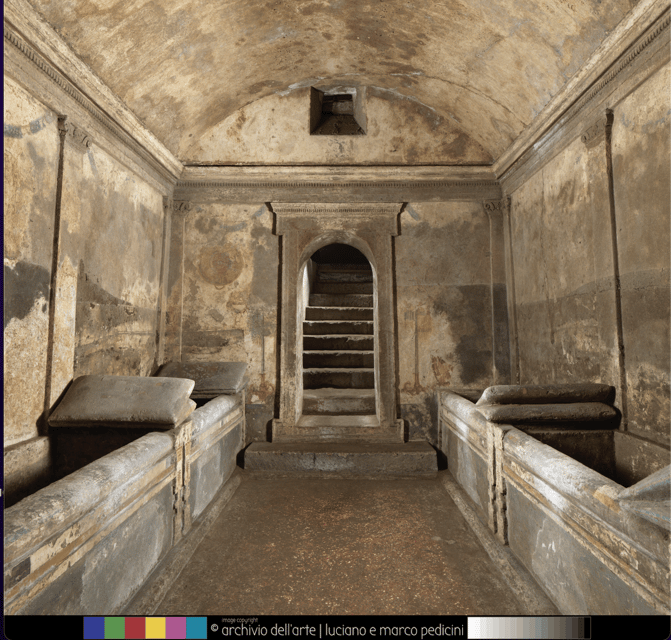
- 12-meter staircase down into the original Naples area and street setting.
- Painted tombs connect Greek origins to later Roman additions.
- Medusa in sculpture and paint is the one you’ll remember.
- Rione Sanità context gives the neighborhood meaning, not just the landmark.
More guided runs around Naples
- Naples: Catacombs of San Gennaro Entry Ticket & Guided Tour★ 4.6 · 7,941 reviews
- Naples: Spanish Quarters Underground Guided Tour★ 4.8 · 5,064 reviews
- Naples: Street Food Walking Tour with Local Guide★ 4.9 · 4,976 reviews
- Herculaneum: Skip-the-Line Guided Tour with Archaeologist★ 4.8 · 3,439 reviews
A 45-minute trip 12 meters underground in Naples
This tour is short by design: 45 minutes that trade crowds for focus. You start aboveground, with the guide setting the scene, and then you go down into the underground world of Naples. The payoff is that you’re not just looking at walls—you’re seeing a functioning slice of Neapolis as it once was, with Hellenistic tombs carved and painted for the dead.
One practical point matters here. You will be dealing with stairs and low light. That’s not a dealbreaker, but it does change how you should move. Go slow, keep your hands free, and wear shoes with grip. One review noted the need for attention on the steps because illumination is limited; another mentioned extra help was given to someone with bad knees. In other words: the site asks for care, and the guide team tries to meet you where you are.
The group size is limited to 10, and you feel it. The tour doesn’t rush you from one object to another like a factory line. You get time for the details—especially the paintwork, which is the whole point.
What you actually see: painted Greek tombs and the Medusa
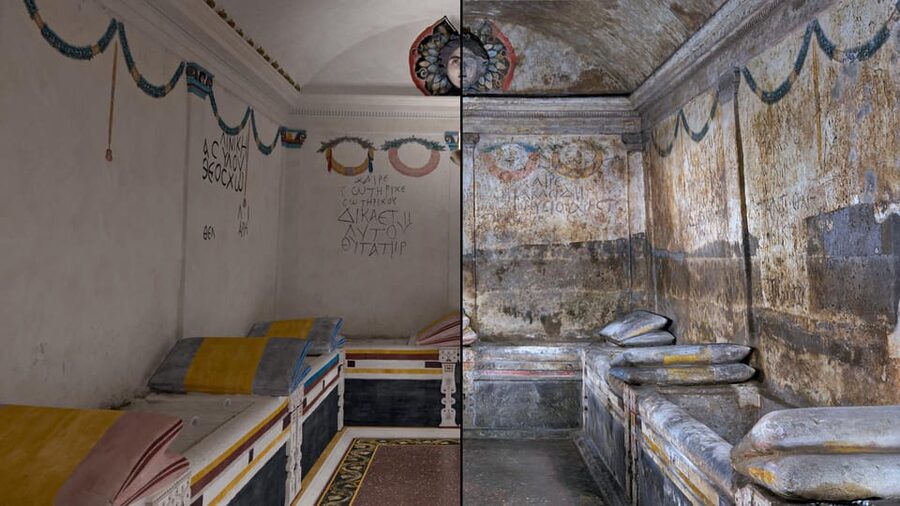
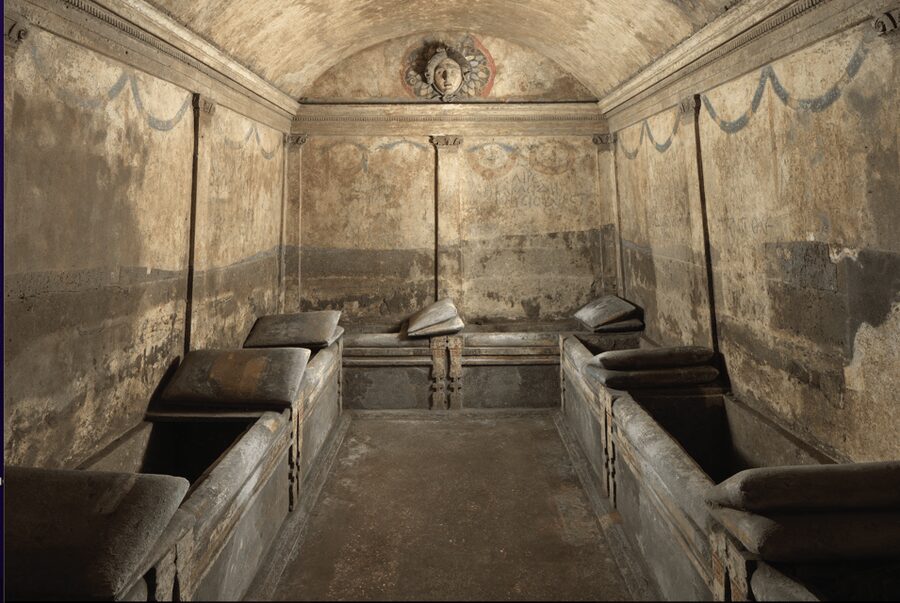
The centerpiece is Ipogeo dei Cristallini itself: an underground space where you can see four Hellenistic tombs with painted decoration. You’re not in a bland, uniform display room. You’re looking at ancient art that had color on purpose—polychromy—meant to be vivid when the tomb was active.
The tour frames the art in a way that makes your brain stop treating it like “decorations.” You’ll learn the myths and legends tied to the imagery, and you’ll connect those stories to what people believed about life and death, love and care, family and friendship. That sounds heavy, but in practice it’s the opposite of academic. The guide keeps pulling you back to what the paintings show and why that mattered to the people who commissioned them.
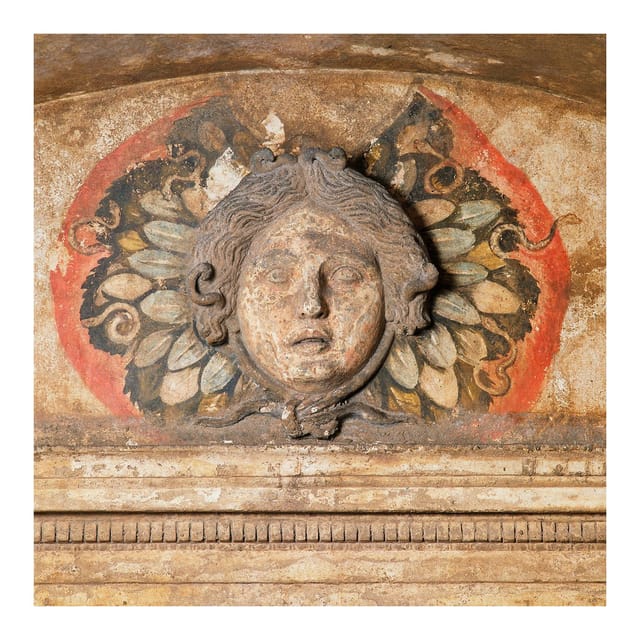
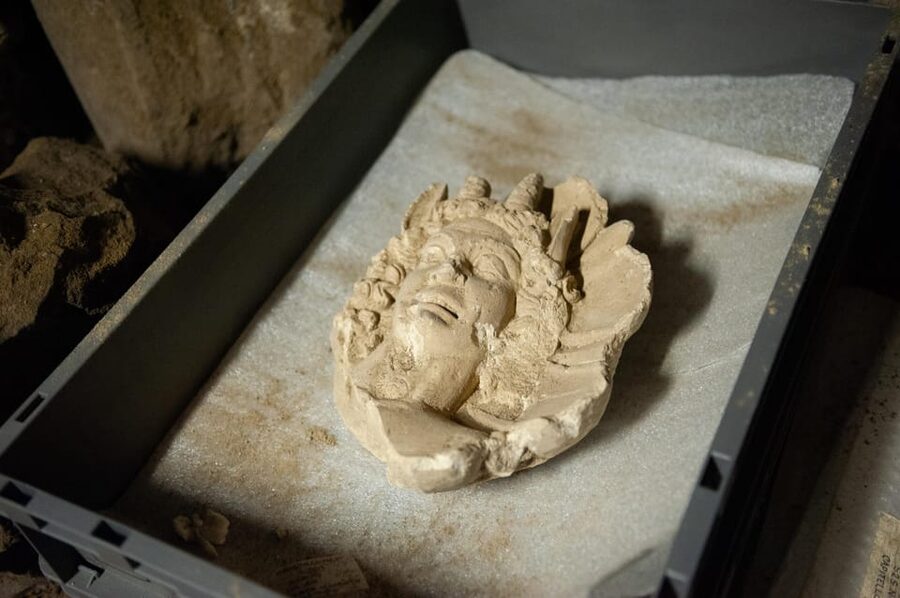
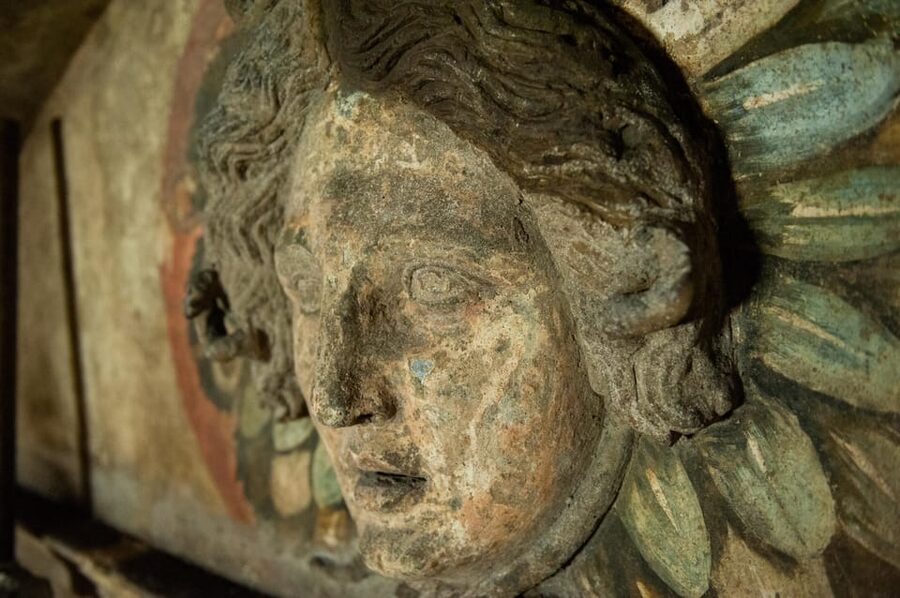
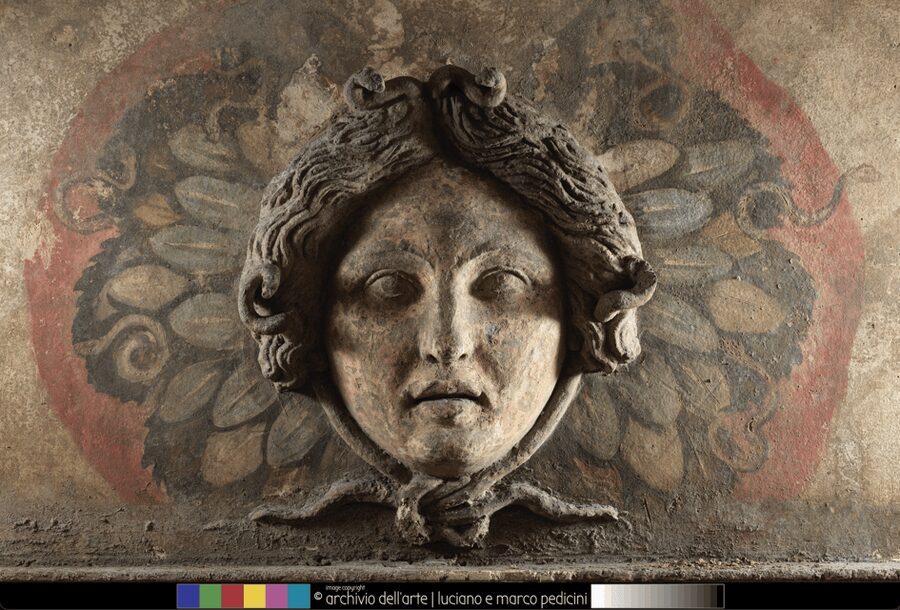
Then there’s the moment that keeps cropping up in people’s reactions: Medusa, sculpted and painted. This is described as an unicum in the world, and whether you’re a mythology fan or not, it lands. Medusa isn’t just a character you’ve seen on a vase—here she’s presented as part of a funerary and symbolic environment. Seeing how ancient Greeks rendered her in both form and color is the kind of thing that sticks long after you’ve climbed back up.
You’ll also notice the cultural layering. The site shows Greek origins alongside Roman artistic additions, giving you a real fusion instead of a tidy timeline. It’s like watching styles change hands across generations, right there in the same space.
Before you go down: the video and the “get your bearings” moment
The tour starts with a video that provides a virtual reconstruction of the archaeological site. This is not just entertainment. It’s a useful way to get oriented so you’re not guessing where you are as you descend.
I like this approach because it solves a common problem with underground sites: your sense of direction gets weird fast. A reconstruction helps you picture the broader plan, so when you hit the carved and painted areas, you understand what you’re seeing and how it relates to the original setting of Neapolis.
One review also highlighted how the intro video helps you anticipate what you will see. That matches what you’ll feel in real time: you’ll spend less effort “figuring it out” and more time noticing details like paint condition, carving depth, and how figures are arranged on the tomb surfaces.
When the guide then talks through myths and architecture, the story has somewhere to land. You’re not hearing legends floating in space. You’re placing them onto specific parts of the site.
Steps, stairs, and small-space realities (plan smart)
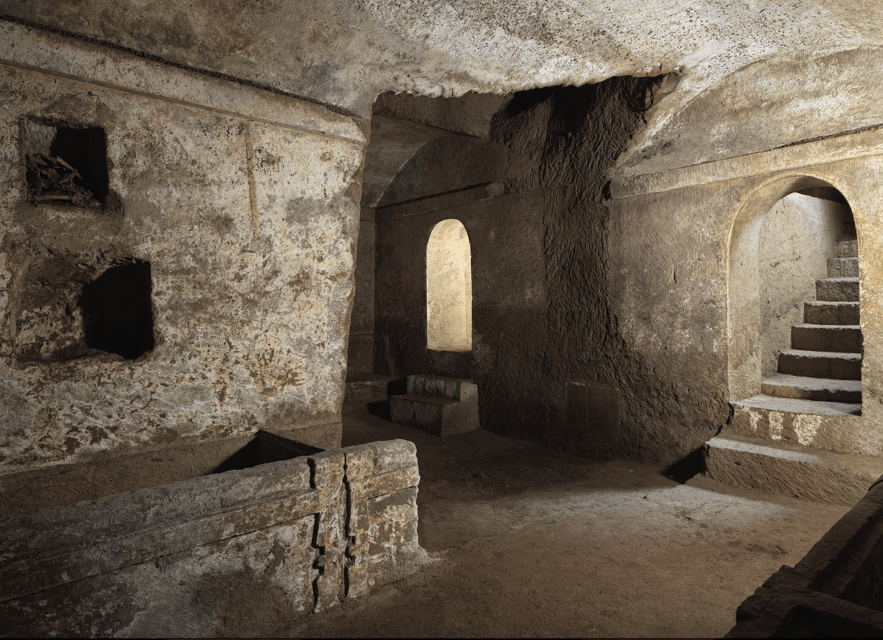
Ipogeo dei Cristallini has architectural barriers due to its historical nature. That’s a polite way of saying: this is not built for wheelchairs or people who need smooth, level access. If you have a disability or mobility concern, the operator asks you to contact them in advance so they can assess access possibilities with you.
Even if you don’t use a wheelchair, treat this as a walking and stair experience. You will descend to reach the underground areas, and you may be waiting briefly at stair landings while the group gathers. Low light also means you should keep your eyes up and avoid rushing.
If you have bad knees, don’t assume you’re out of luck. One review specifically said the guide helped step-by-step. That tells me the tour team is used to assisting with the practical side of getting around. Just be honest with the guide at the start so they can help you at the right times.
Finally, remember it’s an underground archaeological site. The space is limited and you’ll likely feel the “tightness” during parts of the tour. That’s normal here. The upside is that the intimacy makes it easier to focus on art details rather than getting lost in a huge hall.



The story behind the underground: chance discovery in 1889
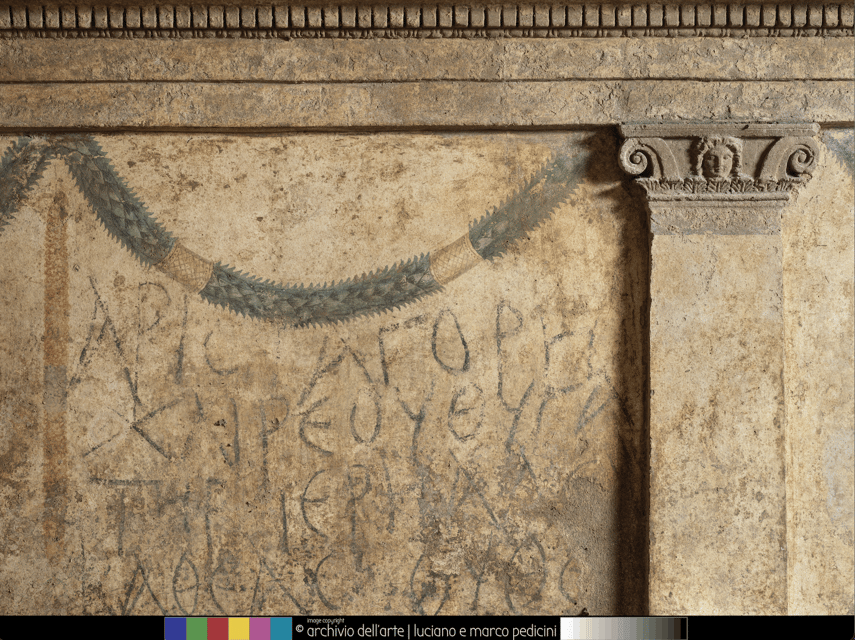
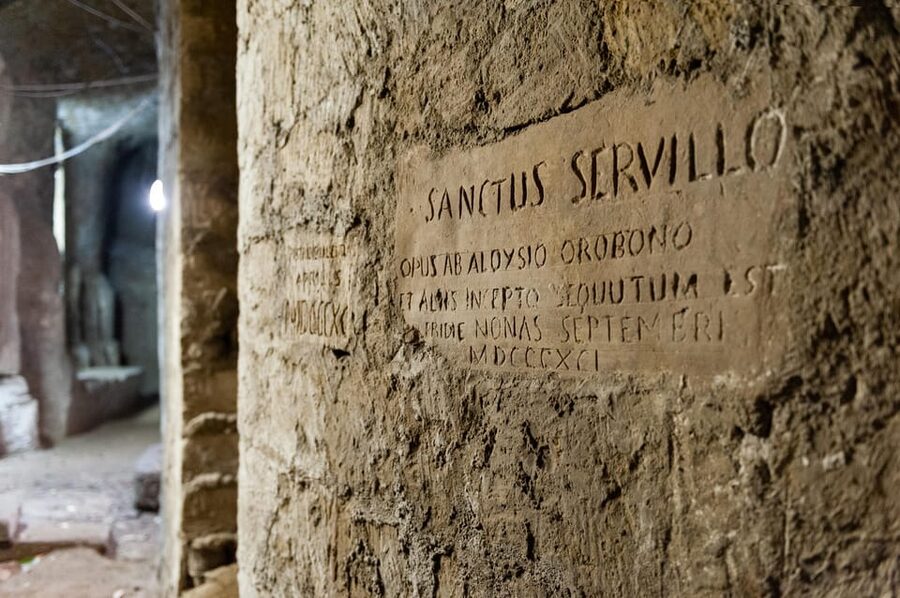
You’re not just watching art—you’re hearing how the site was found and why it mattered once it came to light. The discovery is described as happening by chance in 1889 by Baron Giovanni di Donato. That detail matters because it explains why this particular treasure ended up being rediscovered rather than protected from the start.
This part of the tour adds emotional context. You can stand in front of painted tombs and think, yes, ancient people created these for a reason. Then you realize the site also survived history’s mess—until it was rediscovered.
You’ll also connect the art to Naples as a place where cultures overlap. The tour emphasizes how Greek origins meet Roman artistic additions. That’s more than a trivia line. It’s the lens through which you’ll understand what looks consistent and what looks different as you move through the space.
Rione Sanità: why the neighborhood story is part of the visit
One of my favorite things about this experience is that it isn’t treated like a standalone “artifact stop.” The guide comes from Rione Sanità, and the tour weaves in a powerful story about that neighborhood. You’re getting Naples from below ground, then you’re getting Naples from its streets and people.
This helps you avoid the common problem of only seeing a city’s most famous postcard sights. Here, you get a sense that Naples is layered—culturally, historically, and socially. The neighborhood story adds meaning to the archaeological one, so your visit doesn’t feel like you popped in, saw something pretty, then disappeared back to the street.
Even if you know nothing about Rione Sanità, the guide’s explanation gives you enough grounding to make sense of what you’re looking at. It’s the kind of context that makes the paintings feel less like museum pieces and more like part of an ongoing place.
Languages and small-group attention
The tour runs with live guides in Italian, English, French, and Spanish. Small-group structure means you’re not getting stuck behind a tall shoulder or losing the thread of the story while others catch up.
This matters most for a site like this, where the value is in details. You want to see the Medusa sculpted and painted. You want the guide to point out how Greek myths translate into the tomb’s imagery. If the group is huge, you’d lose that. Here, limited capacity (up to 10 people) helps you keep up.
One review praised the French guidance and noted how the guide was friendly and handled French well. Another mentioned help along the steps, which again points to a guide who’s paying attention to individuals, not just delivering a script.
Price and value: is $21 worth 45 minutes underground?
At $21 per person for a 45-minute guided visit, you’re paying for three things at once:
1) Access to a rare archaeological site that isn’t always open like a standard museum stop.
2) Interpretation—the guide explains myths, architecture, and the Greek-to-Roman fusion so the art doesn’t stay confusing.
3) A guided “see it properly” experience, including the video reconstruction intro.
In places where you can wander freely, you might think, why pay? Here, the pricing makes sense because the value isn’t just the location—it’s the story and the focused attention on the frescoes and tomb details.
Also, you’re not spending hours. A short, well-run tour can be great value in Naples, where you’ll want time for other neighborhoods and street life. You can fit this into a day without turning it into a whole project.
If you like myth and art together—and you enjoy seeing how cultures mix—this is the kind of cost that turns into a strong memory per minute.
Who should book this tour (and who should plan extra)
This tour is a good match if you:
- love ancient art and want to see painted Greek tombs in person
- like mythology explained in context, not as disconnected trivia
- prefer small groups and clear guidance
- want something different from the standard Naples route
Plan extra care if you:
- have mobility limits or need step-free access, since the site has architectural barriers
- get nervous in low light or on uneven stairs
- need time to move slowly between stops
If you fall into that second group, don’t ignore the tour—just contact the operator first so you can assess access together, as they suggest. And when you arrive, ask the guide to point out safe footing or offer help during the stair sections.
Should you book Ipogeo dei Cristallini?
I think you should book this tour if you want a concentrated, story-driven Naples experience that goes past the usual top sights. The combination of painted tombs, the guide’s focus on myths and architecture, and the standout Medusa—sculpted and painted—makes it memorable without eating half your day.
If you’re sensitive to stairs or low light, your decision should hinge on access. Use the guidance about contacting them in advance, and go in with sensible shoes and a calm pace.
If you want art plus archaeology plus neighborhood context in under an hour, this is a very solid yes.
FAQ
How long is the Naples Ipogeo dei Cristallini guided tour?
The guided tour lasts 45 minutes.
What languages are available for the live tour guide?
The tour offers live guides in Italian, English, French, and Spanish.
How big are the groups?
The tour is a small group limited to 10 participants.
Is the site suitable for children?
Entry is free for children between 8 and 12 years old. Children under 8 are not permitted.
Is the site accessible if I have a disability?
Ipogeo dei Cristallini has architectural barriers due to its historical nature. The operator asks visitors with disabilities to contact them ahead of time to discuss access possibilities.
What is included in the tour?
The tour includes a guide from Rione Sanità, 45 minutes discovering the fresco details, myths, and architecture, and a video with a virtual reconstruction of the archaeological site.
More Guided Tours in Naples




More Tours in Naples





More Tour Reviews in Naples

More Naples tours, freshly reviewed





Guided, compared.
 ★ 4.8Pompeii: Entry Ticket and Guided Tour with an ArchaeologistFrom $3519,459 reviews
 ★ 4.1Pompeii: Entry Ticket with Audio GuideFrom $4013,491 reviews
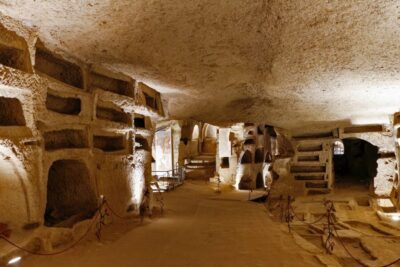 ★ 4.6Catacombs of San Gennaro Entry Ticket & Guided TourFrom $157,941 reviews
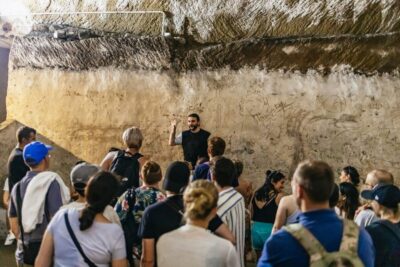 ★ 4.8Spanish Quarters Underground Guided TourFrom $175,064 reviews
 ★ 4.9Street Food Walking Tour with Local GuideFrom $504,976 reviews
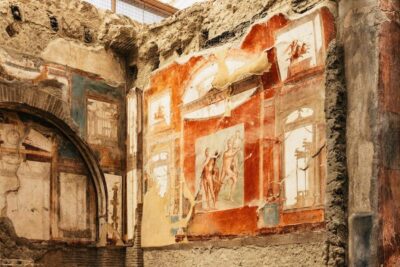 ★ 4.8Herculaneum: Skip-the-Line Guided Tour with ArchaeologistFrom $533,439 reviews
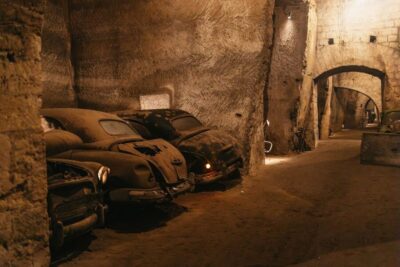 ★ 4.7The Bourbon Tunnel Guided Tour with Entrance TicketFrom $173,225 reviews
 ★ 3.9Pompeii: Skip-the-line Entry Ticket with Audio Guide & MapFrom $433,153 reviews