
Review · GUIDED
Herculanium guided tour
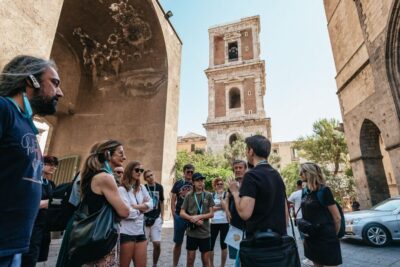
Herculaneum feels eerily close to the past. This guided walk through the Archaeological Park of Herculaneum (Ercolano) is a smart way to experience ancient Roman daily life and the story of Vesuvius, without getting swallowed by big crowds. I especially like that the small group setup keeps things conversational, and that you meet your guide right at the site ticket office.
Two things I really enjoy here are the direct, scene-by-scene explanations (so the ruin details make sense fast) and the pace a guide can actually manage in a compact visit. The only downside to consider is that the site involves walking on uneven outdoor areas, and the experience is best if you’re up for moderate physical fitness.
In This Review
- Key Highlights You’ll Notice Fast
- Meeting at the Herculaneum Ticket Office (And Getting Started Right)
- The Roman City Plan: Sea-Facing Square to Real Street Life
- Vesuvius Explained on the Beach: Victims and Carbonized Wood
- Augusteum, Public Baths, and the Gymnasium: Where People Lived Socially
- Homes Up Close: Samnite House and the House of Neptune and Amphitrit
- Two Hours, Small Group Pace, and How to Get Your Money’s Worth
- Price and Value: $241.86 per Group (Up to 10)
- Should You Book the Herculanium Guided Tour?
- FAQ
- What is included in the Herculanium guided tour?
- Where does the tour start?
- Is the tour only offered in English?
- How long is the guided visit?
- What’s the group size?
- What do I see during the tour?
- How do I find my guide at the start?
- What are the park hours for this tour period?
- Is there a fitness requirement or accessibility info?
Key Highlights You’ll Notice Fast
- Meet your guide at the Herculaneum ticket office in Ercolano, with a sign held up for easy matching
- Best-preserved feel compared with Pompeii, since Herculaneum’s eruption effects kept many structures intact
- Stop-and-explain ruins, from the sea-facing square to houses, baths, and civic spaces
- Hard-hitting Vesuvius reminders, including victims on the beach and carbonized wood details
- Private-house artistry, with frescoes, mosaics, marble statuary, and preserved roof and first-floor elements
More guided runs around Naples
- Naples: Catacombs of San Gennaro Entry Ticket & Guided Tour★ 4.6 · 7,941 reviews
- Naples: Spanish Quarters Underground Guided Tour★ 4.8 · 5,064 reviews
- Naples: Street Food Walking Tour with Local Guide★ 4.9 · 4,976 reviews
- Herculaneum: Skip-the-Line Guided Tour with Archaeologist★ 4.8 · 3,439 reviews
Meeting at the Herculaneum Ticket Office (And Getting Started Right)
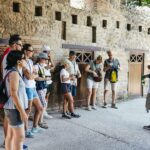
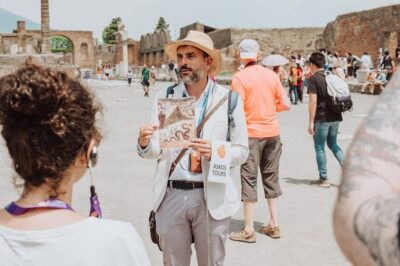
The tour starts at the Archaeological Park of Herculaneum, Corso Resina 187, in Ercolano. Your guide meets you at the ticket office area, and in at least some cases you’ll be looking for a sign with the guide name IRINA, which makes the first five minutes less stressful.
This matters more than it sounds. When you’re visiting a major archaeological site, the difference between a smooth start and a chaotic start is your energy for the whole visit. Here, the format is simple: you gather, your guide takes over, and you move through the park with a plan.
Also, the tour is listed as English-speaking. That’s a practical plus if you want meaning, not just locations. You’re not just seeing objects; you’re connecting them to how Romans lived—where they gathered, what they bought, and how disaster froze a whole community in time.
Finally, keep expectations grounded on timing. The tour runs about 2 hours, so it’s built to be focused rather than endless wandering. If you love lingering, you might want extra time before or after to explore on your own.
The Roman City Plan: Sea-Facing Square to Real Street Life
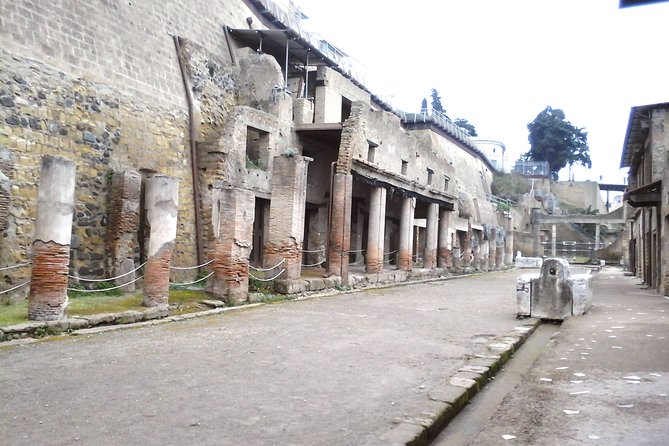
Herculaneum is often compared with Pompeii, and this tour leans into that difference. I like how the visit frames Herculaneum as a prosperous town of merchants and nobility, not just a “volcano tragedy site.” You’ll get a guided walk that helps the layout click: civic spaces, daily routines, and the way buildings line up with the town’s geography.
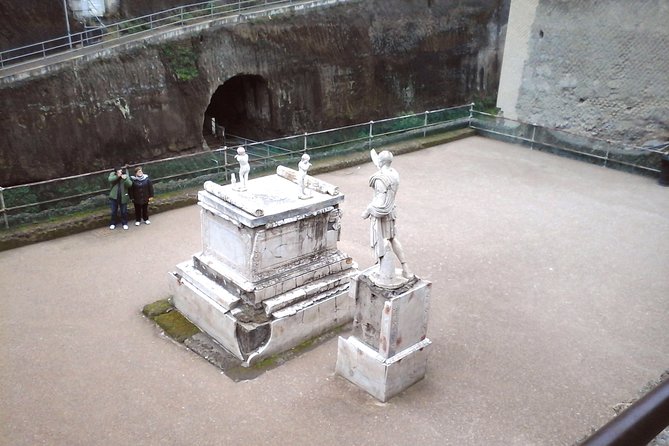
One of the first “oh, that’s why it’s important” moments is the ancient square facing the sea. Standing where the view would have worked for the city, you can understand how people likely moved between public life and waterfront trade. The guide’s job is to turn what could be random ruins into a coherent town.
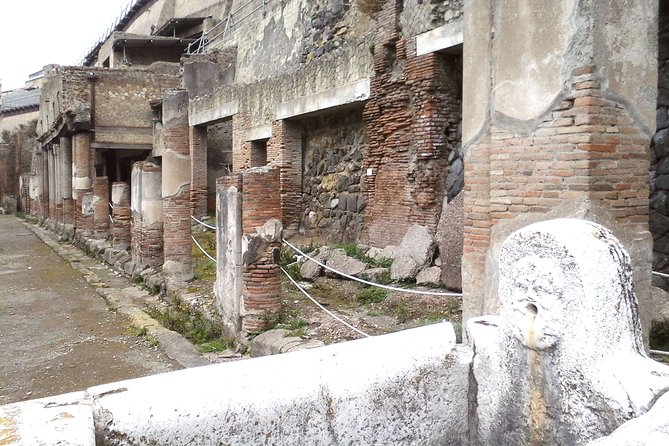
From there, the city becomes more intimate. The tour isn’t only about big monuments. You’ll also see places that feel built for regular use—shops and private spaces—so it starts to look like a real neighborhood rather than museum pieces. This is the value of having a guide in a place this preserved: you can spot details and immediately understand what they were meant to do.
And yes, one reason visitors like this site is that it can feel calmer than Pompeii. You still get tourists, but Herculaneum’s preserved scale and the way it’s experienced on a guided route can make it feel more human in size.
Vesuvius Explained on the Beach: Victims and Carbonized Wood
This tour doesn’t tiptoe around the disaster. You’ll learn about the catastrophic eruption of Vesuvius, but the guide explains it through the scenes you can still see. That’s the difference between reading about a tragedy and standing in front of the evidence.
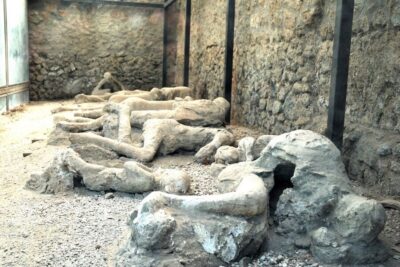
You’ll encounter the skeletons of the victims on the beach. Even if you’ve seen photos before, nothing prepares you for the emotional weight of seeing the site in person. It’s one of those stops where your brain instantly switches from tourism to history, and your guide helps you hold onto the context.
Another striking detail is carbonized wood. In plain terms, you’re looking at what volcanic conditions did to everyday material, which makes the event feel immediate rather than abstract. If you’ve ever wondered how quickly a place could vanish, these kinds of objects answer that question without needing drama.
The best part is that the guide ties the eruption to Roman life, not only to death. The tour’s framing is two-sided: catastrophe and continuity. That balance can make the visit easier to process, and it also helps you appreciate the town that existed before the ash sealed it.
Augusteum, Public Baths, and the Gymnasium: Where People Lived Socially
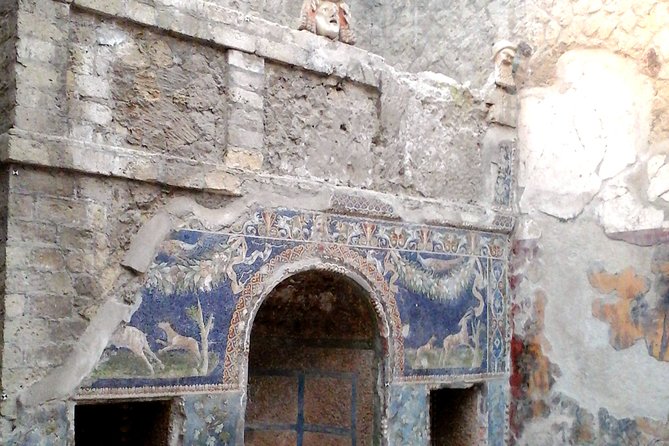
After the more intense eruption-focused stops, the tour shifts into how Romans used their public spaces. You’ll see the Augusteum, described as well preserved, and this is where the civic and religious side of the city comes through.
Then comes the public bath—another highlight because bathing was social, not just hygienic. When you can stand in a space designed for routine gatherings, it becomes easier to picture daily rhythms: who met there, what the atmosphere may have felt like, and how architecture supported those behaviors.
The Gymnasium is also part of the guided circuit. In Roman towns, these spaces weren’t only about exercise; they were social hubs where people gathered, talked, and spent time. Having a guide here helps you understand what you’re looking at instead of just admiring stone and walls.
One practical tip: pay attention to transitions in the story. If the guide mentions what these buildings were used for, your eyes will follow details you might otherwise miss—layout cues, architectural intent, and how rooms connected to one another.

Homes Up Close: Samnite House and the House of Neptune and Amphitrit
This is the part of Herculaneum that often steals the show—private houses and the art that survived. The tour includes stops at several homes, including the Samnite house and the house of Neptune and Amphitrit (spelled that way in the tour description).
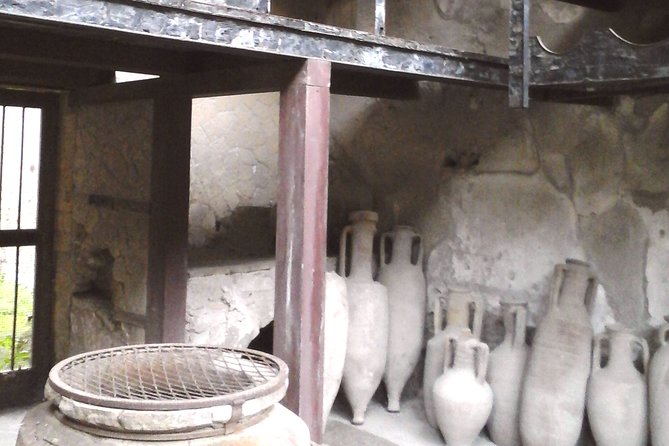
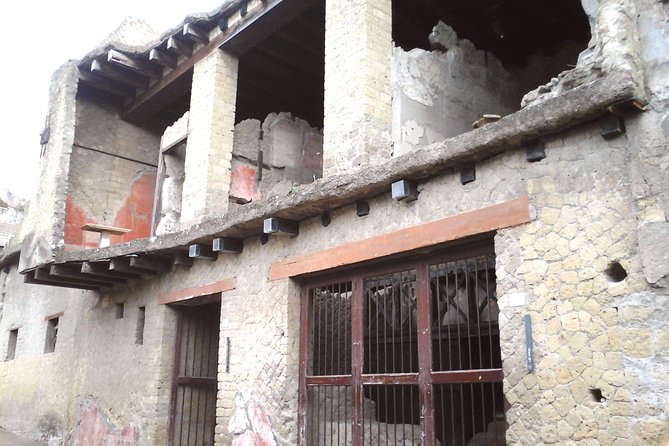
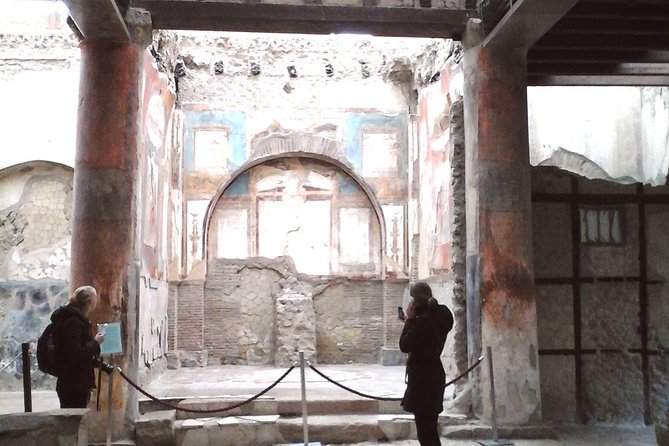
These houses help you move from public town to private life. One minute you’re thinking about civic space; the next you’re looking at the kind of room design that signals wealth, taste, and status. The tour also calls out roofs and houses with first floors, which can be a big deal at Herculaneum where preservation can make vertical spaces feel more present than you’d expect.
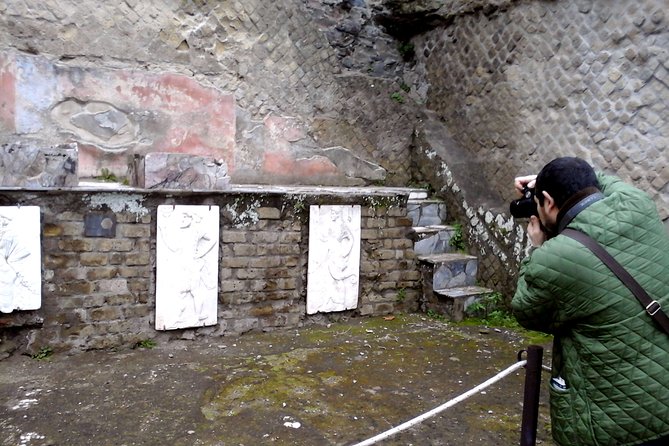
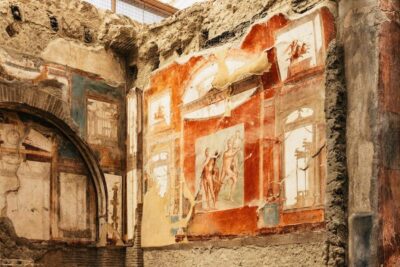
The guide will point out ancient frescoes and mosaics. This is where Herculaneum becomes more than “ruins you can walk through.” You’re looking at decoration meant to be lived with—color, pattern, and imagery that would have shaped how a room felt.
Marble statues and other preserved features can also appear along the way, and it’s helpful to remember that the artistry wasn’t only for display. In a Roman house, art and ornament often reinforced identity and taste.
If you care about interior design, this tour format is a good match. It’s guided, but it’s also paced so you can actually see what’s in front of you.
Two Hours, Small Group Pace, and How to Get Your Money’s Worth
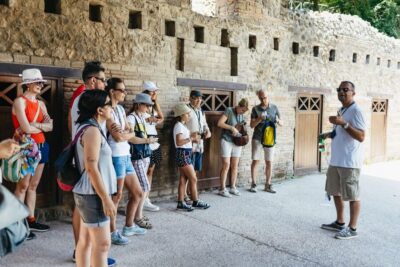
The tour runs about 2 hours, with the whole experience centered on the Archaeological Park of Herculaneum. It’s designed to be small group and private in the sense that only your group participates. That setup tends to improve the experience because the guide can tailor the flow.
From the reviews shared with this experience, a couple of themes show up clearly. One is strong communication: your guide will be where they say they’ll be. Another is the tone of the guiding—less like a scripted lecture, more like a relaxed walk with explanations as you need them.
That’s a real value in Herculaneum because the site is dense. If you go too fast, you’ll miss the “why” behind the “what.” If you go too slow, you can end up tired and under-motivated. A small group helps the guide keep that balance.
Also, the experience is marked as having a moderate physical fitness level. That’s not a warning to scare you away; it’s just a heads-up. Wear solid walking shoes and expect some uneven outdoor surfaces. If you’ve got mobility needs, do check directly, but one reviewer chose this tour specifically because of wheelchair access.
Finally, timing-wise, Herculaneum’s opening hours run until 3:30 PM. If you’re choosing a time slot, I’d aim for earlier in the day if you want more comfortable walking and fewer late-day weather swings.
Price and Value: $241.86 per Group (Up to 10)
The listed price is $241.86 per group, up to 10 people, and the tour lasts about 2 hours. That’s not priced per person, which changes how you should think about value.
If you book with a full group of 10, the cost works out to roughly $24 per person. If you book as fewer people, it’s still a flat group cost, so your per-person number rises. In other words, this is a great deal when you can share it—family groups, small friends groups, or couples who don’t want to hunt for multiple separate reservations.
What you’re paying for is not only entry into the idea of Herculaneum, but interpretation. A good guided route can turn a preserved city into a story you understand. Without that, you’d still see beautiful ruins—but you’d likely spend more time wondering what you’re looking at.
The “small group” and “private tour/activity” framing matters here. You’re less likely to be rushed, and your guide can answer questions without losing the flow. In a place as emotionally and historically loaded as this, that kind of attention can be worth real money.
If you’re traveling solo or as a couple, you can still book it, but I’d check your expectations. You might want to do other free exploration after, because the guided portion is about focusing the key scenes quickly.
Should You Book the Herculanium Guided Tour?
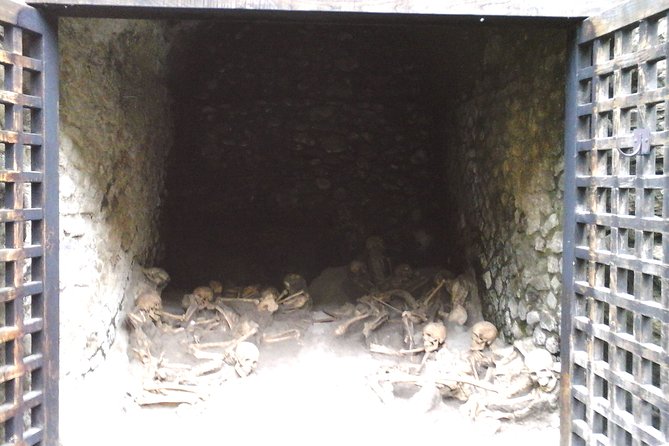
Book it if you want a guided, story-driven visit that focuses on what makes Herculaneum different: the preservation, the Roman daily-life details, and the way Vesuvius is explained through scenes you can actually stand beside.
Skip it or look closely at timing if you’re the type who wants hours of unstructured wandering. This tour is built for about two hours, so it’s best for travelers who like a plan and want clarity fast—especially if your Naples trip is short.
One more reason I’d recommend it: the meeting setup. Showing up at a ticket office can be confusing at popular sites, and having your guide match you with a sign held up makes the start smoother.
If you’re deciding between Herculaneum and Pompeii, this is a strong choice when you want a calmer, more intimate feel with equally powerful Roman architecture and the disaster story still front and center.
FAQ
What is included in the Herculanium guided tour?
It’s a guided visit to the Archaeological Park of Herculaneum with a guide who explains ancient Roman history and what you’re seeing on-site.
Where does the tour start?
The tour meets at the Archaeological Park of Herculaneum, Corso Resina, 187, 80056 Ercolano NA, Italy.
Is the tour only offered in English?
Yes, the tour is offered in English.
How long is the guided visit?
The duration is approximately 2 hours.
What’s the group size?
The tour is priced per group and accommodates up to 10 people. Only your group participates.
What do I see during the tour?
You’ll see key areas and features such as an ancient square facing the sea, the beach area with victims, carbonized wood, the Augusteum, the public bath, the Gymnasium, shops, and private houses including the Samnite house and the house of Neptune and Amphitrit, plus preserved artworks like frescoes and mosaics.
How do I find my guide at the start?
The guide holds up a sign (for example, a sign with IRINA is mentioned in the tour instructions) at the ticket office meeting area.
What are the park hours for this tour period?
For both 2025 and 2026, opening hours are listed as Monday to Sunday from 9:00 AM to 3:30 PM.
Is there a fitness requirement or accessibility info?
The tour lists a moderate physical fitness level. Service animals are allowed, and the start point is near public transportation.
More Guided Tours in Naples



More Tours in Naples




More Tour Reviews in Naples

More Naples tours, freshly reviewed



Guided, compared.
 ★ 4.8Pompeii: Entry Ticket and Guided Tour with an ArchaeologistFrom $3519,459 reviews
 ★ 4.1Pompeii: Entry Ticket with Audio GuideFrom $4013,491 reviews
 ★ 4.6Catacombs of San Gennaro Entry Ticket & Guided TourFrom $157,941 reviews
 ★ 4.8Spanish Quarters Underground Guided TourFrom $175,064 reviews
 ★ 4.9Street Food Walking Tour with Local GuideFrom $504,976 reviews
 ★ 4.8Herculaneum: Skip-the-Line Guided Tour with ArchaeologistFrom $533,439 reviews
 ★ 4.7The Bourbon Tunnel Guided Tour with Entrance TicketFrom $173,225 reviews
 ★ 3.9Pompeii: Skip-the-line Entry Ticket with Audio Guide & MapFrom $433,153 reviews