
Review · POMPEII TOURS
From Naples: Ruins of Pompeii
Pompeii feels shockingly real. I love the 2-hour guided walk through shops, bakeries, and forums, and I love that round-trip transport from Naples keeps you out of stressful logistics. The trade-off: you only get about two hours inside Pompeii, so it’s a best-of route, not an all-day deep dive.
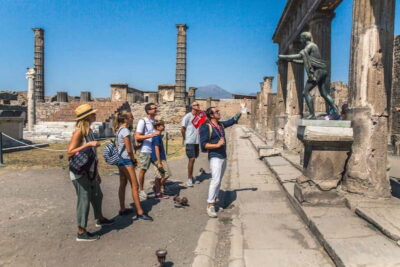
You’ll ride to the Pompeii Archaeological Site and step into a city preserved after Vesuvius erupted in 79 A.D. Your guide focuses on 1st-century Roman daily life, from public spaces to the homes that showed off status. Expect uneven stone underfoot and plenty of walking.
If timing works, there’s also an optional stop at a local workshop making cameos and coral jewelry from coral and seashells. Bring comfortable shoes, plus sun protection, because summer can feel like the ancient Romans left the city mid-sweat.
In This Review
- Key highlights worth your attention
- Naples to Pompeii: Coach Pickup That Keeps Your Day on Track
- Stepping Into 79 A.D.: How the Tour Brings Pompeii to Life
- The Roman Theater and the Street You Can Taste: Theater, Shops, and Bakeries
- Forum, Necropolis, and Bath Houses: Public Pompeii in Context
- The House of the Richest Man: Where Wealth Shows Its Work
- The Optional Cameos and Corals Workshop Stop
- Price and Value: Is $59 a Good Deal for Pompeii?
- Guide Styles That Matter: From Salvatore to Maria
- What to Bring (and What to Skip) for a Better Pompeii Walk
- Should You Book This Naples to Pompeii Tour?
- FAQ
- What’s the total duration of the tour from Naples to Pompeii?
- How long do I spend walking in Pompeii?
- Is transportation from Naples included?
- Is the Pompeii entry ticket included in the price?
- What languages are available for the tour?
- Do I need to carry a lot of luggage?
- Is this tour suitable for wheelchair users or people with mobility impairments?
Key highlights worth your attention
- Roman theater experience: You walk through an ancient theater and get context for how it fit Roman entertainment.
- Street-level Pompeii: You see preserved shopfronts tied to everyday routines like baking and eating.
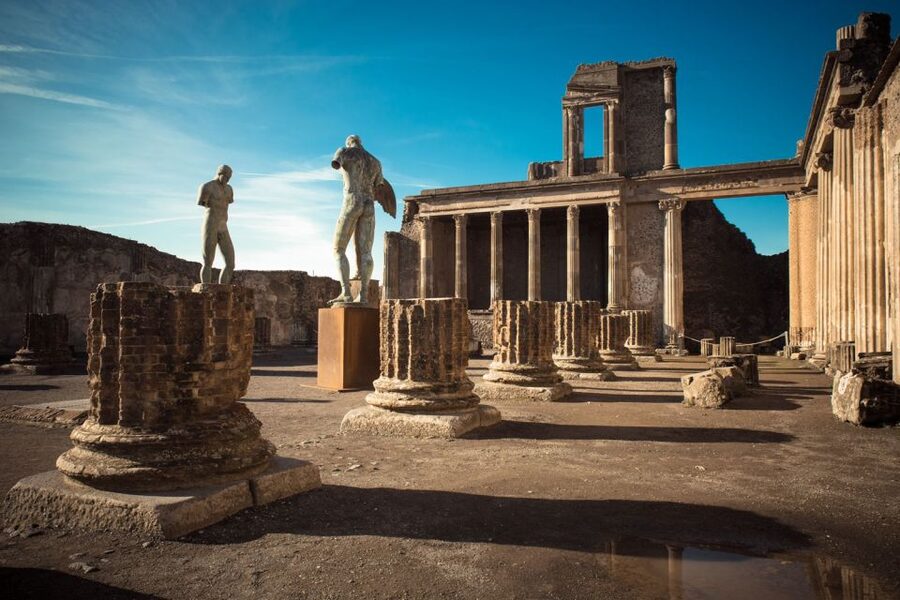
- Forum, necropolis, and baths: Key public areas help you understand how people lived beyond their homes.
- House of the richest man: Wealth isn’t subtle here, and the route makes sure you reach it.
- Optional cameo and coral workshop: If included that day, you’ll watch how these special crafts are made.
- Guides who keep the group together: Several guides (including Salvatore, Fabio, and Maria) were praised for pace, care, and clarity.
Which Pompeii ticket and guide? Compare a few more.
- From Naples: Pompeii Ruins & Mount Vesuvius Day Tour★ 4.3 · 11,459 reviews
- From Naples: Skip-the-line Pompeii – Small Group Tour★ 4.5 · 4,401 reviews
- Naples or Sorrento: Full-Day Pompeii and Mount Vesuvius Tour★ 4.6 · 4,235 reviews
- Pompeii & Mt.Vesuvius Day Tour from Naples with Pizza Lunch★ 4.0 · 2,901 reviews
Naples to Pompeii: Coach Pickup That Keeps Your Day on Track
This tour is built around one big idea: you don’t have to fight your way out of Naples. You get round-trip coach transportation, with pickup from selected hotels and meeting points around the city. On top of that, you have multilingual commentary on board, which helps you start soaking it all in before you even reach Pompeii.
The ride itself is usually quick on paper, with the schedule showing about 20 minutes to/from the site. In real life, traffic can stretch things, so plan for some variation. The good news is you’re not the one steering or parking in that chaotic Italian driving mix.
You’ll also want to travel light. Large bags and luggage aren’t allowed, so bring what you can carry comfortably. If you’re late, the driver waits up to 5 minutes, so keep that buffer in mind if you’re meeting near a busy entrance.
One thing I appreciate about the format: it’s designed for an efficient half-day. You’re looking at a total window of 3–4 hours, with the Pompeii walking portion set at about 2 hours. That schedule matters because Pompeii is huge, and most first-timers benefit from a guided route that gets you to the most meaningful stops fast.
Stepping Into 79 A.D.: How the Tour Brings Pompeii to Life
Pompeii works best when someone gives you a map for what you’re seeing. Left alone, you can end up wandering between impressive ruins without understanding what they were for. With this tour, the guide frames each area as part of Roman life, so the city reads like a story instead of a pile of stones.
You’re walking in a place buried by the eruption of Vesuvius in 79 A.D. That preservation is the main reason Pompeii still hits so hard. Shop counters, wall paintings, and public structures help you picture how people moved through their normal day—work, food, leisure, and community—right before the disaster.
The route is also geared toward helping you grasp scale. Pompeii wasn’t just houses and temples; it had public buildings, marketplaces, and spaces for entertainment. You’ll get explanations tied to the 1st-century AD vibe: what people ate, where they gathered, and how wealth and daily routine played out in stone.
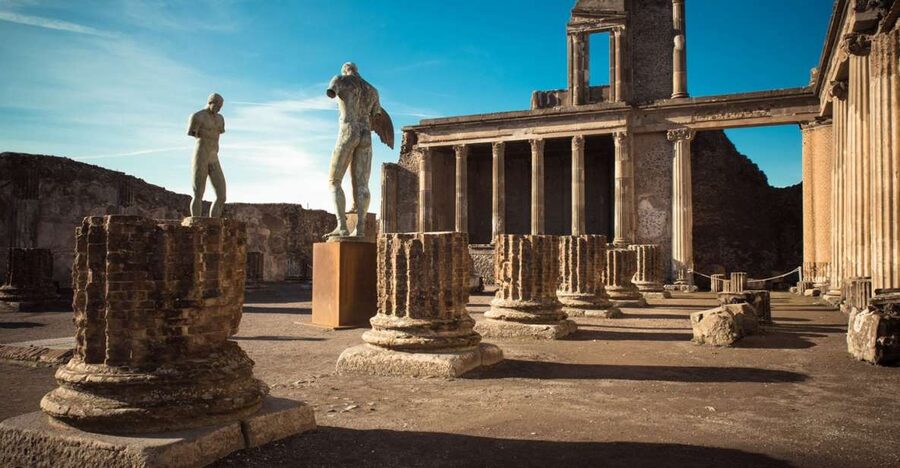
And yes, you’ll still enjoy the visuals. The Roman theater, the preserved streetfronts, and the public areas are the kind of scenes that feel impossible until you’re actually standing there. The guide’s job is to make those scenes make sense.
The Roman Theater and the Street You Can Taste: Theater, Shops, and Bakeries
When you first enter Pompeii on a guided highlights route, the most important thing is momentum. The tour is structured so you reach major sights without spending your energy picking a direction and hoping for the best.
One early win is the chance to walk through an ancient Roman theater. Even if you’re not a theater person, the space helps you understand Roman entertainment and civic life. You can picture not just performances, but also how public gatherings shaped community.
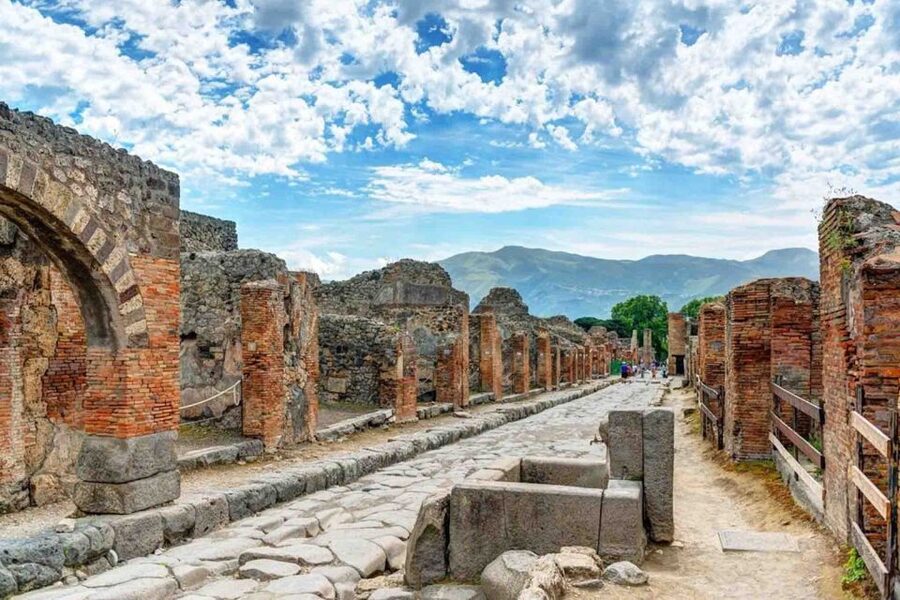
From there, you shift into the everyday side of Pompeii. A big highlight is the ancient shopping area with preserved spots tied to food culture—bakeries and pizzerias are part of what you’re set up to see. This is where Pompeii stops being only dramatic tragedy and becomes a working city in your imagination.
What I like here is how the route balances “wow” with “why.” The guide is there to connect what you’re seeing—like food-related shop spaces—to daily routines. Instead of just looking at ruins, you’re learning how people ate, bought, and socialized.
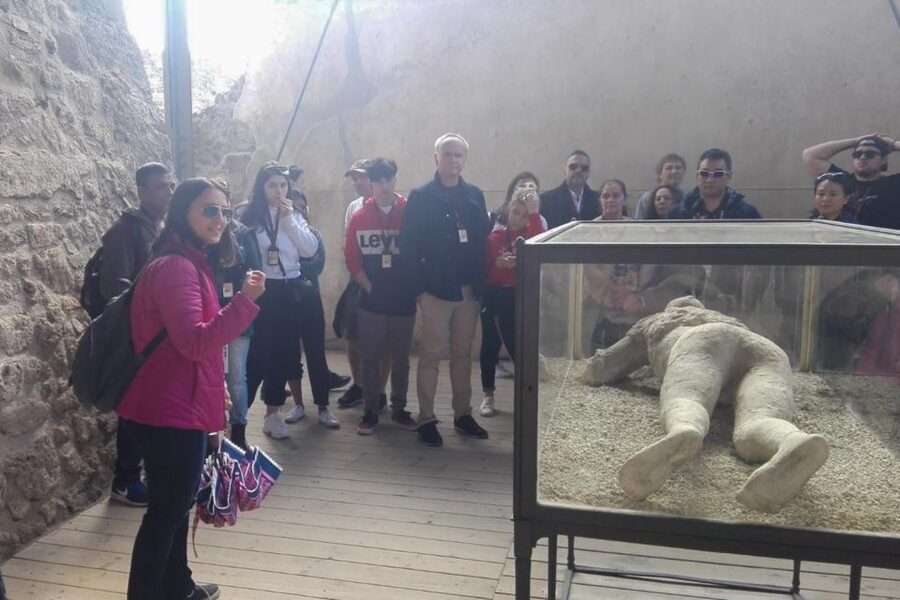
There’s a practical benefit too. A guided pace reduces decision fatigue. Pompeii is crowded at peak times, and a small group (often around a handful of people) means it’s easier to keep your bearings and stay close to your guide instead of constantly chasing.
Forum, Necropolis, and Bath Houses: Public Pompeii in Context
The Pompeii highlights don’t stop at the marketplace. The route also guides you through traditional “read the city” zones: necropolis, forum, and bath houses. These aren’t random stops. They’re key to understanding how Romans organized life around public spaces.
The forum is the social and civic center in Roman cities. In Pompeii, seeing it as part of your walk helps you connect everyday street life to the places where decisions, announcements, and public interaction happened. It’s the kind of stop that makes the city feel structured rather than chaotic.
Then there’s the necropolis, tied to burial and memory. Seeing it on a guided route gives you a framework for how death and remembrance were built into the city’s broader geography. This can be emotionally heavier than the shopping streets, but it’s also one of the most meaningful ways to understand Pompeii as a whole community.
Finally, the bath houses bring you back to routine. Baths were not just hygiene; they were social spaces and a place to unwind. When you’re standing in what remains, you start to understand that leisure and daily maintenance were woven together.
A quick reality check: you’re moving through a lot of major areas within the limited time on site. That’s why the tour is best thought of as a “greatest hits” route. You’ll see the major pieces that most visitors want, and you’ll leave with a clearer mental map than you would after self-guiding alone.


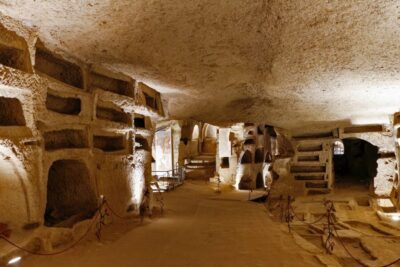
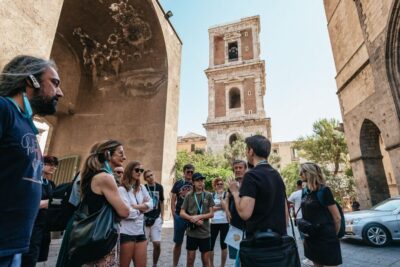

The House of the Richest Man: Where Wealth Shows Its Work
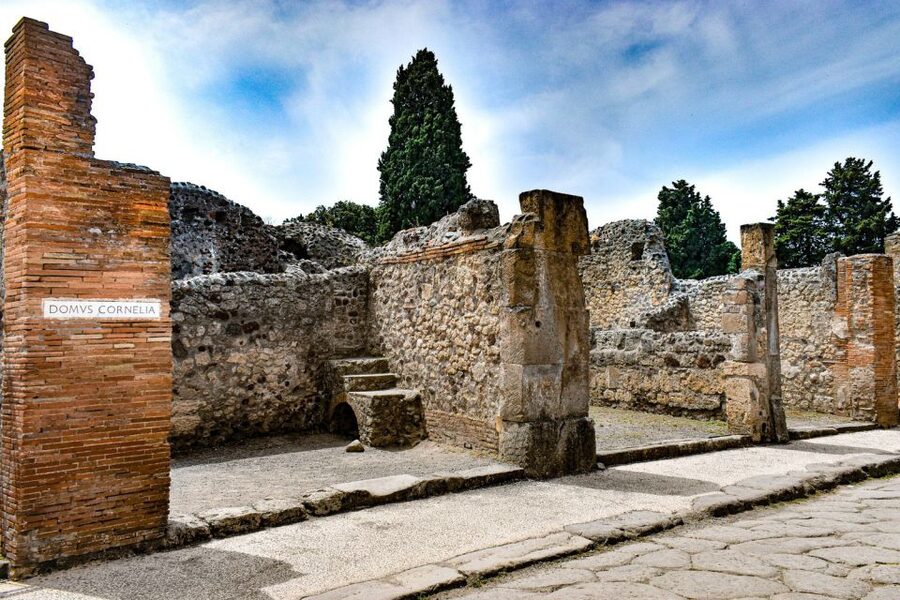
If you want one stop that helps you feel the contrast in Pompeii, it’s the house of the richest man. This is where wealth becomes physical. You don’t just hear that some people were rich—you see the scale of a home designed to impress.
The value of reaching this house on a guided route is context. The guide helps you interpret what you’re looking at: space, status, and how the wealthiest residents used their property to signal power. It’s one of the best ways to understand Roman society without reading a textbook first.
And because Pompeii’s ruins are preserved, details you might otherwise miss become clearer. Wealth shows up in how a space functions and how it’s laid out. Standing there gives you a better feel for what separated everyday life from elite life.
This stop also balances the day nicely. After bakeries, streets, and civic areas, the “rich house” gives your brain a new lens. It’s not only a pretty ruin; it’s a social statement preserved in stone.
The Optional Cameos and Corals Workshop Stop
This tour has a built-in chance to learn a craft that feels far from ancient stones: cameo and coral jewelry making. The workshop stop is described as an optional addition, so whether you get it depends on timing that day.
If it’s included, you’ll see the process behind jewels made out of coral and seashells. Even if you’re not shopping, the explanation is the point. It ties the Campania coast and Mediterranean materials to something people still make and value.
Should you buy? If you love handmade jewelry and want a wearable souvenir, it can be a memorable buy. If you’re only after photos, you may decide to keep it simple. Either way, treat this stop as a bonus that can add variety to your Pompeii day.
The only caution is time management. Because Pompeii is the core experience, the craft stop should never crowd out your main sights. The tour’s setup includes it only if there’s time, which is exactly how it should be.
Price and Value: Is $59 a Good Deal for Pompeii?
At $59 per person for a 3–4 hour tour, the value comes from what’s wrapped into the price. You’re getting round-trip transportation from Naples, multilingual on-board commentary, and a guided Pompeii walking experience of about 2 hours. Depending on the option you select, Pompeii entry ticket may be included.
You’re also paying for direction. Pompeii is overwhelming if you arrive without a plan. A guide helps you reach the main zones—Roman theater, shopping street, forum, necropolis, bath houses, and the richest man’s house—without wasting your limited time.
What’s not included is lunch, so you’ll want to plan food for before or after. That’s standard for these short excursions, but it does affect your day.
The biggest value signal for me is efficiency. You avoid driving, parking, and organizing your own route while still getting a structured highlights experience. If you’d otherwise spend hours figuring out how to see the “must-sees,” this price feels more reasonable than it looks at first glance.
Guide Styles That Matter: From Salvatore to Maria
A good Pompeii guide can make or break your day. This experience scores high for a reason: the guides are praised for clarity, pace, and keeping the group together.
You’ll see names pop up in positive experiences, including Salvatore, Fabio, Anita, and Maria. Some were noted for staying attentive to the group, finding shade when temperatures rose, and explaining Roman life in a way that feels human rather than lecture-like. In one praised case, the guide also handled an older guest with extra care, which matters when you’re on uneven ruins.
Fabio was specifically described as an archaeologist in one of the experiences, which suggests the explanations can get sharp and grounded. Even when the guide isn’t an archaeologist, you still benefit from a guided route that helps you interpret what you’re seeing.
One practical benefit: the tour often keeps things tight enough that you don’t feel constantly lost. You’re not bouncing between stops alone. That also helps with crowd navigation, because Pompeii can feel like a slow-moving funnel at busy times.
What to Bring (and What to Skip) for a Better Pompeii Walk
For Pompeii, your comfort matters more than your outfit. You’ll be on your feet for a guided circuit, often across uneven stone. Comfortable shoes are non-negotiable, and you’ll want extra traction if you tend to slip on smooth surfaces.
Sun protection is a real issue. Bring a sun hat and sunscreen. On hot days, guides may adjust pace and look for shade, but you should still show up prepared.
You should also leave room in your bag for what you’ll carry. Large bags and luggage aren’t allowed, so plan to use a small crossbody or daypack you can keep close. If you’re bringing water, keep it simple and easy to access.
And if you’re easily uncomfortable with stairs, curbs, or uneven ground, consider your limits ahead of time. This tour is not suitable for wheelchair users or people with mobility impairments, based on the tour’s guidance.
Should You Book This Naples to Pompeii Tour?
I’d book this tour if you want a first-time Pompeii experience that’s guided, efficient, and focused on the stops that most people truly care about. The 2-hour walking tour gives you a strong foundation: Roman theater, shopping streets with bakeries and food spots, the forum, necropolis, bath houses, and the richest man’s house—plus optional craft if timing allows.
Skip it only if you’re the kind of visitor who wants to linger for hours in one area, read every inscription slowly, and tour Pompeii at your own pace with no structure. In that case, you may prefer more time on site and a self-guided plan.
If you want a smooth half-day that helps you understand what you’re seeing, this is a solid value way to do Pompeii from Naples.
FAQ
What’s the total duration of the tour from Naples to Pompeii?
The total duration is listed as 3 to 4 hours, with a 2-hour guided walking tour inside Pompeii.
How long do I spend walking in Pompeii?
You get a 2-hour walking tour at the Pompeii Archaeological Site.
Is transportation from Naples included?
Yes. Round-trip transportation from Naples is included.
Is the Pompeii entry ticket included in the price?
It depends on the option you select. The tour notes that Pompeii entry ticket is included if you choose that option.
What languages are available for the tour?
Live tour guide languages are English, Italian, and Spanish. An optional audio guide may be available in French, Chinese, German, Japanese, Russian, and Portuguese.
Do I need to carry a lot of luggage?
No. Luggage or large bags are not allowed on this tour.
Is this tour suitable for wheelchair users or people with mobility impairments?
No. It’s listed as not suitable for people with mobility impairments and wheelchair users.
More Tour Reviews in Naples





More Pompeii Tours to Compare


More Naples tours, freshly reviewed





Pompeii Tours, compared.
 ★ 4.8Pompeii: Entry Ticket and Guided Tour with an ArchaeologistFrom $3519,459 reviews
 ★ 4.1Pompeii: Entry Ticket with Audio GuideFrom $4013,491 reviews
 ★ 4.8Pompeii: Small Group Tour with an ArchaeologistFrom $4012,264 reviews
 ★ 4.3Pompeii Ruins & Mount Vesuvius Day TourFrom $12011,459 reviews
★ 5.0Pompeii Small Group Tour with an ArchaeologistFrom $356,593 reviews
★ 4.3Pompeii Ruins & Mount Vesuvius Day TourFrom $12011,459 reviews
★ 5.0Pompeii Small Group Tour with an ArchaeologistFrom $356,593 reviews
 ★ 4.5Skip-the-line Pompeii – Small Group TourFrom $544,401 reviews
 ★ 4.6Naples or Sorrento: Full-Day Pompeii and Mount Vesuvius TourFrom $1044,235 reviews
 ★ 3.9Pompeii: Skip-the-line Entry Ticket with Audio Guide & MapFrom $433,153 reviews