
Review · POMPEII TOURS
From Naples: Pompeii and Sorrento Guided Tour
Two ruins, one giant volcano, and Sorrento too. This Pompeii and Sorrento guided tour keeps the logistics easy with round-trip coach from Naples, then hands you a real sense of how Romans lived—streets, homes, temples, and public life. I especially like that you get expert guide commentary while you walk through the most important carved-up corners of Pompeii.
What I love even more is the pacing: the day mixes big highlights with enough time to actually see what you came for. I also like that Pompeii access is handled for you, plus the tour includes clear audio gear when you are in a bigger group, so you do not end up playing guess-the-ancient-mosaic. One thing to consider: the advertised length is about 8 hours, but the exact timing can run shorter on the day, depending on how the schedule and lines move.
In This Review
- Key things that make this day trip work
- Naples-to-Pompeii-to-Sorrento: the value of “someone handles it”
- Pompeii: starting in the Forum, where the city ran
- Pompeii’s market streets: Via dell’Abbondanza and the Macellum
- Stabian Baths and the social side of Roman life
- Big houses, mosaics, and a theater that held thousands
- Via delle Ville: the quieter road outside the main city
- Mount Vesuvius: coach up, then walk to the crater
- Sorrento’s historic center: guided walk, then freedom
- Group size, audio, and how the day actually feels
- What to bring so you enjoy Pompeii more (and Vesuvius less stressfully)
- Price and value: $129.86 for Pompeii + crater views + Sorrento
- Who this tour fits best
- Should you book this Naples Pompeii and Sorrento day trip?
- FAQ
- How long is the Naples Pompeii and Sorrento guided tour?
- Do I need to buy tickets for Pompeii?
- Is there time for lunch in Sorrento?
- Will I go up Mount Vesuvius?
- What’s included in the price?
- Are meals included?
- Where does the tour start and end?
- What happens if the weather is poor?
- Can I cancel for a full refund?
Key things that make this day trip work
- Priority access to Pompeii helps you start seeing the good stuff sooner
- Coach transport from Naples reduces stress and backtracking
- Pompeii focus on real places like the Forum, Stabian Baths, and the House of the Faun
- Vesuvius by coach, then on foot gives you crater views without doing everything by bus
- Sorrento guided center walk + free lunch time so the day is not just standing in lines
- Small-group feel (max 30) makes it easier to follow the guide’s route
Which Pompeii ticket and guide? Compare a few more.
- From Naples: Pompeii Ruins & Mount Vesuvius Day Tour★ 4.3 · 11,459 reviews
- From Naples: Skip-the-line Pompeii – Small Group Tour★ 4.5 · 4,401 reviews
- Naples or Sorrento: Full-Day Pompeii and Mount Vesuvius Tour★ 4.6 · 4,235 reviews
- Pompeii & Mt.Vesuvius Day Tour from Naples with Pizza Lunch★ 4.0 · 2,901 reviews
Naples-to-Pompeii-to-Sorrento: the value of “someone handles it”
Naples days can get messy fast. Driving yourself means figuring out parking, tickets, and getting caught in traffic. Here, you board an air-conditioned coach early and spend the day moving in a straight line: Pompeii first, then Sorrento, then back.
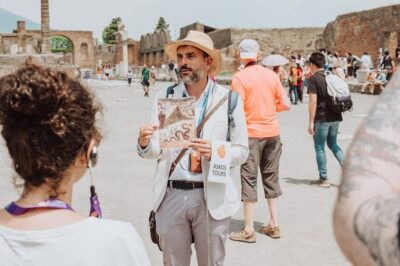
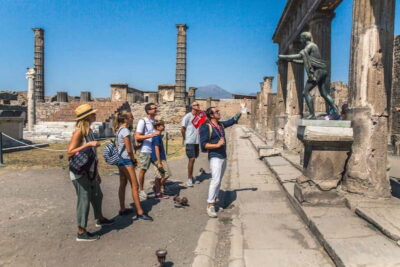
For me, the best part is that Pompeii is not treated like a quick photo stop. The tour is built around guided walking through specific sites—the kind where your guide can point out what you’d otherwise miss: how a forum space worked, how bath complexes were organized, and what a suburban villa tells you about wealth outside the city walls. And when the group is larger, you get headsets so the guide stays clear even in crowded areas.
Price-wise, $129.86 per person is not a bargain, but it also is not just paying for a bus ride. You are paying for guide time, Pompeii admission included, priority entry, and the combination of Pompeii plus Mount Vesuvius plus a Sorrento center walk in one day.
Pompeii: starting in the Forum, where the city ran
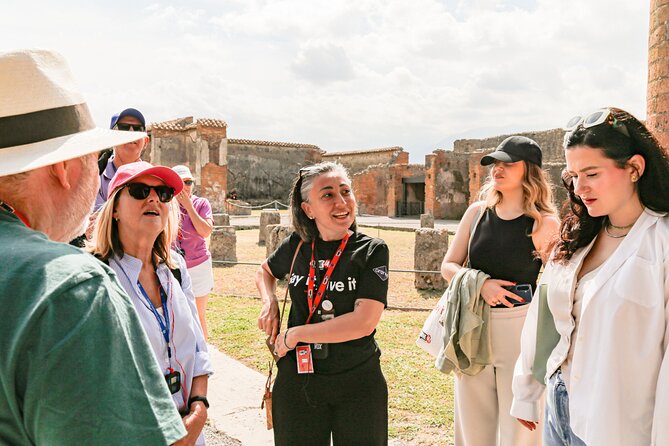
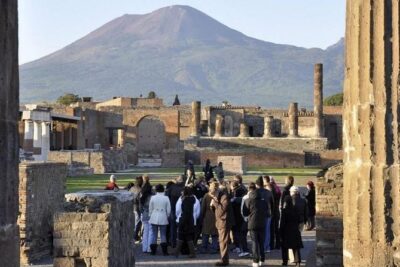
Pompeii’s Forum is the beating heart you need to see early. This was where politics, religion, and business all intersected in one main pedestrian space. If you want a mental picture of Roman civic life, the Forum is where it clicks.
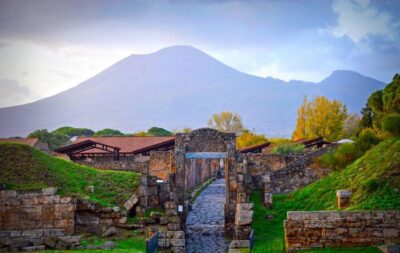
Your walk includes the key anchors around the forum: the open plaza framed by columns and surrounded by major civic buildings. Mount Vesuvius sits dramatically in the background, so you get that eerie sense of where the danger came from without the day becoming all doom. It helps you understand why Pompeii could feel both ordinary and extraordinary at the same time.
You will also spend time at the Temple of Jupiter (Capitolium). This is not just a random temple stop. It’s at the north end of the Forum and links directly to the religious core of the city. Seeing it in context—near the main civic space—helps you get beyond “here’s another ruin” and into “this is how public space shaped daily life.”
Pompeii’s market streets: Via dell’Abbondanza and the Macellum
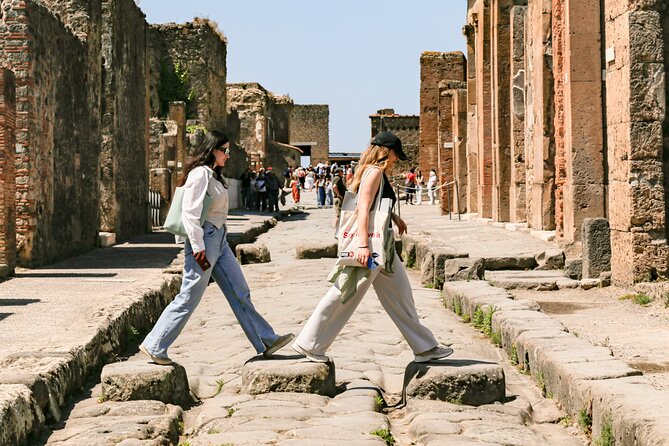
After the Forum, you shift into daily rhythm. Via dell’Abbondanza is Pompeii’s main commercial artery, stretching from the Forum toward the Sarno Gate. Walking it today, you can still sense how long-distance foot traffic and local errands met on the same stone road.
This is also where your guide’s commentary matters. Pompeii is huge, and if you do it alone you tend to wander. With a guided route, you can focus on the commercial logic: shops built along a street, workshops tucked near the pedestrian flow, and the way public space doubled as advertisement space. You’re effectively learning how the city sold goods and ideas at the same time.
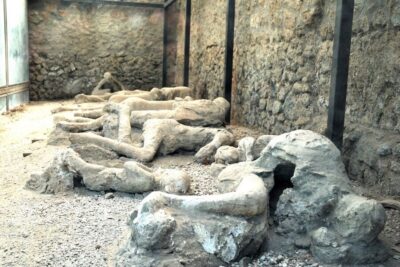
Nearby, you will see the Macellum, Pompeii’s provision market. This building mattered because food and daily supplies mattered. It’s also a useful lesson in how disasters ripple through a city: the market was damaged after the earthquake of 62 A.D. You see the sign of an earlier rupture, not only the final eruption event. That makes Pompeii feel less like a one-time tragedy and more like a real place with repeated stress.
Stabian Baths and the social side of Roman life
Roman baths were not only about cleanliness. They were a full-service social hub. At Stabian Baths, you get a sense of how sophisticated Roman engineering was and how public wellness became part of civic identity.
This is one of the oldest and largest bath complexes in Pompeii, and it shows off the hypocaust underfloor heating system. If you’ve ever visited a cold Roman ruin and wondered how anyone functioned there, this answers that question. You can also see separate sections laid out for men and women, which gives you a clearer picture of how the Romans organized public space.
What I like about including the baths is that it breaks up the “temples and houses” pattern. You get a different type of evidence: stucco decoration, an open-air gym area (palaestra), and the large swimming pool space where people likely spent real time. It’s a reminder that everyday leisure was a serious part of the city’s structure.
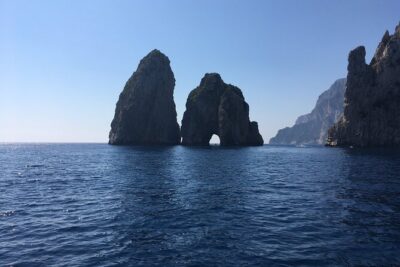
More runs down to Sorrento and its lemon groves



Big houses, mosaics, and a theater that held thousands
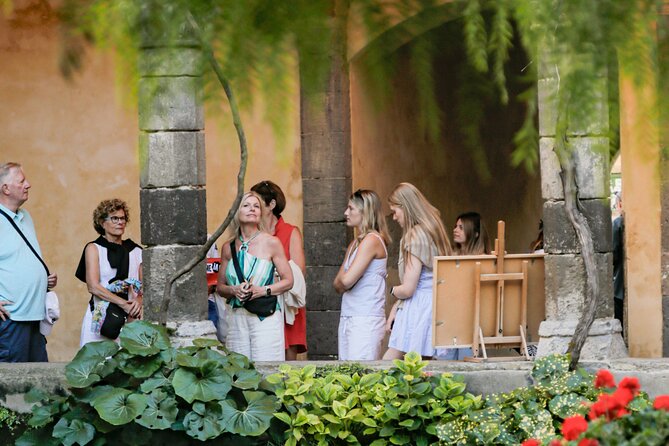
Pompeii is famous for private homes, and the House of the Faun is the one that helps you understand elite taste. This residence covered an entire city block, and it is named for a bronze statue of a dancing faun found in the main atrium. The scale alone tells you this was not a modest home—it was a status statement.
Your highlight here is the Alexander Mosaic, housed in the home. It depicts the battle between Alexander the Great and Darius III of Persia. You do not need to be an art historian to appreciate what that subject choice signals: the kind of cultural storytelling wealthy Pompeians wanted to display inside their walls.
The day also includes Teatro Grande, a horseshoe-shaped theater built into a natural hillside. It was designed for roughly 5,000 spectators and was the first Greek-style stone theater in Pompeii. You get a sense of how major entertainment worked—comedy, tragedy, and pantomime—while also seeing how the Roman elite and everyday people both shared the same public culture.
Then there is the Basilica, near the Forum, which functioned as a courtroom and a commercial center. It’s the kind of building you understand instantly because it resembles a civic room scaled to public life: central nave, towering columns, and a raised tribunal area. It’s built from the 2nd century B.C., and that age matters because it shows pre-imperial civic architecture, not just later Roman decoration.
Via delle Ville: the quieter road outside the main city
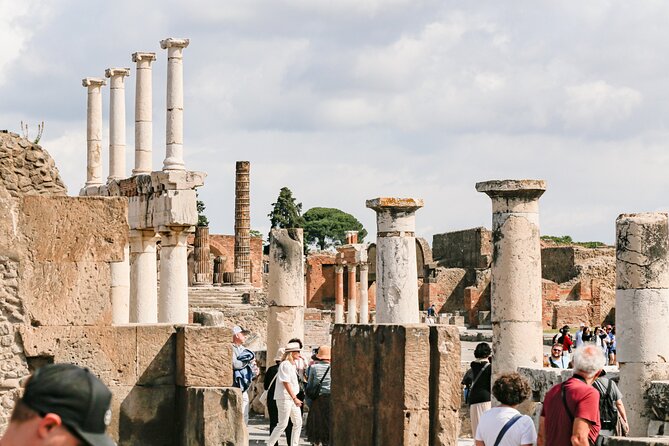
Pompeii’s edge is where the city softens into something more atmospheric. Via delle Ville is a scenic route outside the city walls, leading away toward the Porto Ercolano gate. Along the way is a necropolis with impressive tombs, which changes the mood from street-life noise to the kind of space built for memory.
This road is closely linked to the Villa of the Mysteries, famous for frescoes connected to Dionysian rites. You can think of it as a “contrast stop.” Inside the city you see structures meant for living and working; outside, you see art and ritual spaces tied to belief and commemoration. Even if you are not a big fresco person, this is one of the locations that helps Pompeii feel like more than a ruined grid.
Mount Vesuvius: coach up, then walk to the crater
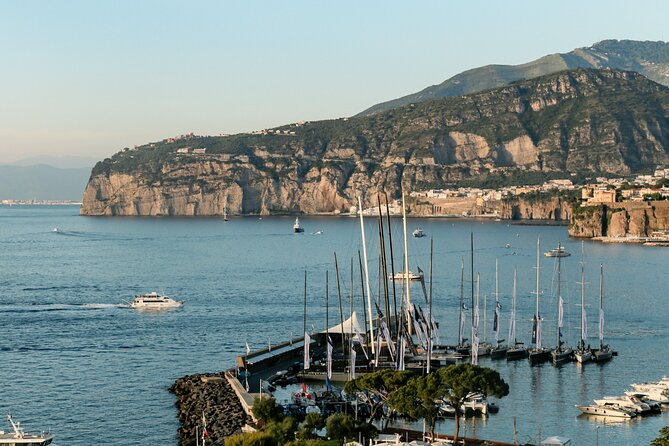
The day’s emotional punch often comes when the schedule swings from Pompeii’s settled dead to Mount Vesuvius. The plan is to partially ascend by coach, then walk up to the crater. That final stretch is the part you feel in your legs and lungs, especially if you’re not used to uphill walking.
This is where practical preparation pays off. Comfortable walking shoes matter here, and you’ll want to be ready for uneven ground and wind near the crater area. Even if you do not love hiking, this is short enough to be doable for most people with moderate fitness—just take it at a steady pace and use the moments for real views, not just quick snapshots.
The payoff is the contrast. You stand above the engine that changed Pompeii forever. And because you already spent time in the city’s forum and streets, the eruption story connects more personally. The volcano stop does not feel random; it feels like the missing chapter of the day.
Sorrento’s historic center: guided walk, then freedom

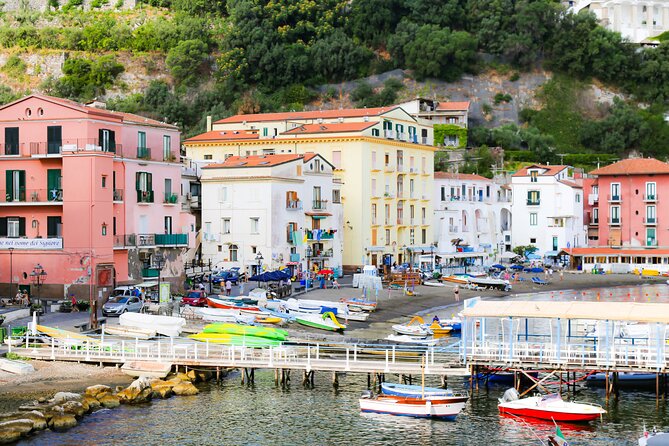
Sorrento is a different pace than Pompeii. After the long Roman walk, you switch to a guided walking tour of Sorrento’s historic center (about 3 hours). It’s long enough for your guide to point out the main sights, but you also get the best kind of break: real free time.
You choose how to spend it—lunch at a local café or restaurant, shopping for handmade souvenirs, or just hanging out near the coastal charm. That “you decide” time is a gift on a day trip, because everyone’s hunger level and photo cravings are different.
I like the structure here: you get guidance for the town’s highlights, then you get permission to wander. If you want a low-pressure souvenir loop, you have time. If you want to sit and watch the street flow, you have time. If you want to try one meal and be done, you also have time.
Group size, audio, and how the day actually feels
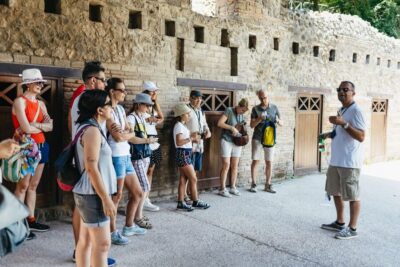
This tour caps at 30 travelers, which is an important detail because Pompeii is where crowds can either ruin your focus or sharpen it. A smaller group usually means your guide can steer you away from the densest bottlenecks and keep the day moving.
If your group is over 8, you’ll use headsets. That’s not a luxury detail. It’s what lets you hear commentary in the middle of walking chaos. In a place like Pompeii, where you are constantly turning corners and reading small features, understanding what you’re looking at helps the ruins feel alive.
Also note the physical side. The tour calls for moderate physical fitness, and the Vesuvius crater walk is the main effort. You do not need to be an athlete, but you should be comfortable with steady walking on uneven paths.
What to bring so you enjoy Pompeii more (and Vesuvius less stressfully)
The tour includes what matters for logistics, so you can focus on comfort. Pack for sun and wind, because coastal southern Italy days can switch fast.
Bring:
- Comfortable, grippy shoes for Pompeii stone paths and the Vesuvius crater walk
- A light layer for cooler air near the volcano
- Water and a snack if you want one for later, since meals are not included
- A small day bag to keep your hands free for photos
Also, arrive ready for the early start. The whole day flows from that “start your day with an early departure” idea. If you show up tired, you’ll feel it twice—on the walking and on the decision-making in Sorrento.
Price and value: $129.86 for Pompeii + crater views + Sorrento
Let’s be honest. A day trip like this costs more than a DIY plan. But value is not just price. Value is what you do not have to manage.
For $129.86, you get:
- Pompeii admission included (about 2 hours there on the plan)
- An expert local guide with live commentary
- Priority access to Pompeii
- Round-trip transportation by air-conditioned coach
- Headsets if needed for clearer audio
- A guided walk in Sorrento plus free time for lunch
Then you add the Vesuvius segment, including the partial coach ride and the on-foot crater walk, which is usually the part DIY travelers struggle to time well. If you want the volcano moment and the Pompeii moment without turning your day into a scheduling spreadsheet, this is the kind of package that makes sense.
Who this tour fits best
This works best if you want a big-results day without car stress. It’s ideal for first-timers to Naples who want Pompeii’s most important spaces plus a real taste of Sorrento in one push.
You’ll especially like it if:
- You enjoy guided context, not just wandering ruins
- You want Pompeii’s major stops stitched into a clear route
- You’re curious about both public life (Forum, Basilica, Baths) and private wealth (House of the Faun)
- You want the volcano view without doing all the logistics yourself
If you prefer slow museum-style roaming and you hate any kind of walking schedule, you might find the pace a bit structured. But for most people doing a limited time in the region, this is a strong match.
Should you book this Naples Pompeii and Sorrento day trip?
I’d book it if you want a guided, well-structured day that connects Pompeii’s civic life with Vesuvius’ crater views and then hands you breathing space in Sorrento.
Skip it only if you know you dislike uphill walking or you want total freedom with no route at all. The day is designed to get you to the key sites efficiently, and that means you’ll follow the plan.
If you do book, do one thing that pays off: show up with good shoes and a relaxed attitude about time. This is the kind of day where the best moments happen when you stop rushing and just look.
FAQ
How long is the Naples Pompeii and Sorrento guided tour?
It runs for about 8 hours, though the exact schedule can vary. Pompeii is about 2 hours on the plan, and Sorrento includes about 3 hours with a guided walking tour plus free time.
Do I need to buy tickets for Pompeii?
Pompeii admission is included in the tour.
Is there time for lunch in Sorrento?
Yes. You get free time in Sorrento for lunch at a local café or restaurant, plus time to shop or explore on your own.
Will I go up Mount Vesuvius?
Yes. The experience includes a partial ascent by coach and then a walk to the crater.
What’s included in the price?
You get an expert local guide with live commentary, headsets for clear audio when the group is over 8, priority access to Pompeii, and comfortable round-trip transportation.
Are meals included?
No. Meals are not included, so you’ll need to plan lunch during the free time in Sorrento.
Where does the tour start and end?
The tour starts at P.za Giuseppe Garibaldi, 91, 80142 Napoli NA, Italy. It ends back at the meeting point.
What happens if the weather is poor?
This experience requires good weather. If it’s canceled due to poor weather, you’ll be offered a different date or a full refund.
Can I cancel for a full refund?
Yes, free cancellation is available. You can cancel up to 24 hours in advance for a full refund.
More Tour Reviews in Naples




More Sorrento Day Trips



More Pompeii Tours to Compare

More Naples tours, freshly reviewed




Pompeii Tours, compared.
 ★ 4.8Pompeii: Entry Ticket and Guided Tour with an ArchaeologistFrom $3519,459 reviews
 ★ 4.1Pompeii: Entry Ticket with Audio GuideFrom $4013,491 reviews
 ★ 4.8Pompeii: Small Group Tour with an ArchaeologistFrom $4012,264 reviews
 ★ 4.3Pompeii Ruins & Mount Vesuvius Day TourFrom $12011,459 reviews
★ 5.0Pompeii Small Group Tour with an ArchaeologistFrom $356,593 reviews
★ 4.3Pompeii Ruins & Mount Vesuvius Day TourFrom $12011,459 reviews
★ 5.0Pompeii Small Group Tour with an ArchaeologistFrom $356,593 reviews
 ★ 4.5Skip-the-line Pompeii – Small Group TourFrom $544,401 reviews
 ★ 4.6Naples or Sorrento: Full-Day Pompeii and Mount Vesuvius TourFrom $1044,235 reviews
 ★ 3.9Pompeii: Skip-the-line Entry Ticket with Audio Guide & MapFrom $433,153 reviews
Browse the lists this tour appears in