
Review · POMPEII TOURS
From Naples: Day Trip to Pompeii with skip the line
Pompeii gets busy fast, and this trip helps you beat the worst of it. You start in Naples with a direct shuttle bus transfer from Piazza del Gesù Nuovo, then you arrive at Pompeii with priority entrance that saves you time at the main gates.
I like the freedom in this day plan. You get enough on-site time to wander at your own pace, and you’re not stuck listening to a script when you’d rather stop for one perfect mosaic or one street-corner view.
One consideration: there’s no guide or audio included, so you’ll rely on signage. Also, the departure time is approximate and the exact pickup time is confirmed the day before, so you’ll want to double-check your meeting instructions.
In This Review
- Key things I’d watch for
- Naples to Pompeii without the stress: the shuttle transfer matters
- Skip-the-line priority entry: what you actually gain
- A four-hour Pompeii day: pacing your expectations
- Pompeii streets, shops, temples, and theaters: what you’ll notice first
- Mosaics and luxury villas: seeing wealth made visible
- Baths, brothel remains, and House of the Faun: Roman life beyond the postcard
- No guide, no audio: how to make it work (and not feel lost)
- Driver and liaison experience: what the better days look like
- Who this Pompeii trip fits best
- Price and value: is $71 worth it?
- Should you book this Naples to Pompeii skip-the-line shuttle tour?
- FAQ
- How long is the Naples to Pompeii day trip?
- Where is the pickup in Naples?
- Is priority entrance included for Pompeii?
- Do I get a guided tour once I’m inside Pompeii?
- How do I get back to Naples?
- Are there restrictions on what I need for children?
- Is the tour free for young children?
- What should I know about the departure time?
- Can I cancel if my plans change?
Key things I’d watch for
- Priority entrance means less waiting at Pompeii’s busiest bottleneck
- Roundtrip shuttle keeps Naples logistics simple, without changing trains or buses
- Free time inside the ruins lets you go slow or power-walk your favorites
- Roman everyday life stops you can actually see: baths, shops, theaters, temples
- Mosaics and villas highlight the city’s wealth and style
- House of the Faun + brothel remains give you an unusually direct look at daily entertainment
Which Pompeii ticket and guide? Compare a few more.
- From Naples: Pompeii Ruins & Mount Vesuvius Day Tour★ 4.3 · 11,459 reviews
- From Naples: Skip-the-line Pompeii – Small Group Tour★ 4.5 · 4,401 reviews
- Naples or Sorrento: Full-Day Pompeii and Mount Vesuvius Tour★ 4.6 · 4,235 reviews
- Pompeii & Mt.Vesuvius Day Tour from Naples with Pizza Lunch★ 4.0 · 2,901 reviews
Naples to Pompeii without the stress: the shuttle transfer matters
A day trip to Pompeii lives or dies by logistics. If you’ve ever tried to coordinate local transport while crowds are already forming, you know the stress. This approach is simpler: you board a shuttle from the historic center of Naples at Piazza del Gesù Nuovo, then you’re driven straight out to Pompeii.
I like that the pickup is clear and central. That matters because you’re trying to start your day with momentum, not playing catch-up. The shuttle is roundtrip, so your return planning is handled for you. You don’t have to figure out which stop to use or how to get back before the buses thin out.
There’s also a small, practical comfort factor. Sitting in a shuttle for the ride means you can keep your energy for walking. Pompeii is a real walking day—cobblestone streets, uneven ground, and lots of looking up at walls and openings that used to be doorways.
If you want a low-friction day trip, this transfer is a strong choice. It’s especially helpful if Pompeii is your one must-do and you don’t want to gamble on how long it takes to reach the site.
Skip-the-line priority entry: what you actually gain
Priority entrance isn’t just a marketing phrase. At Pompeii, time matters because the crowds can build quickly and your energy is limited. With priority entrance, you head to the main entrance and you’re meant to save the long ticket line time.
That gives you something tangible: more of your daylight inside the ruins. Instead of losing your prime morning hours to a line, you can get into Pompeii and start moving. And once you’re inside, you’re not stuck with a strict group pacing. You can go where you want first.
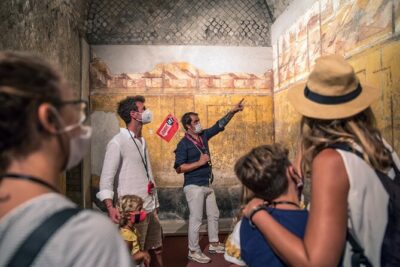
One thing to expect: you’re still on your own at the site. This isn’t a narrated tour where you’re told what to see in a set order. Priority entry is the time-saver; the rest is self-guided exploration. That can be great if you like steering your own visit, but it does require you to engage a little—read signs, glance at context panels, and choose your route.
In terms of value, this is where the $71 per person starts to make sense. You’re paying for two big conveniences: organized transport and time saved at entry. If you’re the type who wants to walk right into the experience, those are the exact things that reduce wasted time.
A four-hour Pompeii day: pacing your expectations
The tour duration is listed as 4 hours, and that frame is important. You’re not buying a full-day ticket to Pompeii. You’re buying a structured shuttle day with free time on-site.
So I recommend thinking of it as a focused highlights visit. Your goal won’t be seeing every room and every inscription. Your goal is picking the sections you’ll actually enjoy walking through—and making sure you’re back on the shuttle when it’s time to leave.
What helps is that Pompeii is designed for wandering. Even in a short visit, you can still get a strong sense of the place: streets over 2,000 years old, building remains that show how people lived and worked, and areas that reveal where people went for entertainment and everyday services.
If you tend to enjoy museum-style slow reading, four hours may feel tight. If you like walking and learning in chunks, four hours often feels about right—enough time to feel the scale and grab key sights without burning out.
Also note the departure time is approximate. The exact time is confirmed the day before by the operator, so plan to stay flexible that day. Build in a little buffer before your pickup so you’re not rushing.
Pompeii streets, shops, temples, and theaters: what you’ll notice first
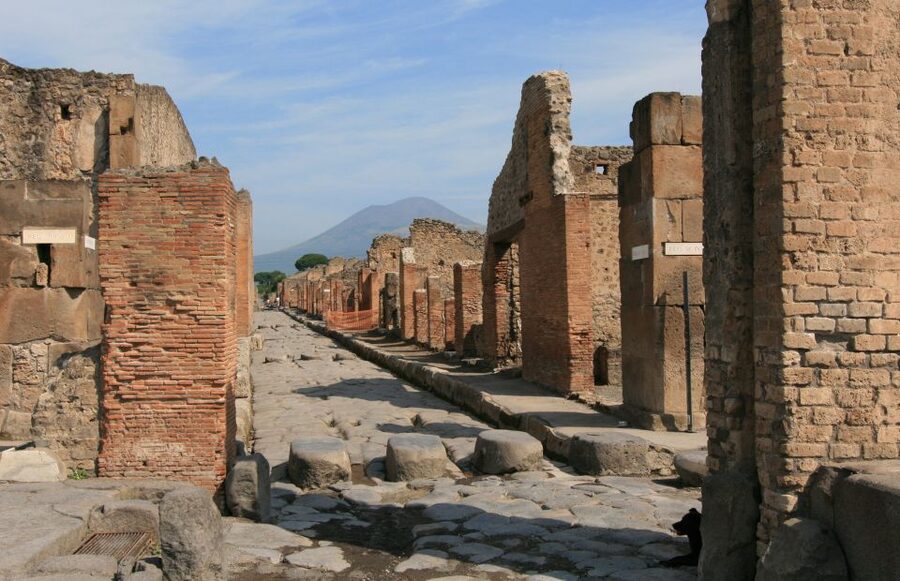
Once you’re through the entrance, you’ll see why Pompeii is famous for being so readable. It’s not just rubble. It’s a city layout—cobblestone streets, building foundations, and spaces where daily life happened.
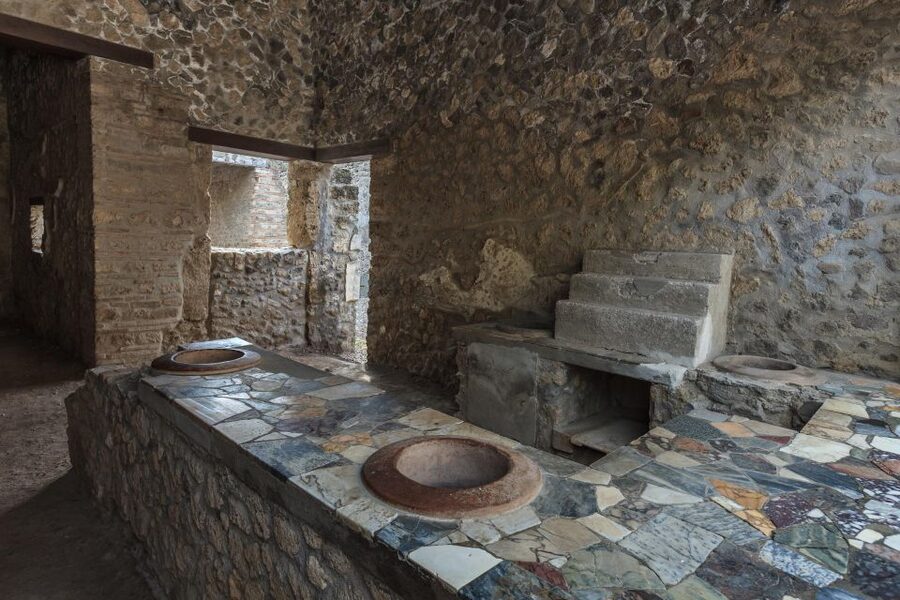
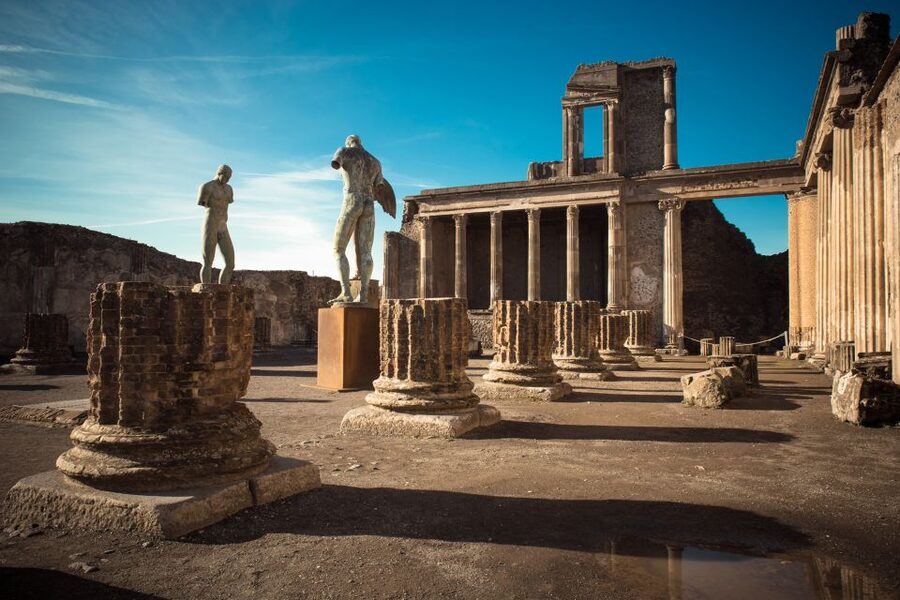
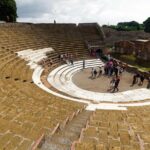
The remains of shops, temples, and theaters show how Roman life worked in public. You can walk through areas that feel like the city’s “front rooms.” The shops help you picture the economy of a prosperous port city. Temples give you the spiritual and civic backdrop. Theaters hint at social life, where community entertainment wasn’t a separate thing—it was part of everyday rhythm.
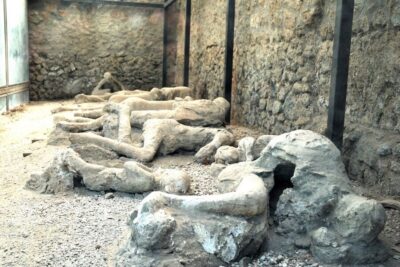
A key historical anchor is the eruption of Mount Vesuvius in 79 AD. The site is often described as covered in lava and ash after the eruption, and you’ll sense that event in the way so many spaces ended abruptly. It makes the city feel frozen, which is both moving and oddly practical as a learning experience. You can look at what’s left and imagine how people moved through it.
If you don’t have a guide on hand, I’d use this strategy: choose one or two themes and follow them. For example, follow entertainment (theater spaces and areas tied to leisure), or follow daily services (baths and commercial areas). With short time, theme-hopping helps you feel like you got “the point,” not just a photo tour.
Other Naples outings worth a look before you book

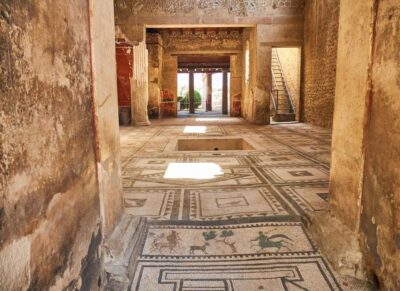



Mosaics and luxury villas: seeing wealth made visible
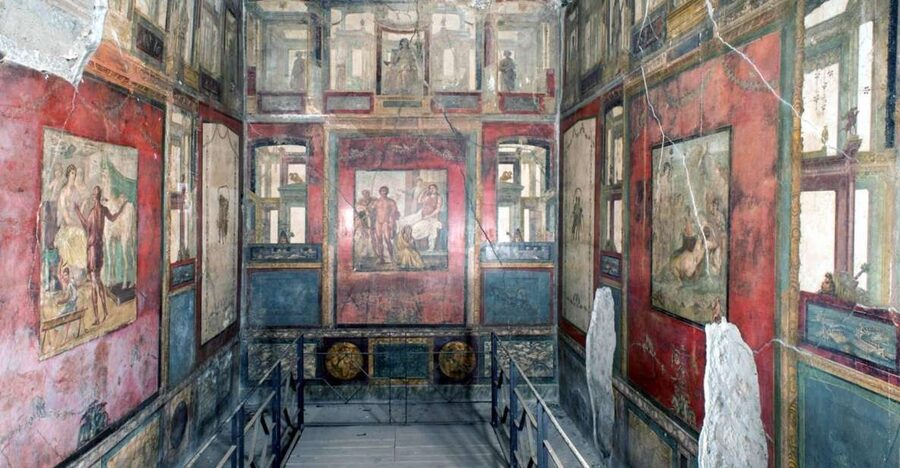
One of the most striking things you’ll find at Pompeii is how clearly wealth shows up in the details. The mosaic tiles of the luxury villas of rich merchants are a standout.
These mosaics aren’t just decoration. They signal taste, status, and how people wanted visitors (and neighbors) to see them. In a short self-guided visit, mosaics are perfect because they stop you in your tracks. You can spend a few minutes there and suddenly you understand the social world of Pompeii in a way that a broad description can’t do.
When you move from the mosaics into surrounding villa remains, you’ll also start to notice how private spaces were arranged. Pompeii’s luxury houses often show a relationship between living areas and shared public-facing zones. That’s useful for grasping daily life: what was meant for family, what was meant for visitors, and what was meant to display success.
If you love art and interior design, plan your route around these villa sections. If you’re less artsy, still don’t skip them. Even a quick look gives you a huge payoff—wealth isn’t just in stories here; it’s in the flooring under your feet.
Baths, brothel remains, and House of the Faun: Roman life beyond the postcard
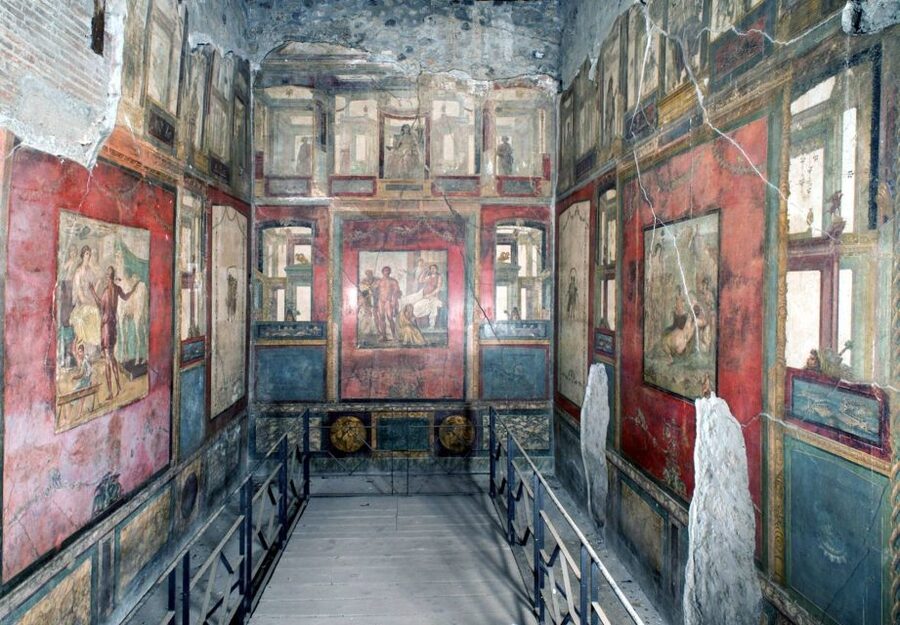
Pompeii’s value isn’t only the famous big structures. It’s that you can see the human side: where people washed, where they relaxed, and where they found entertainment.
You’ll be able to see the remains of public baths. Even if you don’t know every technical term for Roman bathing, you can grasp the idea fast. These spaces point to hygiene, social interaction, and leisure. Baths weren’t just about cleanliness; they were a place to be among others.
You’ll also see parts of villas and temples, plus more everyday structures like shops and theaters. Put together, the city starts to feel like it had a full schedule of activities, not just monuments.
One especially memorable stop is the House of the Faun. It’s known as a key residence, and it helps you visualize how a well-off household functioned inside the city fabric.
Then there are the remains tied to entertainment in ways that feel frank and surprisingly modern in their themes—like a brothel. It’s not comfortable to think about, but it is historically informative. It gives you a more complete picture of what people did for fun and how society operated beneath the surface of grand ideals.
In a short visit, I recommend treating these stops as your “Roman life checklist.” If you catch at least one bathing area, one luxury villa/mosaic moment, and the House of the Faun area, you’ll leave with a strong impression of how Pompeii worked as a city, not just a ruin.
No guide, no audio: how to make it work (and not feel lost)
Because a guide or audio guide is not included, you’re responsible for turning ruins into understanding. That’s not a deal-breaker, but it does change how you should prepare.
Here’s what works well for me in situations like this:
- Pick a few buildings you want to target before you arrive, so you’re not scanning every sign equally.
- Go slow at your chosen mosaics or house remains. Spend your best time where details are easiest to see.
- Use the site signage as your mini-guide. Even quick reading helps connect streets and buildings to everyday life.
If you need a highly structured, deeply explained narration to enjoy ruins, you may feel the missing guide. In that case, consider pairing this with your own pre-reading or a separate audio resource you bring on your phone. The priority entrance still helps, but you’ll want extra context yourself.
The good news: Pompeii is visually straightforward in many areas. You don’t need a lecturer to understand that baths were meant for routines, that theaters were for gatherings, and that villas were for status and comfort.
Driver and liaison experience: what the better days look like
One of the best parts of this kind of service is how smoothly the pickup and return go. On at least one recent day, the liaison named Inna was described as amazing, and the driver named Ciro was praised as professional, on-time, and friendly.
That’s exactly what you want in a day trip: dependable timing and a clear person to help you find the right place. It’s also a reminder to pay attention to your exact bus stop details for both directions.
There’s at least one cautionary note too: someone reported being dropped at an incorrect stop on the return. You can reduce that risk by confirming the pickup/drop-off point you’re assigned, and by staying alert when you’re getting back on the shuttle.
Who this Pompeii trip fits best
This tour suits you if:
- You want a Pompeii day trip from Naples without complicated transport planning.
- You value skip-the-line priority entrance so your limited time is spent walking.
- You like exploring at your own pace and building your understanding from what you see.
It’s also a good fit for families in the sense that it’s straightforward. Children up to 3 years old are free, and kids between 4 and 17 have a reduced price. Just remember to bring the right identification—passport or ID card is required for children.
Where it might not fit:
- If you want a guided narration experience, this one doesn’t include a guide or audio.
- If you’re expecting a full-day, everything-in-Pompeii visit, the 4-hour format will feel short.
Price and value: is $71 worth it?
At $71 per person, you’re not just paying for a bus ride. You’re paying for two key pieces of convenience: roundtrip shuttle transport from Naples and priority entrance into the ruins.
That tends to be good value if you’re the kind of traveler who hates lines and wants to spend your time doing the thing. If you’re comfortable figuring things out on your own and you don’t mind potential delays, you might find cheaper options elsewhere. But if you count your time, the pricing here aligns with what you’re getting.
Also factor in the child pricing. Free for kids up to 3 and reduced rates for ages 4 to 17 can make this a more budget-friendly family choice than you’d expect.
My bottom line: if priority entry and a structured transfer remove stress for you, the $71 price lands more fairly. If you’re hunting for the lowest cost and don’t mind logistical work, you may choose differently.
Should you book this Naples to Pompeii skip-the-line shuttle tour?
Book it if you want a smooth, time-saving day trip with a clear starting point in Naples and priority entrance at Pompeii. It’s a strong way to see the big themes—streets, shops, temples, theaters, public baths, luxury villa mosaics, plus the House of the Faun and brothel remains—without adding transport headaches.
Skip it (or plan extra context) if you want guided storytelling. Since there’s no guide or audio included, you’ll enjoy this most if you like self-guided exploration and are comfortable learning from signage.
If you do book, come prepared to make the most of limited hours: wear good walking shoes, decide what you want to see first, and confirm your exact pickup and drop-off points so you don’t lose time.
FAQ
How long is the Naples to Pompeii day trip?
The duration is 4 hours.
Where is the pickup in Naples?
Pickup is from Piazza del Gesù Nuovo in Naples (historical center).
Is priority entrance included for Pompeii?
Yes. Priority entrance to the ruins of Pompeii is included.
Do I get a guided tour once I’m inside Pompeii?
No. A guide or audio guide is not included, and you’ll have free time to visit the site.
How do I get back to Naples?
The shuttle provides roundtrip transportation by bus.
Are there restrictions on what I need for children?
Yes. You should bring a passport or ID card for children.
Is the tour free for young children?
Children up to 3 years old are free. Children between 4 and 17 have a reduced price.
What should I know about the departure time?
The departure time is approximate, and the exact time is confirmed the day before by the local operator.
Can I cancel if my plans change?
Free cancellation is available up to 24 hours in advance for a full refund.
More 1-Day Tours in Naples





More Tour Reviews in Naples





More Pompeii Tours to Compare




More Naples tours, freshly reviewed




Pompeii Tours, compared.
 ★ 4.8Pompeii: Entry Ticket and Guided Tour with an ArchaeologistFrom $3519,459 reviews
 ★ 4.1Pompeii: Entry Ticket with Audio GuideFrom $4013,491 reviews
 ★ 4.8Pompeii: Small Group Tour with an ArchaeologistFrom $4012,264 reviews
 ★ 4.3Pompeii Ruins & Mount Vesuvius Day TourFrom $12011,459 reviews
★ 5.0Pompeii Small Group Tour with an ArchaeologistFrom $356,593 reviews
★ 4.3Pompeii Ruins & Mount Vesuvius Day TourFrom $12011,459 reviews
★ 5.0Pompeii Small Group Tour with an ArchaeologistFrom $356,593 reviews
 ★ 4.5Skip-the-line Pompeii – Small Group TourFrom $544,401 reviews
 ★ 4.6Naples or Sorrento: Full-Day Pompeii and Mount Vesuvius TourFrom $1044,235 reviews
 ★ 3.9Pompeii: Skip-the-line Entry Ticket with Audio Guide & MapFrom $433,153 reviews
Browse the lists this tour appears in