
Review · TOURS
Tour Of Padre Pio: From Pietrelcina To San Giovanni Rotondo
Padre Pio’s world feels close and human. This tour links his birthplace in Pietrelcina with the San Giovanni Rotondo shrines where millions come to pray, so you see faith in both a small room and a massive sanctuary. I like that it’s a private setup (up to 3 people), which makes the day feel personal. One drawback to plan for: it’s a long drive from Naples, so wear comfy shoes and expect the timing to be shaped by road time.
I also like the care given to what you actually see—bed, washbasin, old furnishings, stained glass, and the story tied to the sarcophagus. And if you’re lucky enough to travel with a guide like Mauro, the explanations land better because he’s clearly passionate and good at matching the pace to your group.
In This Review
- Key Things I’d Watch for on This Padre Pio Day
- From Naples to the Gargano: Road Time and What It Adds
- Casa Natale di Padre Pio in Pietrelcina: The Birth Room You Can Stand Inside
- San Giovanni Rotondo Shrine: Mosaics, Glass, and a Different Kind of Sanctuary
- Santa Maria delle Grazie Complex and the Sarcophagus Shift (1968 to 2008)
- Price and Value: What You’re Paying For (and Why It Can Be Worth It)
- How Long This Will Take (and What to Plan for)
- The Difference a Strong Guide Makes (Mauro as a Great Example)
- Should You Book This Padre Pio Tour?
- FAQ
- How many people are in the group?
- Where does pickup happen?
- How long is the tour?
- Are admission tickets included?
- What’s included in the price?
- Is lunch or meals included?
- Can I cancel for a full refund?
Key Things I’d Watch for on This Padre Pio Day
- Birthplace details matter: a single-room layout with real domestic objects makes Padre Pio’s early life feel immediate.
- A modern-style sanctuary: mosaics, polychrome stained glass, and a less old-world feel than many centuries-old churches.
- Two Santa Maria delle Grazie spaces: the churches are close together, and the burial story connects the old and new sanctuaries.
- Private group up to 3: you’re not squeezed into a big crowd, so your questions get answered.
- Long drive, changing scenery: the route shifts from Campania to Apulia, and you’ll spot lots of olive trees along the way.
- Optional add-ons can happen: at least one guide example included St Michel’s cave when requested.
Not sold on this one? A few more Naples tours sit just below.
- From Naples: Sorrento, Positano & Amalfi – Small Group Tour★ 4.7 · 14,599 reviews
- From Naples: Pompeii Ruins & Mount Vesuvius Day Tour★ 4.3 · 11,459 reviews
- From Naples: Sorrento, Positano & Amalfi Coast – Small Group Tour★ 5.0 · 8,643 reviews
- Naples: Catacombs of San Gennaro Entry Ticket & Guided Tour★ 4.6 · 7,941 reviews
From Naples to the Gargano: Road Time and What It Adds
Leaving Naples for Pietrelcina and San Giovanni Rotondo is not a quick hop. You’re doing a full day shaped by driving time, and you’ll feel that in your legs and attention span. The upside is that the journey itself gives context: you pass through the shift from Campania into Apulia, and the countryside looks different in a way you can actually notice—especially with the sea of olive trees.
Because this is a private vehicle with air-conditioning, you can treat the drive as transit that stays comfortable, not a punishment. Bottled water is included, which sounds small, but it helps keep your day smooth once you start moving through the sites.
If you’re prone to travel fatigue, consider scheduling this kind of tour on a day when you won’t need to do much else afterward. The sights are meaningful, so you’ll want your brain awake enough to take in small details—not just collect stamps.
Casa Natale di Padre Pio in Pietrelcina: The Birth Room You Can Stand Inside
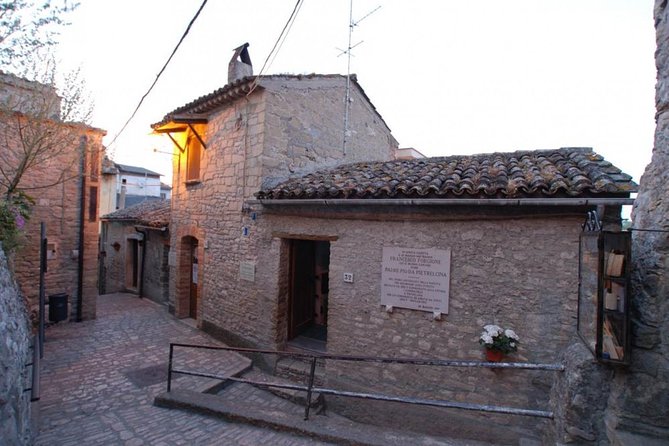
Stop 1 is where the day turns personal. At the Casa Natale di Padre Pio, you’re not looking at a distant monument. You’re in (and around) the real birthplace setting tied to Francesco Forgione, the future Padre Pio.
This house is small—one compartment—and you access it via three external steps. Inside, the layout is compact enough that you understand how a home like this worked: there’s a wrought-iron double bed with a night table, a washbasin facing the window, and an old chest. On a square table you’ll see books connected to his school days (as described in the setting), plus a photograph that links him to San Giovanni Rotondo.
One of the most striking features is the floor’s trap door leading to a lower room used like a storage and donkey barn space, with an external access door on the side of the house. Even if you don’t obsess over architecture, this detail makes the birthplace feel lived-in rather than staged.
There’s also a quiet emotional layer in the story shared here. You get the sense of a child who was already serious about faith and restraint—someone who refused to go out and play with peers when blasphemy was involved, and someone who reportedly went to church morning and evening to visit Jesus and the Madonna.
Practical note: this stop is listed at about 1 hour 30 minutes and the admission ticket is included. You’ll likely want that full time here—because the room is small, you don’t need to rush. Spend a few minutes simply looking at how the furnishings sit within the space.
San Giovanni Rotondo Shrine: Mosaics, Glass, and a Different Kind of Sanctuary
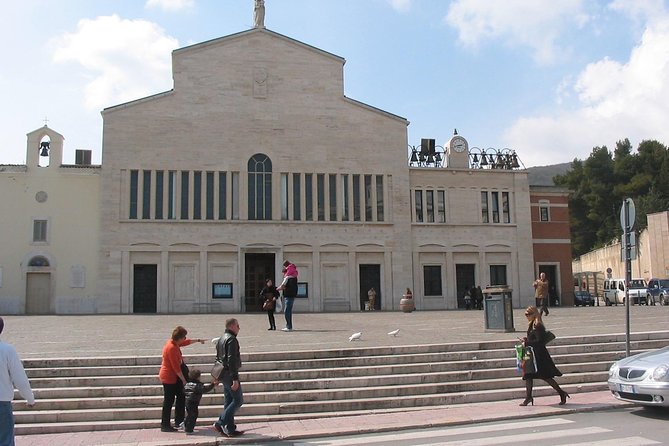
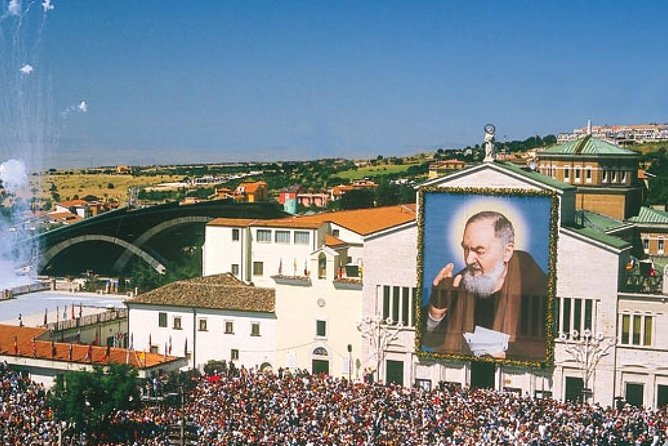
Next comes the big faith stop: San Giovanni Rotondo and the Shrine of Padre Pio. This is a place where the scale is instantly obvious. The shrine is visited by millions each year, and while that can sound like a crowd problem, the design and visitor flow make it easier to orient yourself than you might expect.
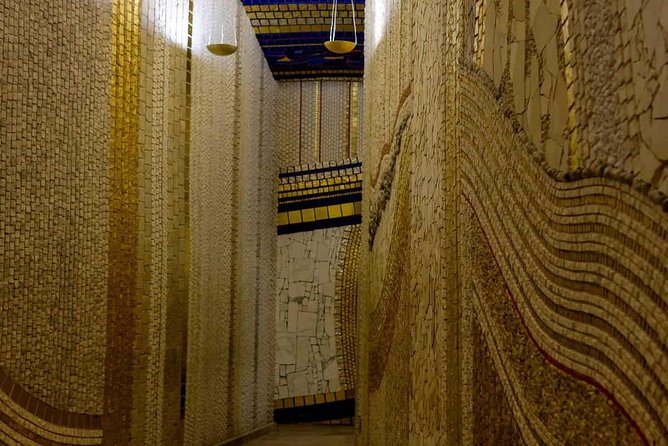
What I like here is how the shrine feels visually specific. Instead of only relying on centuries-old church language, you see a sanctuary shaped with modern touches: prefabricated pillars, decorations of brilliant mosaics, and polychrome stained glass with sharp designs that sometimes feel abstract. The overall result is a sanctuary that doesn’t mimic the past; it expresses faith with the visual language of later design.
If you’re standing in the shrine, pay attention to the mix of surfaces: mosaics, stained glass, stucco, and frescoes all work together. The information given here frames it as a place where it can be hard to get lost among the decorative layers—but where the sense of devotion feels clear and strong.
Stop time is about 1 hour, and the admission is listed as free. That doesn’t mean it’s a quick photo-op. It’s enough time to walk, take in the mosaics and glass, and settle your attention. If you speed through, you miss the details that make this shrine feel distinct.
Santa Maria delle Grazie Complex and the Sarcophagus Shift (1968 to 2008)
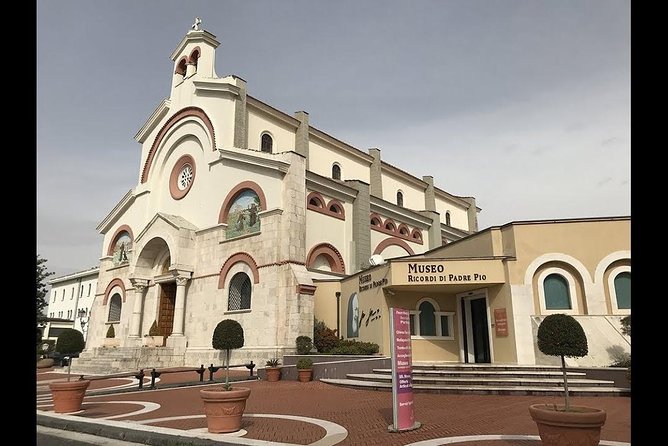
The third stop brings you to the conventual complex connected to Padre Pio’s later life: Santa Maria delle Grazie and the nearby churches dedicated to the same title.
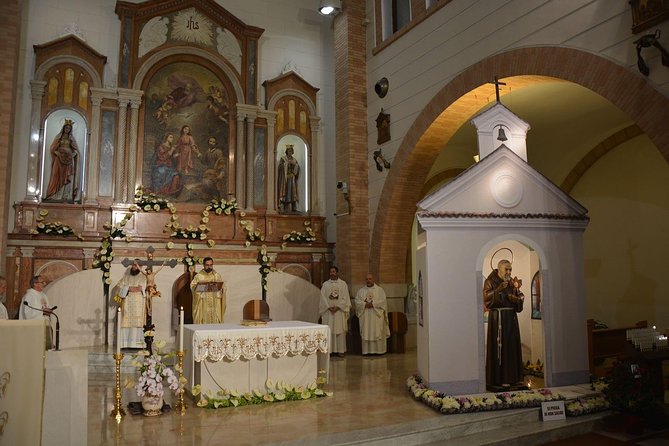
Here’s what I find useful: you get two church spaces next to each other, and the proximity helps you understand why the friar asked for the new church. Pilgrims kept increasing, so the sanctuary had to expand to fit more people coming to see him.
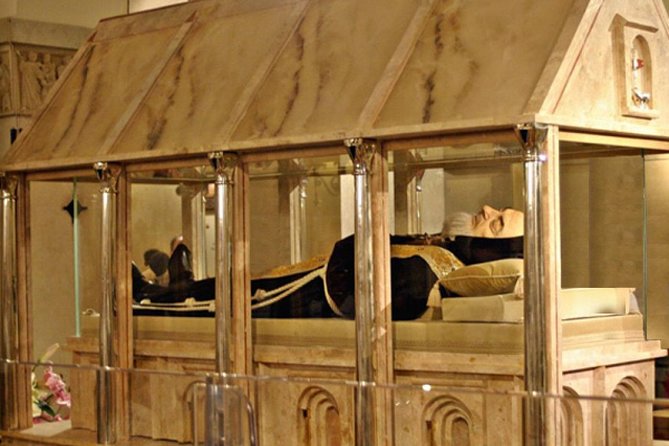
In the lower-floor area, you’ll find the sarcophagus where he was buried after his death in 1968. That tomb guarded his remains until 2008, when the body was transferred to the crystal case of the new sanctuary. That timeline matters. It turns what could be a static stop into a story of how devotion and visitor numbers reshaped the physical space over time.
This stop is about 2 hours, and admission is listed as free. Two hours is a good amount of time because it’s not only about seeing the space—it’s about absorbing the meaning of the move from the older burial arrangement into the newer presentation of his remains.
If you want to make this stop hit harder emotionally, slow down and let the timeline register. The shift from 1968 to 2008 isn’t just trivia; it explains why the complex looks like it does today.

Price and Value: What You’re Paying For (and Why It Can Be Worth It)
The price is $810.16 per group, up to 3 people. On paper, it looks steep. In practice, it can make sense because you’re buying a few things at once:
- Private transportation in an air-conditioned vehicle
- Pickup from your Naples-area lodging or port points (Molo Beverello, Pozzuoli, or Molo Luise)
- Parking, fuel, and tolls
- Bottled water
- Mobile ticket use
If you go with three people, the cost per person drops a lot compared with per-person tours. Even if you’re just a pair, you’re still paying for the convenience of not coordinating with strangers while you’re driving long distances.
Where value gets real: Padre Pio sites reward attention. When you’re not dealing with a massive group pace, you can linger in the birthplace room, take time with the shrine design, and then sit with the sarcophagus story without feeling pushed along.
Not included: tips and meals (and anything else you decide to add). So budget for a simple lunch or snack strategy, especially since this is a longer day. A small amount of planning here prevents the day from feeling rushed at the worst possible time.
How Long This Will Take (and What to Plan for)
The tour duration is listed as 1 to 10 hours (approx.), which suggests flexibility based on your route and timing. The on-site durations for the main parts are about:
- 1 hour 30 minutes at Casa Natale di Padre Pio
- 1 hour at the Shrine of Padre Pio
- 2 hours at the Santa Maria delle Grazie complex
That’s roughly 4.5 hours of visiting time, before you add the driving from Naples and any buffer for timing. In other words: expect a full outing, not a quick afternoon stroll.
What I recommend you plan around:
- Start the day rested. This is a lot of standing and walking, even when the stops are meaningful rather than exhausting.
- Keep your phone charged because of the mobile ticket.
- Bring a light layer if you get chilly in the car’s air-conditioning and then warm up outdoors between stops.
The Difference a Strong Guide Makes (Mauro as a Great Example)
Padre Pio tours can go one of two ways: you either get a meaningful narrative that helps the spaces click, or you just move between locations. The best experiences tend to be guided in a way that makes details matter.
One name that comes up in the best example from a recent experience is Mauro. The key strengths: he showed real passion for learning and for Italian culture, and he was attentive to the group’s needs. He also added St Michel’s cave when requested and kept the schedule flowing so the group made it to both the Rotondo area and Padre Pio’s birthplace.
Even if you don’t get Mauro specifically, use this as your yardstick. When you book, you’re not only paying for transport. You’re paying for someone to connect what you’re seeing—small-room domestic details to the shrine’s mosaics and stained glass, and then to the burial timeline in Santa Maria delle Grazie.
If you have any personal questions—about why the new church was built, or what the different sanctuary arrangements represent—this kind of guide style is exactly what you want.
Should You Book This Padre Pio Tour?
I think this is a good booking if you want a faith-focused day that connects two very different scales: a cramped birthplace room and a sanctuary filled with mosaics and colored light. It’s also a smart choice if you appreciate guidance and don’t want to scramble through long-distance logistics from Naples on your own.
I’d reconsider if you hate long drives or you only have a short window in Naples. This isn’t a compact, low-effort outing. You’re trading time on the road for context you can actually feel on-site.
If you can, book it when you can give the experience your attention: go with comfortable shoes, plan for a real lunch break (since meals aren’t included), and arrive ready to slow down at the birthplace. When you do that, the day has a way of landing—quietly, clearly, and in a way that’s more than sightseeing.
FAQ
How many people are in the group?
This is a private tour/activity, and the group size is up to 3 people.
Where does pickup happen?
Pickup is included. You can be taken from hotels and B&Bs, and from Naples-area port locations including Molo Beverello, Pozzuoli, and Molo Luise.
How long is the tour?
The tour duration is listed as 1 to 10 hours (approx.), with the main stops taking about 1.5 hours, 1 hour, and 2 hours respectively.
Are admission tickets included?
Admission ticket details vary by stop: the Casa Natale di Padre Pio admission is included, while the Shrine and the Santa Maria delle Grazie complex are listed as free.
What’s included in the price?
Included items are an air-conditioned vehicle, parking/fuel/tolls, bottled water, and a mobile ticket.
Is lunch or meals included?
No. Meals aren’t included, and you should budget for anything extra like food. Tips are also not included.
Can I cancel for a full refund?
Yes. You can cancel for a full refund if you cancel at least 24 hours before the experience start time.
More Tours in Naples


More Tour Reviews in Naples

More Naples tours, freshly reviewed


Tours, compared.
 ★ 4.8Pompeii: Entry Ticket and Guided Tour with an ArchaeologistFrom $3519,459 reviews
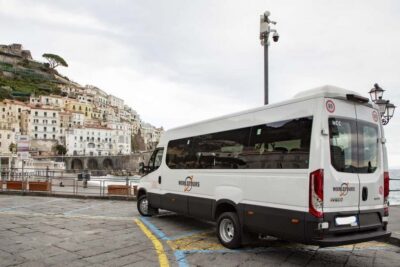 ★ 4.7Sorrento, Positano & Amalfi – Small Group TourFrom $8514,599 reviews
 ★ 4.8Pompeii: Small Group Tour with an ArchaeologistFrom $4012,264 reviews
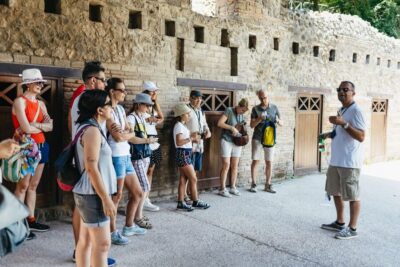 ★ 4.3Pompeii Ruins & Mount Vesuvius Day TourFrom $12011,459 reviews
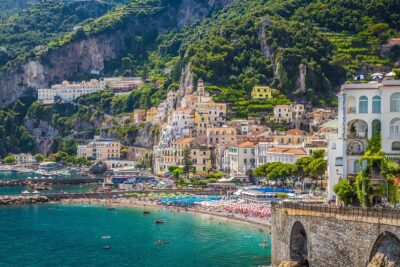 ★ 5.0Sorrento, Positano & Amalfi Coast – Small Group TourFrom $768,643 reviews
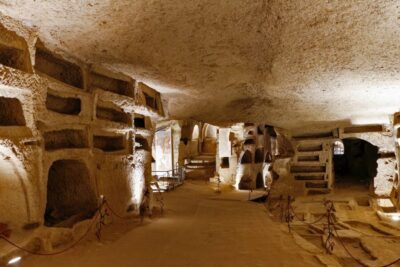 ★ 4.6Catacombs of San Gennaro Entry Ticket & Guided TourFrom $157,941 reviews
★ 5.0Pompeii Small Group Tour with an ArchaeologistFrom $356,593 reviews
★ 4.6Catacombs of San Gennaro Entry Ticket & Guided TourFrom $157,941 reviews
★ 5.0Pompeii Small Group Tour with an ArchaeologistFrom $356,593 reviews
 ★ 4.9Downtown Tour with Veiled Christ & St Clare TicketsFrom $576,462 reviews