
Review · PRIVATE
Phlegraean Fields: Cuma Baia and Pozzuoli private excursion
Volcanic lakes and Roman ruins, in one day. That’s the pull of a Phlegraean Fields excursion around Campi Flegrei, where extinct craters and Roman cities sit side by side. I especially like the way this tour pairs dramatic nature with very specific archaeology, so you’re not just sightseeing—you’re connecting places.
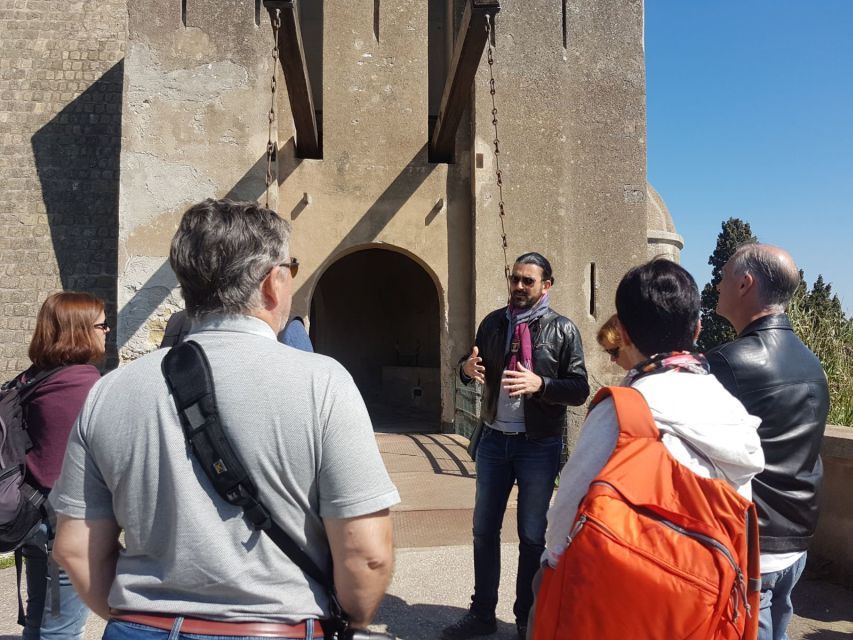
Two big wins for me: first, you get guided visits at each main stop, which helps names like Serapis and Sybil cave sanctuary make sense fast. Second, the day runs with real confidence in traffic and timing, with guide Massimo keeping the focus sharp and driver Giovanni handling complicated streets safely.
One thing to plan around: site hours can be inconsistent by weekday. For example, the Macellum of Pozzuoli has limited opening days, Cuma is closed on Tuesday, and the Baiae Thermal Baths and Museum close on Monday—so your day can change what you can see.
In This Review
- Key highlights worth your attention
- Leaving Naples fast: how the day starts (and why it matters)
- Private transport and skip-the-line: the comfort factor
- Campi Flegrei: the volcanic setting that gives the ruins meaning
- Pozzuoli’s former Roman market: Macellum of Pozzuoli and Serapis
- The Roman amphitheatre of Pozzuoli: Flavian scale in a coastal town
- Cumae’s ruined city: the Acropolis and the Sybil cave sanctuary
- Baiae: the underwater Roman seaside resort (and what’s above ground)
- Bacoli and the Roman cistern: Piscina Mirabilis at Misenum
- Averno, Fusaro, and Miseno: extinct craters you can actually stand near
- Timing matters: closures can change your best day
- Price and value: is $558.97 per person fair?
- Who should book this tour (and who might prefer something else)
- Should you book the Phlegraean Fields private excursion?
- FAQ
- FAQ
- Where are the pickup locations for this excursion?
- How long is the tour?
- Is this a private group tour?
- What kind of vehicle do you use for transportation?
- Are admission fees included, and can you skip the ticket line?
- What languages are offered for the live tour guide?
- Is the tour wheelchair accessible?
Key highlights worth your attention
- Averno’s volcanic lake: a moody crater setting tied to ancient ideas of the underworld
- Macellum of Pozzuoli (Temple of Serapis): Roman market ruins plus bradyseismic context
- Cumae and the Sybil cave sanctuary: one of the most famous legends on the Campanian coast
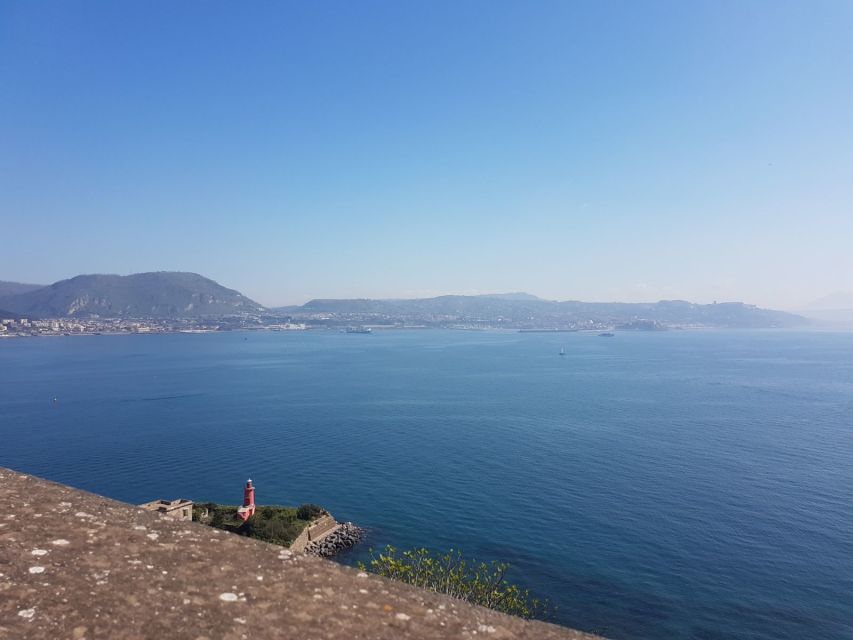
- Baiae (Aragonese fortress museum area): temples and museum views, with much of the site underwater
- Piscina Mirabilis at Misenum: huge Roman cistern engineering in one of the region’s former naval hubs
- Fusaro Lake: another extinct-crater stop that makes the geology feel real
Rather go private? More options in Naples
- Exclusive Naples Private Food Tour: 6 or 10 Tastings★ 5.0 · 596 reviews
- Private Day Tour: Sorrento, Positano, Amalfi, Ravello from Naples★ 4.5 · 546 reviews
- Private Day tour of Positano, Amalfi and Ravello from Naples★ 5.0 · 522 reviews
- Private Amalfi Coast Tour – Enjoy it with our local english speaking driver★ 5.0 · 475 reviews
Leaving Naples fast: how the day starts (and why it matters)
A good day tour out of Naples starts with getting you away from the noise quickly. With this private setup, you’re collected from your chosen pickup point—Naples, Sorrento, or Salerno—then transported by Mercedes (S-Class sedan, van, or minivan depending on your group). That matters here because Campi Flegrei sites are spread out, and public transit won’t save you much time.
Once you’re moving, the vibe changes. You go from city life to a protected volcanic zone where history didn’t happen in a vacuum—it grew directly out of the ground itself. The guide keeps that thread tight, so you understand why certain ruins sit where they do and what people thought the strange geology meant.
Private transport and skip-the-line: the comfort factor
You’re paying for a full day, not a quick hit. This tour includes a guide, skip the line admission fees, and dedicated transportation with an English-speaking driver. Even if you’re not obsessed with logistics, this combination helps a lot on the Phlegraean Fields because you’re juggling multiple archaeological areas with different rules and entry rhythms.
Also, being private changes the tempo. You’re not waiting in a long queue while someone else argues about meeting points. And because the driver is focused on safe, attentive driving, it feels less like a rushed transfer and more like a guided outing that stays on track.
If you’re traveling in a small group (couples or families who want control over pacing), the value usually lands better than doing these sites piecemeal.
Campi Flegrei: the volcanic setting that gives the ruins meaning
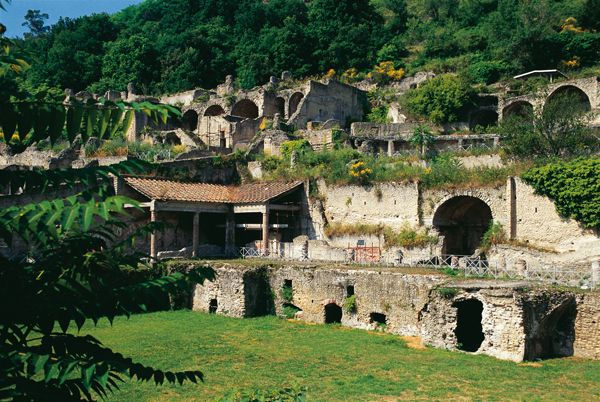
Campi Flegrei is famous for extinct and dormant volcanic activity. On this tour, you’ll hear how the region’s dramatic geology connects to what ancient people experienced and built. The key idea you’ll keep coming back to is that the ground hasn’t been stable for ages, and that shows up in archaeological places.
One place where this shows up directly is Pozzuoli’s historic area, where bradyseismic phenomena are said to be especially noticeable. You might not be thinking about plate movement while you’re standing among Roman columns, but that context helps the ruins feel less like “old stones” and more like evidence of real-world change.
Pozzuoli’s former Roman market: Macellum of Pozzuoli and Serapis
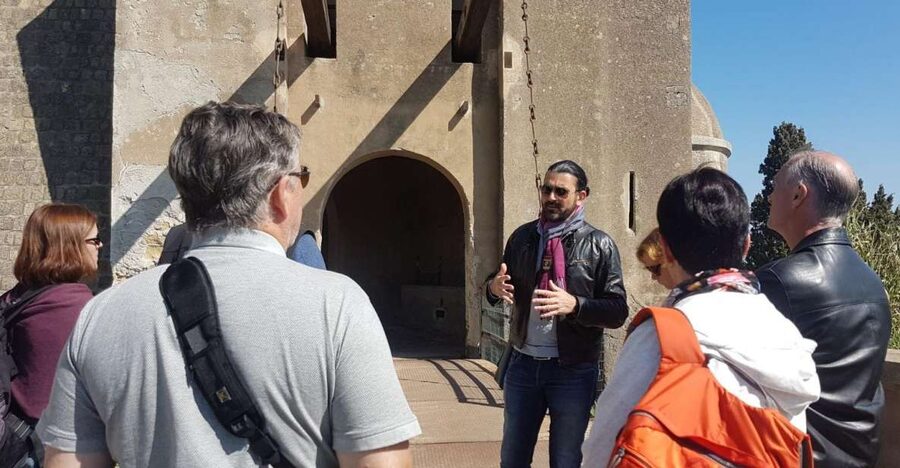
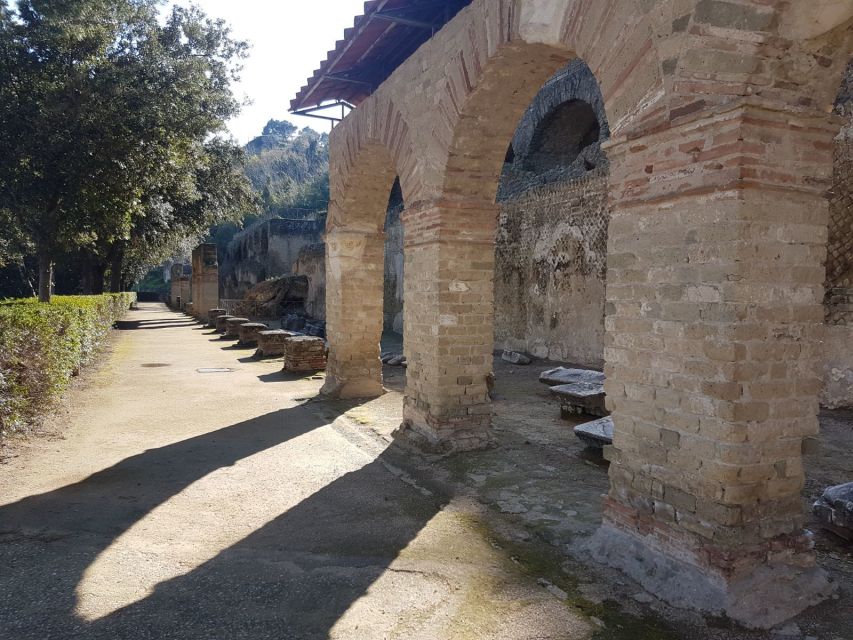
Pozzuoli is where the tour gets very Roman, very fast. The highlight here is the Macellum Temple of Serapis, part of the former market of the Roman colony of Puteoli. The site was excavated in the 18th century after the discovery of a statue of Serapis, which gives the whole place a backstory beyond just ruined arches.
What I like about this stop is that it’s tangible. You’re not only looking at a “general ruin.” You’re seeing surviving columns linked to how the space functioned as a market—and noticing the details, like mollusc holes embedded in the stone. Those tiny marks help you imagine the area as a working port district, not just an archaeological zone.
And because bradyseismic activity is noted here, it’s one of the stops where the geology and the human footprint actually meet. You walk away with a clearer picture of how the environment shapes what survives.
Practical tip: if your day falls on limited opening days, this is one of the places most affected. Check the weekday schedule you’re traveling, because it can affect how much time you can spend in Pozzuoli.

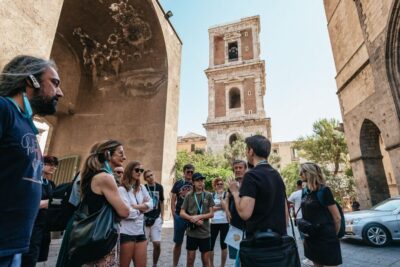

The Roman amphitheatre of Pozzuoli: Flavian scale in a coastal town
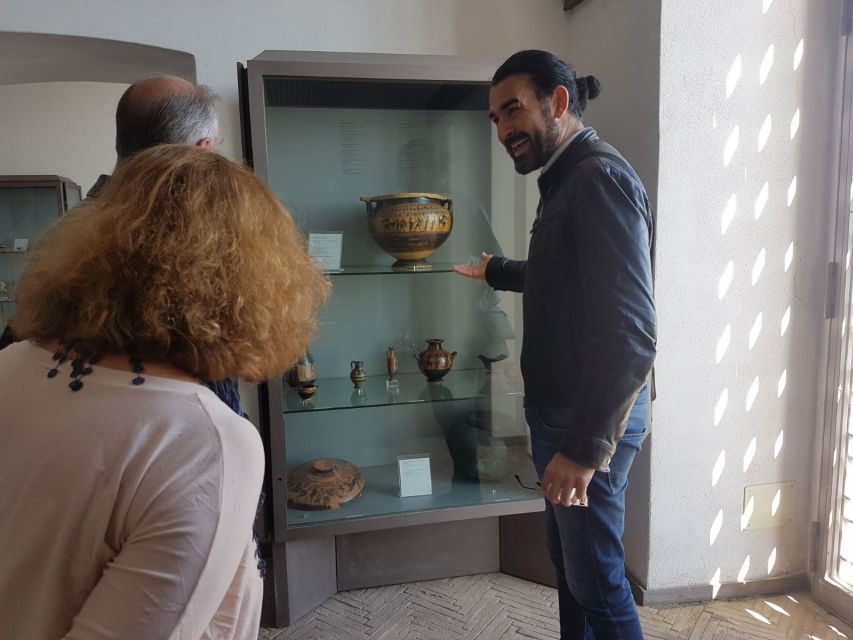
Pozzuoli’s Roman remains also include the Flavian Amphitheatre, which adds a different flavor to the day. Market spaces and civic monuments are one thing; an amphitheatre shows you how large public entertainment and city power looked on a Roman coastline.
Even if you don’t know Roman architecture terms, an amphitheatre communicates its function quickly. You’re dealing with scale and seating rhythm—the sense that people gathered, watched, and became a community for a few hours. In a tour packed with legends and craters, this stop gives you a straight line back to everyday ancient life.
Cumae’s ruined city: the Acropolis and the Sybil cave sanctuary
Next comes Cumae, and it’s a big shift in mood. You’ll visit the Acropolis of Cuma, set on the coast of the Tyrrhenian Sea at the ruined city of Cumae. This place connects to Greek origins in the area, with a founding tied to Euboean Greeks.
The monument that really carries the weight is the Sybil cave sanctuary. This is where legend becomes place. You’re in a setting that’s remembered for prophetic stories, and the guide framing helps you connect why a “cave sanctuary” matters in a world where people believed certain sites held special powers.
The practical upside of the stop is that Cumae isn’t just one viewpoint. It’s a whole archaeological park experience, so you can move through parts of the site and get a feel for the geography—how the coastal setting shaped a settlement and its myths.
Heads-up: Cuma is closed on Tuesday. If your travel dates land on that day, your day plan may need adjustment for what you can see here.
Baiae: the underwater Roman seaside resort (and what’s above ground)
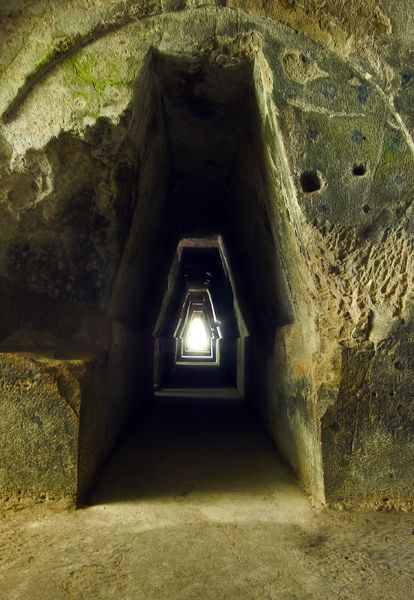
Baiae is where the tour turns cinematic. You’ll visit the former Roman seaside resort and see the Aragonese fortress area tied to the Museum of the Phlegrean Fields. This stop helps you understand how Romans used the coast not just for travel, but for health, leisure, and status.
Much of Baiae is underwater, so what you see above ground becomes even more important. You can still walk among remains of temples dedicated to Venus, Diana, and Mercury. That triad also makes it easy to connect the site to Roman religion and lifestyle—different deities for different kinds of identity and expectation in a resort context.
One of the best things about Baiae on a guided tour is learning what to notice. You’re not just scanning ruins; you’re spotting how the site’s layout suggests a bathing and temple culture, and how the coastal waters changed what could be preserved.
If Baiae Thermal Baths and the museum are central to your interests, keep one weekday in mind: they’re closed on Monday.
Bacoli and the Roman cistern: Piscina Mirabilis at Misenum
Now for the stop that quietly impresses people who think they’re only into ruins. The Piscina Mirabilis is a massive Roman cistern, tied in ancient times to Misenum—when the area hosted one of the largest bases of the Roman navy.
This is one of those places where Roman engineering feels less like trivia and more like survival tech. A cistern of this size tells you how seriously the Roman military thought about water supply and logistics. You’re looking at an infrastructure outcome, and the guide helps translate that into what it meant day-to-day for a huge base.
The value here is contrast. After Greek legend at Cumae and seaside temples at Baiae, Piscina Mirabilis resets your brain to “systems.” It’s a clear, physical reminder that empires don’t last on stories alone; they last on functioning water.
Averno, Fusaro, and Miseno: extinct craters you can actually stand near
The tour isn’t only archaeology; it’s also volcanic terrain with real stops. You’ll see volcanic lakes associated with the area—D’Averno (Averno), Fusaro, and Miseno—and that’s where Campi Flegrei stops being an abstract concept.
These crater lakes help you understand why ancient people connected places like Averno with darkness, mystery, and ideas about the underworld. Even if you don’t care about myth, you’ll still get a strong sense of the terrain: steep, enclosed, and shaped by ancient eruptions.
Fusaro is one of the dedicated viewpoints on the day, and it’s a nice pacing break. After several archaeology stops, the lake setting gives you breathing room while still keeping you in the same theme.
Timing matters: closures can change your best day
Site closures can affect the exact mix of what you see. The big ones to remember:
- Macellum of Pozzuoli: closed Monday, Tuesday, Wednesday, and Friday; open Thursday, Saturday, and Sunday
- Cuma: closed on Tuesday
- Baiae Thermal Baths and Museum: closed on Monday
Because this is a full-day private tour, the guide can still often adjust how the day flows, but you’ll want your expectations set. If you’re traveling on a Monday or Tuesday, confirm which core stops are open for your dates.
Also, this tour isn’t suitable for wheelchair users. That’s worth noting if anyone in your group needs step-free routes or extra accessibility planning.
Price and value: is $558.97 per person fair?
The price—$558.97 per person—is not a budget number. But value in a tour like this isn’t just admissions. You’re paying for:
- a dedicated guide
- transport by Mercedes (sedan/van/minivan)
- skip-the-line admission fees
- private routing so you can cover multiple major stops in one day
For couples or a small group who would otherwise rent a car (parking stress in Naples) or pay for multiple separate tours, it can start to look reasonable. For solo travelers, it may feel steep, but you still get a structured day that’s hard to stitch together on your own without a lot of coordination.
If you care most about guided context—stories tied to specific ruins and sites—this is where the price can make sense. If you just want to drive and wander, you might question the cost.
Who should book this tour (and who might prefer something else)
This experience fits best if you want a single day that covers multiple “layers” of the region:
- volcanic lakes and the sense of place behind ancient stories
- Roman archaeology in Pozzuoli and Cumae
- a coastal resort site like Baiae, with temples above water and history below
- engineering at Piscina Mirabilis, connected to the Roman navy
You’ll probably love it if you like your travel days with structure and a guide who keeps things moving. And based on what I look for in a good day tour, the standout here is not speed for its own sake—it’s focus. The guide Massimo’s style (tight explanations, no wasted moments) and driver Giovanni’s careful handling of complicated traffic make the day feel controlled, not chaotic.
If you’re the type who wants lots of free time with no guidance, you might find a guided schedule less your style. But if you want “several major stops with meaning,” this hits the mark.
Should you book the Phlegraean Fields private excursion?
I’d book this if you’re visiting Naples and want to see more than one “famous thing.” This tour gives you a coherent theme—Campi Flegrei’s volcanic power—then fills it with major archaeological anchors: Macellum of Pozzuoli, Cumae and the Sybil cave sanctuary, Baiae, and Piscina Mirabilis.
Before you commit, match your travel day to opening hours, especially for Cuma (Tuesday closure) and the Macellum (limited weekly schedule). If those key sites line up with your dates, this is the kind of private day tour that feels worth every hour.
FAQ
FAQ
Where are the pickup locations for this excursion?
Pickup is available from Naples, Sorrento, or Salerno. You choose your preferred pickup point and provide the exact pick-up details.
How long is the tour?
The tour runs for 8 hours.
Is this a private group tour?
Yes, it’s a private group experience.
What kind of vehicle do you use for transportation?
Transportation is provided in a Mercedes S-Class sedan, van, or minivan, depending on the group.
Are admission fees included, and can you skip the ticket line?
Yes. The tour includes skip-the-line admission fees.
What languages are offered for the live tour guide?
The live tour guide is available in Spanish, English, Italian, French, and German.
Is the tour wheelchair accessible?
No. The tour is not suitable for wheelchair users.
More Private Tours in Naples


More Tours in Naples

More Tour Reviews in Naples

More Naples tours, freshly reviewed



Private, compared.
 ★ 4.9Pompeii Ruins Private Tour with Optional Skip-the-Line EntryFrom $254732 reviews
 ★ 5.0Pompeii private tour with an Official GuideFrom $107631 reviews
 ★ 5.0Exclusive Naples Private Food Tour: 6 or 10 TastingsFrom $133596 reviews
 ★ 5.0Pompeii Private Tour with an Archaeologist and Skip The Line – 3 hoursFrom $302564 reviews
 ★ 4.5Private Day Tour: Sorrento, Positano, Amalfi, Ravello from NaplesFrom $326546 reviews
 ★ 5.0Private Day tour of Positano, Amalfi and Ravello from NaplesFrom $520522 reviews
 ★ 5.0Private Amalfi Coast Tour – Enjoy it with our local english speaking driverFrom $386475 reviews
 ★ 5.0Visit in Pompeii – Pompeii Private Tour with AdaFrom $229436 reviews