
Review · TOURS
Ipogeo dei Cristallini Standard Tour
Neapolis isn’t just an ancient idea. This short tour takes you underground to see Greek-painted frescoes and the unforgettable story of Medusa preserved in place. It’s a tight 25 minutes, but it packs big emotions: love, family, death, and myth, shown through art you can stand in front of.
I especially like the way the visit connects the site to two worlds at once: Greek craftsmanship, then Roman artistic additions. One possible drawback: it’s not built for everyone, because the underground spaces have architectural barriers tied to their historical structure.
In This Review
- Key things I’d circle before you go
- Why Neapolis Underground Hits Different Than Street-Level Naples
- The 25-Minute Standard Tour: What Happens From the First Step In
- Neapolis and the Four Painted Tombs You Can Actually Read
- Frescoes That Survive, Greek Techniques, and Roman Additions
- Medusa: The One-of-a-Kind Sculpted and Painted Artwork
- The 1889 Chance Discovery of Baron Giovanni di Donato
- Rione Sanità’s Power Story: Redevelopment With Cultural Memory
- Price and Value: Why $11 Makes Sense Here
- Group Size, Languages, and Timing That Keep It Manageable
- Who This Tour Fits Best (and Who Might Want Another Option)
- Practical Prep for an Underground, Detail-Heavy Visit
- Should You Book Ipogeo dei Cristallini?
- FAQ
- How long is the Ipogeo dei Cristallini Standard Tour?
- Where is the tour located?
- How much does it cost?
- Is this a small-group tour?
- Is a guide included?
- Is there a skip-the-line option?
- What languages are available?
- Can I cancel for a full refund?
- Are children allowed?
- Is the site accessible for visitors with disabilities?
Key things I’d circle before you go
- A 12-meter descent into Neapolis to rediscover the original ancient street below Naples
- Four Hellenistic tombs carved and painted, still remarkably preserved
- Medusa, sculpted and painted, described as one-of-a-kind in the world
- The 1889 discovery story of Baron Giovanni di Donato, found by chance
- Greek origins plus Roman additions in a single visual fusion
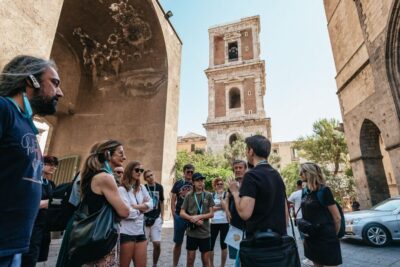
- Small-group size (max 10) with a guide welcomed from Rione Sanità
Not sold on this one? A few more Naples tours sit just below.
- From Naples: Sorrento, Positano & Amalfi – Small Group Tour★ 4.7 · 14,599 reviews
- From Naples: Pompeii Ruins & Mount Vesuvius Day Tour★ 4.3 · 11,459 reviews
- From Naples: Sorrento, Positano & Amalfi Coast – Small Group Tour★ 5.0 · 8,643 reviews
- Naples: Catacombs of San Gennaro Entry Ticket & Guided Tour★ 4.6 · 7,941 reviews
Why Neapolis Underground Hits Different Than Street-Level Naples
Naples is loud, colorful, and above ground it moves fast. This experience slows everything down by taking you 12 meters underground into Neapolis, where the atmosphere changes and the art becomes the main event.
You’re not just looking at “ancient stuff in a room.” You’re stepping into a real archaeological setting: an underground space where you can appreciate the architecture, painted details, and the myths tied to the imagery. The tour also sets the tone with context about how the Rione Sanità neighborhood’s past is being actively reshaped today, so the site feels connected to real people—not frozen behind glass.
And because the visit is only 25 minutes, it’s a great choice when you want something memorable without burning half a day.
The 25-Minute Standard Tour: What Happens From the First Step In
The standard tour follows a simple arc, and that’s part of why it works. You descend into the site and are guided through Neapolis, including the ancient layout and decorated tomb spaces.
Here’s the flow you should expect:
- You go underground 12 meters and start “walking” through the Neapolis story in its original setting.
- You’re shown the original street concept from the ancient city layout (so you understand space, not just objects).
- You then move to the Hellenistic tombs, where carving and painted decoration create a kind of three-dimensional storytelling.
- The tour weaves in myth and interpretation, including the Medusa artwork.
- You finish with the broader human layer: what this place says about life, death, love, care, family, and friendship—ideas that still land today.
The duration matters. Twenty-five minutes is short enough that you won’t feel stuck, and long enough to catch the big details like fresco color and the sculpted faces and figures that make the site special.
Neapolis and the Four Painted Tombs You Can Actually Read
One of the standout features is the claim that this archaeological site is unique in the world. The part you’ll feel immediately is preservation and clarity: the tour focuses on the spaces that were carved and painted by the ancient Greeks, and how they remain visible.
The key visual targets are:
- The original street area, which helps you understand the site as a place people moved through.
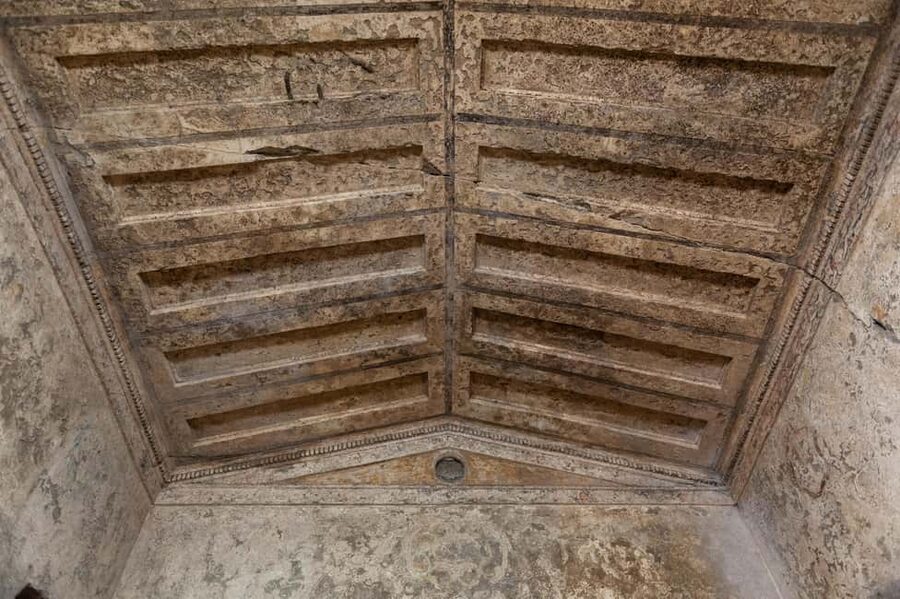
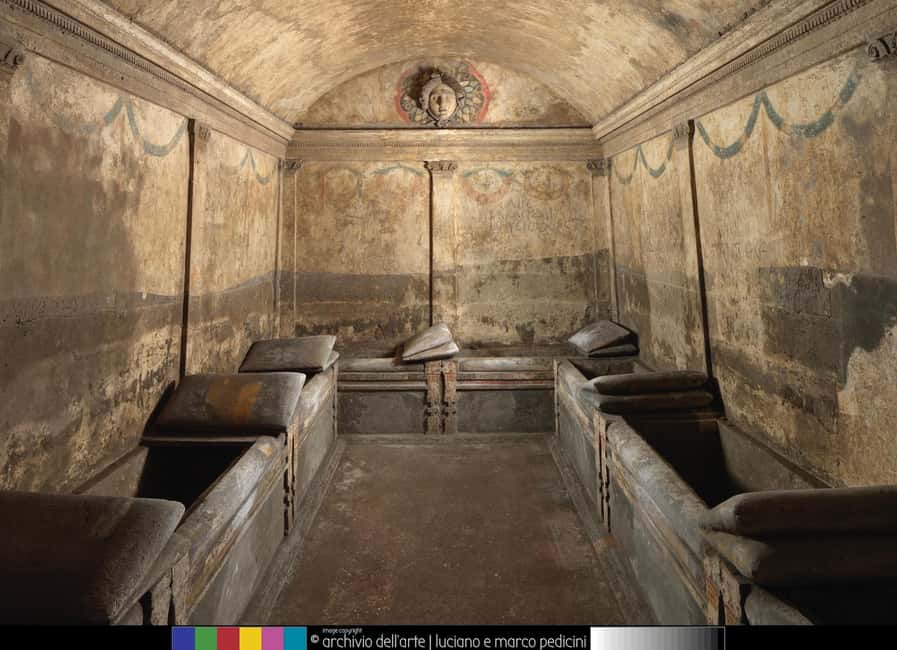
- Four Hellenistic tombs, described as beautifully carved and painted.
- The way the paint still shows bright colors, so you’re not just seeing outlines or worn fragments.
If you like art history, this is the kind of place where you can “read” details with your eyes: architectural lines, painted figures, and symbolic motifs. If you’re more of a casual visitor, the payoff is still there because the visual quality helps you quickly understand why people cared about these images and why they were tied to death rituals and ideas of memory.
This isn’t a slow museum shuffle. It’s a guided look at an underground city section where the design still feels legible.
Frescoes That Survive, Greek Techniques, and Roman Additions
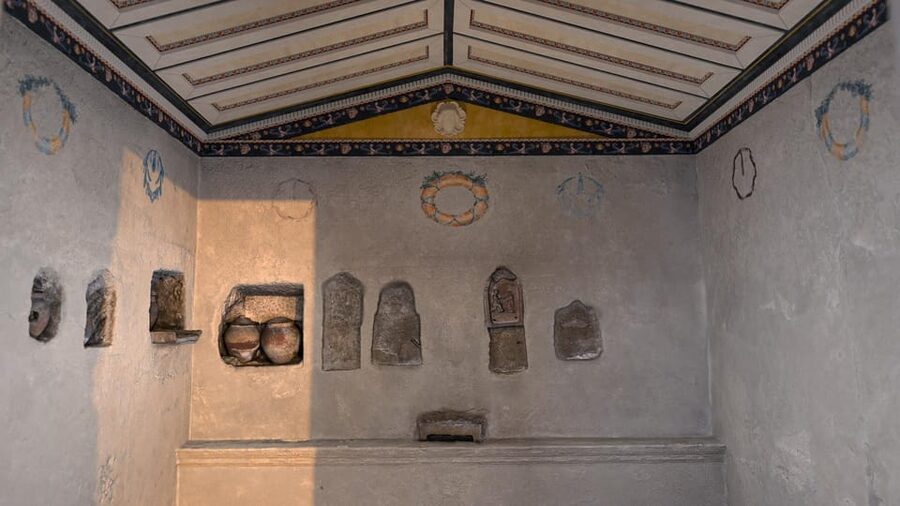
The tour highlights a specific artistic fusion: Greek origins meeting Roman artistic additions. That matters, because it turns the site into a timeline you can see, not a generic “ancient culture” label.
What you’ll likely notice is how the decoration and architecture create a layered effect. The site isn’t just Greek artwork sitting alone; it’s presented as a place where later Roman influence contributed additions to the visual program.
And the fresh paint effect is part of what people come for. The experience is described as showing bright colors of precious frescoes. That’s not a minor detail. Underground sites can often feel dark and flat, but here the guide-led focus on frescoes and their details is what makes it feel vivid rather than gloomy.
I also like that the tour connects the art to meaning, not just style. You’re encouraged to think about the timeless themes represented in the imagery—especially around how communities spoke about death and who was remembered.

Medusa: The One-of-a-Kind Sculpted and Painted Artwork
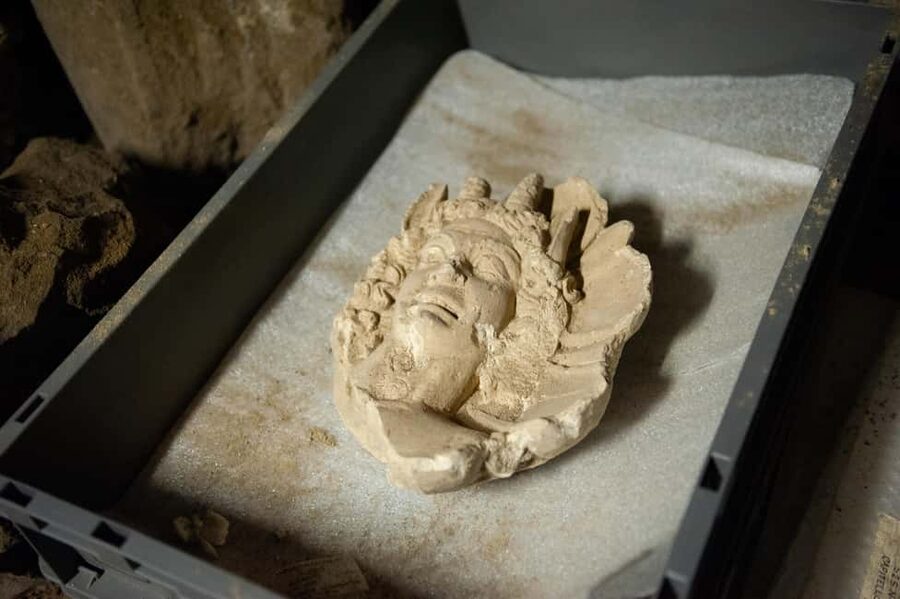
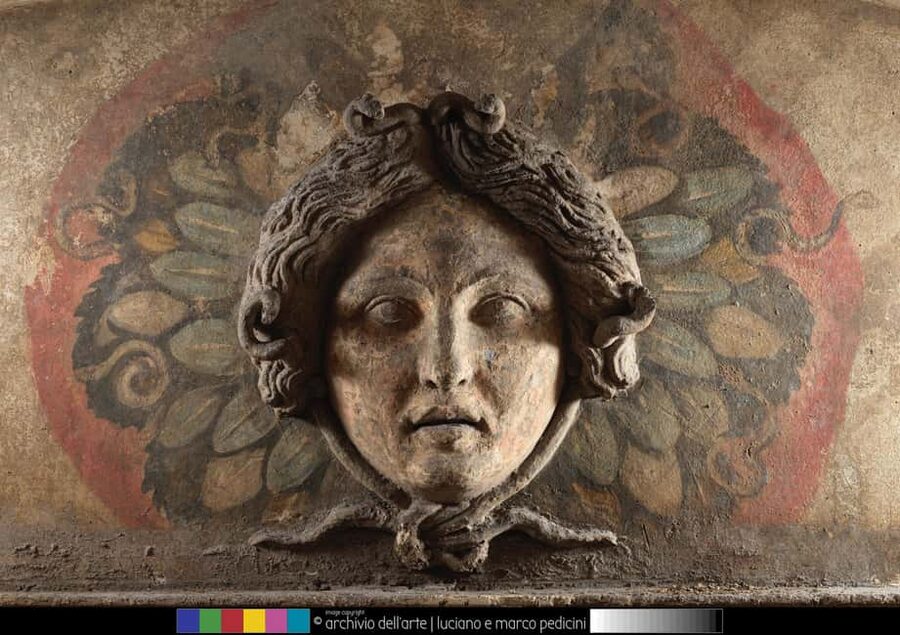
The tour gives Medusa a starring role, and for good reason. You’ll see a Medusa sculpted and painted by the ancient Greeks, described as a precious one-of-a-kind work.
Even if you only know Medusa from later stories, this is a helpful reality check. Greek myth wasn’t just a plot twist; it was visual culture too. Seeing Medusa as both sculpture and paint helps you understand the full impact ancient artists wanted: not a simple illustration, but a physical presence designed to confront and communicate through image.
This is one of those moments where your eyes naturally stop moving. In a short tour, that matters: it gives you a high-impact memory point you’ll carry long after you’ve climbed back up.
The 1889 Chance Discovery of Baron Giovanni di Donato
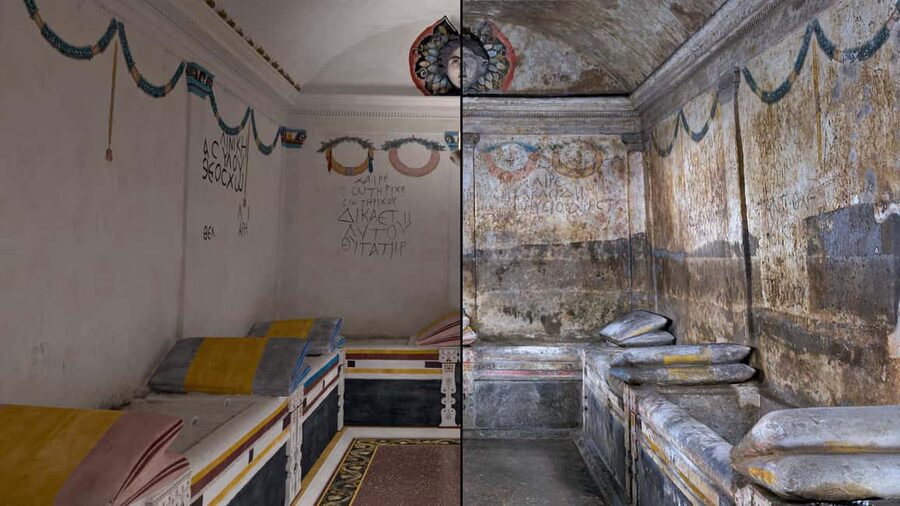
Art survives better when it’s documented—and sometimes it survives because of pure chance. Here, the tour tells the story of the Ipogeo dei Cristallini’s discovery in 1889 by Baron Giovanni di Donato.
That detail adds emotional weight to the visit. You’re not only standing in front of old art; you’re also experiencing the aftermath of how it was found, preserved, and eventually shared with visitors. A chance discovery can feel like luck, but it also reminds you that history often depends on people noticing the right thing at the right time.
I like this part because it creates a bridge between two time periods: the ancient world that made the art, and the much later moment when the site re-entered public life.
Rione Sanità’s Power Story: Redevelopment With Cultural Memory
This tour isn’t only about going underground. It also frames the Rione Sanità district as a place with a powerful socio-cultural past—and an active process happening today.
You’ll learn about the redevelopment process of the Rione Sanità district, presented alongside the site’s archaeological meaning. That pairing is valuable. It avoids the common problem of “ancient site tours” becoming isolated islands. Here, you get a sense that preservation and community identity move together.
The guide is also described as being from the Rione Sanità, welcoming you to the archaeological site. That detail matters for authenticity: you’re not just hearing a scripted museum explanation. You’re hearing a guide’s perspective tied to the neighborhood.
If you care about how cities reuse their past, this layer will make the visit feel more grounded and more current.
Price and Value: Why $11 Makes Sense Here
At $11 per person, this is priced like a quick, accessible add-on—and in a good way. You’re getting:
- a guided visit (the site isn’t presented as self-guided in your info)
- a small group limited to 10 participants
- entry to a unique underground archaeological site
- a focused 25-minute format that doesn’t waste your time
- the ability to skip the ticket line
- coverage in Italian, English, Spanish, and French, so you’re less likely to be stuck with a language mismatch
The value is in concentration. You’re not spending hours to reach a “maybe interesting” set of rooms. You’re spending a short amount of time in the specific spaces where the frescoes, tombs, and Medusa are the point.
If you’re on a tight schedule in Campania, this is one of the rare options where the duration works in your favor: you still come away with a distinct, memorable theme.
Group Size, Languages, and Timing That Keep It Manageable
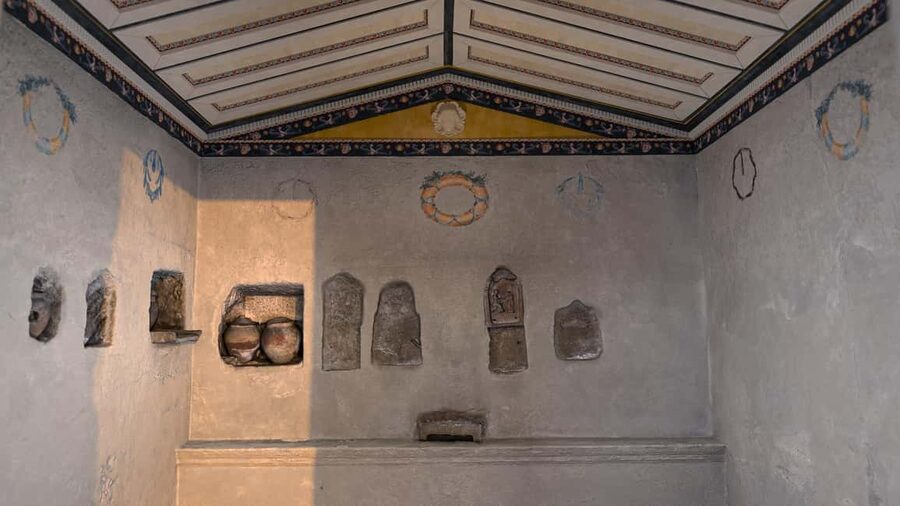
A small group capped at 10 participants is a practical advantage. It usually means the guide can slow down for questions and explanations, which is important in a site where visual details matter.
The tour is also offered in Italian, English, Spanish, and French. That reduces friction and makes it easier to enjoy the interpretive parts—like myths, the discovery story, and the meaning behind the imagery.
The hosts use a standard tour format with a 25-minute duration, which makes it easier to slot into an itinerary without creating chaos in your day plan.
Who This Tour Fits Best (and Who Might Want Another Option)
This tour is a strong match if:
- you want a short, guided underground experience
- you like myth-linked art and symbolism (Medusa is a major anchor here)
- you enjoy archaeology that includes visual quality, not only ruins
- you’re exploring Naples but want a different angle than the surface city
It may be less ideal if:
- you rely on step-free access. The site is noted to have architectural barriers due to its historical nature. If mobility or access is a concern, contact them ahead so you can assess whether you can comfortably participate.
Practical Prep for an Underground, Detail-Heavy Visit
Because it’s underground and designed around an archaeological setting, the biggest “prep” is mindset: come ready to look closely. The tour’s main draw is the carved and painted decoration, especially the fresco colors and the Medusa artwork.
A couple of smart checks based on what’s provided:
- If you’re traveling with kids: children 8 to 12 are free, while under 8 aren’t permitted.
- If you have accessibility needs: plan ahead and contact the operator to assess access conditions.
- Plan to bring your curiosity more than your patience. The experience is short on purpose, so focus on what the guide points out.
Also, because the tour offers an option to skip the ticket line, you’re less likely to lose time waiting around.
Should You Book Ipogeo dei Cristallini?
If you’re looking for a quick hit of real archaeological atmosphere—underground Neapolis, painted tombs, myth imagery, and a Medusa that’s presented as one-of-a-kind—this is an easy recommendation.
I’d book it if you want value that doesn’t feel cheap. At $11 for a guided, small-group visit that highlights fresco color, four painted tombs, and a clearly explained cultural story, you get a strong payoff for your time.
Skip it only if access barriers are a deal-breaker for you, or if you know you won’t enjoy guided explanation focused on art and meaning. Otherwise, this is exactly the kind of Naples experience that leaves you thinking about the human side of the ancient world—life, death, love, and memory—while you’re still standing in front of the art.
FAQ
How long is the Ipogeo dei Cristallini Standard Tour?
The duration is 25 minutes.
Where is the tour located?
It’s in Campania, Italy.
How much does it cost?
The price listed is $11 per person.
Is this a small-group tour?
Yes. It’s limited to 10 participants.
Is a guide included?
Yes. A tour guide from the Rione Sanità welcomes you to the archaeological site.
Is there a skip-the-line option?
Yes, you skip the ticket line.
What languages are available?
The tour is available in Italian, English, Spanish, and French.
Can I cancel for a full refund?
Free cancellation is available up to 24 hours in advance for a full refund.
Are children allowed?
Children aged 8 to 12 are free. Children under 8 are not permitted.
Is the site accessible for visitors with disabilities?
The site has architectural barriers because of its historical nature. You’re invited to contact the operator in advance to assess the possibility of access.
More Tours in Naples





More Tour Reviews in Naples

More Naples tours, freshly reviewed




Tours, compared.
 ★ 4.8Pompeii: Entry Ticket and Guided Tour with an ArchaeologistFrom $3519,459 reviews
 ★ 4.7Sorrento, Positano & Amalfi – Small Group TourFrom $8514,599 reviews
 ★ 4.8Pompeii: Small Group Tour with an ArchaeologistFrom $4012,264 reviews
 ★ 4.3Pompeii Ruins & Mount Vesuvius Day TourFrom $12011,459 reviews
 ★ 5.0Sorrento, Positano & Amalfi Coast – Small Group TourFrom $768,643 reviews
 ★ 4.6Catacombs of San Gennaro Entry Ticket & Guided TourFrom $157,941 reviews
★ 5.0Pompeii Small Group Tour with an ArchaeologistFrom $356,593 reviews
★ 4.6Catacombs of San Gennaro Entry Ticket & Guided TourFrom $157,941 reviews
★ 5.0Pompeii Small Group Tour with an ArchaeologistFrom $356,593 reviews
 ★ 4.9Downtown Tour with Veiled Christ & St Clare TicketsFrom $576,462 reviews