
Review · MOUNT VESUVIUS TOURS
Horseback Ride on Mt. Vesuvius
A horse ride on Vesuvius changes the whole viewpoint. You’ll move across ancient lava trails with local guidance and come away with big panoramic views over the Gulf of Naples and Amalfi Coast. It’s a short, focused experience built for real sightseeing from the saddle, not a long day tour that tries to do everything.
I like how well this is set up for different comfort levels. No riding experience is required, and the ride is offered for beginners, too. I also like the hands-on local angle: you’re not just looking at volcano rocks, you’re learning about the soil, vegetation, and what this landscape produces.
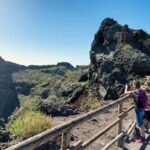
One thing to consider: this horseback experience does not reach the crater rim. You’ll ride high enough for views, but it stays on scenic volcanic slopes (around 400–500 meters above sea level), so if you’re chasing crater-closer drama, you’ll need a separate hike option or a combined Vesuvius tour.
In This Review
- Key things I’d pay attention to before you book
- Why a Vesuvius horseback ride feels different from regular sightseeing
- Meeting at Caffetteria Magma and riding in the transfer van
- The 1-hour horseback ride: lava paths, local guides, and beginner-friendly pacing
- What the ride is likely to feel like for your body
- The views: Gulf of Naples and the Amalfi Coast without the crater rim
- Crater-rim expectations (important)
- What you learn on the slopes: soil, vegetation, and how the volcano shapes food
- Getting to know locals beyond the horses
- Timing and how the full itinerary flows
- Price: $81 per person and what you’re really paying for
- Who this horseback ride suits best (and who should skip it)
- Practical tips that make your day smoother
- Should you book the horseback ride on Mt. Vesuvius?
- FAQ
- How long is the horseback ride on Mt. Vesuvius?
- Where do I meet the driver?
- Do I need prior horseback riding experience?
- Does the ride reach the crater rim?
- Is transfer from Pompeii included?
- What’s included in the price?
- What’s the group size and language?
- What are the age and weight limits?
Key things I’d pay attention to before you book
- Small group (max 8) keeps it calmer and more personal on the trail.
- Roundtrip transfer from Pompei is included, so you’re not doing logistics mid-trip.
- You’ll ride on ancient lava paths, not a generic countryside track.
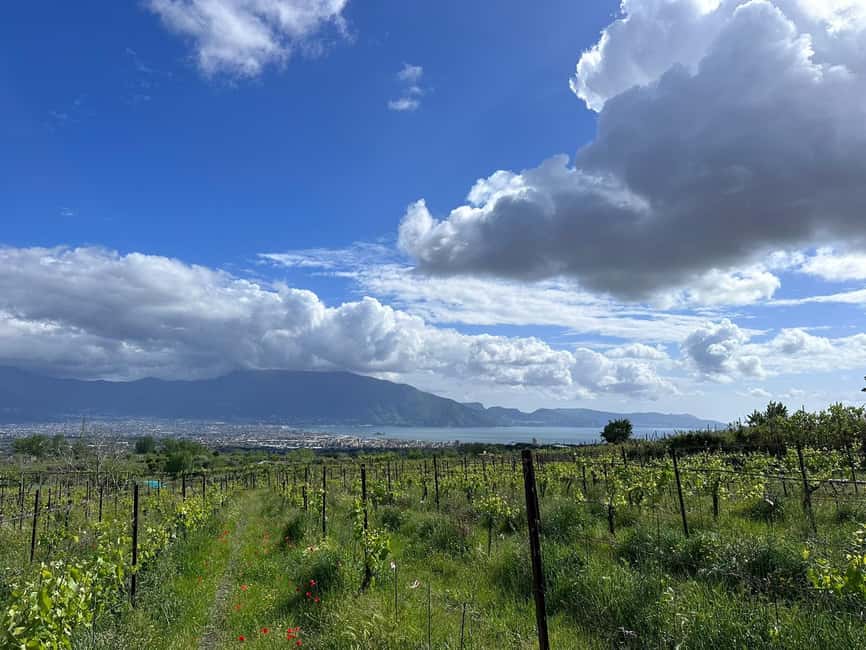
- Panoramic views cover the Gulf of Naples and the Amalfi Coast from high viewpoints.
- Crater rim is off the menu for this ride, by design.
- Helmets and water are included, which makes the basics easier.
More ways up the crater, side by side
- Naples: Pompeii and Mt. Vesuvius with Lunch and Wine Tasting★ 4.5 · 2,454 reviews
- From Pompeii: Bus Transfer to Vesuvius with Park Entry Fee★ 4.4 · 1,205 reviews
- From Pompeii/Naples: Vesuvius Easy Transfer and Entry Ticket★ 4.3 · 660 reviews
- Pompeii: Mount Vesuvius Crater Transfer with Ticket★ 4.0 · 541 reviews
Why a Vesuvius horseback ride feels different from regular sightseeing
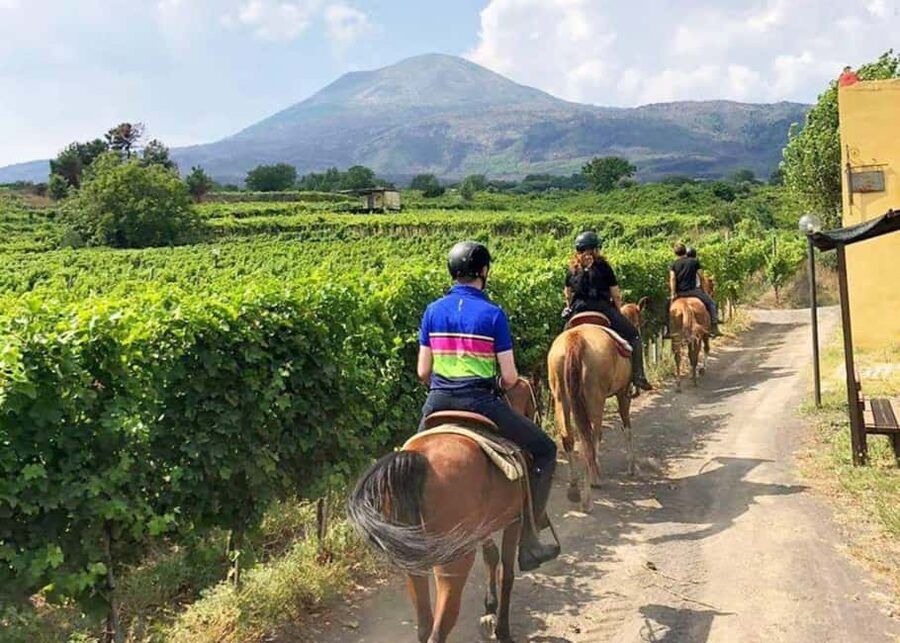
Mount Vesuvius gets plenty of attention, but most day plans treat it like a place you park near and then walk around. This is different. You’re on horseback, moving at a human pace across volcanic terrain shaped by eruptions over long time spans. It turns the landscape from something you look at into something you travel through.
I like the way the experience leans into the connection between people and horses. It’s not just about sitting still for photos. Your guide is there to talk through what you’re seeing, and that changes how you experience the area. Lava rock, fields, and vine-covered slopes start to feel like a living system rather than a stop on a map.
You also get the right kind of “volcano drama,” but without the crater scramble. The ride is positioned for sweeping views and scenic cruising on stable ground rather than a hardcore hike.
Meeting at Caffetteria Magma and riding in the transfer van
Your day starts with pickup near Caffetteria Magma (the driver meets you outside). The starting location is listed as a bar/café stop called Bar – Cornetteria – Tabaccheria Magma H24, so if you’re arriving on your own, use that as your visual anchor.
Then you’ll ride by van for about 30 minutes toward the stables. This matters more than it sounds. The Vesuvius area is spread out, and that transfer takes you to the right starting point for the horses. It also means you spend your energy on the ride itself, not on figuring out how to get to it.
This is a short overall timeline (about 2 hours total), which means the transfer time is part of the rhythm. You’ll be out and moving, not waiting all day.
The 1-hour horseback ride: lava paths, local guides, and beginner-friendly pacing
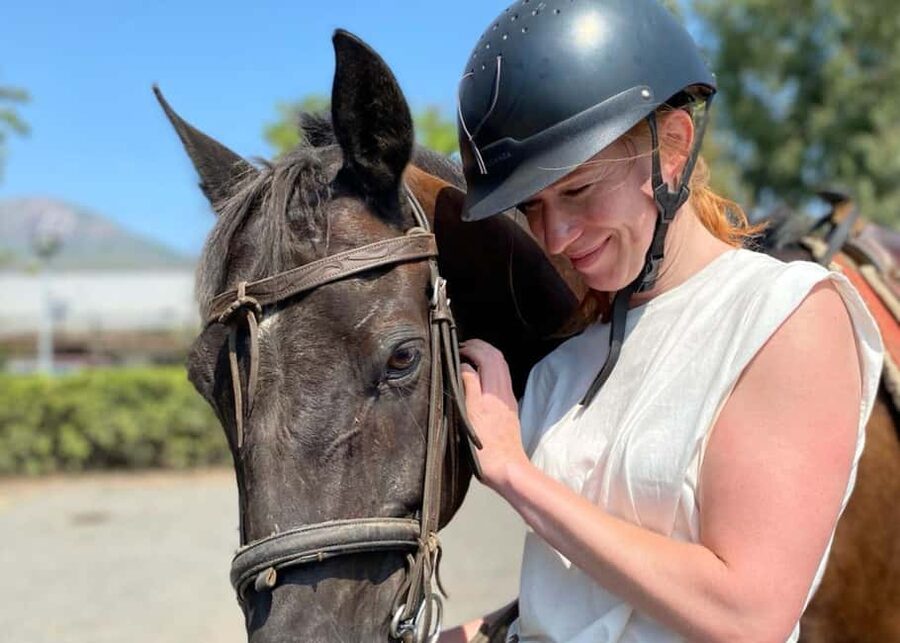
The heart of the experience is the 1-hour horse ride. You’ll travel across ancient lava trail paths, guided by local experts who share stories about Vesuvius and the civilizations it shaped.
Here’s what I think makes this ride so workable: it’s designed to welcome beginners. The format is described as suitable for all skill levels, and no riding experience is needed. That doesn’t mean you’ll be speed-running, but it does mean the activity is structured for people who are nervous or rusty.
You’ll be riding at roughly 400–500 meters above sea level (so you’re elevated, with strong views, but not on the crater edge). The terrain is volcanic, so it feels distinctive in your legs and balance compared to flat rides. The key difference is that this route is about scenery and volcanic landforms, not an adrenaline-only trail.
Also, you’ll be in a small group limited to 8 participants. On horseback, that size helps. It keeps the pace steady, reduces bottlenecks at turn points, and gives your guide room to check in.
What the ride is likely to feel like for your body
No details are provided about horse grooming, mounting steps, or the exact trail surface. But since helmets are included and the ride is positioned for first-timers, I’d treat it as a controlled, guided outing rather than a rugged expedition. Still, volcanic terrain can be uneven, so you should expect some physical effort and focus.
Other Pompei Campania outings worth a look before you book
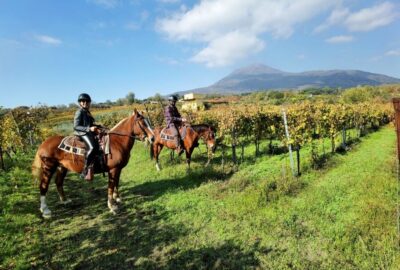
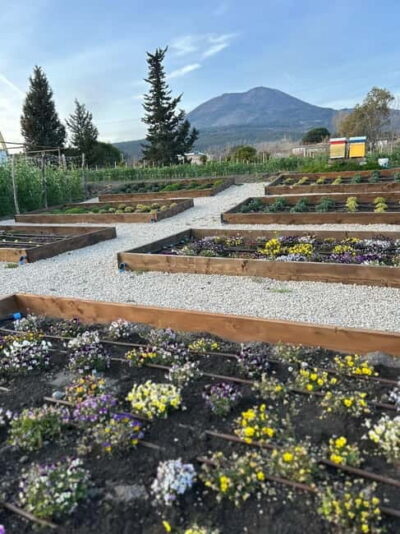
The views: Gulf of Naples and the Amalfi Coast without the crater rim
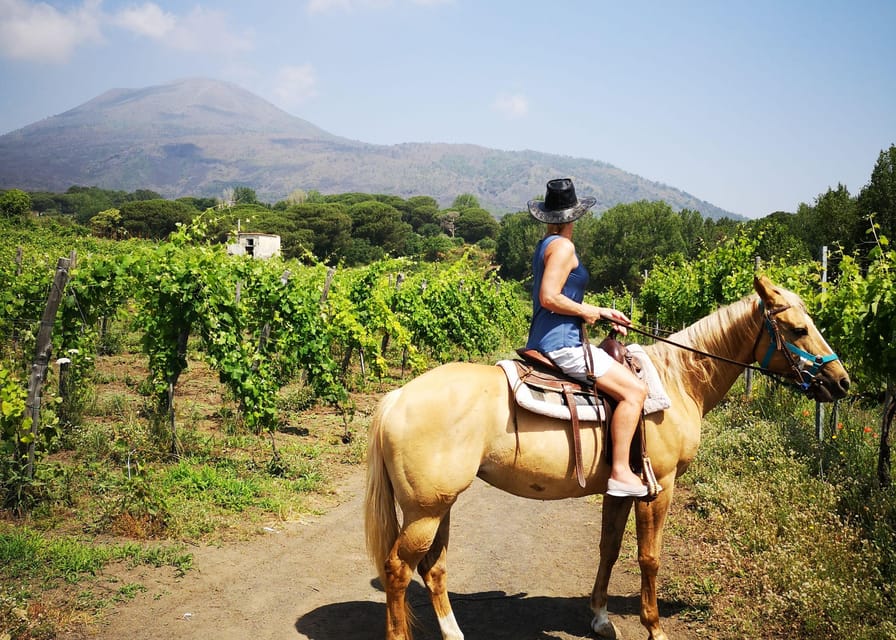
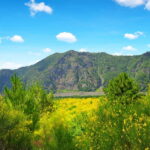
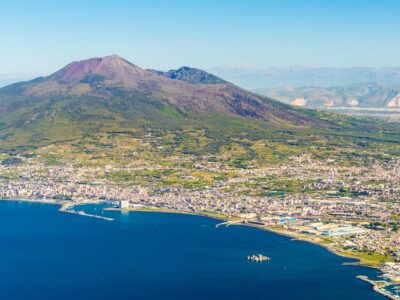
One of the headline promises here is the view. The ride includes panoramic overlooks of the Gulf of Naples and the Amalfi Coast from more than 1,000 meters in the surrounding area. Even with the stated riding altitude (400–500 meters), the broader positioning of the route is clearly about elevation and sightlines.
This is where the horseback format shines. From a trail at the right height, you’re not just snapping photos of buildings or roads. You’re looking across water, coastline, and countryside in a way that feels framed by the volcano itself.
It also helps you understand Vesuvius in a practical way. The mountain is dramatic, but so is the human geography around it. You can see how people built and farmed where the land could be both fertile and dangerous.
Crater-rim expectations (important)
This ride does not reach the crater rim. If your must-do is being right by the crater edge, plan for a separate crater visit using the designated hiking trail from the upper parking area, or choose a package that pairs your horseback ride with a Pompeii and Mount Vesuvius plan.
The good news: the ride offers a quieter, scenic way to experience the volcano. The trade-off is you’re not doing crater proximity during the 1-hour ride.
What you learn on the slopes: soil, vegetation, and how the volcano shapes food
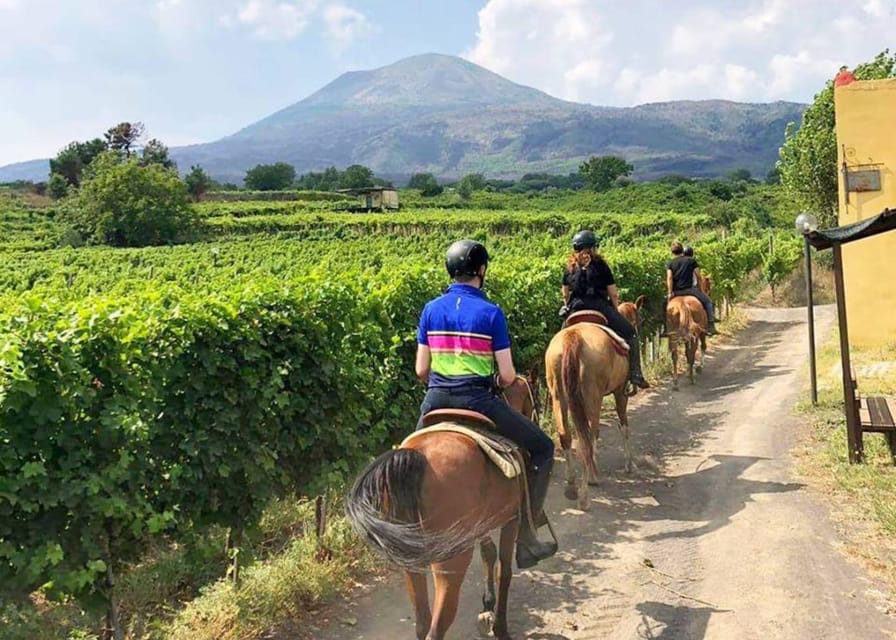
Even if you’re not a geology nerd (no shame), the tour’s local storytelling angle makes the landscape easier to read. The experience is positioned as a way to learn about the area’s products, plus the soil and vegetation that grow there.
Volcanic soil is famous for fertility, and this ride leans into that reality through what the guide points out. Vineyards, countryside plants, and cultivated land are part of the picture. You’ll also hear historical references—Roman soldiers are mentioned as having marched along trails in the region—so the landscape becomes connected to human timelines, not just rock formations.
I like that this isn’t just lecture time. The learning is tied to moving through the terrain, so you’re not stuck staring at one viewpoint for the whole ride.
Getting to know locals beyond the horses
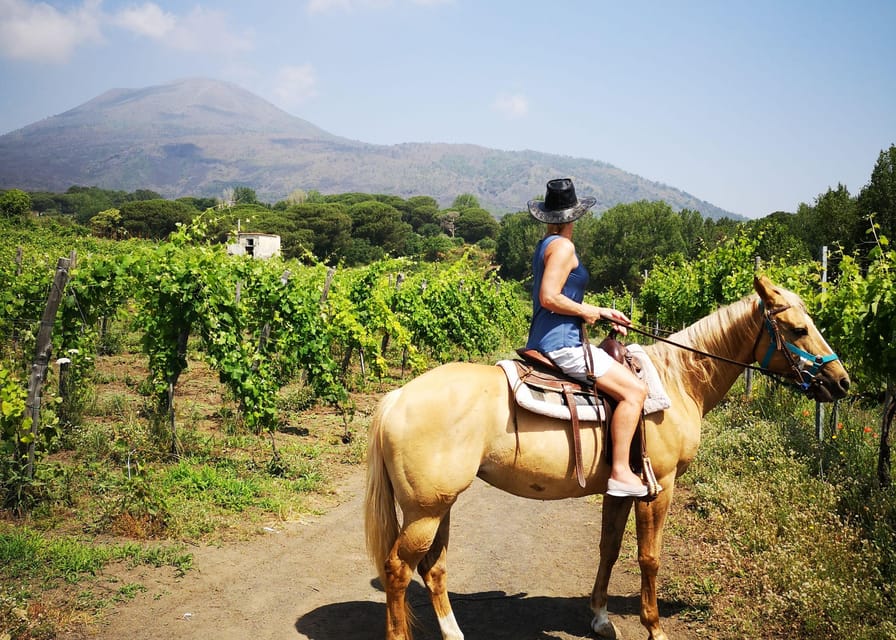
The experience highlights meeting locals and exploring the Vesuvius area in a different way. Practically, that means your time isn’t limited to a horse and a trail. You start with the stable area, you’re supported by expert local guides, and you get context about what you’re seeing.
Small-group dynamics also help here. When there are only up to eight participants, it’s easier for questions and real conversation. The ride feels more like an introduction to the place than a ticketed performance.
One extra detail worth knowing from real-world feedback: the reservation team includes an English-speaking contact named Sofia in at least some cases, and she’s been known to recommend a great nearby lunch stop. If you want your Vesuvius day to extend into food and local produce, ask about Tenuta Quirinoli (a few kilometers from the maneggio/stables), where people have enjoyed km 0 products.
Timing and how the full itinerary flows
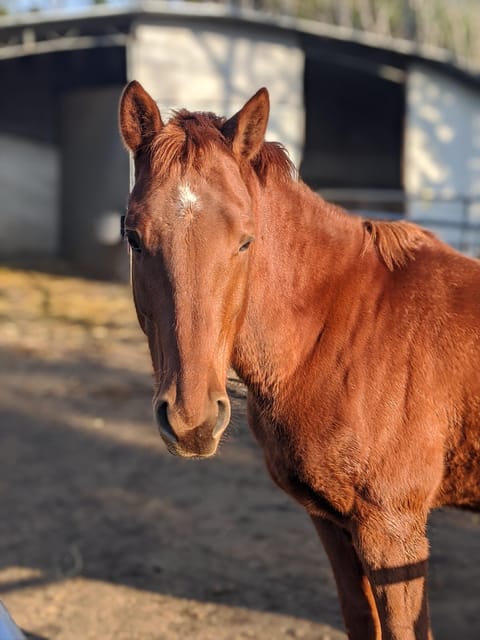
The full schedule stays simple, which is good when you’re packing a Pompeii-focused trip.
- Stop 1: Meeting at Caffetteria Magma
You meet the driver outside the café. The listed starting point is Bar – Cornetteria – Tabaccheria Magma H24, so treat that as your visual match for pickup.
- Stop 2: Van to the stables (~30 minutes)
This is transfer time, getting you to the right base for the horses.
- Stop 3: Horse ride (~1 hour)
You ride through scenic volcanic slopes on ancient lava paths while your guide explains history, landscape, and what’s growing there.
- Stop 4: Van back (~30 minutes)
You return the same way, keeping the overall day tight.
- Stop 5: Back at the same meeting point
You arrive again at the Magma café/bar area.
The main benefit of this structure is time control. You get a volcano experience that fits into a day without taking over your whole vacation schedule.
Price: $81 per person and what you’re really paying for
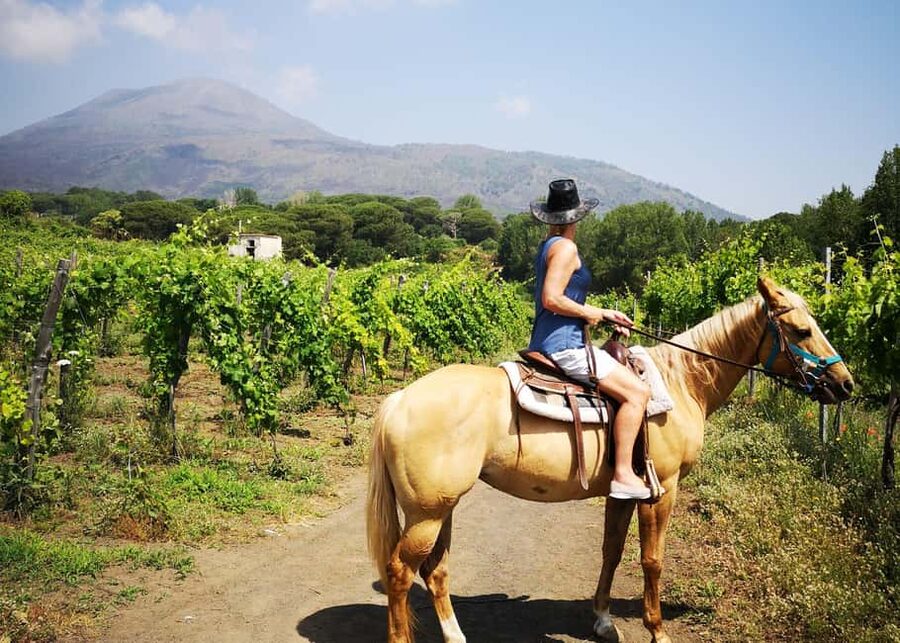
At $81 per person for a total 2 hours, this is priced like a focused activity rather than a long sightseeing day.
What makes the value feel better:
- Roundtrip transfer from Pompei is included, so you’re not adding taxi costs or extra coordination.
- Helmets and water are included, which covers basics you’d otherwise manage.
- You get a guided 1-hour horseback segment in a place where viewpoints and access can be tricky.
What you should watch for:
- Food isn’t included. If you want lunch, you’ll need to plan it separately. (In fact, a nearby km 0 lunch option is often recommended, like Tenuta Quirinoli.)
If you’re already doing Pompeii that same day, this fits well as a “second act.” If you’re only doing Vesuvius, you might pair this ride with a separate crater visit so you get both perspectives: the scenic trail view and the closer crater experience.
Who this horseback ride suits best (and who should skip it)
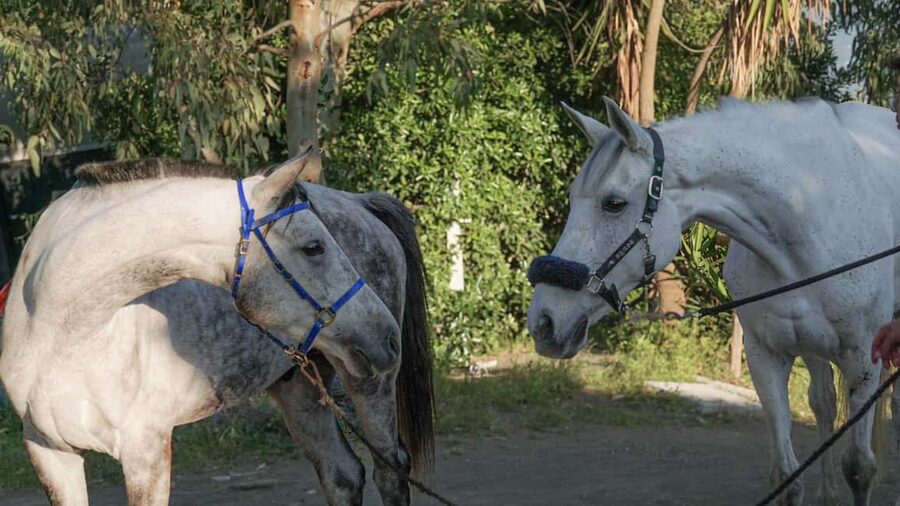
This is a good fit if you want:
- A beginner-friendly introduction to horseback riding
- A small-group experience (limited to 8 people)
- Volcanic scenery with serious views over the coast
- A guided day that’s only about 2 hours, not an all-day grind
It’s also a good choice if you’re traveling with someone who doesn’t want the physical challenge of a crater hike but still wants to experience Vesuvius in a tangible way.
Not suitable notes to take seriously:
- Children under 6 aren’t suitable.
- It’s listed as not suitable for people with mobility impairments.
- Weight limits are given: max weight 105 kg, and there’s also a separate exclusion note stating people over 125 kg (275 lbs). If you’re near the upper end, check directly with the operator before booking.
Practical tips that make your day smoother
A few small things can help you enjoy this ride more.
- Plan for views, not crater access. If crater-rim time is your goal, you’ll need a separate hiking visit or a combined tour.
- Bring a clear mindset. You’re riding on a volcanic route with panoramic stops. It’s meant to be scenic and guided, not a long workout.
- Use the small group to ask questions. With up to eight participants, it’s easier to get answers while you’re on the move.
- Think about lunch. Since food isn’t included, consider adding a nearby local-produce meal after the ride.
Should you book the horseback ride on Mt. Vesuvius?
Book it if you want a short, guided way to experience Vesuvius from the saddle. The combination of small group size, roundtrip transfer from Pompeii, and 1-hour ride on lava paths with big coast views is a strong value for a timed itinerary.
Skip it or pair it with something else if your top priority is crater-rim access. This ride is built for panoramic slopes at about 400–500 meters above sea level, and the crater edge isn’t part of the route.
If you’re the type who likes to understand a place through hands-on movement—animals, trails, soil, and local storytelling—this is the kind of Vesuvius day that feels personal.
FAQ
How long is the horseback ride on Mt. Vesuvius?
The activity lasts about 2 hours total, including roundtrip transfer. The horseback ride itself is about 1 hour.
Where do I meet the driver?
The driver picks you up outside Caffetteria Magma (the starting area is also listed as Bar – Cornetteria – Tabaccheria Magma H24).
Do I need prior horseback riding experience?
No. The experience is described as perfect for beginners, and all skill levels are welcome.
Does the ride reach the crater rim?
No. The ride does not reach the crater rim. You’ll be riding on scenic volcanic slopes at around 400/500 meters above sea level.
Is transfer from Pompeii included?
Yes. Roundtrip transfer from Pompeii to the stables is included.
What’s included in the price?
Included items are roundtrip transfer from Pompeii to the stables, 1 hour of horseback riding, water, and helmets.
What’s the group size and language?
The group is limited to 8 participants, and the host/greeter is English.
What are the age and weight limits?
It’s for ages 6+ and has a max weight limit listed as 105 kg. There is also a note stating it’s not suitable for people over 275 lbs (125 kg).
If you want, tell me what day you’re planning (and whether you’re also doing a Pompeii + crater plan), and I’ll help you pick the best order so you don’t overlap and miss the crater if you want it.
More Horses in Pompei Campania
More Tour Reviews in Pompei Campania

Up Vesuvius, More Ways to Climb
More Pompei Campania tours, freshly reviewed


Mount Vesuvius Tours, compared.
 ★ 4.3Pompeii Ruins & Mount Vesuvius Day TourFrom $12011,459 reviews
 ★ 4.6Naples or Sorrento: Full-Day Pompeii and Mount Vesuvius TourFrom $1044,235 reviews
 ★ 4.0Pompeii & Mt.Vesuvius Day Tour from Naples with Pizza LunchFrom $1492,901 reviews
 ★ 4.2Mount Vesuvius: Skip-the-Line Ticket and Smart Digital GuideFrom $182,780 reviews
 ★ 4.5Pompeii & Mt Vesuvius All-Inclusive Small Group w/ LunchFrom $1312,748 reviews
 ★ 4.5Pompeii and Mt. Vesuvius with Lunch and Wine TastingFrom $1412,454 reviews
 ★ 4.3Mount Vesuvius Transfer with Entry TicketsFrom $511,247 reviews
 ★ 4.7Pompeii & Mt. Vesuvius Day Trip with Tickets & LunchFrom $1261,208 reviews
Browse the lists this tour appears in