
Review · MUSEUMS
Naples: LAPIS Museum Guided Visit in Italian
Underground Naples is a totally different planet. This guided visit takes you below the Basilica of Pietrasanta to see restored Greco-Roman cisterns lit like a stage.
I particularly like the chance to view Naples from a surprising setting in the basement spaces, and I also like that the visit is led in Italian by a guide who keeps the story clear.
What you’re really paying for is the way the engineering and architecture are explained in a tight 75-minute format. The tour’s biggest drawback is that it’s not suitable for mobility impairments or wheelchair users, since the experience involves descending and moving through underground spaces.
In This Review
- Quick hits
- Why Naples’ underground water story starts at the Basilica of Pietrasanta
- The Submerged Decumanus: how lighting turns engineering into a walkable story
- Museo dell’Acqua di Napoli: what to look for underground
- The 35-meter drop: riding an archaeological lift without wasting time
- What the guided experience adds (and why small-group matters)
- Price and value: is $15 for 75 minutes a fair deal?
- Practical considerations before you go underground
- Who should book this LAPIS Museum guided visit?
- Should you book the LAPIS Museum guided visit?
- FAQ
- How long is the LAPIS Museum guided visit?
- What language is the tour guide?
- How large is the group?
- How deep does the archaeological lift go?
- Is this visit suitable for wheelchair users?
- How much does it cost, and can I cancel?
Quick hits
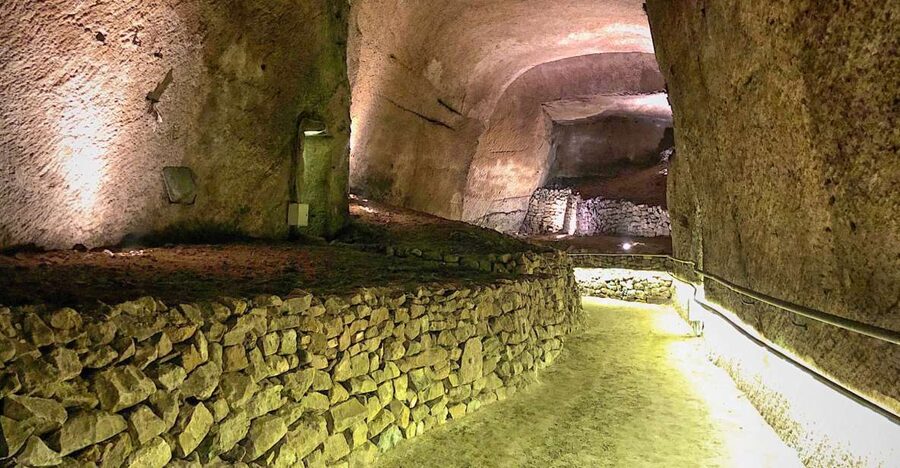
- Submerged Decumanus: a named underground route inside the Basilica of Pietrasanta
- Museo dell’Acqua di Napoli: the Water Museum as the hub of the visit
- Lighting that teaches: technical lights and colors emphasize vaults and volumes
- Archaeological elevator: down to 35 meters in about 20 seconds
- Small group: limited to 10 people for a calmer pace
- Good value: $15 for an organized guided underground experience
More guided runs around Naples
- Naples: Catacombs of San Gennaro Entry Ticket & Guided Tour★ 4.6 · 7,941 reviews
- Naples: Spanish Quarters Underground Guided Tour★ 4.8 · 5,064 reviews
- Naples: Street Food Walking Tour with Local Guide★ 4.9 · 4,976 reviews
- Herculaneum: Skip-the-Line Guided Tour with Archaeologist★ 4.8 · 3,439 reviews
Why Naples’ underground water story starts at the Basilica of Pietrasanta
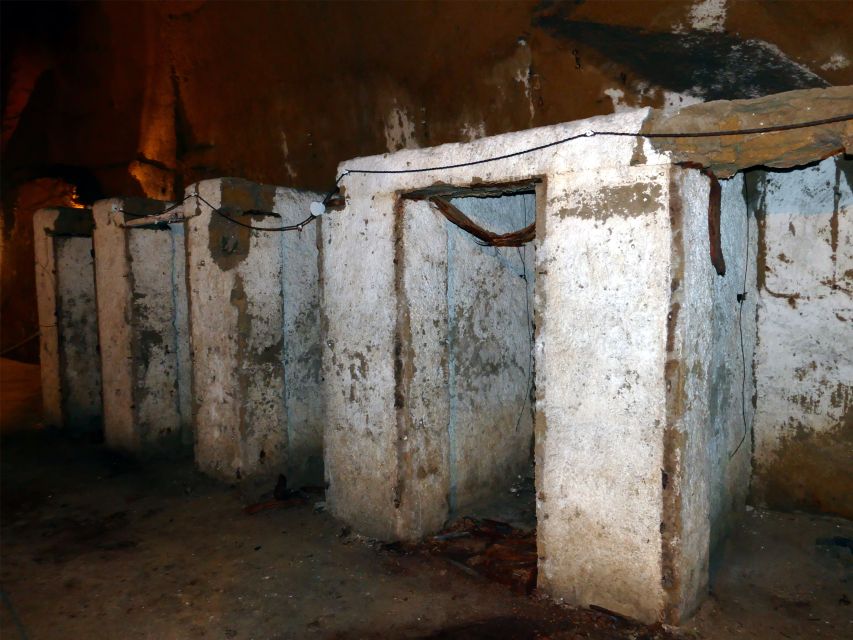
Naples has always been about water—where it comes from, where it goes, and what it can do to a city. That’s the core idea behind the LAPIS Museum visit. You begin in the world of the Museo dell’Acqua di Napoli, which serves as the hub for the underground route in the Basilica of Pietrasanta.
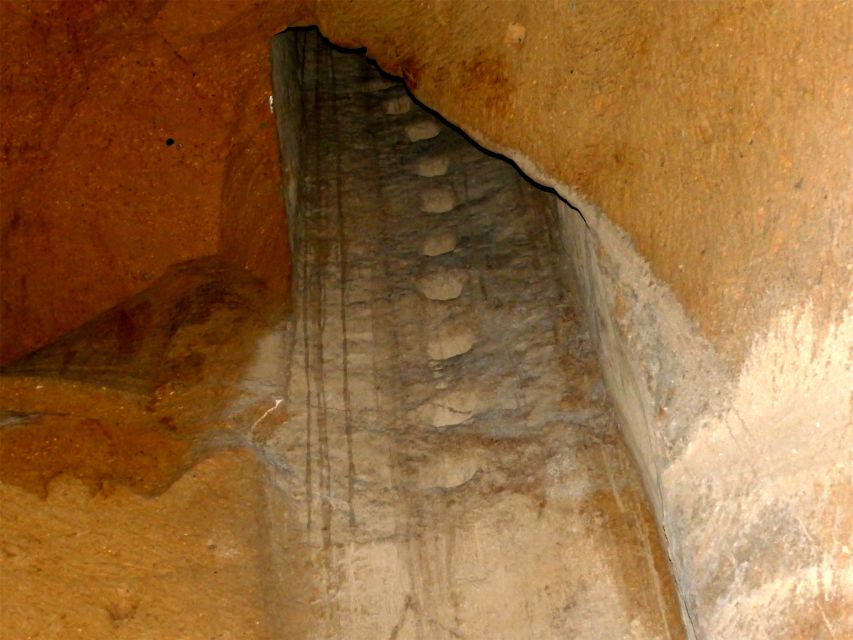
This isn’t a museum basement that feels like storage. The spaces you’ll walk through are part of a hydraulic engineering project designed to bring ancient Greco-Roman cisterns back into operation. The tour explains how this system works, and it also frames the deeper story: these cisterns were built on the remains of an older sacred site, including the Ancient Temple connected with the goddess Diana, and later transformed in the mid-seventeenth century by architect Cosimo Fanzago.
If you like archaeology that has purpose—not just ruins this and ruins that—this works. It turns the underground into something you can understand, not just something you can look at for a minute.
The Submerged Decumanus: how lighting turns engineering into a walkable story
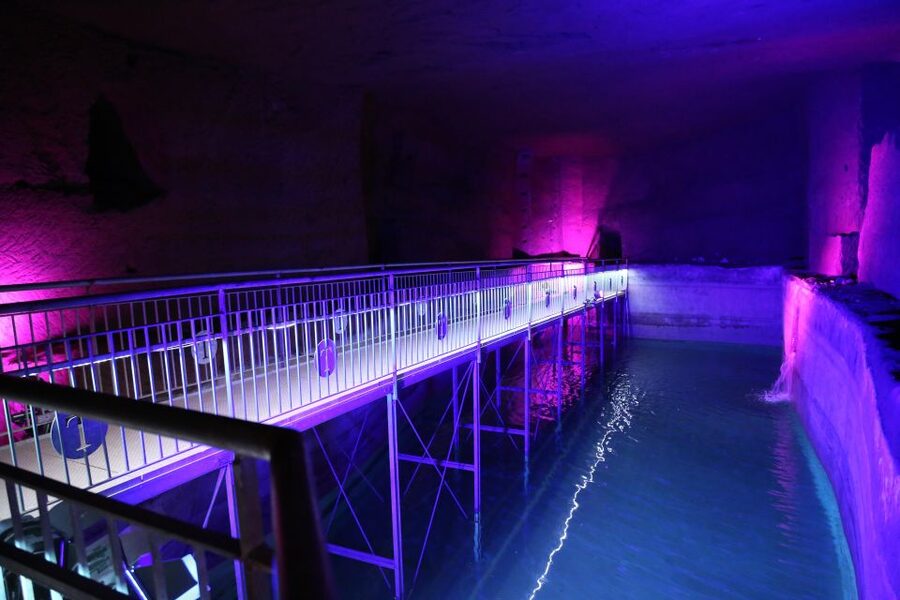
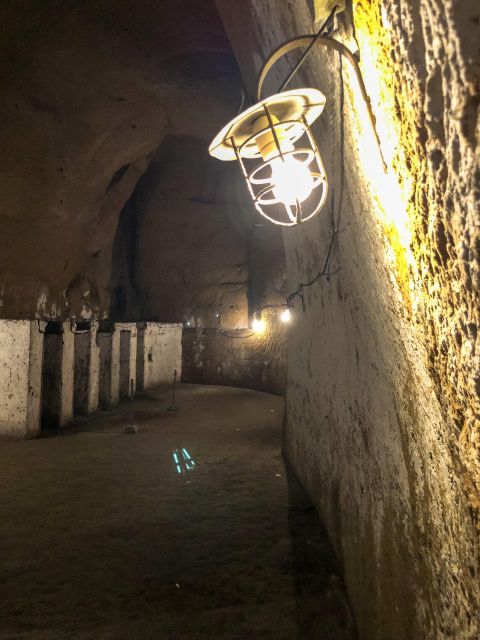
The underground path is called the Submerged Decumanus, and it’s one of those details that sounds like marketing until you’re there. The point is that the route guides you through a sequence of vaults and volumes, where the visual design is meant to help you read the space.
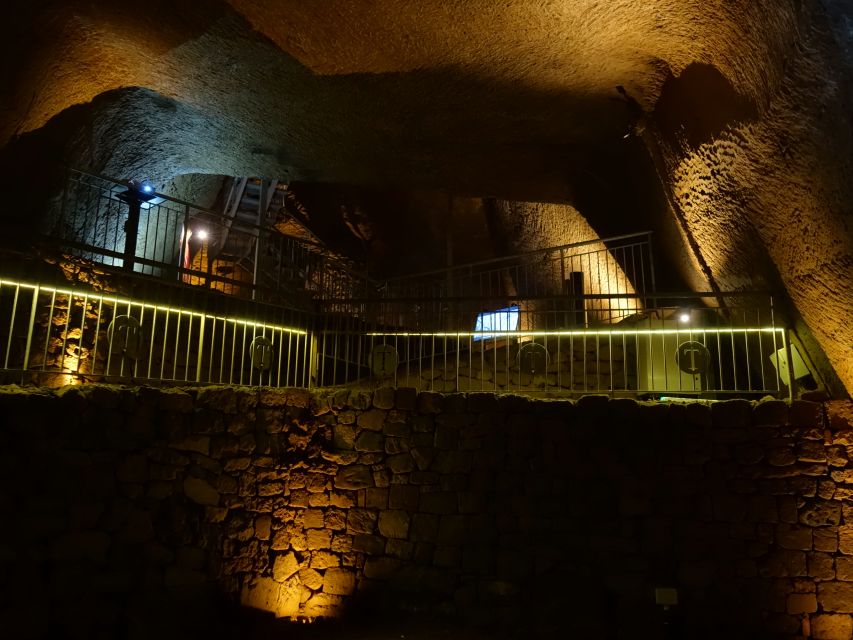
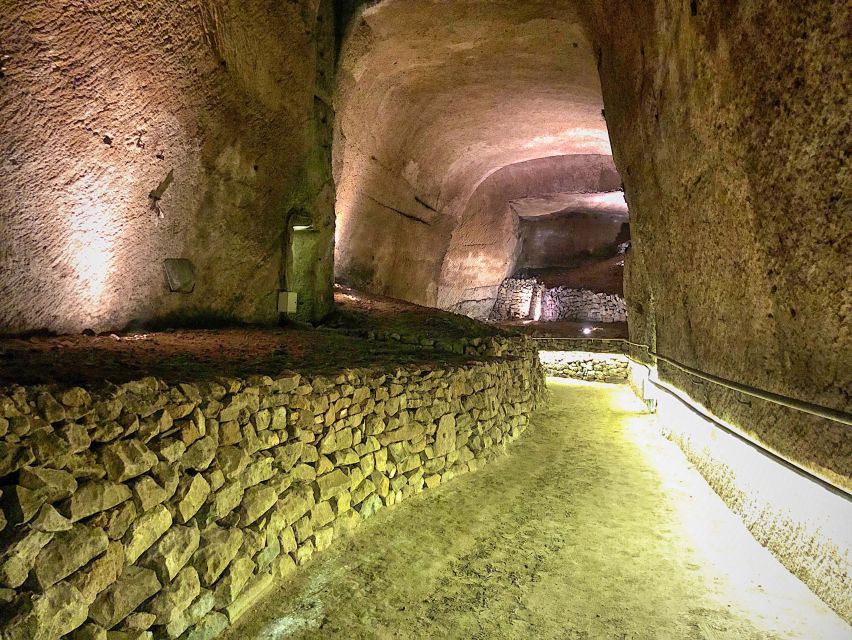
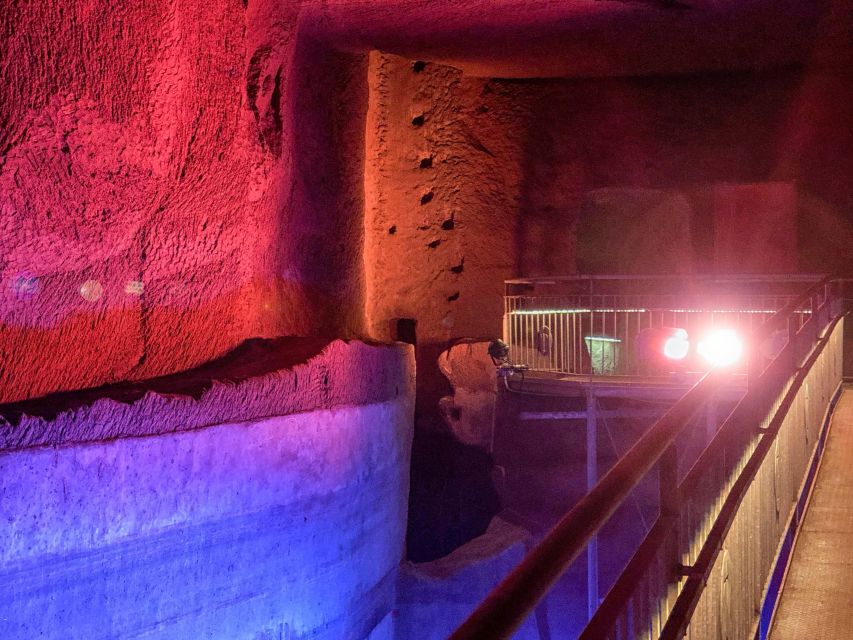
A technical lighting system highlights the architecture: you’ll see how the cisterns and tunnels relate to each other, and how the vault shapes change as you move. The lights and color choices aren’t random. They’re used to emphasize structure and scale—so the underground doesn’t feel flat or uniform.
This is also where the tour’s emotional effect can kick in. One of the most consistent impressions is the idea of a different view of Naples. When a city’s usual skyline is replaced by stone, water systems, and illuminated vaults, you start to grasp Naples in layers. You’re not just touring a site; you’re changing your perspective.
Museo dell’Acqua di Napoli: what to look for underground
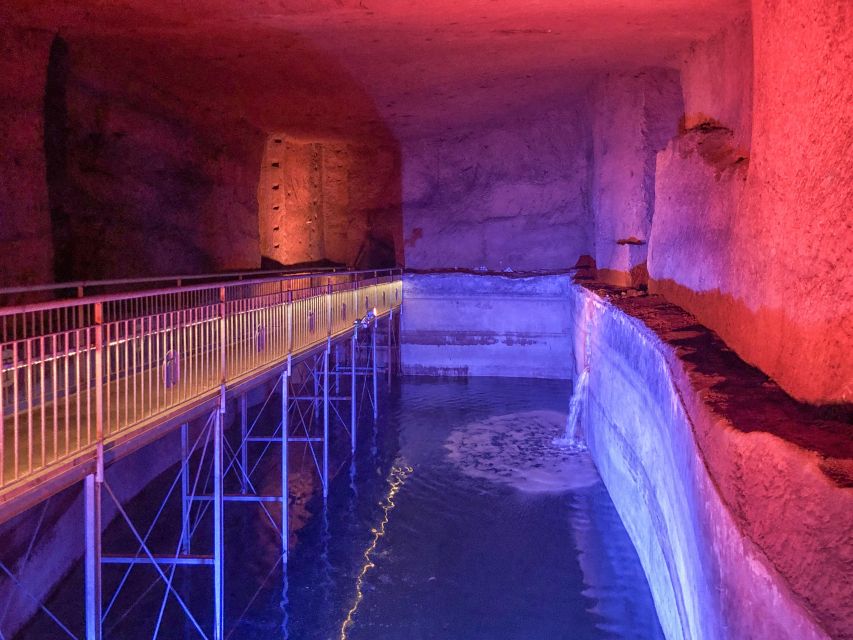
The Water Museum is where you’ll get your bearings for the whole visit. Think of it as the “why” section before the “wow” section. Here’s what you can expect to connect:
- The cisterns aren’t presented as dead objects. You’re told they still find water and manage runoffs.
- The spaces you’re moving through connect to the idea of a working hydraulic system, not only an archaeological display.
- The route is designed to show the transformation over time—from ancient structures to later work in the seventeenth century.
And there’s one more practical point: this setup makes the rest of the tour easier to follow. Even if your Italian is only fair, the guide’s explanations plus the visible architecture give you something to anchor each idea to.
The 35-meter drop: riding an archaeological lift without wasting time
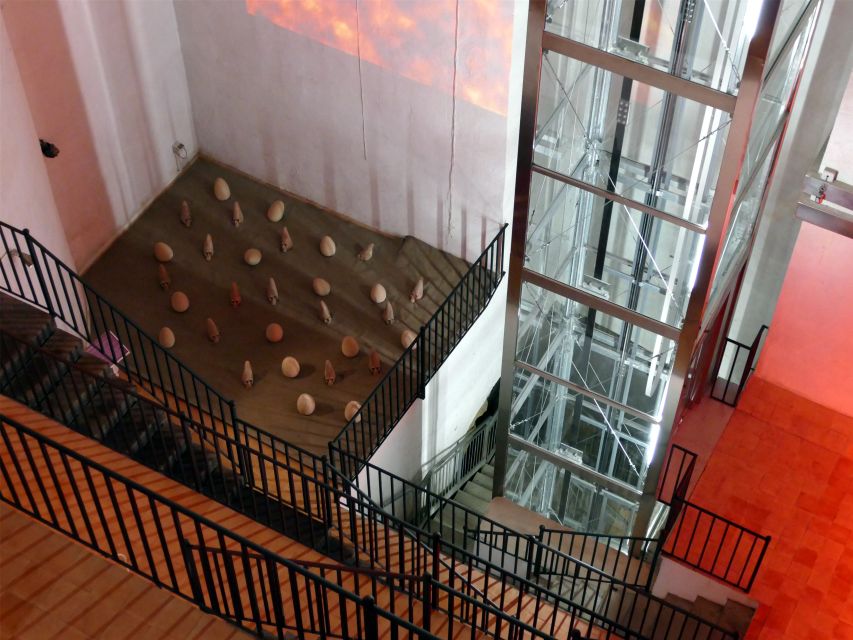
One of the standout moments is the ancient elevator down to a depth of 35 meters. The tour keeps this efficient: the archaeological lift connects the crypt environment with the subsoil in about 20 seconds.
That short ride matters more than it sounds. Underground visits can drag when you have long stairs or slow transitions. Here, the lift acts like a controlled time machine. The experience is described as taking you roughly 2000 years back, and while nobody expects literal time travel, the effect of going straight down into older layers is real.
Also, keep your expectations realistic: this is not a gentle, meandering stroll. The point is to transition quickly from one “level” of the story to another. If you like tours that respect your time and still deliver a strong sense of place, you’ll probably appreciate that.
Other Naples outings worth a look before you book

What the guided experience adds (and why small-group matters)
This is a guided visit with an Italian-speaking tour guide, and the group is capped at 10 participants. That small size is usually where quality hides. In a group like this, the guide can slow down when something is unclear, and you’re less likely to feel herded.
One of the best outcomes of a well-prepared guide is that the site stops being a list of features. Instead, you start linking architecture to function: why certain spaces were created, how lighting clarifies shape, and how the hydraulic engineering story ties the whole underground route together.
Another detail you’ll likely notice is how the tour focuses on the basement experience of Naples—admiring the city in a setting you’d never expect to look at normally. It’s the kind of moment that makes you rethink the phrase underground Naples as more than a metaphor.
Price and value: is $15 for 75 minutes a fair deal?
At about $15 per person for a 75-minute guided visit, this is priced in the range where you can say yes without budgeting your whole day around it. The value comes from a few things working together:
- You’re not just buying entry; you’re getting a guided explanation in Italian.
- You get a specific highlight experience: the underground route plus the elevator down to 35 meters.
- The time is tight and intentional, which makes it easier to slot into a sightseeing schedule.
Is it expensive? No. Is it too short to be meaningful? Also no. Seventy-five minutes is enough time to follow the logic of how the cisterns and underground spaces are presented, while still keeping you from feeling drained by constant underground walking.
If you’re the kind of traveler who likes architecture, engineering, or “how this works” history, $15 feels even more reasonable because you’re buying interpretation—not just access.
Practical considerations before you go underground
A few points to know so you can avoid surprises.
First, language: the tour is Italian. If you don’t read Italian well, you can still enjoy the visuals, but the written details you might want won’t be the focus. This is one reason the small group format can help—your guide’s pace matters.
Second, physical access: it’s not suitable for people with mobility impairments and wheelchair users. Underground spaces often involve uneven ground, stairs, or elevator transitions even if the elevator ride is quick. If you have mobility limits, it’s worth skipping this one.
Third, underground temperature and feeling: you’ll be in stone spaces underground. Even when the tour is comfortable, wear clothes you don’t mind in cooler, enclosed areas.
Who should book this LAPIS Museum guided visit?
I think this tour is a great match if you enjoy any of the following:
- You like architecture with a job to do, not only monuments posed for photos
- You’re interested in water systems and how cities manage resources
- You want a short tour that still gives a strong sense of place
- You prefer small groups and a guide who can explain clearly
It’s also a smart choice when Naples daylight plans feel overcrowded. This is a way to see the city’s history in a different setting—literally below street level.
If you’re traveling with someone who thinks “underground” sounds scary or boring, this one has a chance to change minds because the lighting and engineering story make the space feel understandable and even emotional.
Should you book the LAPIS Museum guided visit?
Yes, if you’re looking for an organized, visually guided underground Naples experience that pairs Greco-Roman cisterns with practical storytelling—and if you can handle the mobility constraints. The $15 price feels fair for what’s included: the ticket, the guided Italian explanations, the named underground route, and that 35-meter elevator moment.
Skip it if mobility access is a concern, or if you know you won’t enjoy an Italian-only guided format. In that case, you’d likely do better choosing a more accessible Naples attraction.
If those points work for you, this visit is one of the easiest ways to get beyond the usual surface Naples postcard and see how the city thinks about water.
FAQ
How long is the LAPIS Museum guided visit?
The experience lasts 75 minutes.
What language is the tour guide?
The tour guide speaks Italian.
How large is the group?
The group is limited to 10 participants.
How deep does the archaeological lift go?
The lift takes you down to a depth of 35 meters.
Is this visit suitable for wheelchair users?
No. It is not suitable for people with mobility impairments and wheelchair users.
How much does it cost, and can I cancel?
The price is $15 per person. You can cancel up to 24 hours in advance for a full refund.
More Museum Visits in Naples





More Guided Tours in Naples




More Tour Reviews in Naples





More Naples tours, freshly reviewed




Museums, compared.
 ★ 4.4National Archaeological Museum Ticket & Audio AppFrom $29617 reviews
 ★ 4.8National Archaeological Museum of Naples Guided TourFrom $52498 reviews
 ★ 4.2National Archaeological Museum Tour & Digital GuideFrom $40177 reviews
 ★ 4.0National Archaeological Museum audio guideFrom $4155 reviews
 ★ 4.0Capodimonte Museum in NaplesFrom $27115 reviews
 ★ 4.9Jago Museum & Sant’Aspreno ai Crociferi Guided Tour96 reviews
 ★ 3.5Skip the Line: National Archaeological Museum of Naples Entry TicketFrom $3882 reviews
 ★ 4.5Pompeii: Skip-the-Line Ticket and Virtual MuseumFrom $6066 reviews
Browse the lists this tour appears in