
Review · NAPLES OLD TOWN TOURS
Naples: guided tour of the historic center
Naples’ history shows up fast on foot. This guided walking tour is built to help you read the city’s layers in just 2 hours, from the Greek roots to major monuments up through later centuries. I like that it’s focused on orientation, not overload, so you know what you’re looking at. One catch: the Cloister of Santa Chiara isn’t included, so you may need separate tickets if you want to go inside.
My favorite part is the way the route strings together key stops—churches, squares, and streets you can still walk today—so the story stays connected. The tour also gets positive notes about the guide’s energy, including Paola, who’s praised for bringing real affection and passion for Naples to the group.
If you hate walking, plan for a true walking tour. The upside is that it’s wheelchair accessible and offered as a private group, so the experience can feel more comfortable and tailored than a big bus crowd.
In This Review
- Key things to know before you go
- Why a 2-Hour Walk Gets You Oriented in Naples
- Meeting the City’s Layers: Greek Roots to Later Centuries
- Santa Chiara: What You Can See and What Needs a Separate Ticket
- Church of Gesù Nuovo and the Meaning of Naples’ Big Landmarks
- Piazza San Domenico: A Square Stop That Helps You Read the City
- San Gregorio Armeno: Street Names, Craft Culture, and What People Do Here
- Church of Santa Patrizia and Piazza San Gaetano: Belief in Public Space
- The Decumani: The Street Structure You’ll Keep Seeing
- Price and Value: What $23 Buys You (and What It Doesn’t)
- Guide Quality: Why Paola Gets Mentioned
- Who This Tour Fits Best (and Who Might Want More)
- Tips to Make the Walk Feel Easier
- Should You Book This Naples Historic Center Tour?
- FAQ
- How long is the guided tour of Naples’ historic center?
- How much does the Naples historic center tour cost?
- What monuments are included on the tour?
- Is the Cloister of Santa Chiara included?
- What languages is the tour available in?
- Is the tour wheelchair accessible?
- Is this tour a private group?
- What is the cancellation policy?
Key things to know before you go

- A 2-hour focus on the oldest core: you’ll see a concentrated set of famous sites without getting lost.
- Greek-colony streets you can still walk: the route follows street structure tied to roots going back to the 7th century BC.
- Major monuments included, interiors may vary: the cloister of Santa Chiara is explicitly excluded.
- Good for short stays: perfect if you want the highlights of Naples’ historic center in limited time.
- Guides like Paola add personality: reviews highlight passion and warmth that make the explanations stick.
- Languages you can choose: the tour is available in English and Spanish, alongside Italian-speaking guidance.
Deeper into the old center of Naples
- Naples: Origins, Cults and Legends Old Town Guided Tour★ 4.8 · 749 reviews
- Naples: The Holy Mile 3-Hour Guided Tour★ 4.9 · 711 reviews
- Naples: Guided Pub Crawl in the Old Town★ 4.7 · 300 reviews
- Naples: Old Town Tour with Veiled Christ and Cathedral★ 4.8 · 276 reviews
Why a 2-Hour Walk Gets You Oriented in Naples
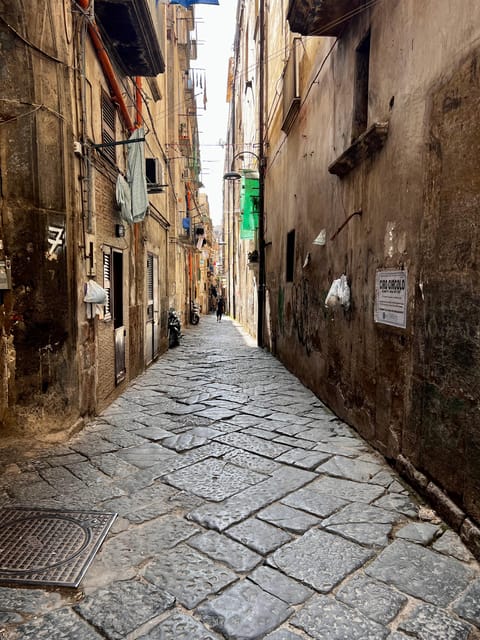
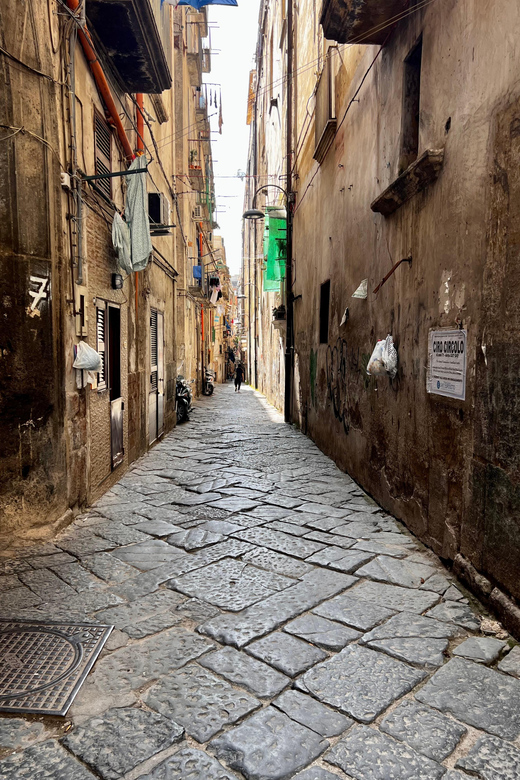
Naples can feel like information overload. Too many streets, too many churches, too many layers. This tour is designed for the opposite problem: it gives you a simple path through the historic center so you don’t just “see buildings,” you understand why they’re there.
I like the time frame a lot. At around 2 hours, you can cover the core monuments and important public spaces without spending your whole day in line-ups or on transit. It’s also ideal for the first afternoon or evening you arrive—when you want to get your bearings fast and start recognizing areas later on your own.
The pricing is also part of the value. At about $23 per person, you’re paying for a qualified guide and a structured route, not for multiple separate attractions. That matters in Naples, where ticketed sites can add up quickly. Here, you’re mainly investing in interpretation—someone pointing out what to notice and how different eras left their mark.
Meeting the City’s Layers: Greek Roots to Later Centuries
What makes Naples special for a walking tour isn’t just the number of monuments. It’s how the city’s past is physically present in the street plan and building styles.
This tour is framed around major eras, from the Greek colony period (with roots dating to the 7th century BC) to areas shaped later, up through the 1700s. You’ll walk streets described as part of the ancient Greek colony still usable today. That’s a big deal: you’re not only looking at archaeology behind glass—you’re walking on a living city grid that still influences how neighborhoods function.
During the walk, your guide connects visible details to those eras—where churches sit, how public squares work, and why certain streets matter. The practical benefit for you is simple: once you learn the logic of the area, your self-guided wandering gets way easier afterward.
Santa Chiara: What You Can See and What Needs a Separate Ticket

The tour includes the Monastery of Santa Chiara among its key stops. Even if you don’t go deeper into ticketed areas, the area is famous enough that your guide can help you spot what makes it important.
Here’s the practical consideration: the Cloister of Santa Chiara is not included. So you can expect either exterior viewing or an explanation without entry to the cloister itself. If you’re the type who likes to pay extra for the “best room” in a monument, keep that in mind. You can still get a lot out of the stop, but you may want to plan a separate visit later if the cloister is a must for you.
Why it’s worth the time anyway? Santa Chiara sits in a part of Naples where sacred sites and small urban spaces blend together. Your guide can help you connect the monastery to the surrounding street life and explain how these places kept their cultural power through centuries.
Church of Gesù Nuovo and the Meaning of Naples’ Big Landmarks

Next comes the Church of Gesù Nuovo, one of those Naples landmarks that looks impressive even before anyone tells you what to look for. The value of a guide here is that big churches can be visually loud, but the explanations are what make them memorable.
The tour approach isn’t just “this is a church.” It’s more like: this is where religious architecture meets the story of Naples. Expect your guide to point out what makes the site significant and what links it to other monuments you’ll see later on the walk.
And for you, this stop pays off twice. First, you’ll understand the building. Second, you’ll start recognizing similar cues in other churches and squares as the tour moves along.
More guided runs around Naples


Piazza San Domenico: A Square Stop That Helps You Read the City
Naples is built around squares. Streets lead to them, people linger in them, and important buildings often face them. Piazza San Domenico is part of that rhythm.
On a walking tour like this, a square stop is more than a pause. It’s a tool. When your guide talks about a square, you learn how to navigate the city as a human scale, not just a map. You can also connect the church-or-monument stops to the urban space they serve.
If you’re short on time, squares are also where you can quickly understand the feel of an area without having to enter every building. Take a few minutes to regroup, look around, and let the guide’s pointers turn into something you can carry forward.
San Gregorio Armeno: Street Names, Craft Culture, and What People Do Here

Then you hit San Gregorio Armeno, a name that pops up in Naples for a reason. It’s tied to the idea of Naples as a city where tradition stays active, not frozen.
Even without making up extra details about specific shop types, you can still get a lot from this stop because the guide’s job is interpretation: showing you how street culture connects to what you’re seeing. When you learn why this area is associated with a certain kind of craft and seasonal storytelling, the street becomes more than a corridor—it turns into a living part of the city’s identity.
For your planning, this also helps you decide what to do after the tour. If you want to shop or browse, this is the kind of street where you might want a second pass on your own time, when you can slow down.
Church of Santa Patrizia and Piazza San Gaetano: Belief in Public Space
The tour continues with Church of Santa Patrizia and then Piazza San Gaetano. Together, these stops help you understand something that’s easy to miss when you’re only moving from one postcard sight to the next: Naples uses religious places to organize everyday life.
At Santa Patrizia, your guide will explain what you’re seeing and how it fits into the city’s longer arc—again tying back to the idea that Naples is shaped by different eras. Then, by the time you reach Piazza San Gaetano, you’ve got a clearer sense of how a church and a square reinforce each other: sacred architecture draws people, and the square gives that movement somewhere to happen.
For most visitors, these are the stops that make the tour feel more real. They’re not just famous objects. They’re places where the city’s routines and beliefs overlap.
The Decumani: The Street Structure You’ll Keep Seeing
One of the smartest parts of this tour is mentioning the decumanietc—the main streets that matter in Roman-era urban planning and still influence how Naples unfolds.
Why you should care: street grids affect how you experience a city. If you understand the big axes—where movement channels naturally—the rest of Naples becomes easier to read. You’ll recognize streets on your map and in real life. That reduces the stress of navigating and makes your post-tour wanderings feel more confident.
Even if you don’t know the terms when you start, you can learn them quickly through context. This is one of those “small” pieces that often improves everything else: better navigation, fewer wrong turns, and more time spent where you actually want to be.
Price and Value: What $23 Buys You (and What It Doesn’t)
At $23 per person for a roughly 2-hour guided walk, you’re paying for three things: a qualified guide, a curated route through major monuments, and the time-saving benefit of not having to figure out the best sequence on your own.
What you don’t get is separate ticket entry to the Cloister of Santa Chiara. That exclusion is worth noting because cloisters can be a standout interior experience. If you specifically care about interior access, you’ll likely want to plan that separately. If you mainly want the overview—what the city looks like across eras, and how the monuments connect—this tour stays a strong value.
Also, the tour being available as a private group can matter more than you’d think. Even without knowing exact group size, private-group formats often feel more adjustable: you can ask questions, you can move at a comfortable pace, and the guide can tailor explanations to what you seem most curious about.
Guide Quality: Why Paola Gets Mentioned
The review notes I’m taking seriously here are the ones that talk about the guide’s attitude and delivery. Paola is specifically praised for transmitting love for the city and a sense of joyful, passionate Naples through the explanations.
That kind of feedback matters because Naples rewards guides who can turn stone and dates into lived context. A historic center walking tour can go two ways: either it’s a list of names, or it’s a story you can remember later. The emphasis on passion suggests this tour leans toward the story side—at least when paired with the guides leading the walk.
If you’re the kind of person who gets more out of human explanations than museum labels, that’s a good sign for your experience.
Who This Tour Fits Best (and Who Might Want More)
This tour is a strong match if:
- you have little time in Naples and want the main monuments in one organized walk
- you like understanding how different eras show up in streets and buildings
- you prefer a guided route over picking sights off a list
- you want wheelchair accessibility in a walking format
It might be less ideal if:
- you plan to spend most of your time inside ticketed attractions (because the Cloister of Santa Chiara isn’t included)
- you expect lots of stop-and-stare museum time at each monument (this is a walk designed for coverage and orientation)
If you’re visiting for the first time, I think this kind of guided “historic center circuit” is one of the best ways to start. Then you can return on your own to the places that stuck with you most.
Tips to Make the Walk Feel Easier
Here are a few practical moves that fit this exact kind of walking tour:
- Wear shoes you trust. A historic center walk is still a lot of pavement, even when it’s short.
- Bring a small amount of patience for church visits. Even when the tour includes churches, you’ll likely spend time listening and looking more than moving slowly through long interior routes.
- If cloister entry is important to you, plan it separately. The tour is set up so Santa Chiara’s cloister tickets are your responsibility.
- If you’re choosing language, check that your booked language matches what you want. The tour is available in English and Spanish, and the live guidance is listed as Italian—so language availability may depend on the session you book.
Should You Book This Naples Historic Center Tour?
Book it if you want the quickest path to understanding Naples’ historic core: Greek-root street structure, major monuments, and the kind of guided context that helps you navigate afterward. At about $23 for 2 hours, it’s hard to beat as a value-first plan—especially when your priorities are orientation and the highlights.
I’d skip it or add a second plan if your top goal is paid interior access at specific sites, like the Cloister of Santa Chiara. But even then, the walk can still function as a strong primer, helping you decide what’s worth your time later.
FAQ
How long is the guided tour of Naples’ historic center?
The tour lasts approximately 2 hours.
How much does the Naples historic center tour cost?
It’s priced at $23 per person.
What monuments are included on the tour?
The tour includes major sites such as the Monastery of Santa Chiara, the Church of Gesù Nuovo, Piazza San Domenico, San Gregorio Armeno, the Church of Santa Patrizia, Piazza San Gaetano, and the decumani area (and related streets).
Is the Cloister of Santa Chiara included?
No. Tickets for the Cloister of Santa Chiara are not included.
What languages is the tour available in?
The tour is available in Italian, and it is also available in English and Spanish.
Is the tour wheelchair accessible?
Yes, the tour is wheelchair accessible.
Is this tour a private group?
Yes, it’s a private group.
What is the cancellation policy?
You can cancel up to 24 hours in advance for a full refund.
More Tours in Naples



More Tour Reviews in Naples

More of the Old Center




More Naples tours, freshly reviewed




Naples Old Town Tours, compared.
 ★ 4.9Downtown Tour with Veiled Christ & St Clare TicketsFrom $576,462 reviews
 ★ 4.8Origins, Cults and Legends Old Town Guided TourFrom $31749 reviews
 ★ 4.9The Holy Mile 3-Hour Guided TourFrom $22711 reviews
 ★ 4.7Guided Pub Crawl in the Old TownFrom $18300 reviews
 ★ 4.8Old Town Tour with Veiled Christ and CathedralFrom $57276 reviews
 ★ 5.0Naples Walking Tour: Old Town and SpaccanapoliFrom $30200 reviews
 ★ 4.5City Center Walking Tour with Underground NaplesFrom $90143 reviews
 ★ 5.0Historic Center Tour & Veiled Christ Entry TicketsFrom $7097 reviews
Browse the lists this tour appears in