
Review · MUSEUMS
Visit to the Lapis Water Museum in Spanish
Naples water lives under your feet. This Spanish-guided tour takes you into the Lapis Water Museum, where ancient cisterns and living-water recreations are tied to the city above. You also visit the Pietrasanta complex, a Greco-Roman link to the name Partenope, so Naples’ layers make sense in one smooth route.
I particularly love the way the tour turns engineering into storytelling. You go down 35 meters to see the Greek and Roman aqueducts, plus the big cistern called the prince’s pool. I also like that the experience is designed for real context, including how these underground spaces served as a Second World War shelter, not just as ruins behind glass.
One consideration: the guided tour is in Spanish only, so if your Spanish is shaky, you may feel more lost than informed. That matters because this is a very explanation-heavy visit.
In This Review
- Key highlights you should know before you go
- Naples water museum in 75 minutes: what the underground tour really is
- From Piazza Dante to Pietrasanta: start at the church, then go down
- The Greek and Roman aqueducts and the prince’s pool cistern
- Wartime Naples below ground: shelter stories that stay grounded
- Language, pace, and who this tour fits best
- Price and value: what $46.34 gets you
- Should you book the Lapis Water Museum tour?
- FAQ
- FAQ
- Where is the meeting point for the Lapis Water Museum tour?
- What time does the tour take, and does it include admission?
- What language is the guided tour?
- How deep do you go underground during the visit?
- What will I see in the underground sections?
- How large are the groups?
Key highlights you should know before you go
- A 35-meter descent: you reach Naples’ deepest layers to see water structures from ancient Neapolis.
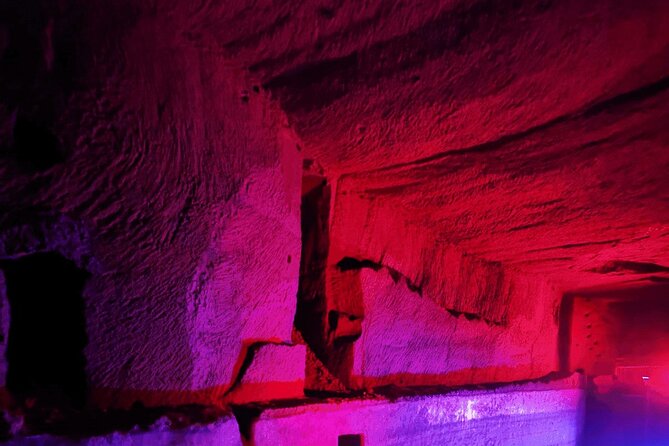
- Greco-Roman water features: the Greek and Roman aqueducts and a major ancient cistern are part of the core route.
- The prince’s pool: you’ll visit the largest underground pool in Naples, tied to the city’s water system.
- World War II shelter history: the underground spaces were used as protection during bombing.
- Small groups (max 20): you’re not packed in like a train car, which helps with explanations.
Other Naples outings worth a look before you book
- Naples: National Archaeological Museum Tour & Digital Guide★ 4.2 · 177 reviews
- Naples: National Archaeological Museum audio guide★ 4.0 · 155 reviews
- Capodimonte Museum in Naples★ 4.0 · 115 reviews
- Naples: Jago Museum & Sant’Aspreno ai Crociferi Guided Tour★ 4.9 · 96 reviews
Naples water museum in 75 minutes: what the underground tour really is
This is one of those Naples experiences that makes the city feel physical. Above ground you get churches, streets, and views. Below ground, you get the reason Naples could exist for centuries: water.
The Lapis Water Museum project was launched in 2021 to bring ancient water cisterns from Greco-Roman times back to life. That’s not marketing fluff. The idea is to recreate how streams and cisterns worked in ancient Naples, working with a Neapolitan water company. So instead of just looking at stone leftovers, you’re guided through how the system functioned, and why those spaces mattered.
The timing is also smart. The total duration is about 1 hour 15 minutes, which means you can fit it into a day of churches and historic streets without burning half your trip underground. It’s long enough to feel like a real visit, short enough that you don’t have to rearrange your entire itinerary.
From Piazza Dante to Pietrasanta: start at the church, then go down
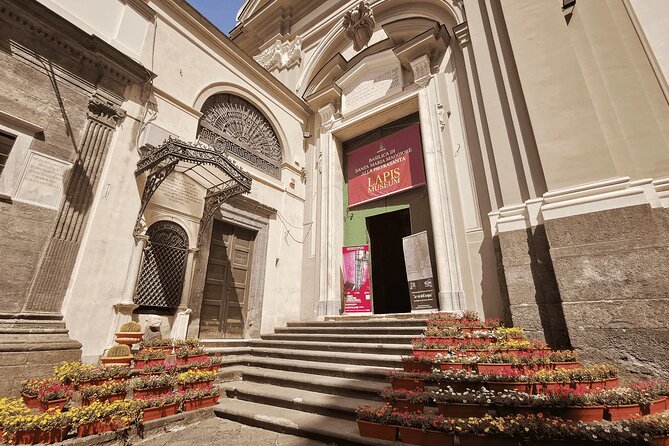
Your tour starts at Piazza Dante, meeting at the chosen time. Once the group is formed, you walk over to the museum at Piazzetta Pietrasanta 17. The guided tour ends directly at the museum, so you’re not forced into extra steps right after your underground portion.
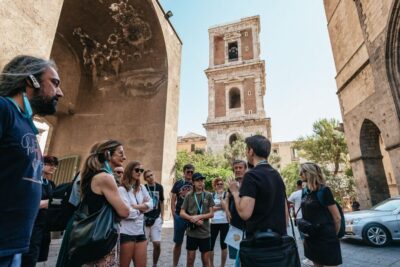
The first stop is the Basilica of Santa Maria de la Pitra Sagrada. This matters because it sets the frame: you’re in an architectural complex that has Greco-Roman roots. The tour also connects the area to the story of Partenope. The first settlers gave the name Partenope to the city, where the Basilica of Pietrasanta stands today.
Then comes the main event. You go down 35 meters to reach the deepest part of the city. That descent is where the tour earns its keep: Naples stops being a city you walk across and becomes a city you read vertically.
The Greek and Roman aqueducts and the prince’s pool cistern
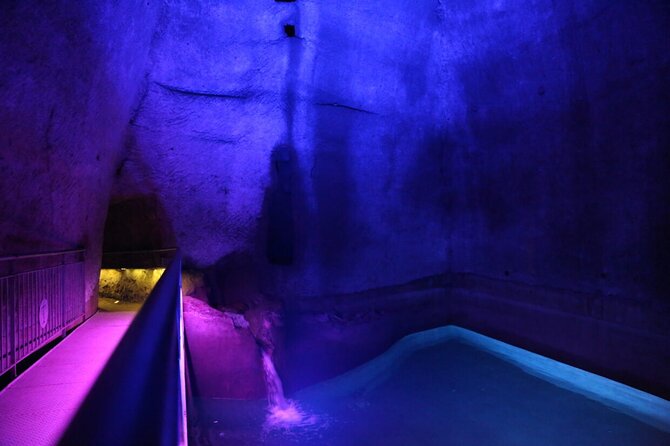
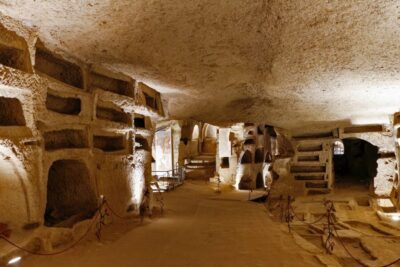
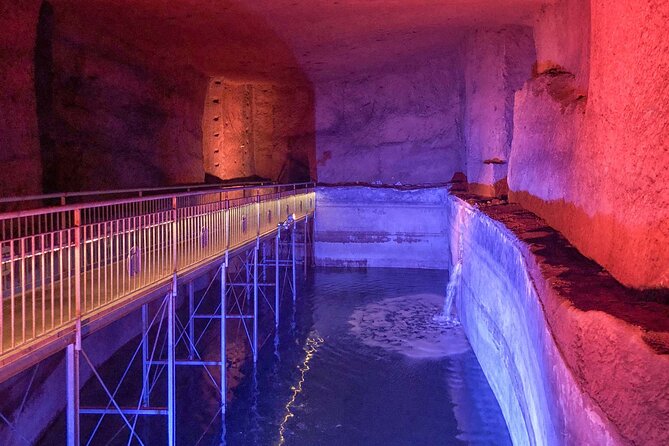
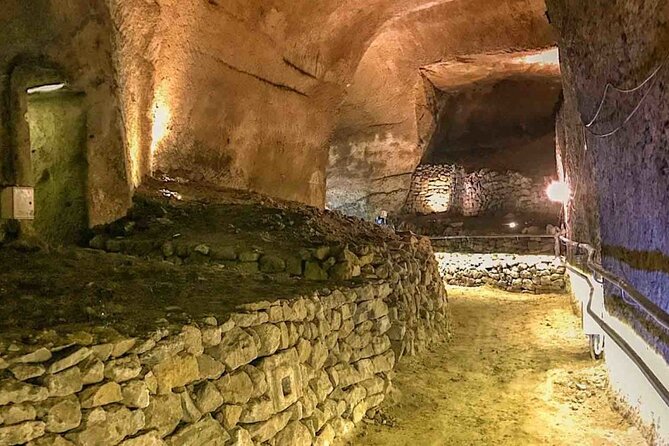
Once you’re below ground, you’ll see the ancient water infrastructure that made early Neapolis possible. The highlight here is the Greek and Roman aqueducts you can admire as part of the museum route. This is the kind of site that turns ancient history from a concept into something concrete.
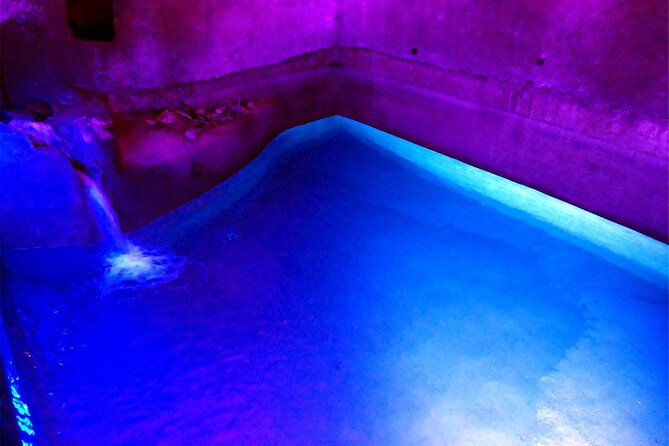
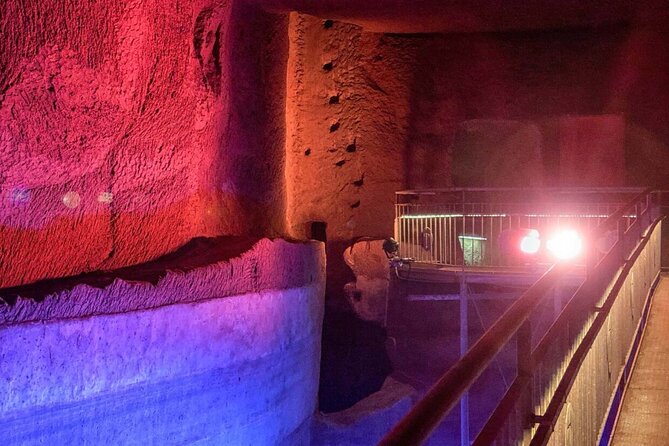
You also visit the ancient cistern, described as the prince’s pool. It’s called the largest underground pool in Naples, and that scale changes how the whole story feels. A small cistern is a detail. A huge one is a system that supports a city.
Here’s the practical value for you: water in Naples isn’t just an interesting topic. It’s part of why so many layers exist in the ground. When a city has a long timeline, its infrastructure becomes a framework that later eras build on, repurpose, or hide beneath newer floors. In this tour, the underground water works help you understand why Naples feels like an archaeological site while still being a living city.
The museum project also focuses on recreating how streams and cisterns worked in ancient times. That recreation is meant to help you visualize flow and storage, not just memorize names.
Wartime Naples below ground: shelter stories that stay grounded
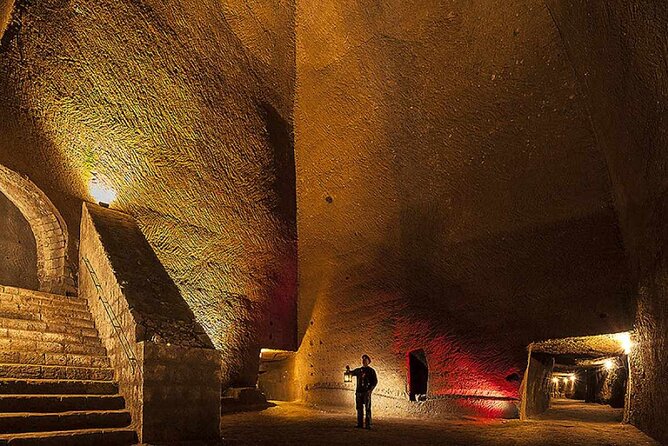
The underground spaces were not only for water. They were also used as protection during World War II, when people needed shelter from bombing.
In this tour, that thread adds weight to the visit. You’re still in an ancient setting, still focused on Greco-Roman structures, but you also get a reminder that “historic” doesn’t mean irrelevant or frozen. Underground, the same spaces that stored water also offered safety in a much later crisis.
You’ll see an area used as a shelter during the Second World War as part of the visit. And the tour experience uses films to help you connect to the people who were forced to live in these underground cellars during difficult moments. That storytelling approach is one of the most praised parts of the experience: it’s not only about stone. It’s about lived experience, told with context.
If you like history that connects engineering to real people, this is where you’ll feel it most.



Language, pace, and who this tour fits best
The guided tour is offered in Spanish, so this is the big filter for deciding. If you read Spanish well but don’t understand spoken Spanish, you might still follow the route, but the story will land unevenly. This tour’s power is in the explanation-heavy journey through layers of Naples.
On pace: it’s a relatively compact visit, with one main guided flow from the church down into the museum areas. The site involves going down 35 meters, so keep in mind you’ll be moving through a deep underground setting. Wear shoes you’re comfortable walking in for a short but active indoor route.
Group size is limited to a maximum of 20 travelers, which is a nice touch in a museum like this. Smaller groups usually mean fewer people blocking the guide’s view when they explain features at close range.
In terms of who it suits:
- Great for people who love Naples beyond the postcard basics—especially those who want the city’s layers explained in one place.
- A good match if you enjoy practical, tangible history like aqueduct systems and cistern scale.
- It can also work for people who need accessibility consideration; the experience is described as suitable even for people with disabilities.
If you’re traveling with very young children, temper expectations. One family booking found the experience didn’t match the child-friendly idea they were expecting. This isn’t a craft workshop. It’s a guided history and architecture visit, so bring a kid-plan that can handle explanations and underground spaces.
Price and value: what $46.34 gets you
The price is $46.34 per person. On the surface, that may sound steep for an underground museum. But you’re not paying just for entry. You’re paying for a structured guided visit that includes:
- The architectural complex start point (Pietrasanta area and the basilica)
- A guided descent to major Greco-Roman water features
- Multiple key underground stops (aqueducts, cistern, prince’s pool)
- The World War II shelter portion
- Admission ticket included, within about 1 hour 15 minutes
So the value isn’t just the site. It’s the fact that the guide helps you connect each layer—ancient water systems, the Greco-Roman-to-Partenope link, and the wartime use of the underground—to a single understanding of Naples as a layered city.
Also, the tour is booked about 35 days in advance on average. That tells me you should reserve if you have a tight schedule, especially in busier periods.
If you’re on a strict budget, compare this to self-guided options you might find in Naples. But if you want the city explained with a clear route through underground features, this price starts to look more reasonable.
Should you book the Lapis Water Museum tour?
Book it if you want Naples to make sense in layers—water, architecture, and wartime history—without spending all day. The combination of Greco-Roman water structures and the World War II shelter element gives the visit a rare emotional balance: technical and human at the same time.
Skip it or think twice if you don’t speak Spanish and you won’t be comfortable following explanations in Spanish. Also, if you’re traveling with very young children who need constant hands-on attention, be aware this is not positioned like a play-focused family activity.
One more practical note: it’s near public transportation, and the tour ends at the museum, which makes it easier to keep your day moving. And if your schedule might change, free cancellation is available up to 24 hours before the start time, so you’re not locked in too tightly.
Overall, I’d treat this as a “core Naples” stop if you’re the type who enjoys understanding how a city actually works—then watching how that same place keeps getting reused through time.
FAQ
FAQ
Where is the meeting point for the Lapis Water Museum tour?
The tour meets at Piazza Dante (P.za Dante, 80135 Napoli). Your guide meets you there at the time you choose, then the group walks to the museum.
What time does the tour take, and does it include admission?
The tour lasts about 1 hour 15 minutes, and the admission ticket is included.
What language is the guided tour?
The guided tour is in Spanish.
How deep do you go underground during the visit?
You go down 35 meters to reach the deepest part of the city.
What will I see in the underground sections?
You’ll see the Greek and Roman aqueduct, an ancient cistern (the prince’s pool, described as the largest underground pool in Naples), and an area used as a Second World War shelter.
How large are the groups?
The experience has a maximum of 20 travelers.
More Museum Visits in Naples






More Tour Reviews in Naples





More Naples tours, freshly reviewed




Museums, compared.
 ★ 4.4National Archaeological Museum Ticket & Audio AppFrom $29617 reviews
 ★ 4.8National Archaeological Museum of Naples Guided TourFrom $52498 reviews
 ★ 4.2National Archaeological Museum Tour & Digital GuideFrom $40177 reviews
 ★ 4.0National Archaeological Museum audio guideFrom $4155 reviews
 ★ 4.0Capodimonte Museum in NaplesFrom $27115 reviews
 ★ 4.9Jago Museum & Sant’Aspreno ai Crociferi Guided Tour96 reviews
 ★ 3.5Skip the Line: National Archaeological Museum of Naples Entry TicketFrom $3882 reviews
 ★ 4.5Pompeii: Skip-the-Line Ticket and Virtual MuseumFrom $6066 reviews
Browse the lists this tour appears in