Review · NAPLES
The Phlegrean Fields Discover the ruins of Baia, Cuma and Pozzuoli
Cuma, Baia, and Pozzuoli in one day beats the odds. I like the private minivan that handles the driving, and I love that you’ll get guided context at sites most visitors miss in favor of central Naples. One possible drawback: if a key site is closed on the day, your highlights may get swapped around (I’m thinking especially about Cuma’s acropolis and Pozzuoli’s amphitheater).
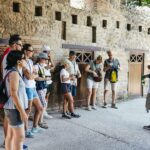
This is built for a long, satisfying day starting at 9:30am, with pickup from cruise ports in Campania or your hotel/meeting spot in Naples, Salerno, and the Amalfi Coast. The walking is real in one spot—Cuma’s acropolis involves about a 10-minute uphill climb—so pack comfortable shoes and expect a full schedule.
In This Review
- Phlegrean Fields in one circuit: what this day really gives you
- Cuma acropolis: Apollo’s Temple ruins and the Sybil’s Cave
- Baia Castle of Alfonso d’Aragona: terrace views plus museum time
- Roman Baths in Baia: seeing the everyday side of Roman luxury
- Pozzuoli’s Flavian Amphitheater and the volcanic lakes of the area
- Pickup, private transport, and an 8-hour rhythm that works
- Price and what you’re actually paying for (and what you’re not)
- The guides: where the experience goes from stones to meaning
- Small risks worth planning for
- Who should book this Phlegrean Fields tour?
- Should you book? My practical take
- FAQ
- What places are visited on this Phlegrean Fields tour?
- How long is the tour?
- What time does the tour start?
- Is pickup included?
- Is this a private tour?
- What’s included in the price?
- Are meals included?
- What should I wear or bring?
- What is the cancellation policy?
Phlegrean Fields in one circuit: what this day really gives you
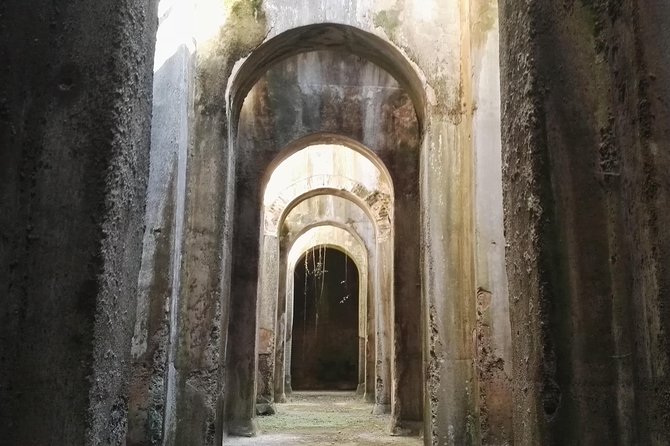
The Phlegrean Fields (Campi Flegrei) are volcanic country with a Roman-era track record, and this tour strings the story together in a smart order. You move from Cuma’s early Greek-flavored legend and temple remains to Baia’s Roman luxury vibe, then on to Pozzuoli’s big public works and nearby volcanic lakes.
What I like is the practical structure: full-day transportation by a private minivan plus a professional driver means you’re not wasting your day guessing buses or sharing taxis with strangers. And since the tour is private (only your group), the guide can slow down when the terrain or questions call for it.
Not sold on this one? A few more Naples tours sit just below.
- From Naples: Sorrento, Positano & Amalfi – Small Group Tour★ 4.7 · 14,599 reviews
- From Naples: Pompeii Ruins & Mount Vesuvius Day Tour★ 4.3 · 11,459 reviews
- From Naples: Sorrento, Positano & Amalfi Coast – Small Group Tour★ 5.0 · 8,643 reviews
- Naples: Catacombs of San Gennaro Entry Ticket & Guided Tour★ 4.6 · 7,941 reviews
Cuma acropolis: Apollo’s Temple ruins and the Sybil’s Cave
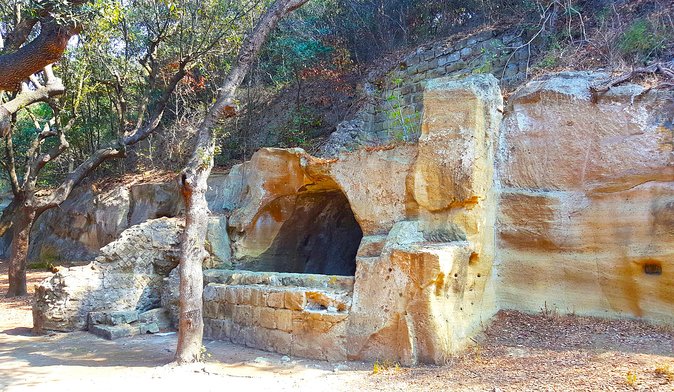
Cuma is where the day turns from scenic to story-rich. You start at the acropolis, which is reached with that short but noticeable uphill walk (plan on about 10 minutes). Once you’re up there, the ruins of Apollo’s Temple give you the kind of site where you can actually picture the religious and political importance of the place.
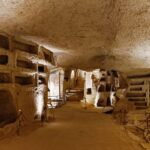
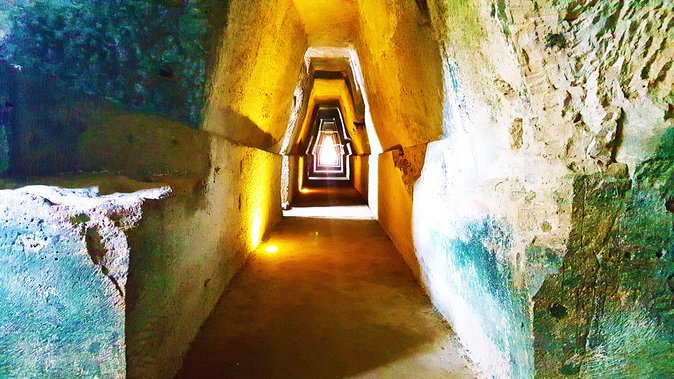
Then comes the star stop for many history-minded people: the Cave of the legendary prophetess Sybil. This is the sort of location where the guide’s job matters. The difference between wandering and understanding is huge when you’re looking at a ruin connected to a famous legend. If you want the Phlegrean Fields to make sense beyond photos, this is the moment to pay attention.
Important caution: the Cuma acropolis is exactly the kind of place that can be affected by closures on the day. If Cuma is your must-see, build in flexibility and don’t plan your whole trip around just that one ruin.
Baia Castle of Alfonso d’Aragona: terrace views plus museum time
Baia is a contrast machine. Instead of a high, windier acropolis, you’re at a site designed for viewpoints and Roman-era prestige. One highlight here is the castle built by Alfonso d’Aragona, which now houses the archaeological museum of Baia.
The museum setting matters because it turns scattered remains into a clearer picture. You’re not just looking at stones; you’re walking through the story that explains why the Roman world cared so much about this area.
After museum time, you’ll get a chance to take photos and enjoy the panorama from the castle terrace. Even if you’re not a “sunset person,” this terrace helps you read the region in your head—where water, slopes, and ruins connect. That’s the kind of context that makes the next stop more satisfying.
Roman Baths in Baia: seeing the everyday side of Roman luxury
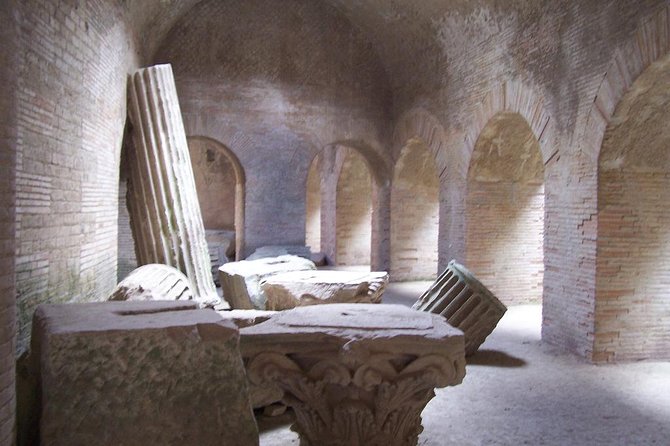
Between the castle and the volcanic surroundings, Baia’s archaeological park with Roman Baths is where the tour earns its keep. Roman baths weren’t just for hygiene; they were social space, status space, and a place to spend real time.
In practical terms, you’ll have the chance to see spectacular bath-related ruins and get a guided explanation for what you’re looking at. This is a good stop for photographers, yes, but it’s also a great stop for anyone who likes architecture details—spaces, room patterns, and how the site would have worked as part of daily life.
One subtle benefit: Baia tends to be where the day can slow down. In at least one documented case of partial closures elsewhere, the tour ended up spending more time in Baia, and that makes sense. The area is packed with enough to justify extra minutes.
Pozzuoli’s Flavian Amphitheater and the volcanic lakes of the area
Pozzuoli brings you back to big-scale Roman public life. The Flavian Amphitheater is one of the most important amphitheaters in the world, and you’ll see it as a major anchor point of the region’s Roman story.
This stop can carry risk, though, because the amphitheater has also been reported as closed on some days. If you’re booking for the amphitheater specifically, keep your expectations flexible. You’ll still get a full day with other sights, but access can change.
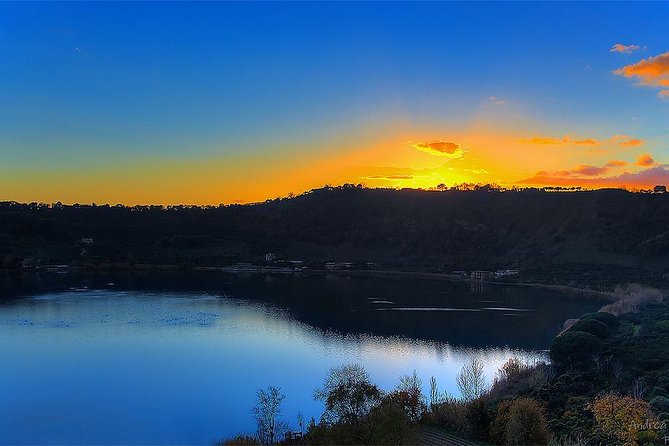
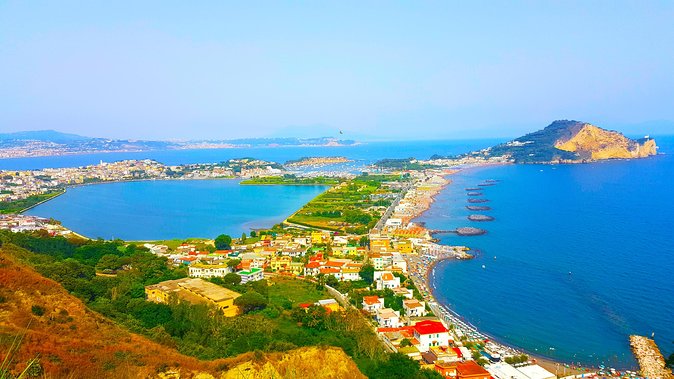
Next, you’ll get glimpses of the volcanic lakes: Lago d’Averno, Fusaro, and Miseno. The tour doesn’t position these as long hikes or long stays; it’s more like smart regional context from the road. That’s a good approach if you want to see multiple areas in one day without burning hours trying to cover volcanic terrain on foot.


Pickup, private transport, and an 8-hour rhythm that works
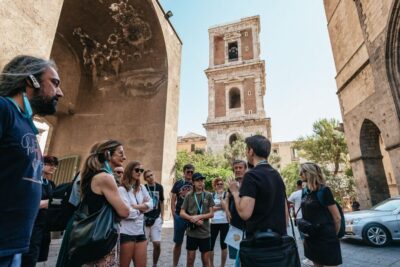
The logistics here are a major part of the value. Pickup is offered at every cruise port in Campania and also from your hotel or other Naples/Salerno/Amalfi Coast meeting locations. That single detail can save you a lot of stress, especially if you’re juggling cruise schedules or limited time in the city.
Transportation is handled with a private Minivan and a professional driver, and you’re dropped off at the start location when the day ends. Full-day movement like this is what keeps Cuma, Baia, and Pozzuoli realistic in one sitting.
The schedule is also guided by the reality of the terrain. There’s that uphill walk at Cuma, plus you’ll be on your feet through ruins and museum spaces. If you’re the kind of traveler who likes to stop for photos and ask questions, a guided private format tends to feel more relaxed than squeezing the same stops into public transport timelines.
Price and what you’re actually paying for (and what you’re not)
The price is $618.08 per person for an approximately 8-hour experience. That sounds steep until you break down what’s included.
Included costs cover guidance for the whole day, full-day private transport (driver, fuel, parking, local taxes), and admission fees for the Phlegrean museum and sites included on the tour. Meals are not included.
So you’re paying for time-saving pickup, a private vehicle, and paid access at the key sites. If you’re traveling with a small group, this can look much more reasonable because you’re not just buying a guide—you’re buying transportation and entrance fees bundled into one plan.
If you’re a solo traveler, it can feel like a big spend. In that case, ask yourself if you’ll use all the coverage: Cuma (temple + Sybil cave), Baia (castle museum + terrace + baths), and Pozzuoli (Flavian amphitheater) plus the volcanic lake glimpses. If you’re mainly chasing one or two sites, the value may not feel as strong.
The guides: where the experience goes from stones to meaning
A good guide makes ruins readable, and this tour seems to lean into that. One named guide associated with the area, Gennaro, is described as bringing a strong love for the Baia and Cuma zone, with thorough knowledge of geology, history, and archaeology.
That geology angle matters in the Phlegrean Fields. Volcanic terrain shapes where people built, where water pooled, and why the myths stuck. If your brain connects the dots between rock type and Roman decisions, you’ll get more out of every stop.
Even when access changes because of closures, a solid guide can still help you make sense of what you’re seeing and why the area matters.
Small risks worth planning for
This is a single-day circuit, and that means you’re exposed to one real risk: site closures. There’s at least one documented case where the acropolis at Cuma and the Flavian Amphitheater at Pozzuoli were closed, shifting more time to Baia. The driver and guide still did well, but it shows you why you should treat this as a flexible highlights tour, not a guaranteed checklist.
If Cuma’s Sybil cave and Pozzuoli’s amphitheater are the top two reasons you booked, I’d still book—but I’d plan your day elsewhere so you’re not left feeling stuck if those specific entries aren’t available.
Who should book this Phlegrean Fields tour?
You’ll likely love it if you want a guided, multi-site day that covers major ruins without you doing logistics math. It also suits cruise travelers who need pickup and drop-off handled cleanly.
It’s a good fit for people who care about context—legends tied to archaeology, Roman bath culture, and how volcanic geography frames history. If you’re traveling with a group that wants one plan and minimal coordination, the private format can feel like a quality-of-life upgrade.
You might want to think twice if you’re dealing with mobility limits. Most travelers can participate, but the Cuma acropolis includes a short uphill walk, and the rest of the day involves walking through ruins and museum areas. Comfortable shoes are not optional here.
Should you book? My practical take
If you’re looking for a day that turns the Phlegrean Fields from a name into a set of places with real meaning, this tour is a strong choice. The value comes from the bundled admission fees, private transport, and full-day guidance—plus pickup that’s friendly for cruise schedules and visitors staying across Naples, Salerno, and the Amalfi Coast.
Book it if your priority is to see Cuma + Baia + Pozzuoli with a guide who can explain what you’re looking at, not just point at it. Just keep one thing in mind: closures can happen at major stops like Cuma’s acropolis or the Flavian Amphitheater, so approach it as a highlights day with smart regional coverage, not a locked-in guarantee for every single site.
FAQ
What places are visited on this Phlegrean Fields tour?
You’ll visit the acropolis of Cuma (Apollo’s Temple and the Cave of the legendary prophetess Sybil), Baia (Alfonso d’Aragona castle and the archaeological museum of Baia, plus the archaeological park with Roman Baths), and Pozzuoli (the Flavian Amphitheater). You’ll also get glimpses of volcanic lakes d’Averno, Fusaro, and Miseno.
How long is the tour?
The duration is about 8 hours.
What time does the tour start?
The tour starts at 9:30am.
Is pickup included?
Yes. Pickup is offered at every cruise port in Campania, as well as from the client’s hotel or other meeting locations within Naples, Salerno, and the Amalfi Coast.
Is this a private tour?
Yes. It’s a private tour/activity, and only your group will participate.
What’s included in the price?
Included are guidance for the full duration, full day transportation by a private minivan with a professional driver (including pickup and drop-off), local taxes, fuel and parking, and admission fees for the Phlegrean museum and sites included.
Are meals included?
No, meals are not included.
What should I wear or bring?
Wear comfortable shoes, especially because climbing the acropolis of Cuma involves a 10-minute walk uphill.
What is the cancellation policy?
Free cancellation is available. You can cancel up to 24 hours in advance for a full refund, and cut-off times are based on local time. If you cancel less than 24 hours before the start time, the amount paid will not be refunded.