Review · NAPLES
Pastum and Buffalo Mozzarella Drive
Paestum hits you fast, in a good way. I like how this day pairs Paestum’s Doric temples with a real food stop for buffalo mozzarella in Campana. It’s also the kind of trip that works without you needing to study ancient architecture first. One thing to consider: it’s mostly a driver-guided day, so if you want a dedicated on-site archaeologist for every stop, you may want the optional add-on.
The best part is the logistics that feel made for regular humans: hotel or port pickup in Naples, then comfortable air-conditioned driving with live commentary in English. After all the stones, you get a chance to slow down by the sea with Paestum’s beach time. If you’re sensitive to long travel days, plan for an early start and expect a full 8-ish hours.
In This Review
- Key moments that make this day tick
- Paestum’s Doric temples: what you’ll see and how to read it
- The Roman Paestum layer: amphitheatre and forum remains
- The National Archaeological Museum: artifacts that do the explaining
- Paestum beaches: a smart way to end the day
- Buffalo mozzarella in Campana: why this stop feels worth it
- How the Naples to Paestum day really runs (pickup, timing, comfort)
- Coming from Rome: a schedule that can work
- The value question: is $291.82 per person a fair deal?
- Who this tour suits best (and who should skip it)
- Should you book this Paestum and mozzarella day trip?
- FAQ
- What language is the tour offered in?
- Do I get hotel or port pickup in Naples?
- How long is the tour and what time does it start?
- Is there an admission fee included for Paestum and the museum?
- Is this tour private or shared?
- Does the tour run in bad weather?
Key moments that make this day tick
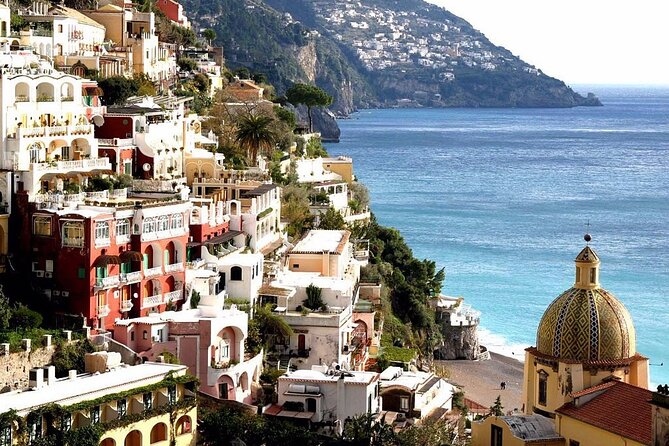
- Doric clarity at Paestum: The Temple of Neptune is the standout and the easiest to “read” even with zero background.
- Hera and Athena in two flavors of Greek: Temple of Hera for its massive oldest feeling, and Athena for Doric-and-Ionic mix on a hill.
- The Museum that explains the ruins: Highlights include the Tomb of the Diver and Paestum’s archaic metopes.
- Campana mozzarella with DOP focus: You’re aiming for the real deal, not a generic cheese stop.
- Beach time after history: Golden sand and clear water, so the day ends with a breather.
Not sold on this one? A few more Naples tours sit just below.
- From Naples: Sorrento, Positano & Amalfi – Small Group Tour★ 4.7 · 14,599 reviews
- From Naples: Pompeii Ruins & Mount Vesuvius Day Tour★ 4.3 · 11,459 reviews
- From Naples: Sorrento, Positano & Amalfi Coast – Small Group Tour★ 5.0 · 8,643 reviews
- Naples: Catacombs of San Gennaro Entry Ticket & Guided Tour★ 4.6 · 7,941 reviews
Paestum’s Doric temples: what you’ll see and how to read it
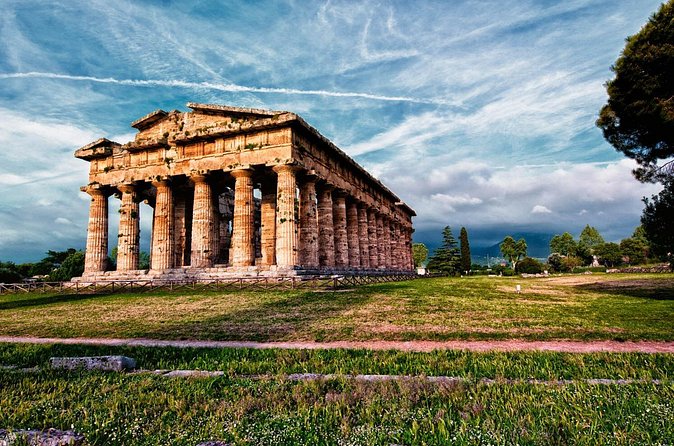
Paestum isn’t just a stop—it’s a crash course in early Greek temple design, laid out in a way that’s surprisingly visual. You’ll visit the main temple zone first, and it helps to look for how the columns carry the whole structure. Start with the Temple of Neptune (5th century BC). It’s described as the largest and best preserved, so it’s the one that makes everything else click.
Next is the Temple of Hera (Basilica) from the 6th century BC. If Neptune feels like the big star, Hera feels like the tough older sibling: massive columns, older proportions, and a stronger sense of age. Then comes the Temple of Athena (5th century BC), positioned on a hill. That setting matters—give yourself a moment to take in the slope and the view lines, because the temple’s Doric-and-Ionic elements make more sense when you can see how the building sits in space.
The Roman Paestum layer: amphitheatre and forum remains
After the Greek temples, the day broadens into the Roman era. You’ll see remains tied to the Roman Forum and an amphitheatre—proof that Paestum didn’t freeze in time after Greece. This part is valuable because it helps you understand continuity: the site stayed important, even as the culture around it changed.
Look at the paving and the fragments of public buildings and try to picture traffic and crowds where you’re standing now. Even if you don’t have an archaeologist walking you through every stone, the live on-board commentary usually gives you the story beats you need to make the ruins feel less like random rock.
The National Archaeological Museum: artifacts that do the explaining
If temples are the “wow,” the National Archaeological Museum of Paestum is the “wait, I get it.” The museum is right near the park, so you don’t lose your momentum after walking outside.
One highlight is the Tomb of the Diver. It’s noted as the only example of Greek funerary painting with symbolic scenes. That’s a big deal because funerary art is often more about what people believed than what they built—so you get a different window into ancient life. You also see archaic metopes tied to the Sanctuary of Hera near the mouth of the Sele, plus vases, statues, and everyday artifacts that help fill in the gaps between grand architecture and daily routines.
Here’s how I’d use your time in the museum: don’t race. Spend a few minutes at each major piece, then zoom out and connect what you’re seeing to the temples outside. When the museum objects line up with what you walked through earlier, Paestum stops being a checklist and becomes a place.
Paestum beaches: a smart way to end the day
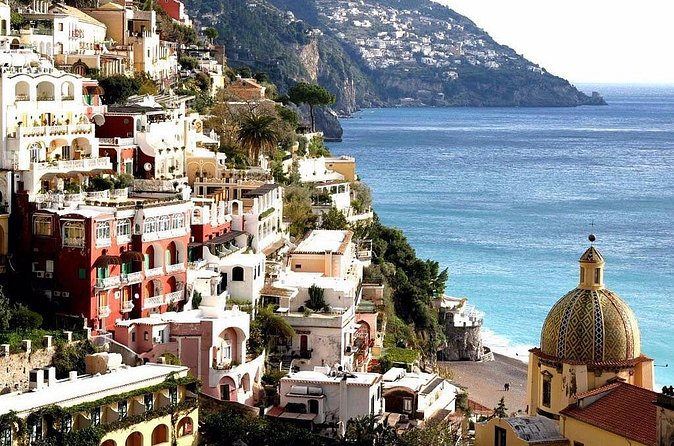
Once you’ve had your fill of stone and sculpture, the beaches are a reset button. You’ll have time to relax on golden sand with crystal-clear sea views. This isn’t just a nice extra—it’s practical. Paestum is warm in southern Italy, and a beach break helps you come out of the day without feeling fried.
If you want the most from this part, keep your beach plan simple: water, shade if you can find it, and a quick swim if conditions feel inviting. Wear footwear you can walk in on uneven ground, since you’re shifting from archaeological areas to shoreline paths.

Buffalo mozzarella in Campana: why this stop feels worth it

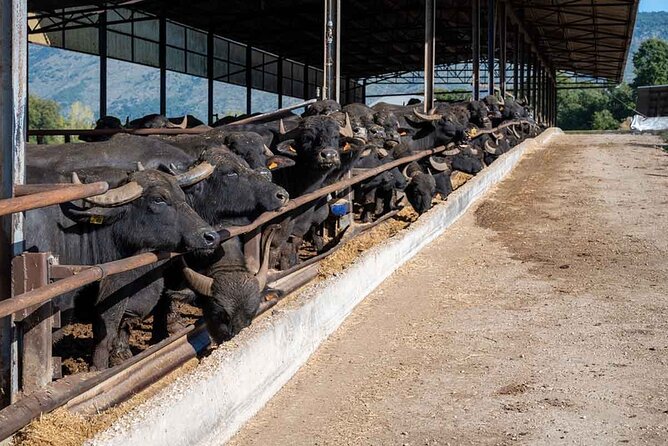
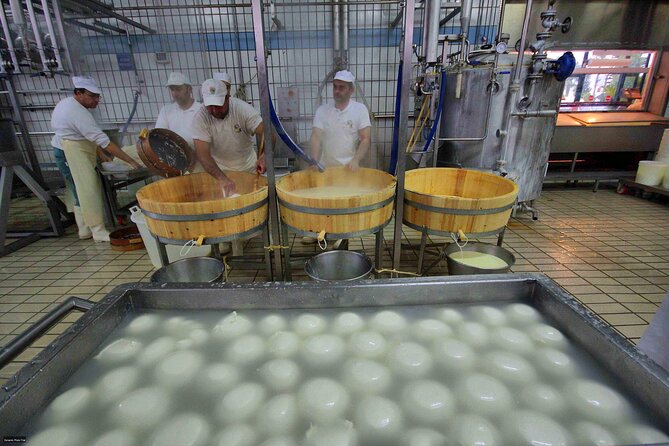
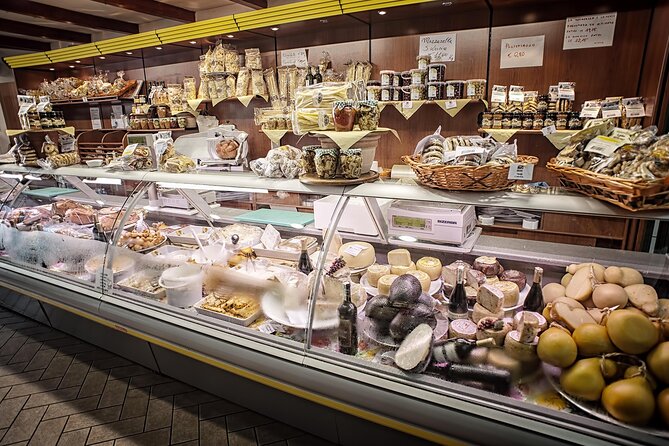
The food stop is where the day turns from sightseeing to taste. The tour is built around prestigious DOP-certified mozzarella in Campana, which matters because DOP is a real quality and origin marker. You’re not just grabbing something for lunch—you’re aiming for the region’s signature product.
In my experience of how these stops usually work, the best cheese moments aren’t about fancy wording. They’re about texture and freshness. Buffalo mozzarella is at its best when it’s properly handled and served soon after preparation. If the stop includes time to sit and enjoy, that’s a win, because mozzarella tends to shine more when you can actually pay attention to it.
One of the standout details from this experience: you may get an extra coastal pause and a limoncello toast depending on how the day flows. That kind of small, regional touch is often what makes a food stop feel like part of the landscape rather than a rushed detour.
How the Naples to Paestum day really runs (pickup, timing, comfort)
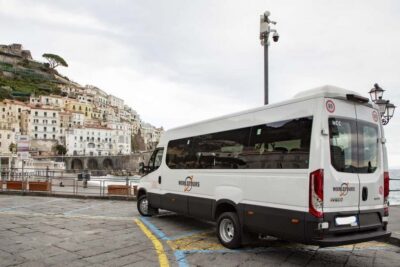
This is an 8-hour day with Naples pickup and drop-off from designated meeting points. The pickup window noted is 6:00 AM to 11:00 AM, which tells you to be ready early-ish. The ride itself is in a deluxe air-conditioned vehicle, and that’s not a small detail—southern Italy heat can turn a “short walk” into a sweat session fast. Air-con makes the route tolerable and keeps your energy for the ruins and the museum.
Communication is covered too. You’ll have an English-speaking driver/guide with live commentary on board, and the service is described as smart casual. That means you don’t need to dress like you’re headed to a museum opening, but you should wear comfortable shoes for temple-area walking.
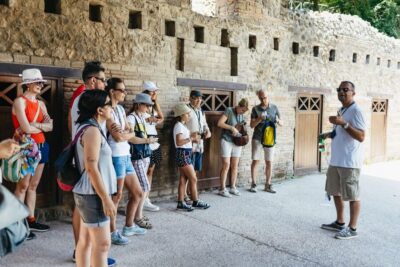
You should also know the structure of guiding: the day runs with a driver/guide for the trip, but it’s “driver only” for visits to attractions, with an archaeological tour guide listed as optional. Translation for your planning brain: you’ll get plenty of context through commentary, but you won’t necessarily have a second specialist on-site explaining every artifact minute-by-minute.
Coming from Rome: a schedule that can work
If you’re basing yourself in Rome, this day trip can fit with a direct plan. The suggestion provided is to take the Freccia Rossa fast train from Rome Termini departing at 7:35 AM and arriving Naples Centrale at 8:45 AM. The pickup then happens at Naples train station, and at the end of the day you’ll be returned to Naples where you can catch a suggested train back to Rome departing Naples around 6:30 PM.
This is a realistic approach because it aligns with the idea that you’ll be back in Naples and not stuck trying to transfer late at night. If your train choice changes, just make sure you have enough buffer to return on time.
The value question: is $291.82 per person a fair deal?

At $291.82 per person for roughly 8 hours, the value hinges on what’s included versus what you’ll pay on the ground.
What you do get:
- Deluxe air-conditioned vehicle
- English-speaking driver/guide with live commentary
- All tolls, parking, petrol, and taxes
- Pick-up and drop-off from designated points
What you don’t get:
- Entrance fees where applicable
- Driver only for visits to attractions (with an optional archaeological guide)
There’s one detail that’s worth double-checking before you assume everything is covered: the itinerary notes Admission Ticket Free, but the general inclusions say entrance fees where applicable aren’t included. That usually means some entries might be covered while others aren’t, or it depends on the specific site rules on the day. Before you go, confirm what’s free and what isn’t, especially for the museum and any paid areas in Paestum.
If you compare mentally to doing this on your own—renting a car, paying for parking, handling train schedules, and then figuring out how to make Paestum meaningful without a guide—the packaged approach feels easier. You’re paying for time, coordination, and context.
Who this tour suits best (and who should skip it)
This tour is a great match if you want one full day that hits both culture and food without juggling multiple tickets and transit plans. You’ll enjoy it most if you like:
- Big outdoor sights with photo-friendly structure (temples are made for this)
- A museum stop that adds meaning, not just a quick glance
- A Campana mozzarella lunch focus rather than random snacking
It may be less ideal if you’re the type who wants deep, step-by-step explanations inside each site. Since the format is driver-led with driver only for visits, you might want the optional archaeological guide if that’s your priority.
Also, because it’s private and timed tightly to return you to Naples (including ensuring timely return to the port), it’s not the best fit if you want total freedom to linger. The day is built to move, with a beach breather at the end.
Should you book this Paestum and mozzarella day trip?
I’d book this if you’re staying in Naples and you want an efficient, meaningful day that goes beyond a drive-by. The mix of Paestum temples, a museum with major artifacts like the Tomb of the Diver, and a DOP buffalo mozzarella focus in Campana is a strong combination for both your eyes and your appetite.
Hold off or ask questions first if you care about on-site specialist guiding at every stop, or if entrance costs are a big part of your budget. Also, confirm what the Admission Ticket Free note actually covers, since the broader inclusions say entrance fees where applicable aren’t included.
If you want a day that feels “Southern Italy in one shot”—ruins, museum, and cheese—this is a solid bet.
FAQ
What language is the tour offered in?
The experience offers English with a live commentary on board and an English-speaking driver/guide.
Do I get hotel or port pickup in Naples?
Yes. Pickup is offered from your Naples hotel, the station, or the port, and the tour includes pick-up and drop-off from designated meeting points.
How long is the tour and what time does it start?
The duration is about 8 hours. The pickup hours listed are 6:00 AM to 11:00 AM, depending on the booked schedule.
Is there an admission fee included for Paestum and the museum?
The information provided says admission ticket free in the tour overview, but it also notes that entrance fees where applicable are not included. You should confirm which specific entries are covered.
Is this tour private or shared?
It’s a private tour/activity, so only your group participates.
Does the tour run in bad weather?
Yes, it operates in all weather conditions, so dress appropriately for the day.