
Review · NAPLES OLD TOWN TOURS
Naples The City of Legends History and Forbidden Cults
Naples has a talent for legends. This 3-hour walking tour mixes big-name landmarks with stories of history and forbidden cults, starting at Piazza Municipio and finishing at Palazzo Reale. Expect a smart route through the city center, with just enough time to look up, ask questions, and keep moving.
I love how the walk links Naples’ power buildings in a way that makes the geography click: Castel Nuovo (Maschio Angioino), Palazzo San Giacomo, and the royal core. I also love the stop at Teatro San Carlo, since it explains why this opera house earned its long reputation, not just its impressive façade.
One possible drawback: you’ll cover a fair amount of ground in a busy area, so bring comfortable walking shoes and be ready for uneven sidewalks and crowd flow.
In This Review
- Key highlights you’ll care about
- Walking Naples like a story, not a checklist
- Piazza Municipio: where the walk gets its bearings
- Castel Nuovo (Maschio Angioino): medieval fortress power
- Palazzo San Giacomo and the city’s governing heartbeat
- Teatro San Carlo: the opera house that still matters
- Piazza del Plebiscito: scale, politics, and a walk you can feel
- San Francesco di Paola colonnades: geometry that holds attention
- Palazzo Reale: the royal ending that ties the story together
- The snack break: coffee and sfogliatella
- Price and value: what $32.10 really buys you
- Group size, pace, and the guide effect (Mira and Maria)
- Practical logistics: meeting point, mobile tickets, and getting there
- Who should book this tour, and who might skip it
- Should you book Naples The City of Legends History and Forbidden Cults?
Key highlights you’ll care about
- Maschio Angioino at human scale: you get close enough to notice medieval fortress character, not just big walls.
- Teatro San Carlo for architecture lovers: a major opera house where the building tells part of the story.
- Piazza del Plebiscito’s scale and sound: the huge square feels different under your feet and ears.
- San Francesco di Paola colonnades: look up and track the geometry as you pass.
- Royal finish at Palazzo Reale: a powerful, outward-looking ending that ties Naples’ royal era together.
- Small group size (max 12): easier conversation with the guide and less waiting around.
Deeper into the old center of Naples
- Naples: Downtown Tour with Veiled Christ & St Clare Tickets★ 4.9 · 6,462 reviews
- Naples: Origins, Cults and Legends Old Town Guided Tour★ 4.8 · 749 reviews
- Naples: The Holy Mile 3-Hour Guided Tour★ 4.9 · 711 reviews
- Naples: Guided Pub Crawl in the Old Town★ 4.7 · 300 reviews
Walking Naples like a story, not a checklist
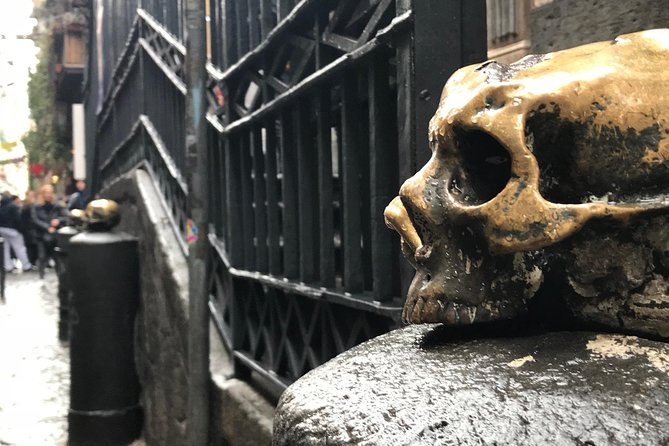
Naples can feel like three cities at once: the postcard layer, the real street layer, and the legend layer. This tour leans into that last part. The route is built around major landmarks, but the guiding thread is how Naples remembers itself through tales, including the darker side hinted at in the tour name: forbidden cults and legend-world stories.
I like tours that help you connect dots, and this one does. You’re not just staring at buildings; you’re learning what made these places matter to whoever held power at the time. That context makes your photos better, but more importantly, it makes your walk feel purposeful.
Piazza Municipio: where the walk gets its bearings
The tour starts at Piazza Municipio, a natural launching pad for Naples’ center. You’re positioned right by two standout blocks: Castel Nuovo and Palazzo San Giacomo, which makes the first minutes useful even if you’re jet-lagged.
Palazzo San Giacomo is noted here for its Renaissance architecture, and that’s exactly what to look for as you begin: smoother lines and more formal structure than you’ll see in the fortress later. I also like the way the start location sets you up for an easy flow into the rest of the route, rather than doubling back through the same streets.
If you’re the type who likes to get your bearings fast, this is a good start. You begin with a view that helps you understand where Naples’ political and royal energies have historically pointed.
Castel Nuovo (Maschio Angioino): medieval fortress power
Next comes Castel Nuovo, also called Maschio Angioino. Even without going into heavy detail, a medieval fortress communicates its job immediately: protect, control, intimidate. That’s why it works so well on a walking tour. Up close, you can feel the massing of the structure and understand why this was a center of gravity.
This stop is also a great moment for your eyes to adjust. Naples has plenty of architectural styles, but you’ll notice how a fortress changes the mood. It’s not decoration-first. It’s function-first, and you can see that in the design choices.
One practical tip: take a slow second here before you move on. The rest of the tour has plenty of “look at this” moments, but the fortress is where you set the tone for everything that follows.
Palazzo San Giacomo and the city’s governing heartbeat
From there you move toward Palazzo San Giacomo again in the bigger sense: the seat of municipal government. Even if you’ve never been obsessed with civic architecture, it helps to see where daily decision-making used to align with the city’s grand image.
This is one of the tour’s strengths: it balances the dramatic (fortress, opera house, royal palace) with the everyday governing core. You get a sense of how Naples’ identity isn’t only about spectacle; it’s also about administration, order, and public life.
If you like learning the “who ran the place” angle, this stop adds meaning to the walk instead of just adding another pretty building.
More ways to take in Naples in a day



Teatro San Carlo: the opera house that still matters
Teatro San Carlo is one of the oldest and most prestigious opera houses in the world, and the tour gives you a chance to look at it in a way that goes beyond name recognition. You’ll admire its neoclassical façade, then connect what you see to why it became a major performance landmark.
I love an opera-house stop when it answers a real question: why does this building keep drawing people? In this case, the architecture is part of the explanation. You see it as a formal stage for big cultural moments, not just a theatre exterior to pass by.
Also, this stop is where I’d expect you to pause for a longer look. It’s the kind of place where you’ll want to look up, step back a little, and take in the symmetry and proportions before your group moves on.
Piazza del Plebiscito: scale, politics, and a walk you can feel
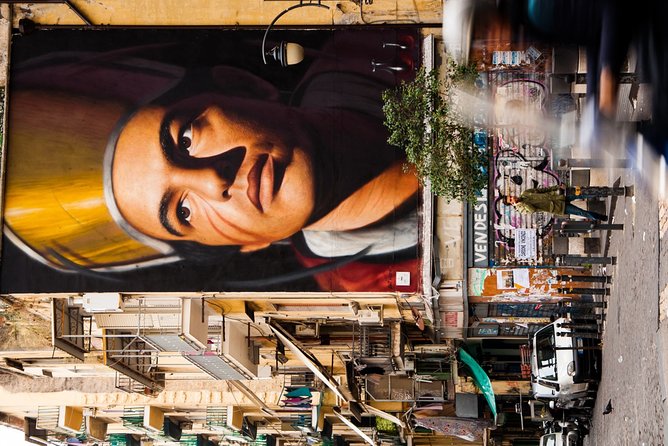
Piazza del Plebiscito is the giant square in the center of Naples, famous for political gatherings and major ceremonies. The tour frames it as a place where public life and big decisions spilled into the open air.
Here’s something practical and sensory that I think you’ll notice: the square’s surface feels smooth underfoot, and the sound carries. If you walked the space blindfolded, you’d still pick up on footsteps, voices, and the possibility of street music depending on what’s happening that day. It’s not just visual size; it’s atmosphere.
You also get the surrounding architectural anchors:
- The Royal Palace presence on one side
- The Church of San Francesco di Paola with its majestic colonnades
Look at the colonnades as you pass them. The repeated columns give you a rhythm that makes the square feel even wider, like the architecture is guiding your eyes across the distance.
San Francesco di Paola colonnades: geometry that holds attention

This is the moment to train your eye on structure. The Church of San Francesco di Paola is singled out for its grand colonnades, and that’s exactly what you should focus on: the repeating forms and how they frame the street-level experience.
A lot of churches in old cities can blur together if you only glance. Colonnades are different. They create a strong pattern you can track, and it makes the walk feel more intentional, like you’re measuring the space with your eyes.
If you’re an architecture person, you’ll enjoy this segment. If you’re not, you’ll still get a win because the design is bold and easy to read.
Palazzo Reale: the royal ending that ties the story together

The tour wraps at Palazzo Reale, the Royal Palace. This is a satisfying finish because the façade tells you what the royal era wanted Naples to look like: polished, powerful, and built for public presence.
The exterior reflects Bourbon kings’ royal heritage and gives you a different kind of ending than a church or museum. It’s outward-facing, so you end with your eyes on authority rather than on interior artifacts.
I like endings that connect back to earlier stops, and this one does. You started near the municipal pulse and the fortress scale, and you finish with the royal statement. You can feel the storyline tighten as you approach the palace.
The snack break: coffee and sfogliatella
The tour includes coffee and sfogliatella, which is a smart way to handle Naples’ walking rhythm. You get a small reset without the awkward question of where to stop for something you might not find quickly.
Two practical notes for you:
- Since food and drinks aren’t otherwise included, plan to bring water if you tend to get thirsty on walks.
- If you’re sensitive to caffeine, take it easy with the coffee part and see how you feel after.
This included bite also keeps the group moving. You’re not waiting around for a sit-down meal, which helps the 3-hour timing stay comfortable.
Price and value: what $32.10 really buys you
At $32.10 per person, this is priced like a classic city-center walking experience. The real question is what you get for that money, not just the number.
You’re getting:
- A compact route through major landmarks
- A small group capped at 12
- A live guide with a story-focused angle (legends and forbidden cult themes tied to where you stand)
- An included taste of Naples: coffee and sfogliatella
In a city like Naples, the value often comes from orientation and context. You can wander on your own, but you’d likely miss why these stops connect and how the guide’s narrative helps you read the city’s power centers.
Timing matters too. The average booking window is about 86 days in advance, which suggests demand can be steady. If you’re traveling in peak season or on a weekend, earlier booking is a safe move so you’re not stuck choosing a less convenient slot.
Group size, pace, and the guide effect (Mira and Maria)
A small group matters here because the area is active and the sights are close enough that you can actually talk without shouting. The max is 12 travelers, so questions don’t feel like an interruption.
The reviews highlight two guide styles that you’ll benefit from:
- Mira’s approach, described as leading through Naples’ winding streets with a local perspective
- Maria’s pace, described as not rushing and staying easy to converse with
That combination tends to produce a tour that feels human. You’re walking through history, but you’re also getting to stop, ask what something means, and keep your own pace within the group’s flow.
Practical logistics: meeting point, mobile tickets, and getting there
You’ll meet at McDonald’s Via Medina, Piazza Municipio 37/38/39 and the activity ends back at the meeting point. That loop is convenient because you’re not stranded far from where you started.
You’ll use a mobile ticket, so have it ready on your phone before you arrive. Also, the meeting area is near public transportation, which helps if you’re combining this with other Naples plans.
Wear comfortable shoes. Naples sidewalks can be uneven, and this is a walking route through a busy core. If you want a smoother experience, arrive a few minutes early so you can settle and locate your guide before the group starts moving.
Service animals are allowed, and the tour notes that most travelers can participate, so it’s broadly approachable for visitors who can handle a steady walk.
Who should book this tour, and who might skip it
This tour fits best if you want:
- A 3-hour Naples introduction that hits landmark highlights
- A guide who explains the connections between civic life, royal influence, and major cultural sites
- A story layer that includes legend and forbidden-cults themes tied to real places
You might consider skipping or pairing it with something else if you’re expecting a museum-style, artifact-heavy tour. This is built around walking and looking outward at major façades and public spaces.
Should you book Naples The City of Legends History and Forbidden Cults?
If you want a Naples walk that feels guided, paced, and tied to meaning, I’d book this. For $32.10, the included coffee and sfogliatella help, but the bigger value is the route logic: fortress to municipal core to opera house to political square to royal palace, all in one coherent loop.
Book it early if you can, because small-group tours in this area tend to fill. And if you’re the kind of traveler who likes asking questions, this tour’s small size makes that part easy.
More City Tours in Naples




More Tour Reviews in Naples



More of the Old Center




More Naples tours, freshly reviewed



Naples Old Town Tours, compared.
 ★ 4.9Downtown Tour with Veiled Christ & St Clare TicketsFrom $576,462 reviews
 ★ 4.8Origins, Cults and Legends Old Town Guided TourFrom $31749 reviews
 ★ 4.9The Holy Mile 3-Hour Guided TourFrom $22711 reviews
 ★ 4.7Guided Pub Crawl in the Old TownFrom $18300 reviews
 ★ 4.8Old Town Tour with Veiled Christ and CathedralFrom $57276 reviews
 ★ 5.0Naples Walking Tour: Old Town and SpaccanapoliFrom $30200 reviews
 ★ 4.5City Center Walking Tour with Underground NaplesFrom $90143 reviews
 ★ 5.0Historic Center Tour & Veiled Christ Entry TicketsFrom $7097 reviews
Browse the lists this tour appears in