
Review · NAPLES STREET FOOD TOURS
Naples in Tuk Tuk between Panoramas and History and Street Food
Naples from a tuk tuk feels like magic. I love the mix of panoramic viewpoints and the street-food stop, so you get postcards and something you can actually eat. The main consideration: this is a hill-and-view route with short walks, so practical shoes matter, even if you’re mostly riding.
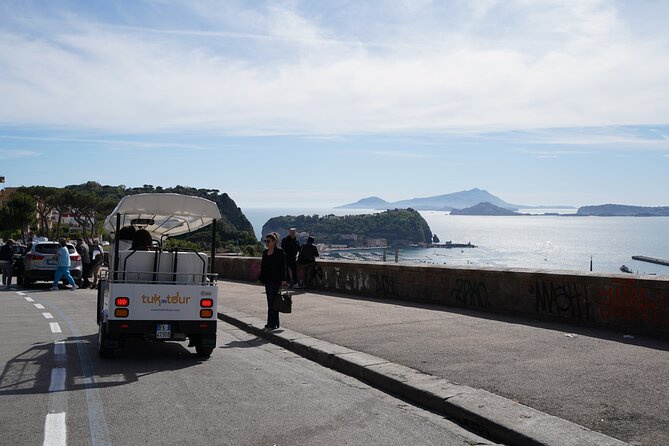
This private 3-hour ride is built for moving fast through real neighborhoods—Posillipo viewpoints, the sea front, the castles, and the Spanish Quarters. The guide I’m especially happy to see highlighted in the experience is Vitaliano, and the driver’s skill on narrow streets and steep stretches is a big part of why the whole loop feels smooth. It also earns a 5 out of 5 rating, with people praising the coast-and-island views and the way the streets connect.
In This Review
- Key highlights you’ll actually notice
- Why this tuk tuk route makes sense for Naples
- Panoramas on the way up: Via Petrarca and the gulf views
- Via Francesco Petrarca: the bus-stop selfie that people chase
- Sant’Antonio a Posillipo: church views that feel like postcards
- The sea-walk vibe: taralli, beer, and a Naples tradition
- Piazza Vittoria to Chiatamone: Lepanto meets designer streets
- Mount Echia and the “morning” connection: culture between monuments
- Borgo Marinari, Castel dell’Ovo, and the famous fountain
- Castel dell’Ovo’s egg legend: myth that sticks with you
- Maschio Angioino and Piazza Municipio: city-center power
- Piazza Bovio and Corso Umberto I: where Naples lines cross
- Inside Castel Nuovo: museum rooms you’ll want to notice
- Piazza S. Ferdinando and the streets that feed Naples
- Fiorenzano pizzeria trattoria: choose your street-food plate
- Quartieri Spagnoli to Maradona mural: the neighborhood spirit
- Corso Vittorio Emanuele to San Martino: top-of-the-city views
- Practical tips: shoes, timing, and getting the photos you want
- Price and value: what you get for $212.43 per person
- Should you book this Naples tuk tuk panoramic and street-food tour?
- FAQ
- How long is the Naples tuk tuk tour?
- Where does the tour start and end?
- Is this tour private?
- What food can I choose at Fiorenzano?
- Are admission tickets required for the main stops?
- Can I cancel for a full refund?
Key highlights you’ll actually notice
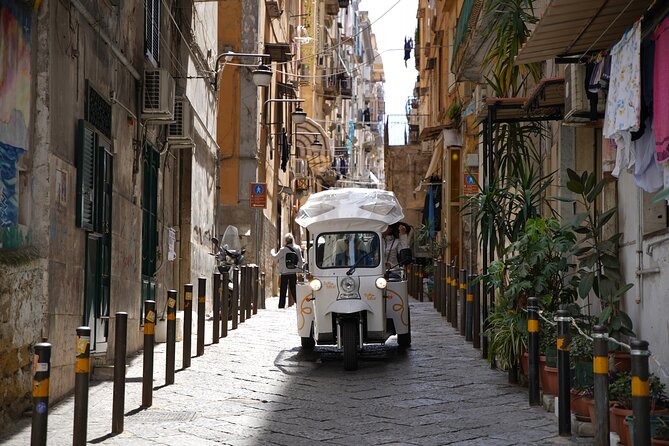
- Tuk tuk comfort on steep, narrow roads so you can focus on views instead of transit lines
- Photo stops with big payoff like Via Francesco Petrarca and scenic belvederes
- Castles and coastline in one loop, including Castel dell’Ovo and Maschio Angioino
- Fiorenzano street food choices paired with a soft drink (pizza, frying cups, or pasta omelette)
- Maradona artwork in Quartieri Spagnoli plus classic neighborhood names and landmarks
- Short but meaningful cultural stops such as Sant’Antonio a Posillipo and Certosa di San Martino
Still hungry? More to eat on the move in Naples
- Naples: Street Food Walking Tour with Local Guide★ 4.9 · 4,976 reviews
- Authentic Naples Street Food Tour With Local Expert Guide★ 5.0 · 2,402 reviews
- Naples: Guided Street Food Tour with Spritz★ 4.9 · 1,212 reviews
- Authentic Naples Food Tour with 8+ Tastings of Pizza, Wine & More★ 5.0 · 824 reviews
Why this tuk tuk route makes sense for Naples

Naples is big on contrasts: sea views beside old fortresses, designer shopping streets near lively local corners, and steep hills that can slow you down if you try to do it all by foot. This tour solves that by using a tuk tuk to link viewpoints with historic zones in a tight 3-hour loop.
The big win is rhythm. You’ll spend real moments looking out over the Gulf and the coast, then you’ll switch gears into architecture and street-level Naples. That’s also why a private group is a plus here—you’re not squeezed into a huge crowd trying to grab the same selfie angle.
One more practical benefit: several stops are listed with free admission tickets. That makes the time feel efficient, because you’re not bouncing between paid entrances just to get to the next panorama.
Panoramas on the way up: Via Petrarca and the gulf views
Early in the ride, you start with “wow” views that come from elevated streets and bends where the city suddenly opens up. One section described as an upper-middle-class street delivers surprising looks over Naples, and it sets the tone: you’re above the grid, seeing how the city spills toward the water.
Then you hit Via Orazio, one of the main arteries from which you can enjoy the whole Gulf—sea on one side, Naples spread out below. This is where the trip earns that coast-and-islands feeling. In the experience, people specifically call out views that can include Capri and Mount Vesuvius, depending on what the sky is doing that day.
Via Francesco Petrarca: the bus-stop selfie that people chase
Via Francesco Petrarca is a classic Naples viewpoint stop, and the reason it’s famous is simple: the view is good without trying too hard. You’ll ride curve after curve, and you don’t need a long hike to feel like you’ve climbed into the best seat in town.
At the “most beautiful bus stop in the world” spot, you’ll get a few minutes for selfies with the kind of framing that looks planned even when you didn’t know to plan it. The stop is listed at 5 minutes, so keep your camera ready and think before you shoot—this is a quick-in, quick-out moment.
Tip: if you want the best photos, step to the side where you get the horizon and the coastline. Naples streets are busy, so move with purpose once the driver drops you.
Sant’Antonio a Posillipo: church views that feel like postcards
Next up is Chiesa di Sant’Antonio a Posillipo, described as a sanctuary dating to 1642. What makes it special isn’t just the building—it’s the belvedere-style viewpoint from where you can see Naples in layers.
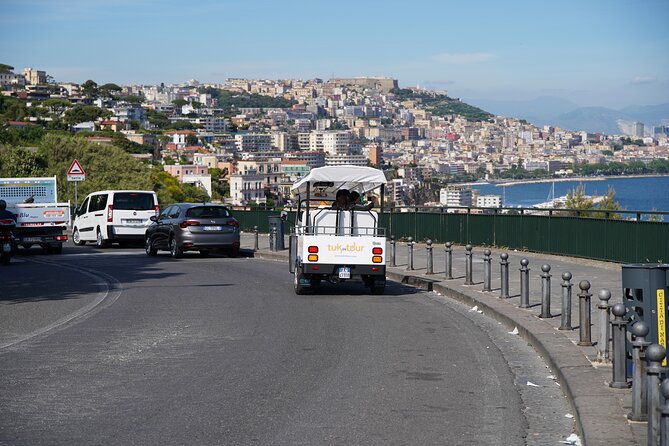
From this spot, the view is detailed and specific: Castel dell’Ovo, Vesuvius, Via Caracciolo, and Mergellina. In practical terms, that means you’re not just seeing “Naples.” You’re seeing recognizable anchors of the city, which makes later sights easier to connect.
This stop is listed for about 10 minutes with free admission. That’s enough time to look up, check the view, and take a few photos without turning it into a long church visit.
Other Naples outings worth a look before you book


The sea-walk vibe: taralli, beer, and a Naples tradition
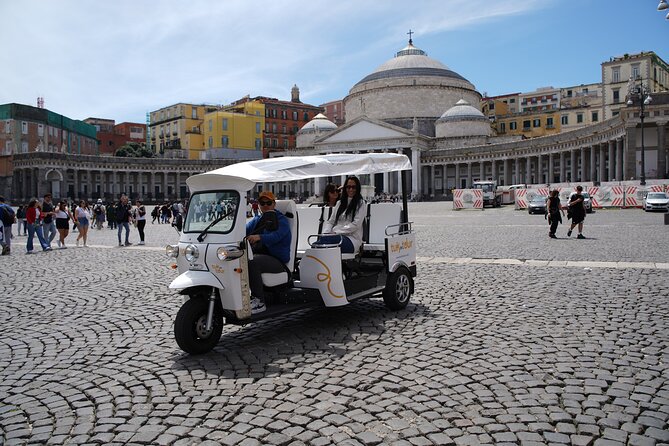
After the viewpoints, you shift closer to the water. There’s a walk described as Neapolitans’ favorite sea-side stroll—once lined with makeshift chalets for classic taralli and beer, now served up through more modern bars and kiosks.
This is one of those stops that works even if you’re not a “sit down and linger” person. You get the seaside atmosphere and a taste of how people actually spend time near the coast, not just what monuments look like from above.
If you’re hungry, this is a good moment to slow down and decide whether you want a quick snack now or save your appetite for Fiorenzano.
Piazza Vittoria to Chiatamone: Lepanto meets designer streets
Piazza Vittoria adds a different kind of context. It’s the entrance to a chic area with boutiques of famous designers and tailor shops, but it’s also an important crossroads. From here, the route connects toward Chiatamone and Via Partenope, where you’ll find the sailor’s village energy and places associated with higher-end dining.
There’s also a historical note tied to the space: it’s dedicated to the Battle of Lepanto, fought by Christianity against the Turks. The payoff for you is perspective—Naples isn’t only about ruins and sea views. It’s also about the way public squares carry stories forward.
Mount Echia and the “morning” connection: culture between monuments
As you continue along the route, you’ll pass by ancient palaces and references to major Naples institutions and legends. The Bourbon Gallery shows up in the description, along with Mount Echia and the old headquarters of the Morning of Naples (the morning newspaper).
There’s also mention of the source of the Mummarelle—one of those local details that helps Naples feel less like a checklist and more like a city with living traditions. Even when the stops are brief, this kind of context is what turns random architecture into something you can place.
Borgo Marinari, Castel dell’Ovo, and the famous fountain
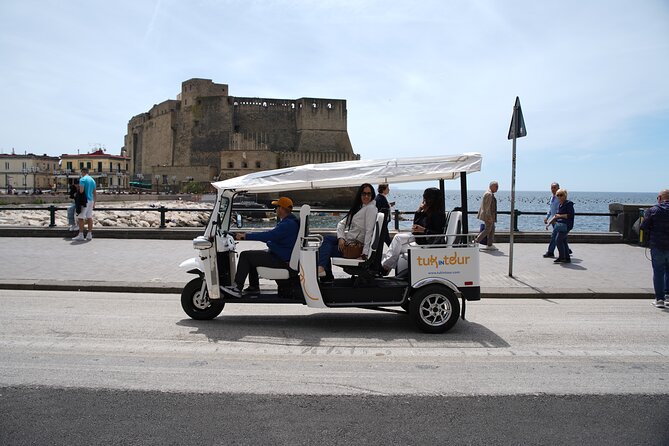
Now you move toward the sea in the Porto area. Borgo Marinari is where Castel dell’Ovo becomes hard to ignore—built on the islet of Megaride, it’s a visual anchor on the waterfront.
Another highlight near this area is the Giant’s fountain, attributed to Bernini and Michelangelo Naccherino. If you love Baroque details, this is a good moment to look closely rather than just take a wide shot. Fountains in Naples often look dramatic because of how they frame street life around them.
Castel dell’Ovo’s egg legend: myth that sticks with you
Castel dell’Ovo (also linked to Castel Marino in the legend) is described as a castle on the sea, on Megaride. The name is tied to a story about an egg hidden by Virgil inside a cage in the castle’s basement. The legend says that the egg’s location was kept secret with heavy locks, since it held the fate of the fortress.
Whether you treat legends as history or storytelling, it helps you understand why locals get emotionally protective of places like this. You’re not just looking at stone. You’re hearing a reason people feel attached.
Maschio Angioino and Piazza Municipio: city-center power
From the port and Castel dell’Ovo area, the route reaches Piazza Municipio for Maschio Angioino—also called Castel Nuovo. It’s described as a castle whose construction began in 1279, and it dominates the heart of the city.
Around this area, the description mentions the ramparts and a recently renovated port space that includes a beautiful elevated promenade. It’s a nice contrast: medieval fortifications beside modern reworkings of the waterfront.
Maschio Angioino is also noted as home to contemporary art installations. That matters because it gives you a Naples feeling that’s not frozen in time.
Piazza Bovio and Corso Umberto I: where Naples lines cross
Next is the area locals know as Piazza Borsa, but the official name is Piazza Bovio. The point of this stop is the way it splits the rectifilo Corso Umberto I, a main straight route overlooked by the prestigious Federico II University.
This isn’t a stop you linger at like a museum. It’s more about orientation. Once you’ve seen this crossing, you understand why Naples neighborhoods feel connected instead of isolated.
If you like photography, this can be a good “hold your camera low and aim up” spot—straight lines and street energy often look better than trying to capture everything at once.
Inside Castel Nuovo: museum rooms you’ll want to notice
Castel Nuovo isn’t only an exterior landmark. The description includes an internal museum itinerary with specific areas: the Armory Room, the Palatine Chapel or Santa Barbara, the Charles V Room, and the Loggia Room, which is used for exhibitions and cultural initiatives.
Even if you don’t plan to spend a long chunk of time inside on this 3-hour loop, knowing the names helps you recognize what you’re seeing. It’s one of those details that makes the architecture feel more human and less like a blur.
Practical note: on a tour like this, you’re still on the move. If any one room truly grabs you, you can always plan a separate follow-up visit later.
Piazza S. Ferdinando and the streets that feed Naples
The next food-related turning point is Piazza S. Ferdinando, where the description says the square’s current name came after the victory of the First World War. It’s also presented as a crossroads between Via Toledo, Via Chiaia, and Piazza del Plebiscito—so you’re right in the center of Naples’ major street life.
Monuments nearby include the Royal Palace and the Galleria Umberto I. Even if you’re not stopping to enter them here, this place is a reminder that Naples street life is layered: you’ve got everyday bites and big-name sights within a few blocks.
Fiorenzano pizzeria trattoria: choose your street-food plate
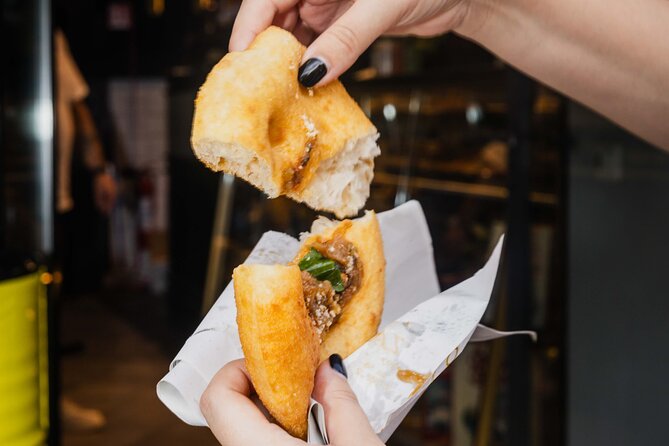
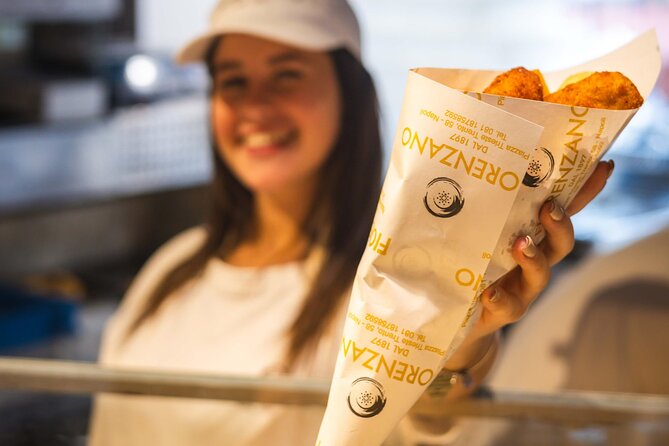
This is the core “eat like a Neapolitan” moment. At Fiorenzano, you can choose from three options, each paired with a soft drink:
- Wallet Pizza + 5 pieces frying + soft drink
- Frying cup with 12 pieces + soft drink
- Pasta omelette + 5 pieces frying + soft drink
The best choice depends on what you’re craving:
- If you want something hand-held and easy to eat quickly, go for the wallet pizza option.
- If you like sampling more variety in frying form, the 12-piece cup is a fun way to eat without committing to one single flavor.
- If you want something more filling, the pasta omelette option tends to feel like a meal, not just a snack.
This stop is listed at about 15 minutes. Don’t plan on savoring slowly here—plan on eating, enjoying, and staying ready for the next viewpoint and neighborhood.
Quartieri Spagnoli to Maradona mural: the neighborhood spirit
After the food, you head to Murale Diego Armando Maradona in the Quartieri Spagnoli, the Spanish Quarters. This area is described as showing Naples’ authentic face: basses (small, low entrances or shop-style levels) and street-level life. The description also highlights “pagan saints” and musical-cultural figures—Totò, Pino Daniele, Eduardo—and Diego Maradona, with a square dedicated to him.
This is where Naples identity shows up loud and visible. It’s not about grand architecture; it’s about how people claim space with art, music, and names.
If you’re a soccer fan, you’ll likely enjoy it more than you expect. If you’re not, you’ll still appreciate how the neighborhood tells its story through walls.
Corso Vittorio Emanuele to San Martino: top-of-the-city views
The ride continues with Corso Vittorio Emanuele, described as offering another breathtaking view and taking you toward the top of the Vomero hill.
Then you reach Belvedere di San Martino, where the medieval structure Castel Sant’Elmo and the Certosa di San Martino appear in the description. The Certosa is noted for its cloister and museum, plus terraced gardens that give wide panorama views across Naples.
This stop is listed around 10 minutes with free admission. That time window is tight, but views like this don’t require a long explanation. You just need a minute to look, frame the city, and then get moving.
Finally, the route returns in the opposite direction of Corso Vittorio Emanuele, still offering Naples views on the way back.
Practical tips: shoes, timing, and getting the photos you want
This is built for short walks and frequent view changes. The tour guidance specifically calls for comfortable clothing and practical shoes for short walks and scenic stops. I’d treat that as non-negotiable—Naples hills plus curb edges plus quick photo stops can turn a simple moment into a slip if you’re in sandals.
Bring:
- Your camera or smartphone (Naples views are the main event)
- A layer if you’re sensitive to wind, since some viewpoints sit higher and can feel cooler
Timing-wise, expect a steady pace rather than long museum time. Even some listed viewpoint stops are around 5–10 minutes. If you love museums and could spend hours inside, plan for extra time elsewhere in Naples.
Also, since this is a tuk tuk route, you’ll feel more like you’re moving with the city than touring a theme park. That’s the point.
Price and value: what you get for $212.43 per person
At $212.43 per person for about 3 hours, the value comes from the “bundle” you’re getting:
- A private group experience (only your group participates)
- Tuk tuk transport that handles hills and narrow streets
- Multiple panorama stops with quick time efficiency
- Historic landmarks ranging from Castel dell’Ovo to Castel Nuovo
- Street-food tasting at Fiorenzano with soft drink
- Free admission tickets at several key viewpoints (Via Francesco Petrarca, Sant’Antonio a Posillipo, Fiorenzano stop listing, plus Belvedere di San Martino)
If you were to piece these elements together yourself—local transport, timed museum visits, and a guided route that links views intelligently—you’d likely spend more time figuring it out. Here, the ride does the connecting work for you.
The main “value watch” is the pace: this is not a slow, deep dive into one museum. It’s more about seeing many anchor sights and eating one great street-food stop within a short time window.
Should you book this Naples tuk tuk panoramic and street-food tour?
Book it if:
- You’re short on time and want big Naples views plus major monuments
- You like street food and want a structured tasting moment at Fiorenzano
- You want a route that connects neighborhoods you’d otherwise struggle to link efficiently
- You appreciate local storytelling—Vitaliano’s style is specifically highlighted as proud and personal
Skip it (or plan extra time elsewhere) if:
- You want long museum hours as the main goal
- You’re the type who likes to linger 45 minutes per stop and doesn’t enjoy quick photo windows
If you’re visiting Naples for the first time, this kind of tight route is a smart way to get your bearings fast—then you can return later on your own to the corners that really hooked you.
FAQ
How long is the Naples tuk tuk tour?
It lasts about 3 hours.
Where does the tour start and end?
It starts at C.so Vittorio Emanuele, 4/Int.Stazione 1, 80122 Napoli NA, Italy, and it ends back at the meeting point.
Is this tour private?
Yes. It’s a private tour/activity, and only your group participates.
What food can I choose at Fiorenzano?
At Fiorenzano, you can choose one of these: Wallet Pizza plus 5 pieces frying plus a soft drink, or a frying cup with 12 pieces plus a soft drink, or pasta omelette plus 5 pieces frying plus a soft drink.
Are admission tickets required for the main stops?
Some stops are listed with admission ticket free, including Via Francesco Petrarca, Chiesa di Sant’Antonio a Posillipo, and Belvedere di San Martino. The data doesn’t confirm admission costs for every single stop.
Can I cancel for a full refund?
Yes. You can cancel up to 24 hours in advance for a full refund.
More Food & Drink in Naples






More Tour Reviews in Naples





More Naples Street Food

More Naples tours, freshly reviewed





Naples Street Food Tours, compared.
 ★ 4.9Street Food Walking Tour with Local GuideFrom $504,976 reviews
 ★ 5.0Authentic Naples Street Food Tour With Local Expert GuideFrom $502,402 reviews
 ★ 4.9Guided Street Food Tour with SpritzFrom $461,212 reviews
 ★ 5.0Authentic Naples Food Tour with 8+ Tastings of Pizza, Wine & MoreFrom $105824 reviews
 ★ 5.0Exclusive Naples Private Food Tour: 6 or 10 TastingsFrom $133596 reviews
 ★ 5.0Not Just Another Naples Street Food Tour with Eating EuropeFrom $83463 reviews
 ★ 5.0Naples Street Food Tour: Discover Local Flavors with Expert GuideFrom $50428 reviews
 ★ 4.7Street Food Experience With 6 StopsFrom $33392 reviews
Browse the lists this tour appears in