Review · NAPLES
Discover the Rione Sanità with Insolitaguida
Naples’ Rione Sanità has real edge and soul. In just two hours, you’ll walk through alleys packed with murals and baroque churches, guided by an expert local voice that makes the neighborhood feel legible instead of chaotic. I love the way the tour links art to place—you don’t just see a mural, you learn what it’s pointing to. I also like the rhythm: Palazzi, markets, and then food breaks the story up at the right moments. One drawback to consider: some stretches are simply loud, so if you want every last detail, you may find it harder to catch explanations during busier moments.
You’ll meet at Porta San Gennaro in Piazza Cavour, right at the neighborhood’s symbolic gateway, then work your way through squares, back streets, and two major Neapolitan Baroque palaces. If you’re hoping for a relaxed, step-free stroll, note that it’s still a walking tour and there are age limits: it’s listed as not suitable for people over 70.
In This Review
- Key things that make this tour special
- Porta San Gennaro: where the tour’s story starts fast
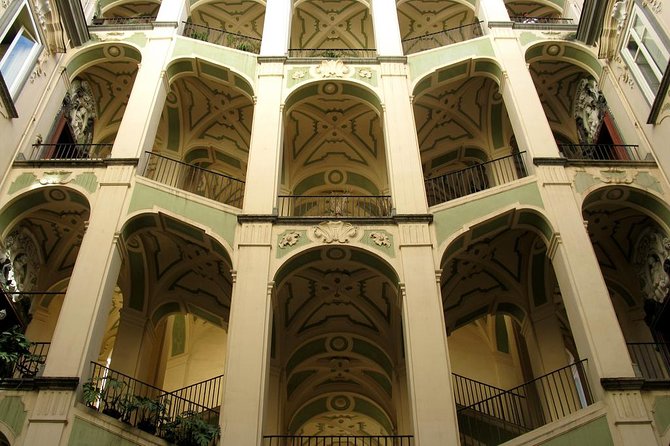
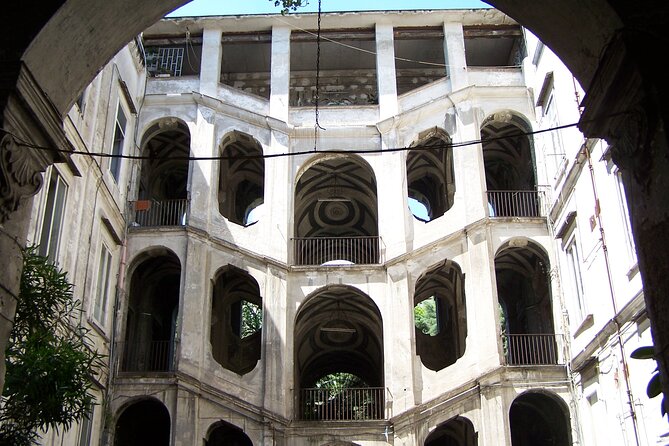
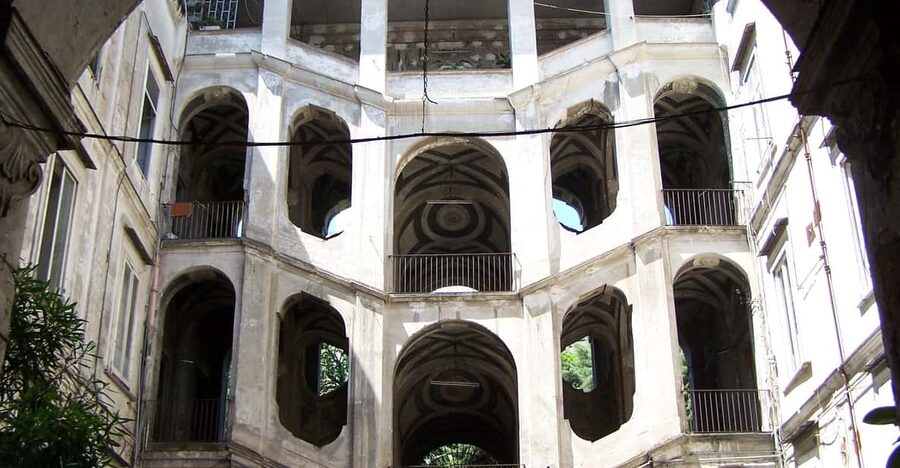
- The baroque show: Palazzo Sanfelice and Palazzo dello Spagnolo
- Murals, markets, and the streets of Totò and Maradona
- Food breaks that actually fit the route: coffee, Poppella, and the snowflake
- Santa Maria stops: from quiet streets to the Basilica’s interior
- Pace, price, and value: is $25 worth it?
- Logistics you should know before you go
- Who should book this Rione Sanità tour
- Should you book this tour?
- FAQ
- Where does the tour start and end?
- How long is the tour?
- What does the tour cost, and what’s included?
- What languages are available for the live guide?
- Is it wheelchair accessible?
- What should I bring, and who is it not suitable for?
Key things that make this tour special
- Porta San Gennaro as the starting point where you get context fast and don’t wander aimlessly
- Baroque stops at Palazzo Sanfelice and Palazzo dello Spagnolo, including film-set energy
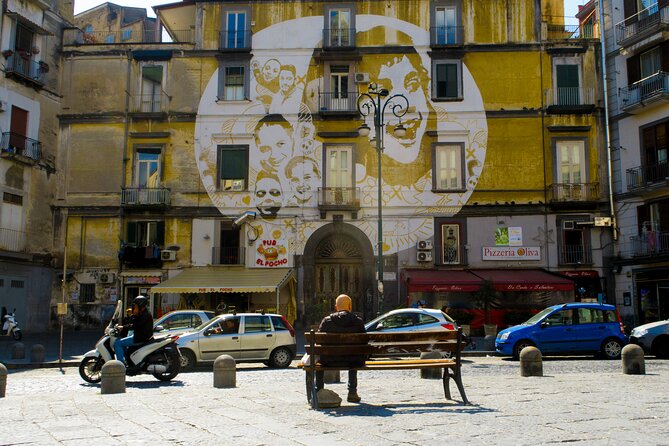
- Murals tied to Totò and Maradona, so street art feels like storytelling, not decoration
- Borgo dei Vergini and the food market angle, with short stops that keep the pace human
- Coffee and the snowflake pastry in the shop where it’s said to be created
- Santa Maria della Sanità at the end, finishing with a strong sense of atmosphere
Not sold on this one? A few more Naples tours sit just below.
- From Naples: Sorrento, Positano & Amalfi – Small Group Tour★ 4.7 · 14,599 reviews
- From Naples: Pompeii Ruins & Mount Vesuvius Day Tour★ 4.3 · 11,459 reviews
- From Naples: Sorrento, Positano & Amalfi Coast – Small Group Tour★ 5.0 · 8,643 reviews
- Naples: Catacombs of San Gennaro Entry Ticket & Guided Tour★ 4.6 · 7,941 reviews
Porta San Gennaro: where the tour’s story starts fast
The tour begins at Porta San Gennaro, in Piazza Cavour, which is the kind of starting point that instantly helps you understand what you’re looking at. Instead of arriving in a neighborhood and hoping you’ll figure it out, you get orientation from the start—what the area represents and why it matters in the Naples of today.
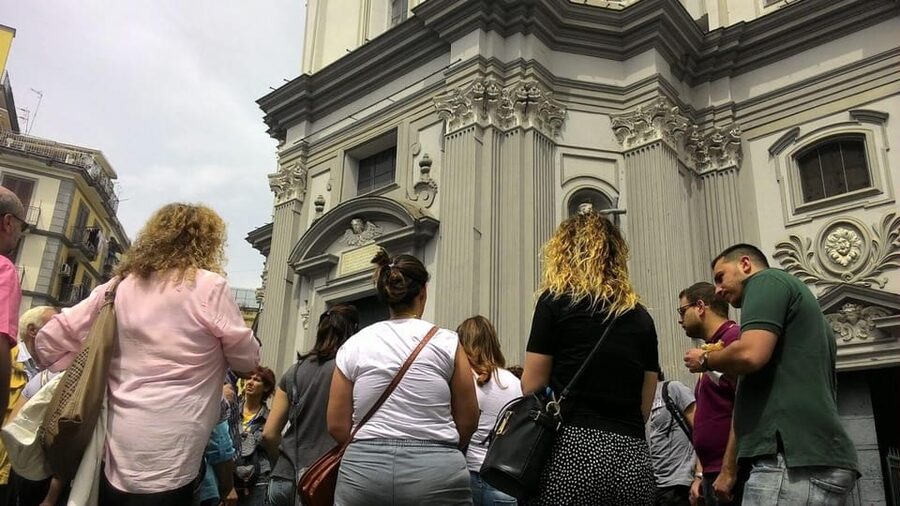
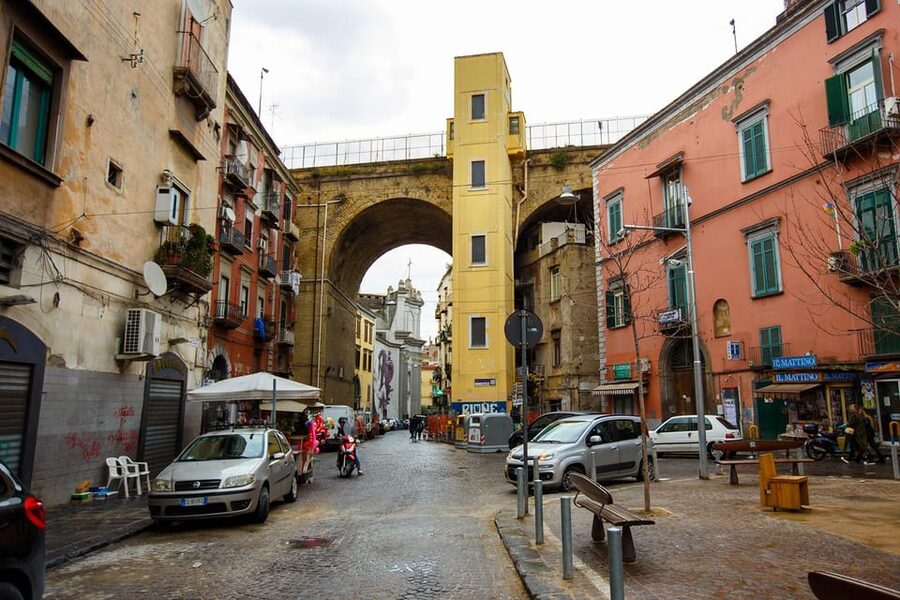
From there, your guide pulls you into the alleys with the clothesline colors, the everyday noise, and the neighborhood pace. This is where the tour earns its keep: it doesn’t treat Rione Sanità like a museum. You’re walking through the real fabric of the district, and the guide helps you notice things you’d normally miss—how baroque churches sit in the middle of ordinary streets, how murals act like a public memory wall, and how small squares can feel like stages.
If you’re the kind of traveler who likes to connect dots (art, history, everyday life), you’ll enjoy how direct the storytelling feels. And if you want a practical tip: wear comfortable shoes. The walking is part of the point, and this is Naples—pavements can be uneven and the streets can be busy.
The baroque show: Palazzo Sanfelice and Palazzo dello Spagnolo
Neapolitan Baroque can look like sheer visual overload if you’re not given a guide to what to focus on. Here’s what I like: the tour doesn’t ask you to memorize facts. It points you toward the main features that make these buildings important—so your eyes know where to land.
You’ll visit two key masterpieces: Palazzo Sanfelice and Palazzo dello Spagnolo. One of the most practical benefits is that the palaces help you understand how the wealth and drama of Baroque Naples still shapes street-level life. These aren’t “stand there and read a plaque” stops. They’re part of the neighborhood’s personality.
Palazzo dello Spagnolo has an extra layer of fun: it has often been used as a film set. That matters because it changes how you see the space. You start noticing the angles and atmosphere that make the building camera-friendly. Even if you’re not into film, that sense of cinematic design makes the architecture easier to appreciate.
At both palaces, the guided approach keeps it from turning into a long lecture. You get just enough structure to make sense of what you’re seeing, then you move on while it’s still fresh.
Murals, markets, and the streets of Totò and Maradona
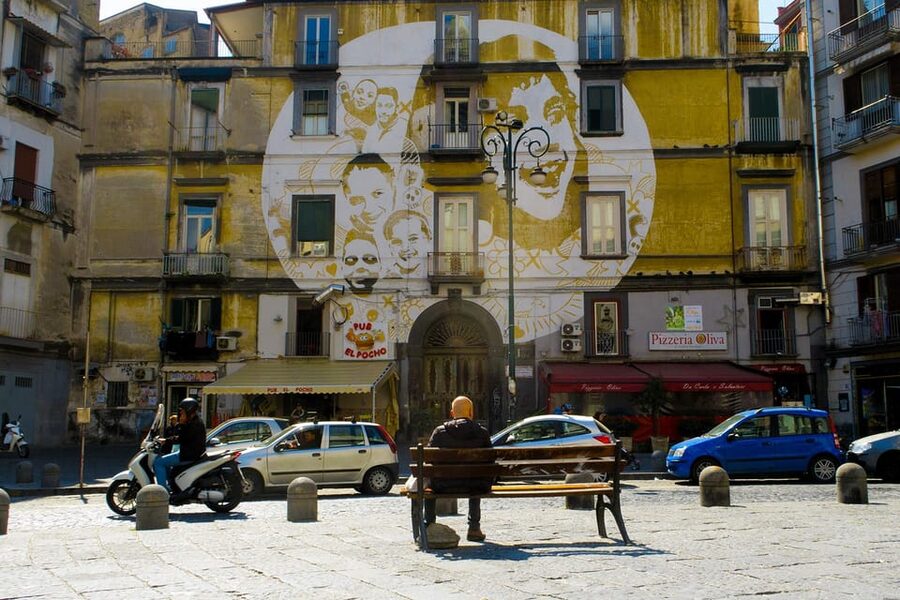
One of the most praised parts of this experience is how the tour handles the neighborhood’s characters and symbols. You’re not stuck with generic talk—you’ll actually see murals dedicated to Totò and Maradona, and you’ll get the story behind them.
The murals matter because they’re not random. They sit in the social geography of the district. When your guide explains what they represent, the alleyways stop feeling like a photo backdrop and start feeling like a living page of Naples.
You’ll also pass through Borgo dei Vergini, including a guided stop tied to the local food market atmosphere. This is a great choice for value-minded travelers, because it adds a “real Naples” element without turning the tour into a shopping expedition. You get to see how people move through the neighborhood day-to-day, and you get guided context while you’re there.
Then comes one of the most specific storytelling moments: walking along streets linked to Totò, including the area where there’s the house associated with his birthplace. If you enjoy art tied to personality—comedian, musician, celebrity, cultural icon—this is one of those tours where the neighborhood feels like it’s performing history at walking speed.
Food breaks that actually fit the route: coffee, Poppella, and the snowflake
Naples tours can forget that food is part of the culture, not an optional bonus. This one builds the breaks into the flow.
First up is coffee tasting near the start area at Porta San Gennaro. It’s not just a sip-and-go stop. The point is to give you a Neapolitan taste moment while the guide is still setting the scene, so you absorb the atmosphere with your senses, not just your eyes.
Later, you’ll have another tasting stop at Poppella, which keeps the day from getting too lecture-heavy. Small tastings like this are a big deal in a two-hour tour, because they help you stay engaged and keep the energy light.
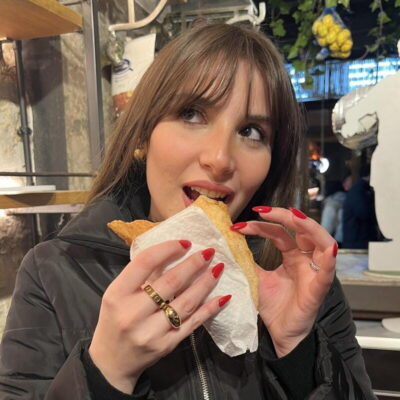
The star for many people is the famous snowflake pastry, taken at a pastry shop said to be where it was created. It’s the kind of detail that makes a walking tour memorable: you’re not just eating, you’re participating in a local tradition with a specific origin story. And it’s a satisfying counterpoint to baroque palaces and murals—sweet, familiar Naples, right when your feet are starting to ask questions.
Practical note: if you’re sensitive to strong coffee flavors, go slow. The point is to enjoy it, not to power through.


Santa Maria stops: from quiet streets to the Basilica’s interior
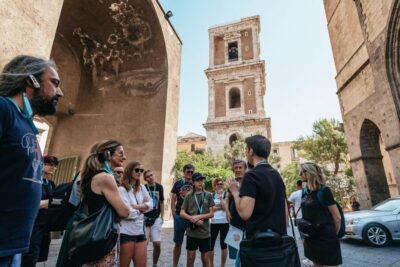
As the tour continues, it leans more reflective. You’ll visit churches with guided explanations, including Santa Maria Antesaecula and then end at Basilica di Santa Maria della Sanità.
Church visits can go two ways on tours: either the guide rushes you past the details, or you sit through too much. Here, the structure feels built for a short format. You get guided attention in the right places, and you finish with a stronger sense of the neighborhood’s spiritual and cultural weight.
Ending inside Santa Maria della Sanità is a smart move. It gives you a moment to slow down and reset your brain after street noise, murals, and baroque exteriors. And if you like architecture, the interior usually helps you understand the whole neighborhood story—why these buildings were built with such confidence, and why they still shape the district’s identity.
Pace, price, and value: is $25 worth it?
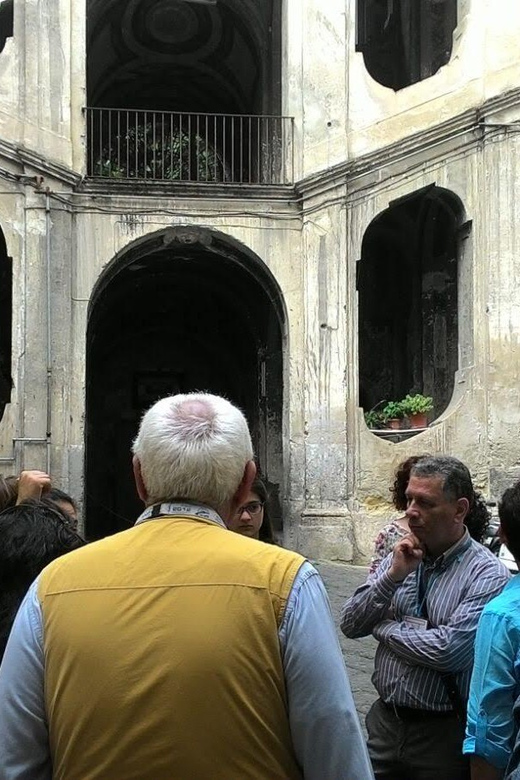
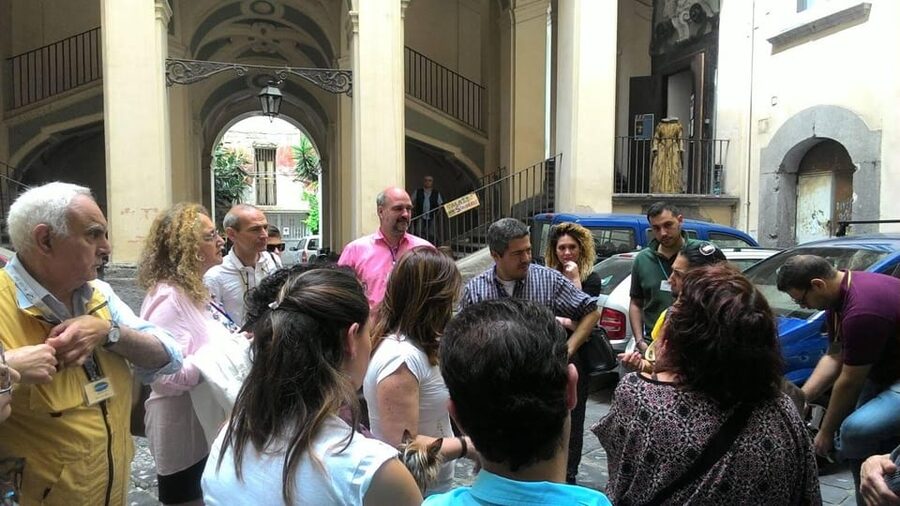
At $25 per person for about two hours, this tour makes sense if you care about guidance. You’re paying for a local person who can connect the dots—street art, Baroque palaces, market life, and the Totò and Maradona references—then wrap it all up with coffee plus a Neapolitan sweet tasting.
What makes the price feel fair is that the included food isn’t an afterthought. You get at least two tasting moments (coffee and a sweet), and those breaks are timed so you’re not dragged into long waits. If you’ve ever done a self-guided walk through a complex neighborhood, you know the main cost isn’t money—it’s time and confusion. A good guide saves both.
Also, the language options are helpful: guides can run in Italian, English, or Spanish. That matters because the difference between a good explanation and a weak one can be huge in places with layered symbolism like this.
Group size can vary, and private groups are available. If you’re traveling with family or want a quieter experience (especially if you’re sensitive to street noise), a private setup can be the best way to keep the discussion comfortable.
Logistics you should know before you go
This walk is designed for real streets, so your prep matters.
- Bring comfortable shoes. You’re on foot for the full experience.
- Be on time for your appointment. The route moves as a unit.
- The tour is listed as wheelchair accessible, but it still involves walking along neighborhood streets.
- It’s listed as not suitable for people over 70 (and also not suitable for people over 95), so check this early if age or mobility is part of your planning.
One more consideration comes from on-the-ground reality: parts of Naples can get noisy. In a recent review, someone noted that city noise can make it hard to catch explanations at times, and suggested that better hearing support like earphones would help. If you’re the type who needs clear audio, consider your own solution—simple noise reduction can make a big difference when you’re learning on the move.
On the bright side, the guides I saw praised in feedback share the same theme: enthusiastic, prepared, and able to connect history with neighborhood life. Names that come up include Lina and Valentina, both described as professional and lively, with strong historical and folkloristic storytelling. That’s exactly what you want for a district where symbols matter.
Who should book this Rione Sanità tour
This is a good fit if you:
- Want a short, high-impact walk (two hours) that covers the essentials without feeling rushed
- Like street art with context, especially Totò and Maradona murals
- Enjoy Baroque architecture, but want it explained in plain language
- Appreciate food moments built into the route, not tacked on at the end
It may be less ideal if you want a quiet, low-stimulation experience, or if you’re not comfortable with city noise and uneven walking. Also, respect the age guidance: the tour isn’t listed for people over 70.
Should you book this tour?
If your goal is to get oriented fast and see Rione Sanità like a local story rather than a grid of sights, I’d say yes. The biggest strengths are the combination of Baroque palaces, meaningful street art, and the finishing touch of an interior church visit—plus the practical pleasure of coffee and the snowflake pastry at the right moments.
Book it especially if you like guided storytelling that’s not just dates and names. The guide style—energetic, prepared, and full of neighborhood anecdotes—sounds like the main reason people rate it highly.
Skip it only if you know you’ll struggle with walking, or if you’re worried about hearing details in louder streets. Otherwise, this is a solid value way to spend two hours in Naples, and you’ll leave with more than photos—you’ll leave with the neighborhood’s symbols in your head.
FAQ
Where does the tour start and end?
The meeting point is Porta San Gennaro in Piazza Cavour. The tour ends at Basilica di Santa Maria della Sanità.
How long is the tour?
The duration is 2 hours.
What does the tour cost, and what’s included?
The price is $25 per person. Included are the local guide service, coffee tasting, and a Neapolitan sweet tasting.
What languages are available for the live guide?
The guide is available in Italian, English, and Spanish.
Is it wheelchair accessible?
Yes, the tour is listed as wheelchair accessible.
What should I bring, and who is it not suitable for?
Wear comfortable shoes, and please be on time. It is listed as not suitable for people over 70 (and also not suitable for people over 95).