
Review · CITY TOURS
Baia: Semi-Submarine Tour for the Underwater City
Baia’s underwater city is one wild time-saver. This semi-submarine tour (on Nemo Sub) lets you see the Parco Sommerso di Baia from huge underwater windows while staying in total safety, with a guide explaining what you’re looking at as you pass the Nymphaeum of Claudius and nearby Roman ruins. You get an easy, scenic mix of “sea” and “site,” without the gear or stress of other water-based options.
What I like most is how the eight large windows turn the underwater ruins into something you can actually study (statues, old structures, and Roman-era remains). The other big win is the short, controlled 50-minute pace, so you get the payoff fast and still have time to enjoy Baia on land afterward. The main drawback to plan around is that visibility and comfort depend on conditions: if you’re prone to motion sickness or the sea is rough, it can be rougher than you’d like, and the lower deck can feel cold.
In This Review
- Key things to know before you go
- Baia’s underwater city, seen through Nemo Sub windows
- What makes the Nemo Sub semi-submarine feel different
- The 50-minute route: from Molo Sud past Claudius and Baia Castle
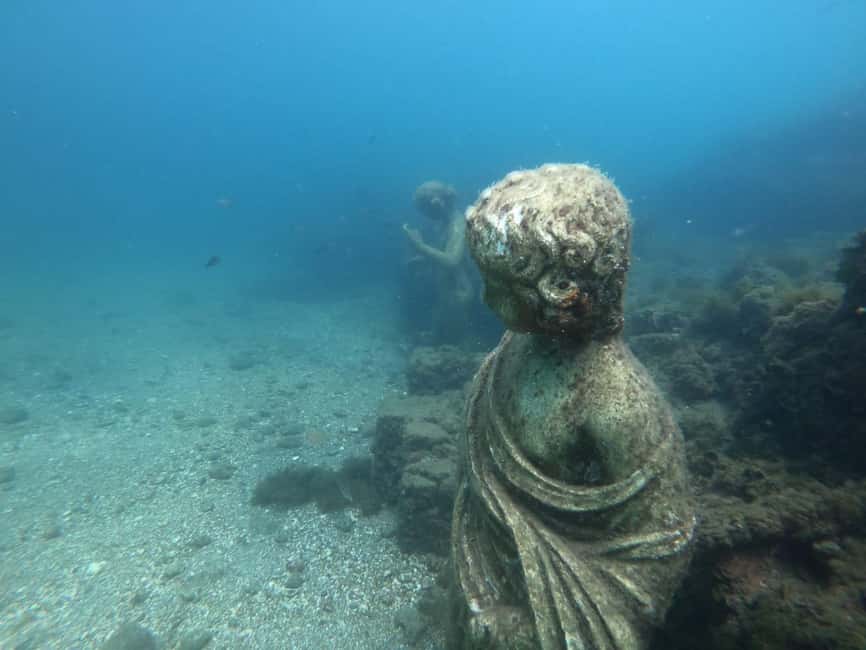
- Nymphaeum of Claudius: where the statues and structures feel real
- Roman shoreline highlights: Via Erculanea, aquaculture, and old fish farms
- The cold lower deck and motion sickness reality check
- Price and value: what $35 gets you here
- Who should book this Nemo Sub tour (and who should skip)
- Booking choices, weather reality, and how to arrive without stress
- Should you book NemoSub Baia in Baia?
- FAQ
- How long is the Nemo Sub semi-submarine tour in Baia?
- Where does the tour start and where do you return?
- How much does the tour cost?
- What’s included in the ticket?
- Is it really a semi-submarine or does it go underwater?
- Is the tour suitable for people with claustrophobia or wheelchair users?
- What languages do the guides speak?
- What happens if the weather is bad?
- What’s the cancellation policy?
Key things to know before you go
- You stay above water in a semi-submarine: passengers look down through underwater windows via a ladder, not by submerging the whole cabin.
- Eight big windows make the ruins readable: perfect for photos and for spotting details at your own pace.
- 50 minutes is tightly focused: enough time to see major features like the Nymphaeum of Claudius and the Roman shoreline highlights.
- Weather matters for what you see: clear water and calmer seas improve visibility.
- Bring a jacket even in warm months: the below-deck area can feel chilly.
More ways to take in Naples in a day
- Naples: City Highlights Guided Bike Tour★ 4.7 · 850 reviews
- Naples: 3-Day City Attractions and Public Transport Pass★ 3.1 · 705 reviews
- City Sightseeing Naples Hop-On Hop-Off Bus Tour★ 3.5 · 619 reviews
- Naples: City Walking Tour w/ Underground Roman Ruins Ticket★ 4.6 · 284 reviews
Baia’s underwater city, seen through Nemo Sub windows
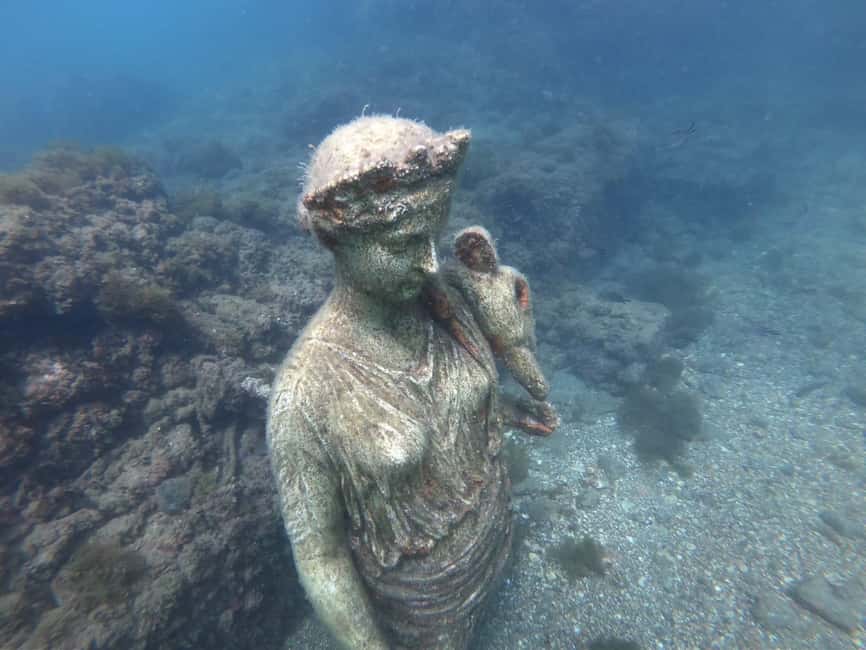
Baia is the kind of place that feels like it was built for sea days and time travel. Above the water, you get the coastline and castle silhouettes. Below it, there’s a whole layer of history that was once part of a thriving Roman world. The Nemo Sub semi-submarine tour is a clever way to view that submerged archaeology without turning your day into a project.
You’re not trying to swim, snorkel, or manage complicated equipment. You’re simply carried along the bay as your guide points out what’s down there. Then you get to look through the windows and connect the story to the shapes, statues, and structures still visible on the seafloor. It’s like reading the past with a frame that keeps it in view.
This is especially useful if you want something family-friendly and time-efficient. At around 50 minutes, you’re not committing to a half-day excursion. The tour is also small, with a maximum of 12 people and a typical small-group feel (8 participants noted for the experience), so you’re not fighting for a good window angle.
What makes the Nemo Sub semi-submarine feel different
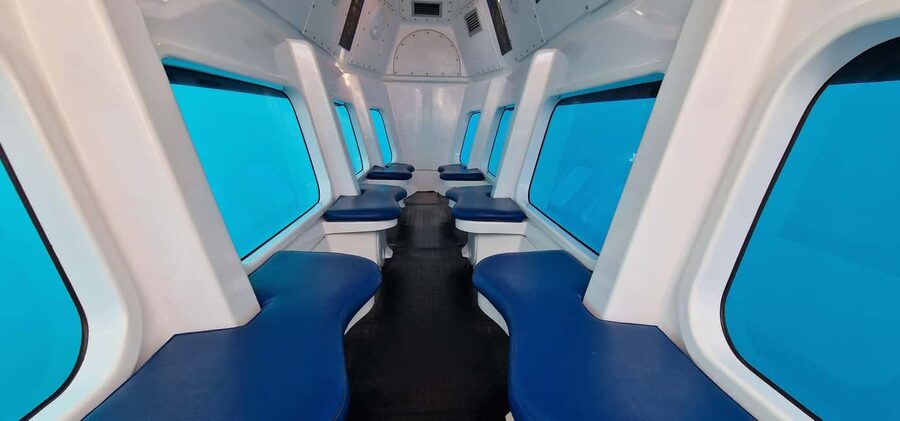
The best part of this tour is the setup. The Nemo Sub is a semi-submersible design, and you don’t end up fully submerged as a passenger cabin. Instead, you go down via ladder to a lower deck area where you can see through underwater windows. That one detail changes the vibe completely. You feel the sea air part of the time, then you switch to “window mode” when you’re ready to look.
Inside, there are eight large windows per boat. That’s a big deal. Smaller viewing areas force people to crowd and rush. Here, the window size helps you actually take in what you’re seeing. You can slow down, zoom your attention to one statue area at a time, and re-check details when your guide mentions something new.
Outside the water, the boat also includes an external space on top. You can use it as a reset button. If the lower deck feels cold or cramped for you, or if you’re sensitive to motion, stepping topside for a break is built into how the tour flows. From real experience reports, people with mild motion sensitivity often do better when they take those breaks.
The 50-minute route: from Molo Sud past Claudius and Baia Castle
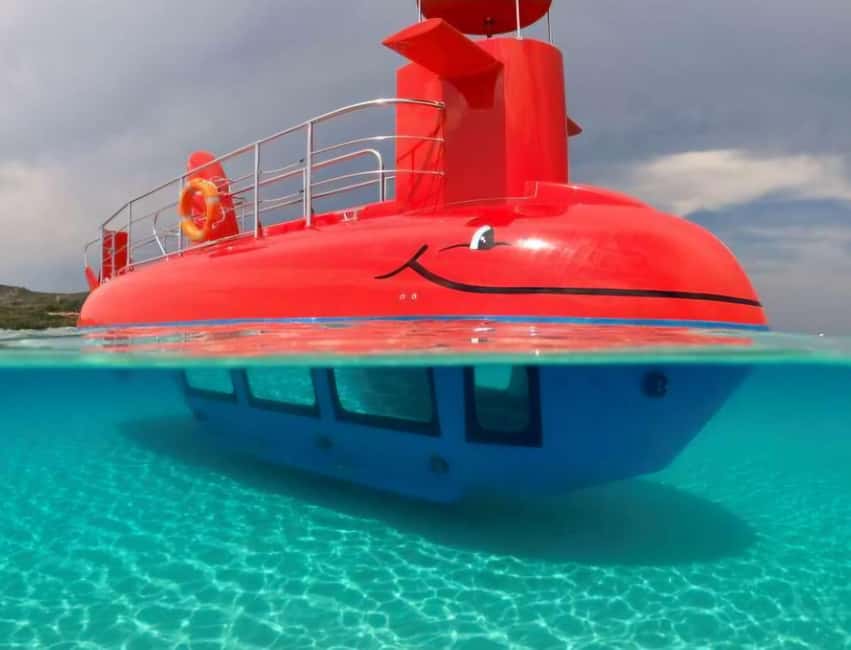
The tour starts at Molo Sud and runs for about 50 minutes. You’ll also come back to Molo Sud at the end. Along the way, you’re guided through the underwater park area, with passing time near key landmarks around Baia.
Here’s how to think about the pacing: you’re not doing “one long look” at everything. The tour balances short underwater viewing windows with on-deck sightlines. That matters because underwater visibility isn’t always consistent. You might get moments of sharp sunlight that make underwater stonework and statue surfaces look clearer. Other times, light and water conditions can soften the view, and shorter, focused stops help you still get value.
You’ll pass by the Archaeological Park of Baia from the water, then you’ll spend time looking toward the Nymphaeum of Claudius area and the nearby shoreline features. You also get a look near the Aragonenses Castle of Baia, plus the breakwater pier and Roman fish farms in that same zone.
Nymphaeum of Claudius: where the statues and structures feel real
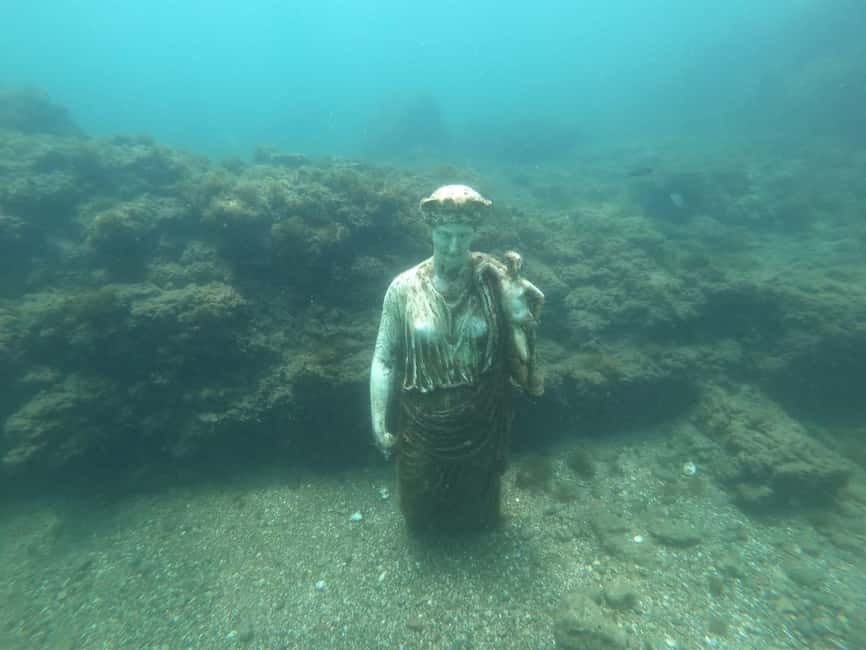
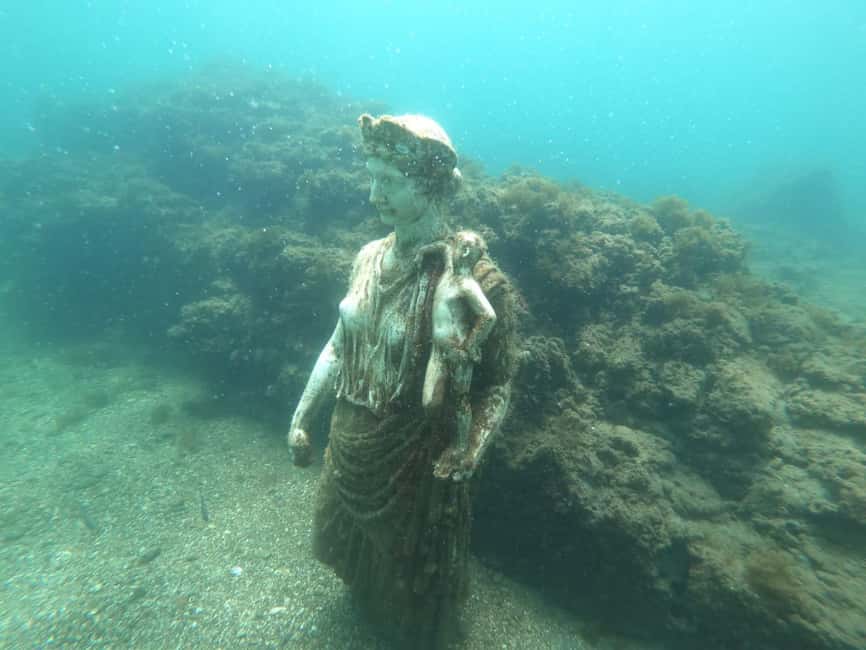
The Nymphaeum of Claudius is the star attraction of this style of tour, and it makes sense why. It’s the kind of underwater site that gives you “wow” fast, but it also rewards attention.
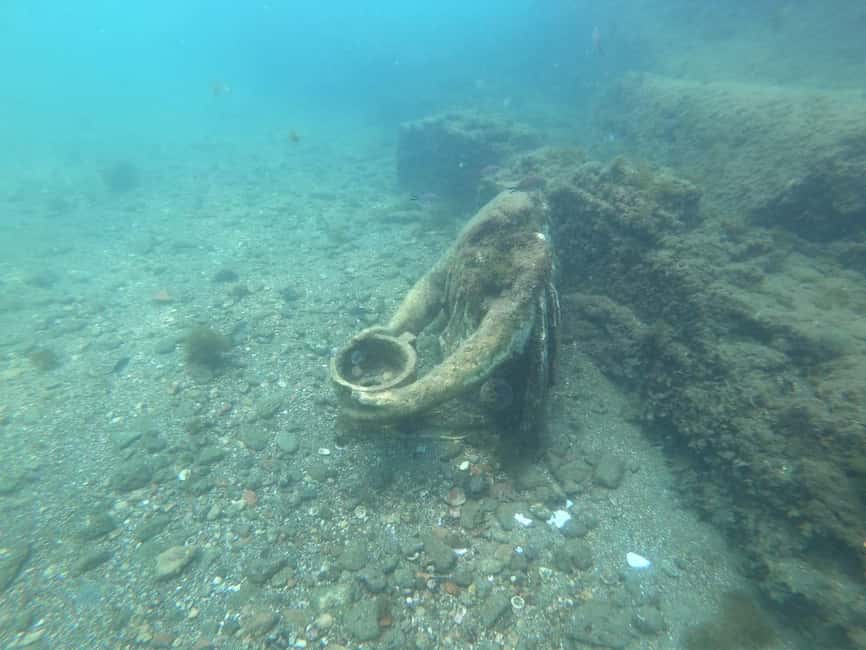
From the viewing perspective, you’ll see statues and underwater archaeological remains clearly enough to understand what you’re looking at. The windows help because you’re not trying to guess from distance or from a bouncing deck. You’re steady, and your view is framed. On clear, sunny days, the underwater objects can look especially crisp.
A key practical point: you won’t control the light down there. Water conditions and sun angle do. If you’re going on a day when the sea looks calm but visibility is mediocre, you can still learn from the guide, but the visual pop may be less than you hoped. In contrast, if the water is clear, you’ll likely feel like the ruins are “right there,” not just ghostly silhouettes.




Roman shoreline highlights: Via Erculanea, aquaculture, and old fish farms
Baia’s underwater story isn’t only about decorative architecture. It also includes daily-life engineering. As you move along the bay, you pass areas connected to the old shoreline infrastructure and Roman maritime life.
Two highlights worth having on your mental map:
First is Via Erculanea, an ancient Roman route mentioned for this tour. Second is the nearby Roman fish farms, including fish-pond style remains and aquaculture structures. When you’re looking through the windows, those practical, utilitarian shapes can be just as interesting as the more glamorous statue zones. They show how Romans used the sea as a resource, not just a backdrop.
One helpful way to appreciate this segment is to watch for contrast: decorative underwater pieces vs. the more geometric, “built” features linked to aquaculture. Your guide will tie these elements together, so even if you’re not a Roman-history nerd, you’ll still leave understanding why the area mattered.
Also, pay attention to what you’re near around the Aragonenses Castle of Baia. The castle gives you a strong visual reference point above water, so when your guide connects that skyline to what’s underwater, the whole bay makes more sense.
The cold lower deck and motion sickness reality check
This tour is designed for comfort, but you should still plan like you’re on the water. The activity isn’t recommended if you’re prone to seasickness. That’s not a small detail. The semi-submarine still moves, and the experience includes time where you’re inside a lower deck viewing area.
That said, there are practical strategies that work for many people. If you know you get even mild nausea, use the built-in rhythm: take breaks on the top deck when you feel you need them. Real reports say that stepping outside helps people stay on track, and the tour’s timing is short enough that you’re not stuck for hours feeling off.
Also, dress for temperature changes. Even on warm days, the below-deck area can be cold, and you’ll want something to keep you comfortable while you look through windows. A light jacket is a simple upgrade that makes a real difference.
Finally, consider sunlight and water clarity. This tour can look dramatically better with clearer water. So if you have the flexibility to choose a time, pick one where conditions look calm and bright.
Price and value: what $35 gets you here
At $35 per person for a roughly 50-minute guided experience with a ticket to the underwater park area, this tour is priced like an activity that’s aiming at wide appeal. And in a way, that’s what it delivers: it gives you access to underwater archaeology in a format that’s safe and straightforward.
Where the value shows up:
- You get guided interpretation while you view the ruins, not just random sightseeing.
- You get a “close enough” underwater view without scuba or snorkeling.
- You get short-and-sweet timing, which lowers the risk that you’ll feel bored or stuck on a bad-weather day (when the tour runs).
Is it cheap? No, but it’s fair for what you’re doing. You’re paying for access to the Parco Sommerso di Baia by a purpose-built boat, plus a guide in English (and additional languages available). If your goal is underwater archaeology and you don’t want the hassle or expense of diving, this is one of the most direct ways to get it.
Who should book this Nemo Sub tour (and who should skip)
This experience fits best if you want a straightforward, safe way to see underwater archaeology in Baia. It’s a strong choice for families, first-time visitors, and people who want a high “story-to-view” ratio: the guide points out what you’re seeing, and the windows keep the site in view.
It’s also a good option if you’re balancing an itinerary and don’t want to spend half a day on the water. At 50 minutes, you can pair it with time on land in the same area.
But you should skip if any of these apply:
- Claustrophobia, since there’s time spent in the lower viewing area.
- Wheelchair users, since the tour setup isn’t described as wheelchair-accessible.
- People prone to seasickness, because motion can still affect you.
If you’re in that “maybe” category, be honest with yourself. This isn’t the right place to test how you handle rough water. If you’re sensitive, treat that as a decision point, not a gamble.
Booking choices, weather reality, and how to arrive without stress
If weather is bad, this tour can be canceled in winter months, including cases of rain, wind, rough sea, or adverse conditions. That’s not a surprise for a bay-based activity. The smart move is to check conditions before you go and plan a backup activity in Naples or Pozzuoli.
Getting there is the other practical variable. The most direct meeting point noted is the Venus Temple, and the boat starts at Molo Sud. If you’re traveling from Naples, use public transit if you’re comfortable navigating connections: one path mentioned is taking the 101 bus to the Porto Di Baia stop and then walking a short distance to Molo di Baia.
Another option mentioned is using the Metro to Pozzuoli, then continuing by taxi or bus to the Porto di Baia area. If you’re short on time (or you’re traveling with multiple people and bags), a taxi ride from Naples is an option, but you’ll pay for it.
The simplest advice: arrive early enough to avoid last-minute stress. One practical problem that came up is not finding the meet-up point easily without good phone reception or clear signage. So I’d recommend downloading maps offline and keeping directions saved before you leave your hotel.
If you’re driving, parking costs were reported as low (about 2 euros), which is encouraging if you’re already using a car for other stops around Campania.
Should you book NemoSub Baia in Baia?
Book it if you want short, safe underwater archaeology with a real guide and big window viewing. If you’re excited by Roman remains like the Nymphaeum of Claudius, Via Erculanea, and Roman fish farms, this tour is one of the most time-efficient ways to see them without needing special water skills.
Don’t book it if you’re likely to feel seasick, if you’re dealing with claustrophobia, or if wheelchair access is a must. And if you’re going on a day when visibility looks poor, manage expectations: the story will still be worth it, but the visuals may not land as strongly.
If your plan is flexible, aim for calmer, clearer weather and bring that jacket. When conditions cooperate, this is the kind of excursion you’ll remember because it turns underwater ruins into something you can actually see, not just imagine.
FAQ
How long is the Nemo Sub semi-submarine tour in Baia?
The tour lasts about 50 minutes.
Where does the tour start and where do you return?
It starts at Molo Sud and you return there at the end. The meeting point is listed as Venus Temple.
How much does the tour cost?
The price is $35 per person.
What’s included in the ticket?
Your ticket includes entry to Parco Sommerso di Baia and an English guide on board.
Is it really a semi-submarine or does it go underwater?
It is a semi-submarine setup. Passengers go down via ladder to view the underwater objects through underwater windows, rather than the boat fully submerging the passenger area.
Is the tour suitable for people with claustrophobia or wheelchair users?
No. It is not suitable for people with claustrophobia and it is not suitable for wheelchair users.
What languages do the guides speak?
The live tour guide is offered in Italian, English, and Spanish.
What happens if the weather is bad?
During the winter season, the tour may be canceled due to bad weather such as rain, wind, or rough sea.
What’s the cancellation policy?
You can cancel up to 24 hours in advance for a full refund.
More City Tours in Naples




More Tours in Naples





More Tour Reviews in Naples

More Naples tours, freshly reviewed




City Tours, compared.
 ★ 4.7City Highlights Guided Bike TourFrom $54850 reviews
 ★ 3.13-Day City Attractions and Public Transport PassFrom $33705 reviews
 ★ 3.5City Sightseeing Naples Hop-On Hop-Off Bus TourFrom $31619 reviews
 ★ 4.6City Walking Tour w/ Underground Roman Ruins TicketFrom $35284 reviews
 ★ 4.5Capri Mini Cruise and City Sightseeing Day Trip from NaplesFrom $107272 reviews
 ★ 4.8Discover Pompeii: French Walking Tour of the Buried CityFrom $41253 reviews
 ★ 4.0Naples Shore Excursion: Naples City and Pompeii Half Day Sightseeing TourFrom $97219 reviews
 ★ 4.5City Center Walking Tour with Underground NaplesFrom $90143 reviews
Browse the lists this tour appears in